
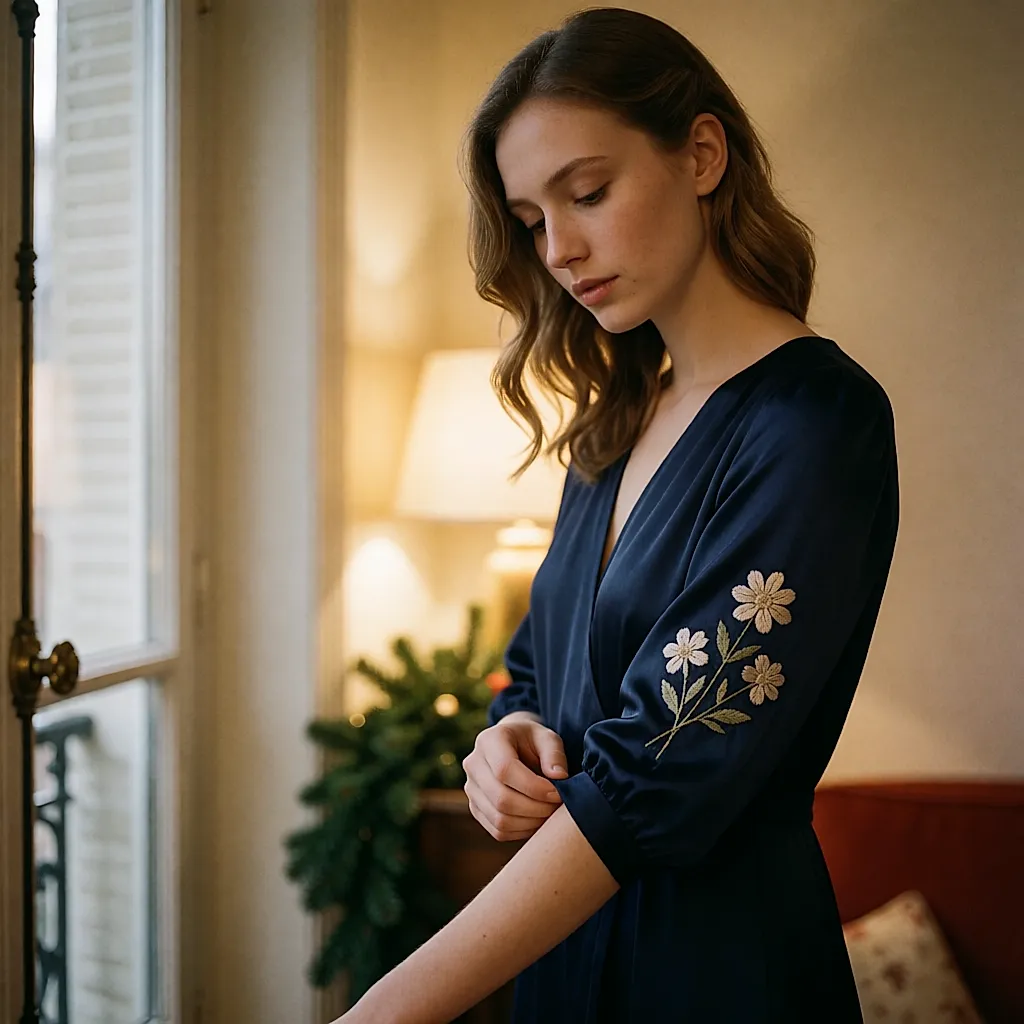
Two dresses on the rail, same price, same midnight blue. On one, the brand motif repeats itself in miniature down the whole sleeve, crisp as a printed signature. On the other, three flowers in stem stitch, the stitches drawing in and then opening out again, a millimetre at a time. A mischievous question: which one will you still recognise in ten years' time, at the back of the wardrobe?
The tell is in the close-up
Hand embroidery is not the same thing as industrial lettering. A machine repeats itself identically; a hand hesitates, corrects, catches a slipped stitch — and it's that tiny irregularity that gives a motif its relief. In a shop window, then, two pieces at the same price tell two very different stories, and only one of them can be read up close.
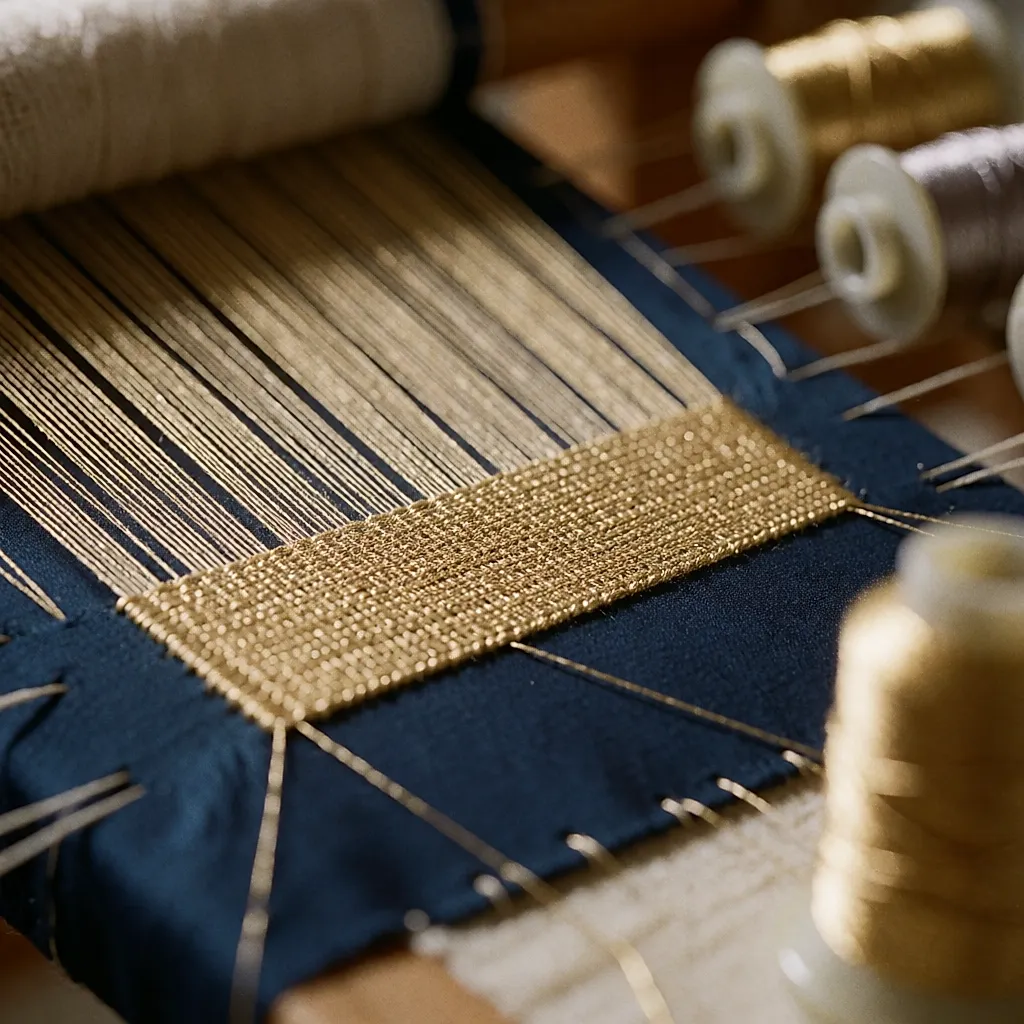
The repertoire is wider than most people assume: tambour beading, worked with the Lunéville hook, which lets beads and purl be laid down almost freehand; gold thread and or nué; whitework with its drawn-thread eyelets; matt silks. Every one of these techniques takes hours to cover an area the size of a postcard. It's part of the reason two pieces that look like twins can sit at such different prices — and why couture still keeps whole ateliers in work, such as those gathered at 19M in Aubervilliers, among the Paris craft houses.
What to check before you say yes
First reflex, and show no mercy: turn the piece over. The reverse of hand embroidery holds up — threads are finished off properly, the jumps between them are neat, the cloth isn't carrying a stiff, bulky backing. On industrial embroidery, the reverse is usually hidden under a dense, even support, almost a shell. It isn't absolute proof, but it is a very talkative clue.

Next, brush the motif with your fingertips and pretend to pull the cloth taut. If the fabric puckers around the embroidery, the thread has been pulled too tight and has already eaten into it: that doesn't relax in the wash, it gets worse. Look at what sits underneath, too. A dense motif on silk gauze or very fine lace is lovely and demanding in equal measure: it isn't the piece to dance in until four in the morning. And read the composition, even though it's less poetic than gold thread — spectacular embroidery doesn't redeem the fabric it's covering.
The option everyone forgets: have something you already own embroidered
There's a third route, smarter than adding another party outfit to the rail. Dig out the white shirt that's looking a bit sad, the inherited blazer that's a touch too sensible, or the favourite piece whose shoulder is ruined by a badly placed stain. Independent embroiderers take commissions: you show two photos, describe the idea, they suggest a design — and the piece sets off for another ten years.
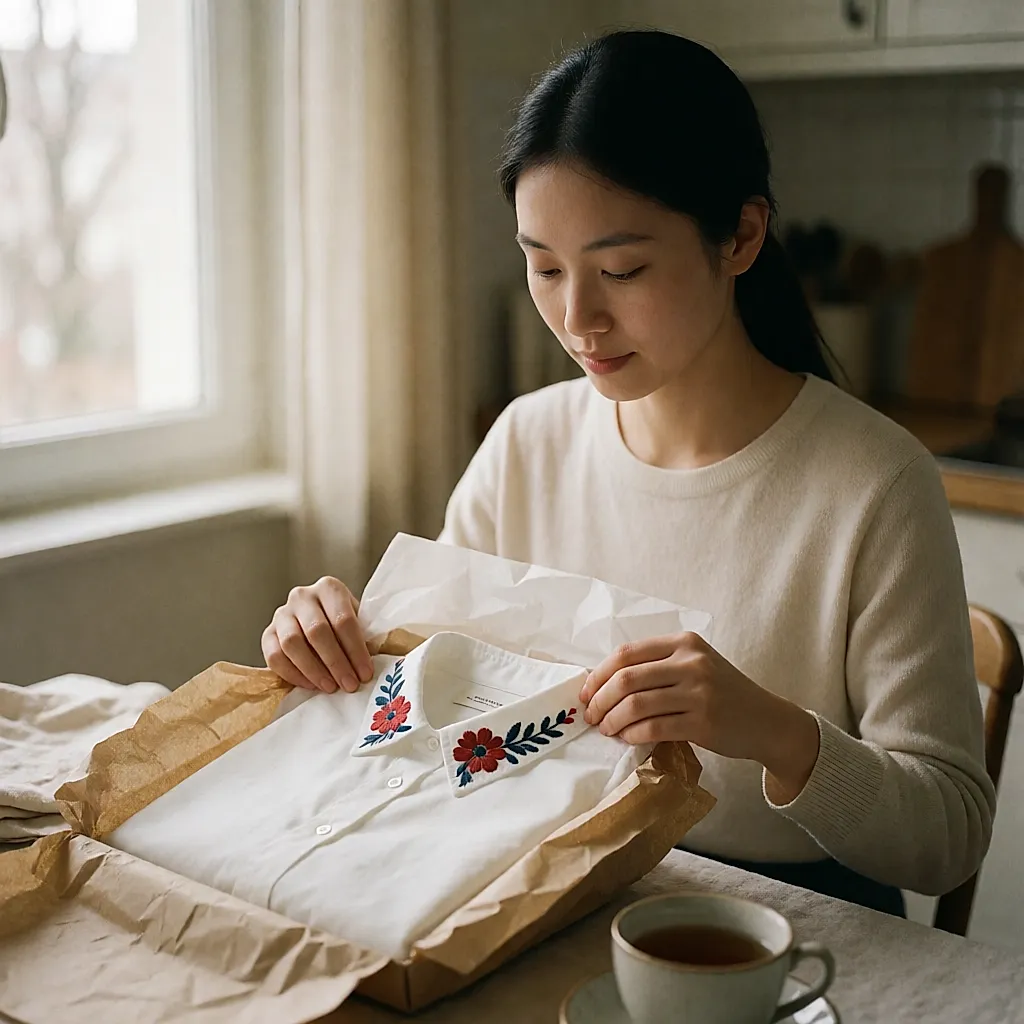
It's also the most understated version of the whole idea: nothing new is made, something is mended, personalised, kept. One thing to watch, and it weighs heavily in December: these commissions often take several weeks. If the idea strikes you on the 20th, it'll be ready for next year's party — which leaves you all the time in the world to pick the right motif.
Budget
Having a simple motif embroidered on a piece of your own: expect around £25 to £100 with an independent embroiderer, depending on the size of the design, the fineness of the work and whether beads are involved. A large or metallic motif pushes it higher, and the lead time climbs with it.
On ready-to-wear, a hand-embroidered piece by a designer or a small house often sits between £130 and £450, and more again on occasionwear. In vintage shops or consignment, an older piece can often be found for £10 to £55 — jackets from the 1950s to the 1970s carry stitches you don't see much of any more. And if the urge to stitch it yourself takes hold, a kit with a hoop, fabric and threads usually comes in under £35.
Three seconds, two fingers. Before you reach the till: turn the piece over to see the reverse; brush the motif to feel whether it puckers; check the composition on the label. A logo will never tell you any of that.
Then there's the choice itself, at the point of paying. Both can be argued for: a label reads from across the room, embroidery reads close up. But at the same price, treat yourself to the one whose making you'll be able to talk about — the flower that isn't quite identical to its neighbour, the thread that catches the light under the fairy lights. It's usually that piece you bring out three winters running, and lend out reluctantly.


Comments
Your opinion matters: rate the article, react and reply to comments.
Comments are moderated; AI-assisted comments are flagged. Text emoticons (8-), :-), <3…) are automatically shown as images.