
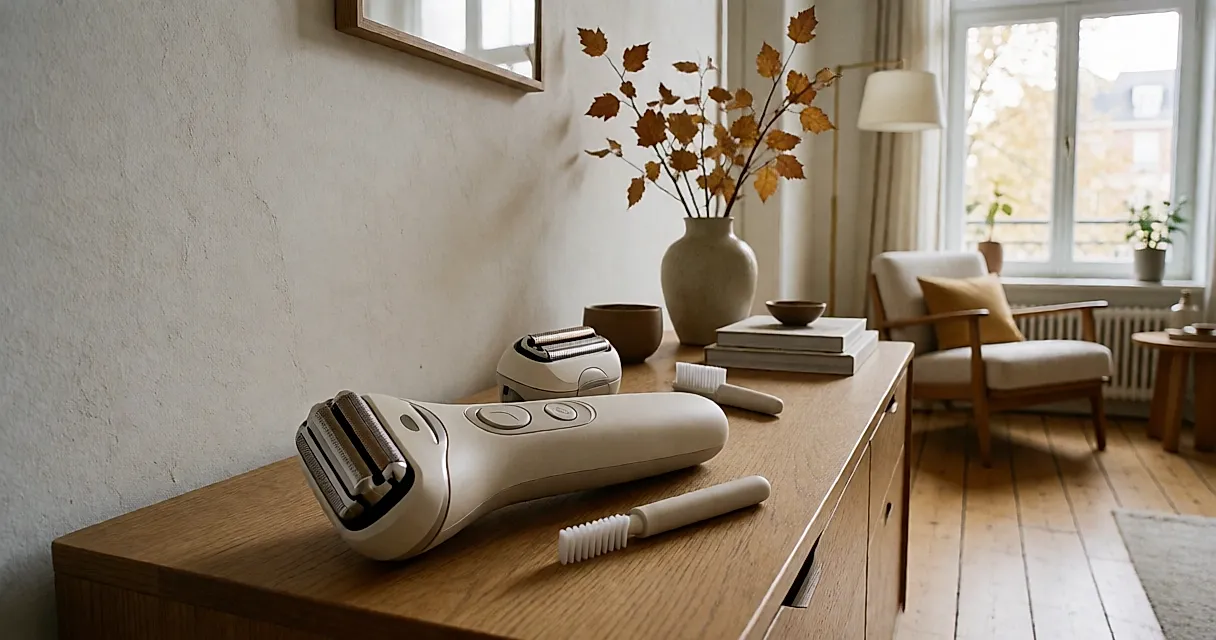
The number of speeds is splashed across the box in big, bright digits. On your skin, it's the head that decides everything — and the head never gets a mention in the tagline. Which is why you can pay top whack for a "5-speed" model and still miss the old two-speed one: comfort doesn't come in a number, it's something you feel.
Comfort lives in the head, not in the speed count
An electric epilator is, at heart, a pair of tweezers snapping shut on a hair at speed. Depending on the model, that grip comes from discs or from metal tweezers, sometimes ceramic-coated — which manufacturers claim slightly reduces heat build-up and tugging as it goes. But what genuinely changes a session is the width of the head: wide on the thighs, it covers the ground in a few passes; narrow on the knee, underarm or face, it keeps you out of trouble. Plenty of models come with a main head plus a precision head: check whether the second one is included or sold separately.
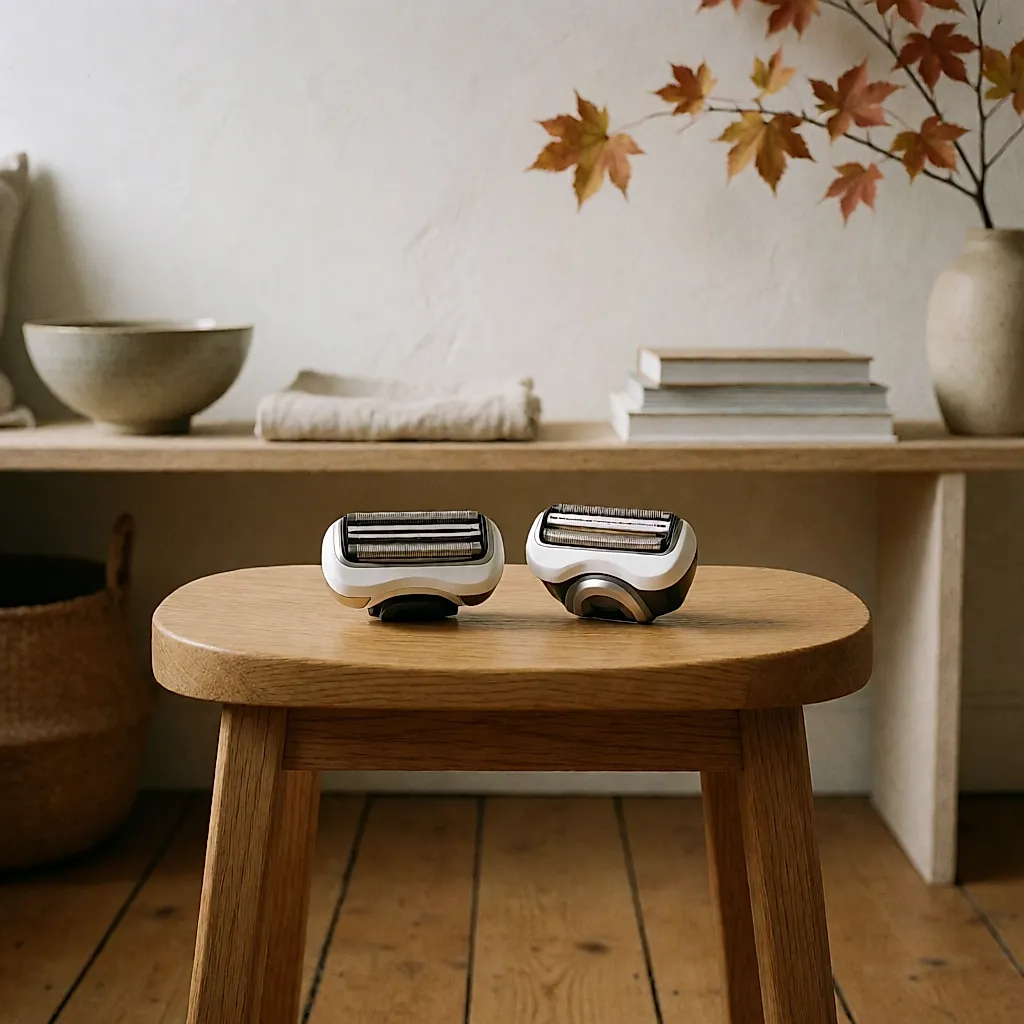
Second detail no product shot ever shows: does the head come off, rinse clean and sell separately? A washable head saves you scrubbing at stuck hairs with a brush; a replaceable head changes how long the whole device lasts, because the motor almost always outlives the tweezers. In practice, that's what separates an epilator you keep for eight years from one you abandon in its third season.
Rotation speed, the other number we skip past
Rotation speed, in revolutions per minute, sets the pace: the higher it is, the more pinches it strings together. Is that a promise of gentleness? If anything the opposite, at least to begin with. Hence the value of a slow setting for sensitive areas at the start, speeding up later once your skin is used to it. In practice two speeds are plenty for anyone who has been epilating for years; the fifth only earns its keep if you have seen it all before.
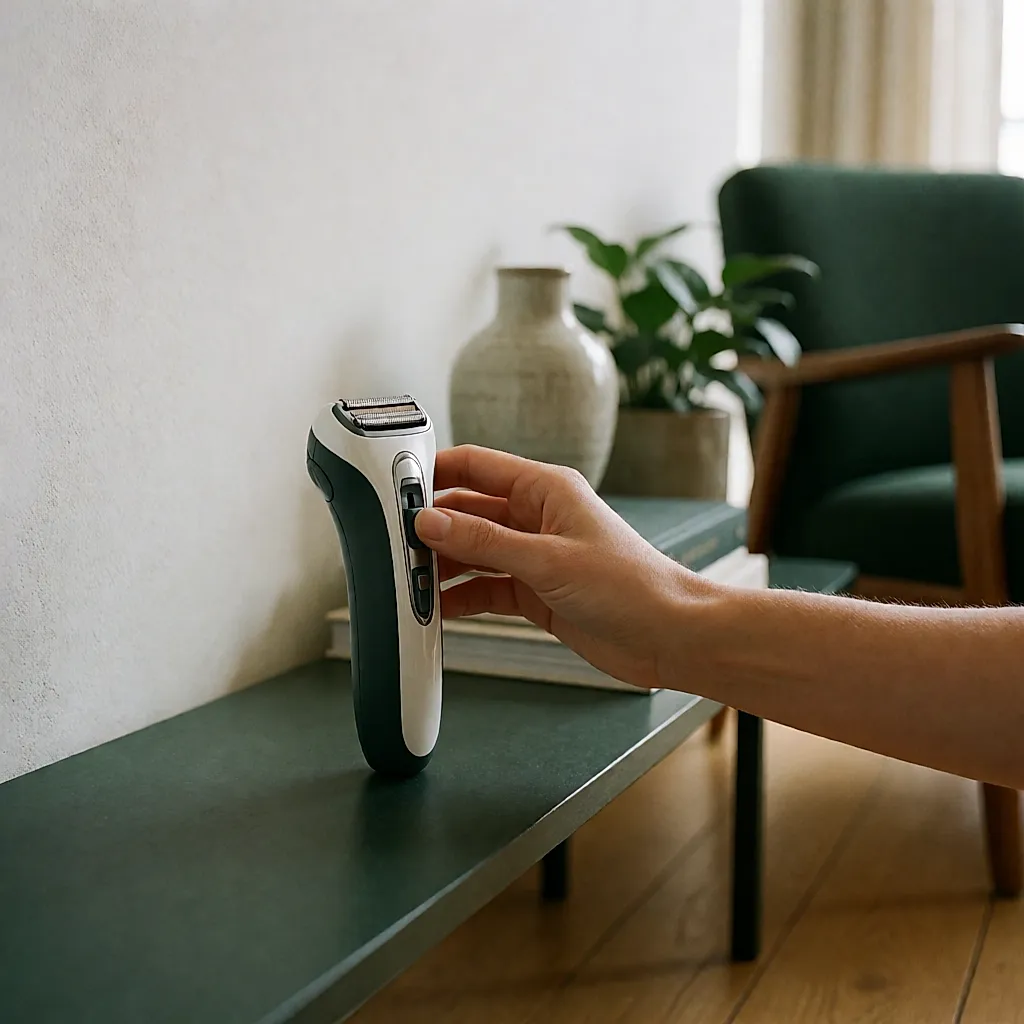
That's assuming the slow setting really is slow. On some budget devices the settings are near-identical and the difference comes down to a small note in the manual. The most reliable test is still the first session: if it stings enough to make you put the thing down, it isn't you, it's the setting.
Cord, battery, replacement head: the budget you forget
Cordless has a price: everything hangs on the battery. A corded model has no battery to charge but ties you to a socket — handy for legs, a pain for the bikini line. Battery models quote a run time in minutes; what matters more is the full charging time, sometimes long, and the awkward question nobody asks: how many years will the battery last before it refuses to charge? A cheap device whose battery dies in two years costs more than a step-up model that lasts five.

The replacement head is the other hidden cost. In practice it's a separate budget, to be renewed every year or two if you epilate regularly — I don't have a universal official figure for this, the guidance varies from one manufacturer to the next. A brand that stops selling heads for its older models leaves you buying the whole device again: something to check before you buy, not after.
On price, budget a few tens of pounds for an entry-level model from a high-street or electricals retailer, with one or two heads and two speeds. Pricier models tend to add cordless operation, an extra precision head, a travel case, sometimes a washable head and a gentler pinch. Online, prices move faster and end-of-line models fall.
What pushes the price up isn't the number of speeds. It's how many heads come in the box, a built-in light (handy for not missing patches), a pouch, a brush. Pay for what you'll actually use: a facial head when you only ever epilate your legs is a head that sleeps in its case for eight years.
Three questions before you pay
- Does the head rinse under water, and can you buy it separately?
- What's the quoted run time — and the full charging time?
- Will the brand still sell heads for this model two or three years after you buy it?
If any of the three answers is vague, walk away: those are the things that decide comfort, not the "5 speeds" line on the box.
Then there's the step everyone forgets: exfoliate the day before and make sure the skin is properly dry on the day itself. The device does half the work; your patience does the rest. And if your old two-speed model is still going strong, there's no shame in keeping it another season — it's probably the best-value purchase you'll make.



Comments
Your opinion matters: rate the article, react and reply to comments.
Comments are moderated; AI-assisted comments are flagged. Text emoticons (8-), :-), <3…) are automatically shown as images.