
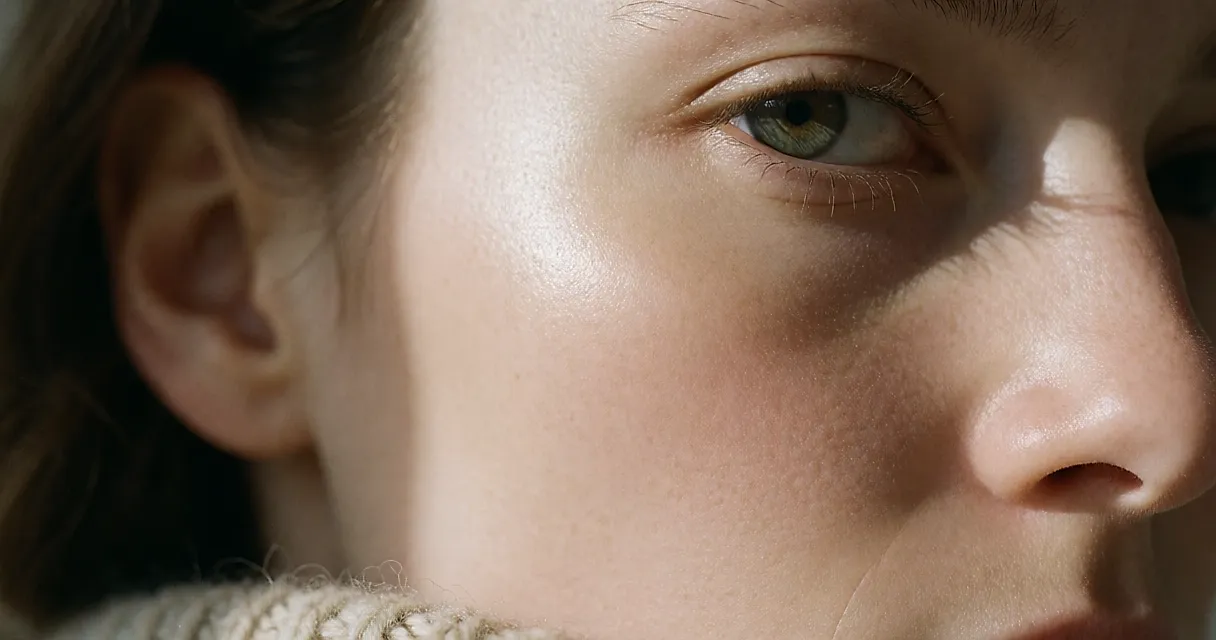
You choose a foundation the way you choose a winter coat: for the cut, the colour, the way it holds up. A tinted moisturiser is more like the scarf you knot over the top — same urge to warm up the complexion, no resemblance to the silhouette. The comparison runs out fast, and that's no bad thing: what has shifted over the past few seasons isn't the shade range, it's the formula. And when the formula changes, the way you apply it changes with it.
The shade isn't the story, the formula is
In a foundation, pigment is the star: tenacious, mattifying, able to blot out a patch of redness without a visible seam. In a tinted moisturiser, the pigment travels in a skincare base — an emulsion with water, glycerine, sometimes oils and humectant actives depending on the formula. You feel it straight away: less coloured material, more transparency, a complexion that's evened out rather than corrected. Shade still matters, but it's less decisive. Half a shade out, the gap shows less than it would on an opaque foundation.
Don't kid yourself, though. A tinted moisturiser that's too pale is still too pale, and its 'skincare' base replaces neither your serum nor your moisturiser. It works alongside them; it doesn't do their job. If your skin feels tight by 6pm, that's a question for your skincare, not your pigment.
Three fingers, one gesture, no brush
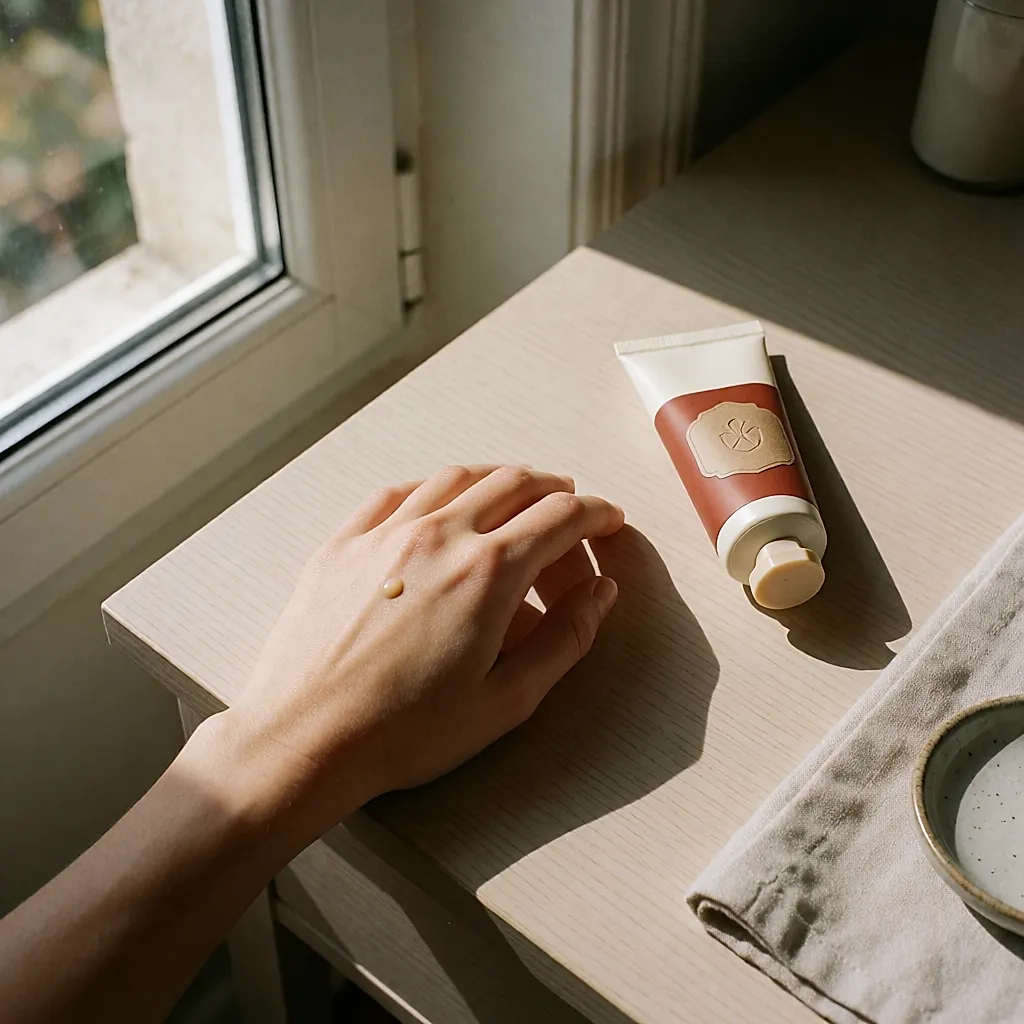
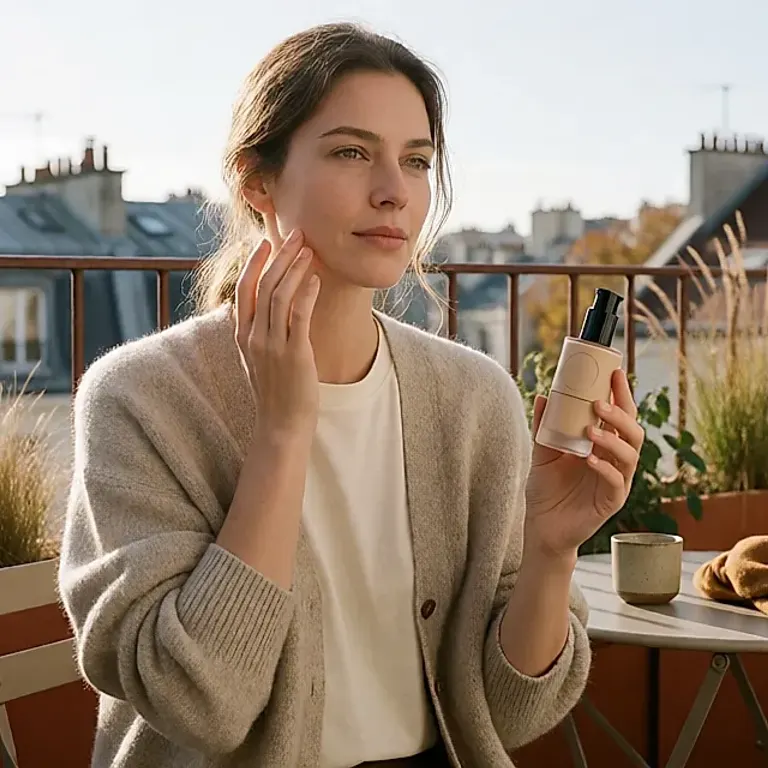
Where a foundation often wants a brush, a damp sponge and a bit of concentration, tinted moisturiser goes on by hand. A pea-sized amount on the back of your hand — a pea, not a walnut; you're not buttering toast — warm it between your fingers, press it into the centre of the face, nose, cheeks, forehead, then blend outwards. Two thin layers beat one thick coat. And if it looks patchy at first, that's usually your hand hesitating, not the product cheating.

You also have to accept the premise: you will see your skin. The spots, the little red patch by the nose, the Monday-morning shadows — a tinted moisturiser softens them, it doesn't erase them. A touch of concealer in the right places will do more than a second all-over layer. In practice, it's the product for mornings when you're counting the minutes between the toast and the missing left sock.
The soft tube tells you how it's meant to be used
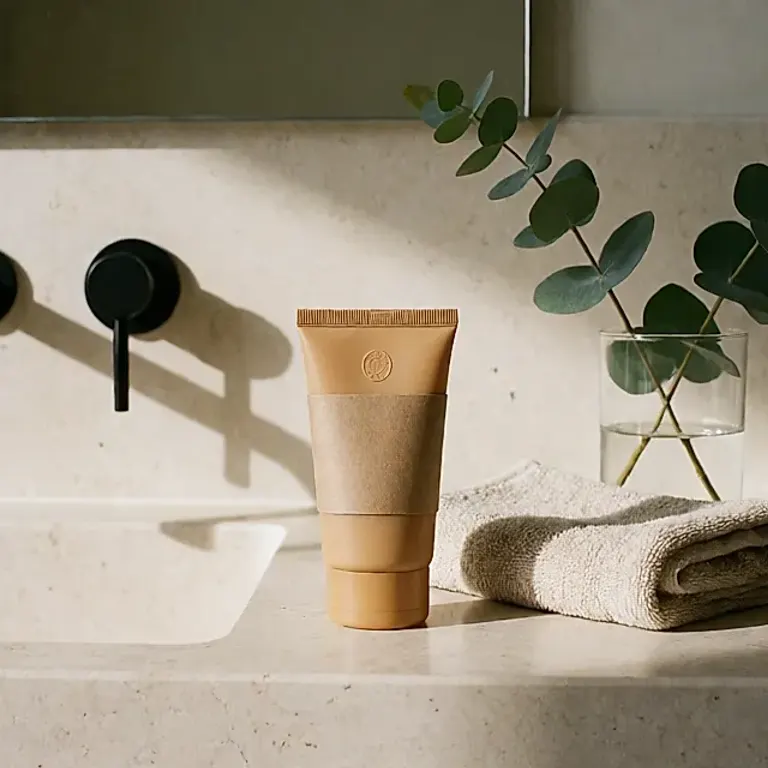
Look at the packaging: 30 to 40 ml, soft tube, screw cap. That's not a packaging detail, it's a statement of intent. You squeeze, you dose, you close it, you throw it in your bag. A tube survives the commute, the shared bathroom, the bottom of the vanity — and it lets the last drops out, which a pump bottle never quite does.
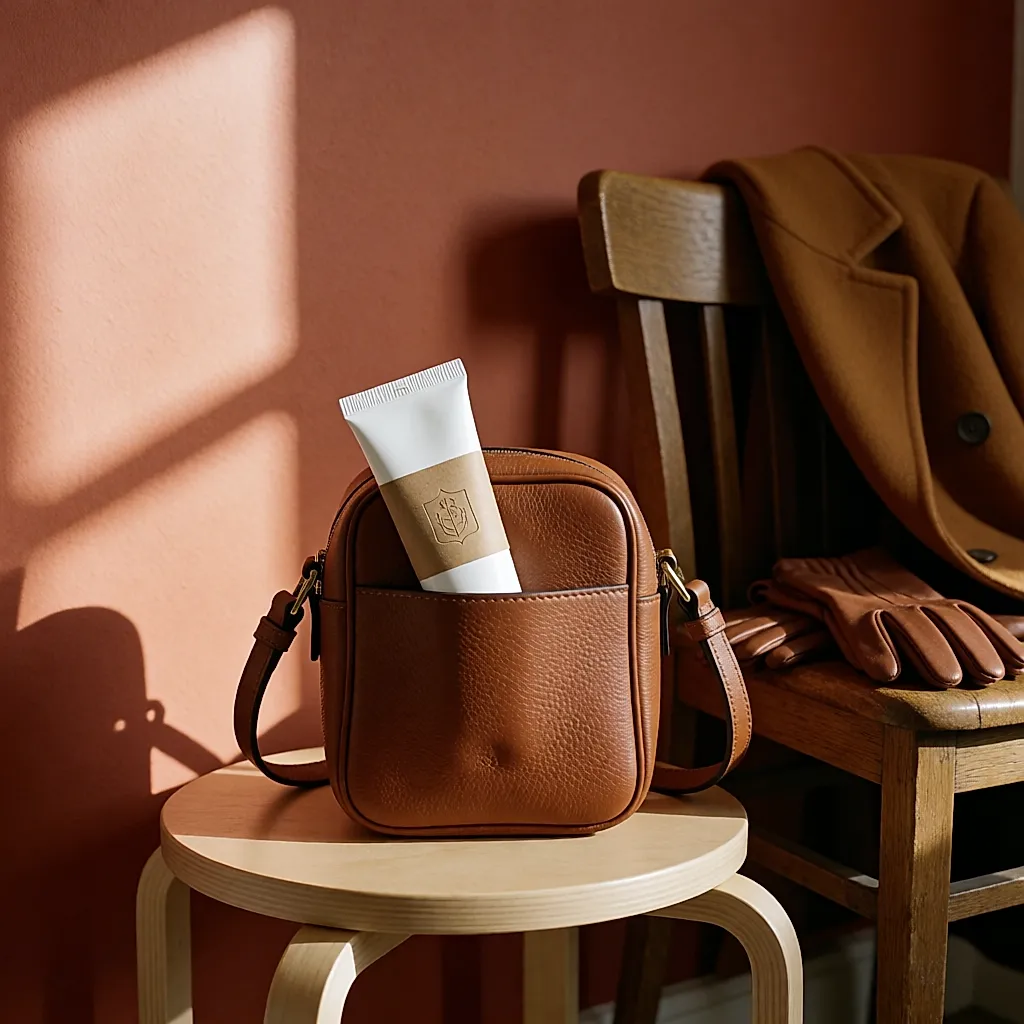
On the environment, be honest with yourself: the soft tube is rarely the most virtuous container, often plastic whose recyclability depends on your local council's collection. Where a refill exists, that's still the best option. Failing that, check the claimed recycled-plastic percentage and the actual volume — a small tube runs out faster than you think.
What to ask of it, and what not to
You want a rested-looking complexion, skin that can breathe, a credible 'not wearing make-up but I look well' in a few minutes? That's exactly its territory. Do you have marked redness, patches to cover, an evening of flash photography ahead? It isn't a foundation, and asking it for the impossible always shows.
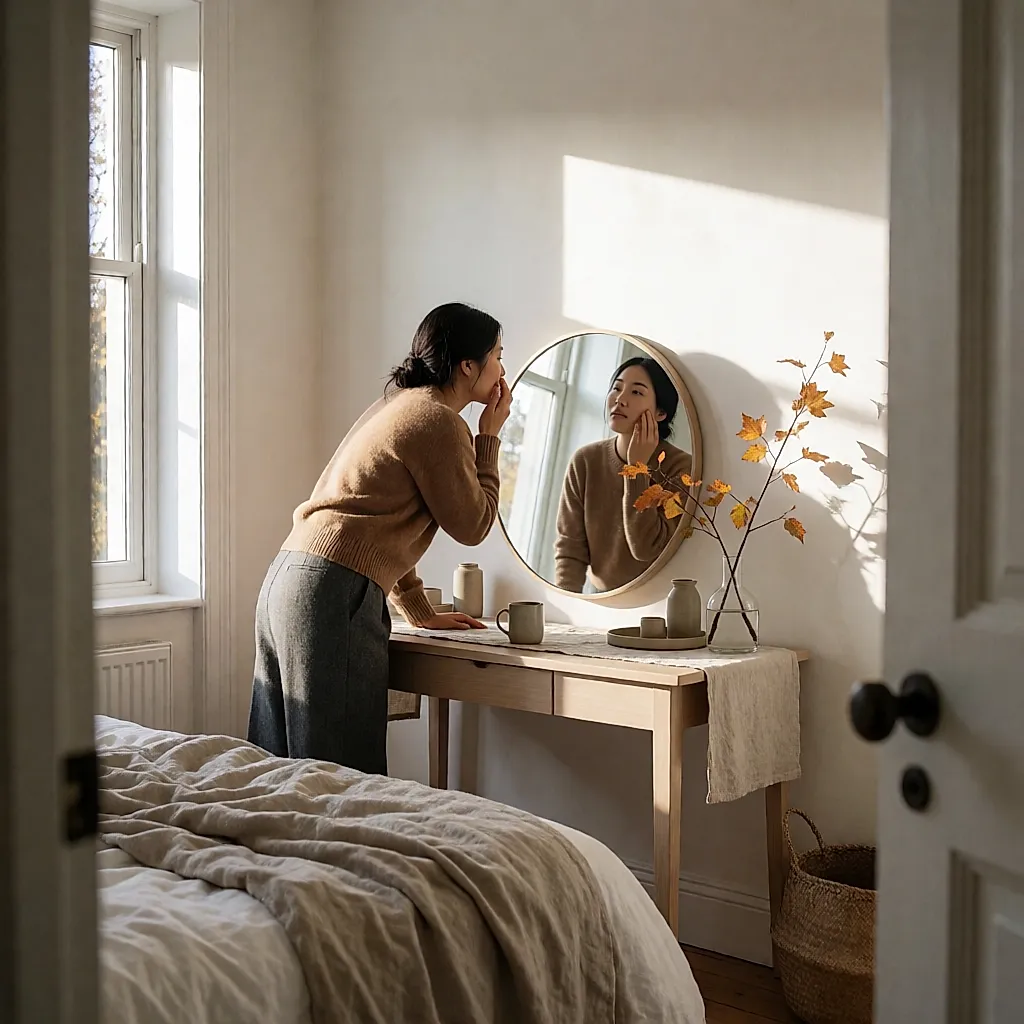
For combination to oily skin, the glowy formula of many tinted moisturisers wants a little powder on the T-zone by late morning; for dry skin, the skincare base is comfortable, provided you don't skip moisturiser. And if there's an SPF number on the tube, remember it doesn't replace a dedicated sunscreen.
Budget
Set aside somewhere between £15 and £35 for 30 to 40 ml, whether you buy from a pharmacy, a beauty retailer or online. Below that, formulas may have fewer actives; above it, you may be paying more for targeted actives, a more refined texture or nicer packaging. In practice, a 30 ml tube lasts around two to three months at one application per working day — that's a rough calculation, not a promise.
Where to buy? A pharmacy or a beauty counter has a real advantage: you can test the texture on the back of your hand and ask for a sample. Online, compare like for like on volume, and be wary of single 'universal' shades.
Always test in daylight, never under shop lighting: draw a stripe along your jawline, step outside, look. That's where undertone mismatches show — and where you avoid walking out with a grey-looking complexion.
One question to ask before you buy: do you want to cover, or to even out? If the answer is 'even out, just enough to look awake', tinted moisturiser does the job with three fingers and one gesture. The only gesture left when you've got five minutes, really — and it fits in a tube.

Comments
Your opinion matters: rate the article, react and reply to comments.
Comments are moderated; AI-assisted comments are flagged. Text emoticons (8-), :-), <3…) are automatically shown as images.