
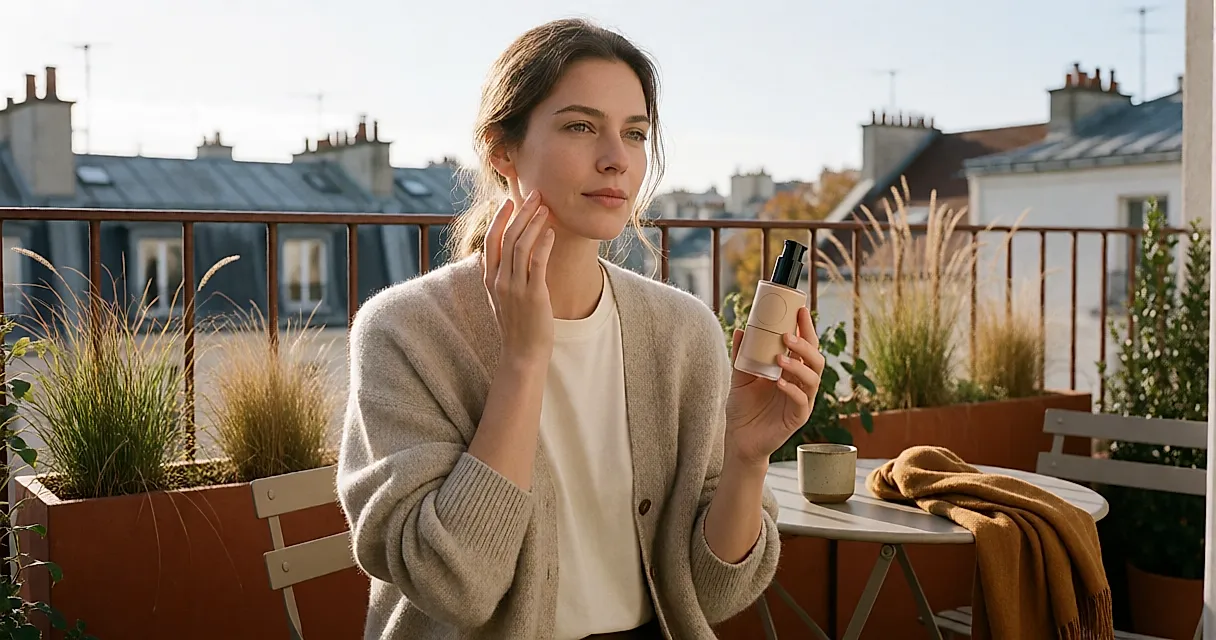
A foundation and a tinted moisturiser do not answer the same request, and it is not a hierarchy — it is a trade-off. Before you start comparing brands, there is a more useful question to ask yourself: what do you actually want, a finish and an undertone that match, or a skincare step that also evens things out?
Two jobs, two ways of building a formula
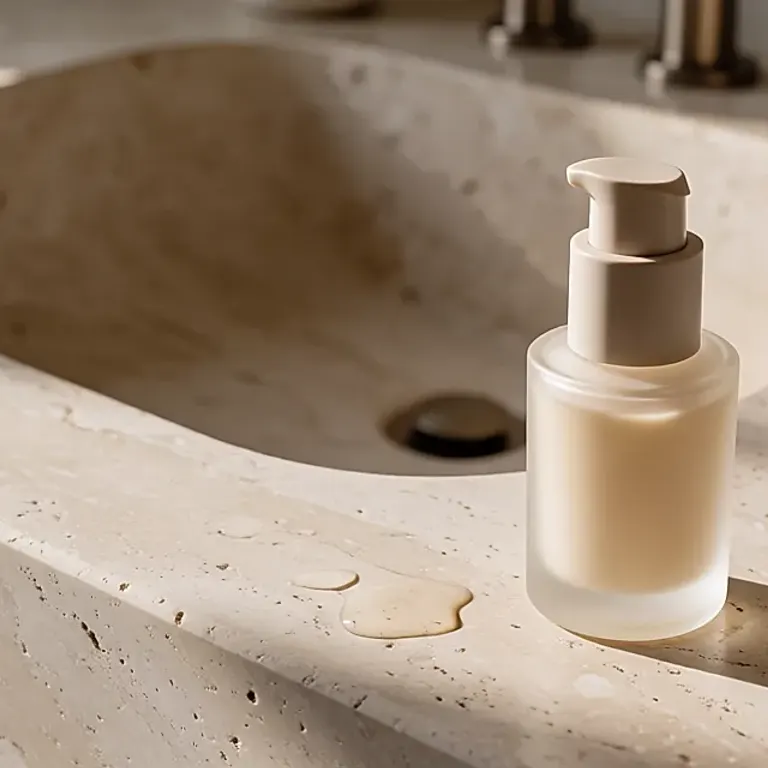
A classic foundation has a brief that is easy to state and hard to deliver: even everything out. So it carries pigment and fillers in real quantity, in a base — water, oils, depending on the formula — that decides how it looks on skin. A tinted moisturiser starts from the other end of the chain: less pigment, more skincare, and coverage that stays light. A veil, then, with all the limits that implies.
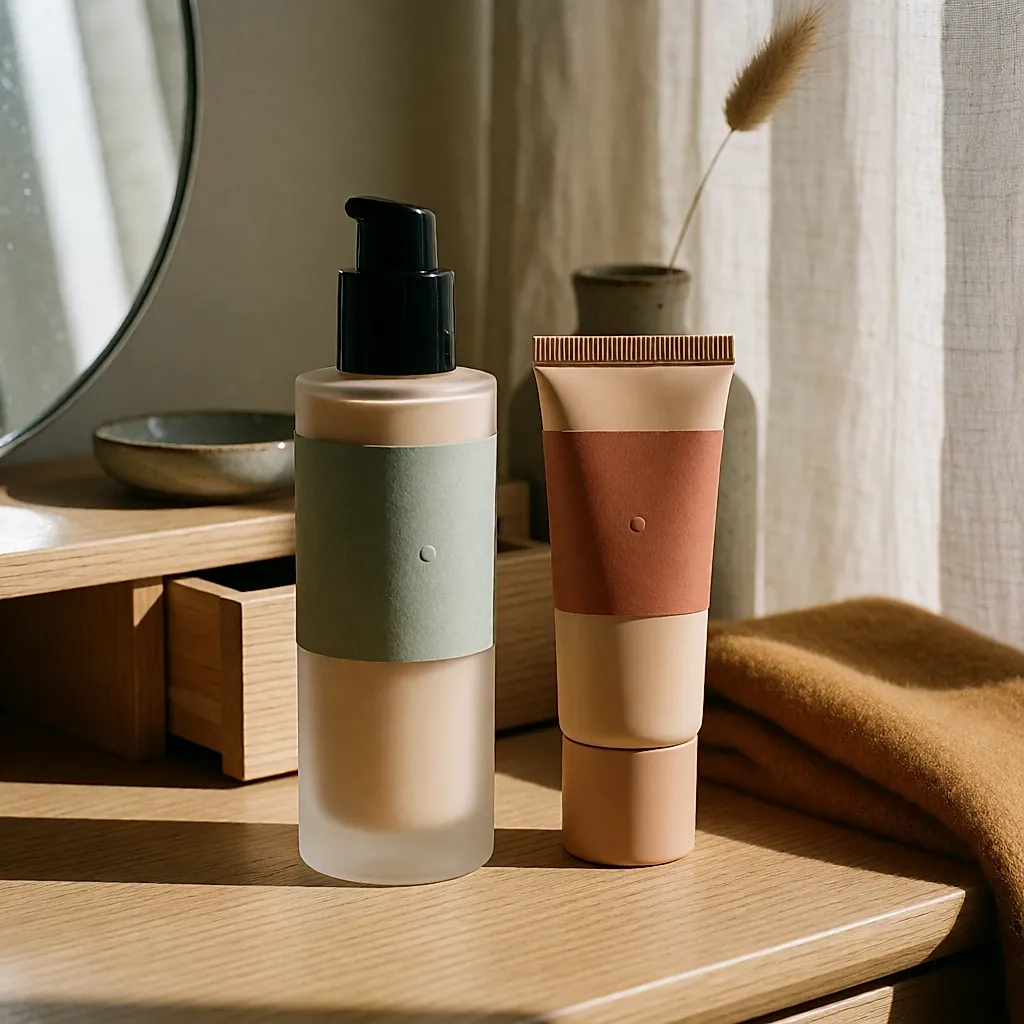
The consequence is very practical. Ask a tinted moisturiser to erase a stubborn red patch and you will end up layering it, and layering shows. Ask a full-coverage foundation for the transparency of a skin tint and you will have to dilute it — having paid a lot for a texture you will never use the way it was designed. Each has its moment: the tinted moisturiser for days when you simply want skin that looks rested, the foundation for the Monday when the alarm came too early.
Undertone before brand
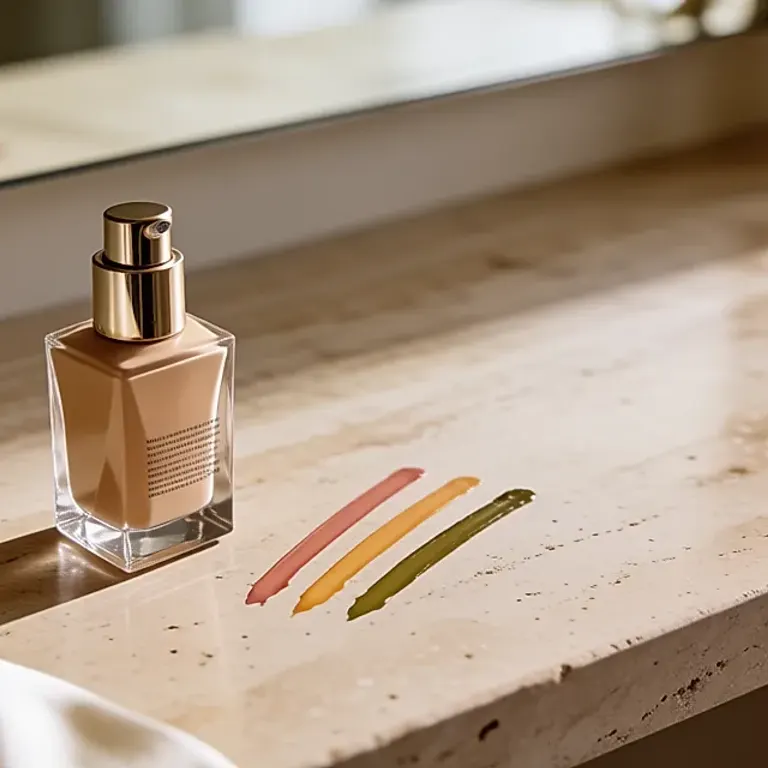
It is the variable the beauty hall mentions last, and it is the one that decides everything. A pink undertone on yellow-toned skin and the face turns to mask; the reverse, and you look faintly unwell. The rule that works: test on the jawline, in daylight, never on the back of the hand — darker than your face and perfectly happy to mislead you.
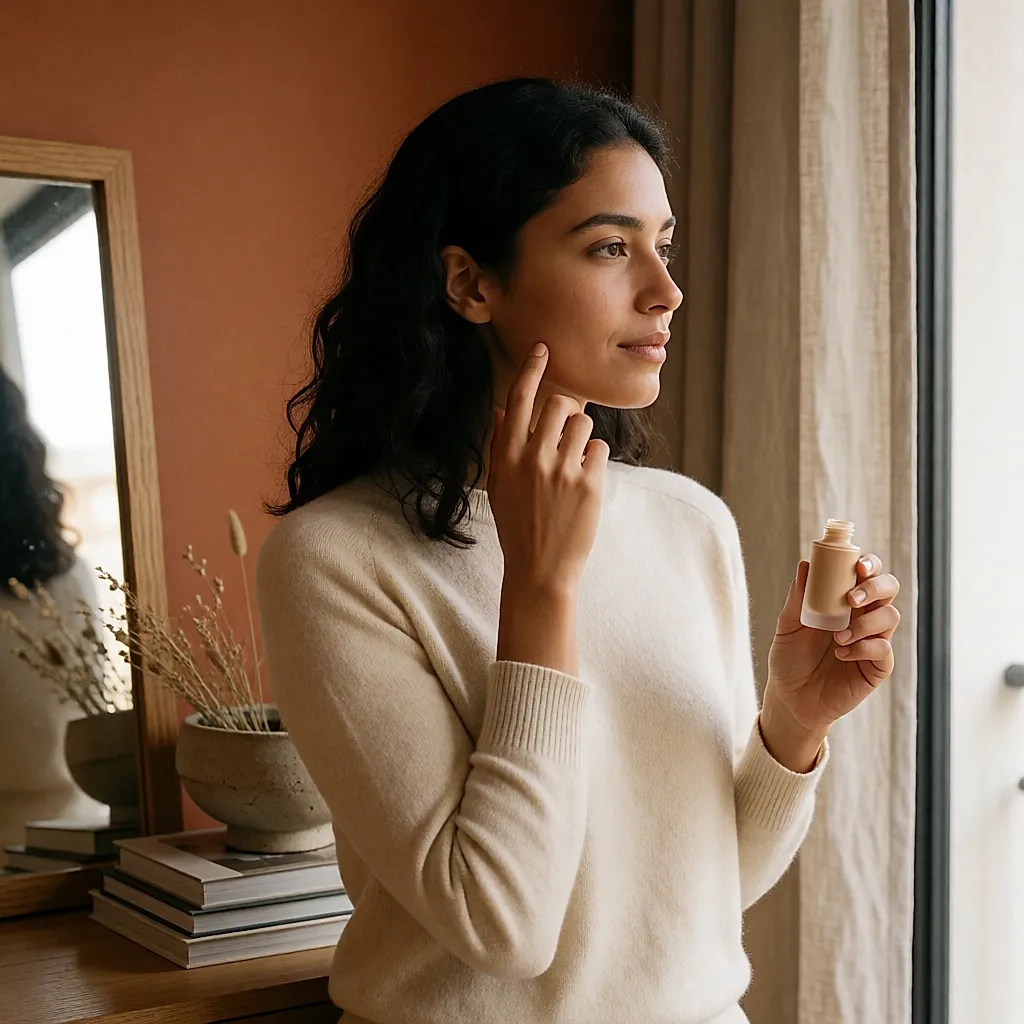
Next comes finish, and honestly, your life decides that one. A matte chosen for a June wedding can set like cement in February. If you powder already, a satin finish is enough; if you never powder, a very glowy foundation will shine by noon on combination skin. And a good counter assistant will let you walk out with the shade on half your face — if they will not, go to another counter.
Does the name on the bottle tell you anything about wear?
A little, but not what people assume. When a dermo-cosmetics house such as La Roche-Posay launches a foundation, it slots it into the continuity of its skincare: the first promise is often tolerance. With Chanel, the first promise is often a finish and a shade. So where a formula comes from tells you about its priorities — not about how it holds up at 6pm.
What really decides is your skin (combination, dry, dehydrated), your base, the day's humidity and how much you apply. Combination skin will hold an oil-free foundation better; dry skin may find a matte formula settles into patches after a few hours. Nobody can promise you eight hours down your nose, and a brand that claims it is talking about lab conditions, not your 8.12am Tube. I will not pretend I know every shade on the market: nobody does, in reality.
The test that costs nothing: ask for samples of two neighbouring shades, put one on each half of your jawline, and look at yourself in daylight late in the afternoon. If you can see the boundary, the shade is wrong. If it disappears, you have found your undertone — and now you can compare brands properly.
What you will pay
On price, the rough brackets do not move much: expect around £10 to £25 at a pharmacy or supermarket, £18 to £35 for a tinted moisturiser from a skincare brand, and £30 to £55 at a department store counter. The price climbs with the range and the number of shades, not necessarily with wear time; a more expensive bottle is not one that lasts longer.
Where to buy? A pharmacy for formulas built around tolerance, a department store counter for colour advice and samples, a supermarket or high-street retailer for an emergency replacement. Some brands sell refills: check their official site, because it varies by range and from one year to the next. And bear in mind that, in practice, depending on how much you use and how often, a 30 ml bottle can last several months.
On the eco side, be sceptical of the words: 'natural' means nothing precise. Look for a certification (COSMOS Organic, for instance), a refill, a glass bottle. Certified organic foundations are still not common on the shelves, and that is not a disaster: better a formula you finish than a pot abandoned at the back of a drawer.
The one thing to hold on to when you have five minutes: undertone first, finish second, the brand last. The rest is counter chat.
Comments
Your opinion matters: rate the article, react and reply to comments.
Comments are moderated; AI-assisted comments are flagged. Text emoticons (8-), :-), <3…) are automatically shown as images.