
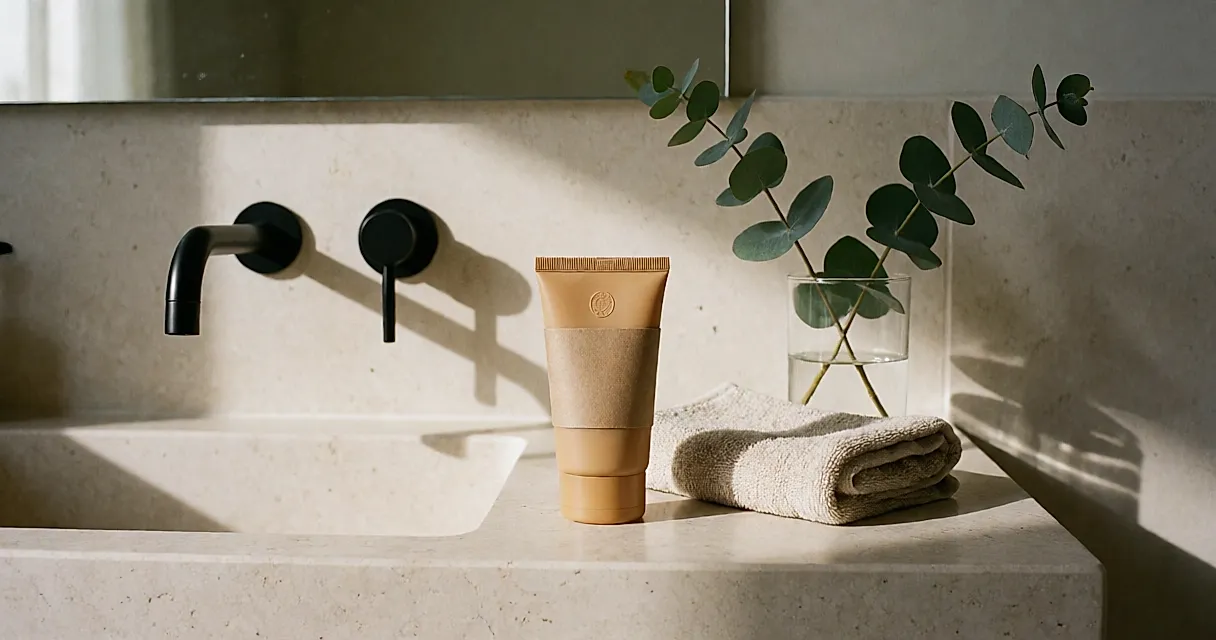
Tinted moisturiser has an embarrassing talent: it makes everything look sorted. A pea-sized amount, and your skin would be treated, evened out and protected. Except that as soon as a tinted moisturiser contains niacinamide, a vitamin C derivative or a sunscreen filter, it is no longer a solo step — it joins a queue. And in a queue, order matters as much as the number of people in it.
What your tinted moisturiser is already doing for you
A 'skincare' tinted moisturiser is neither a watered-down foundation nor a tinted serum: it is a product claiming two jobs in one tube. Hence the hesitation when you apply it. You are applying colour, so you think makeup; you are applying skincare, so you think actives. The two instincts contradict each other, and it is almost always the top layer that makes the call for all the others.
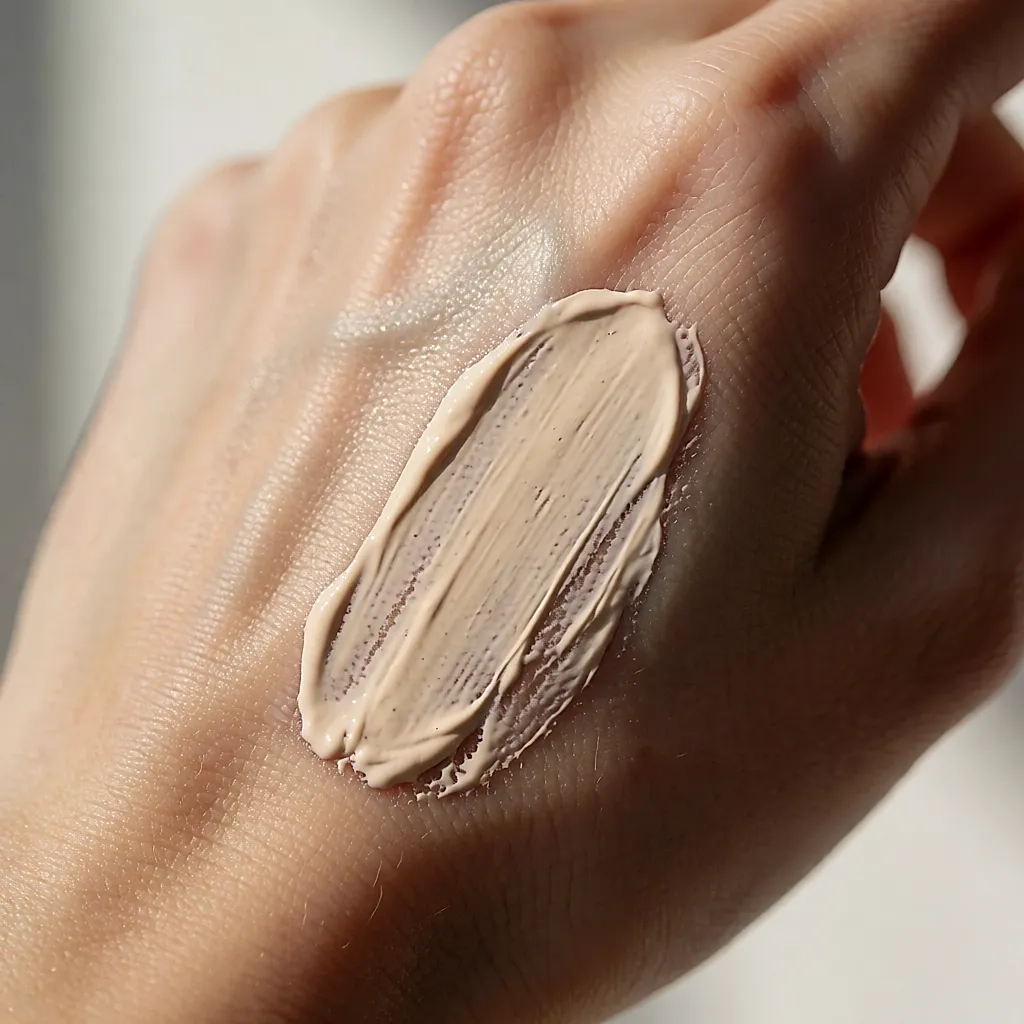
The first clue is not on the instructions; it shows up mid-morning: pilling that rolls under your fingers, little bits of fluff above your cheekbones. It is rarely your skin peeling; more often, the layering has not settled. A rich serum, a hydrating fluid and then a tinted moisturiser: that is three layers competing for the same space.
Before you start, decide what stays underneath and what can go
The basics do not change: cleansed skin, and moisturiser if your skin feels tight. What changes is the guest list. Before the tinted moisturiser, ask the question of every layer: is this product giving me something the tinted moisturiser does not already contain? If the answer is 'nothing certain', that layer can wait until tomorrow night.

Then there is the sun protection question, the one place where caution is essential. An SPF stated on a tinted moisturiser is no substitute for sunscreen applied in a generous quantity: in practice, the amount many of us spread on is often closer to a pea-sized amount than to the generous dose testing assumes. If you are counting on your tinted moisturiser for a July lunch outside, keep a separate sunscreen. The tinted moisturiser, meanwhile, can look lovely on top.
How to spot an overlap in two minutes
Take a piece of paper (or the notes app; no judgement) and list what your products do: hydrate, soothe, exfoliate, brighten, mattify, protect. Then list what the tinted moisturiser contains. And there it is: the same job twice. The classic: a 'glow' serum under a tinted moisturiser that already promises glow.

What are the warning signs? Skin that feels tight at midday, tingling when you apply it, colour that slides off in patches as soon as you touch your face. It is hard to be categorical from a distance: these symptoms can come from elsewhere, from the season, from a change in water. But before blaming a product, count the layers. We will not pretend one layer is always enough — simply, layering the same job twice does not necessarily add a benefit, and it muddies the picture: if it works, you will not know what to credit.
When to keep two steps separate
There are times when the all-in-one tube loses outright. At night, first: you do not need colour to sleep, so treatment follows its own life, with its own dose and rhythm. Then, whenever an active needs a dosage that cannot be improvised inside a coloured product — an exfoliating product, a targeted treatment, a prescription treatment — and there your healthcare professional decides, not us.

Third case, more common than you might think: reactive skin, or a period when you want to test one product at a time. A tinted moisturiser that already contains actives can make the experiment harder to read. You react: is it the tinted moisturiser, the serum, the layering? With two separate steps, you will know what you are dealing with.
What it costs
Expect roughly £8 to £30 for a tinted moisturiser in a UK pharmacy or beauty retailer, and less in a supermarket for a basic version; the range moves with size, location and line. A separate serum is usually an extra cost, at roughly £15 to £45, with real differences depending on the stated concentration.
The clever calculation is not the one you expect. An all-in tinted moisturiser can sometimes cost less than two separate products… until you realise it suits neither summer nor evening. The right question is how many steps this tube actually saves you. If the answer is 'half', you are paying for a hybrid you will use part-time.
The two-hands test: apply your tinted moisturiser to the back of one hand with nothing underneath. The next day, on the same hand, use your usual serum underneath first. Compare how it wears at midday and how comfortable it feels by the end of the day. Two days, one answer — and possibly one layer fewer.
At heart, tinted moisturiser is not a problem: it is a shortcut, and shortcuts are excellent when you know where they lead. So read the label, count the jobs, and keep two steps where precision pays. The rest of the time, one well-chosen layer does the job very nicely — and leaves five minutes for coffee.


Comments
Your opinion matters: rate the article, react and reply to comments.
Comments are moderated; AI-assisted comments are flagged. Text emoticons (8-), :-), <3…) are automatically shown as images.