

“My new straighteners leave rough, tuggy sections, yet at the salon it’s glossy.” This reader’s message arrived this week, and it immediately struck a chord. I asked her two questions: what temperature she was using, and what state her hair was in when she passed the iron through. Answer: 230°C, and hair that was “just a bit damp”. We have our culprit. The straighteners are barely to blame — it’s the technique that needs a rethink.
Before the plates: the formulation
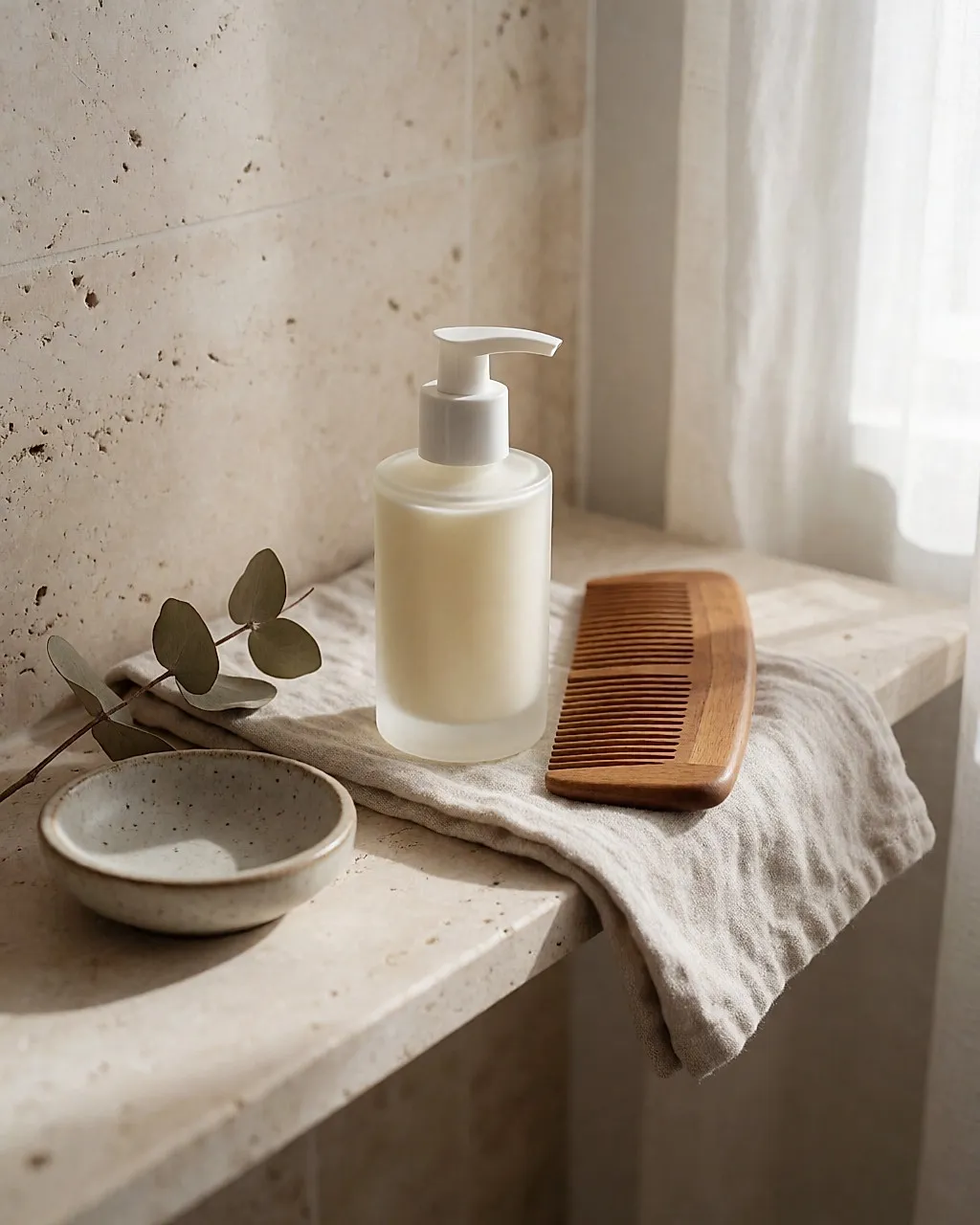
A smooth finish is won first by what you apply before you plug anything in. Heat protectant isn’t a marketing line: it leaves a film that helps the plates glide and reduces friction — one of the factors that abrades the cuticle. For texture, match it to your hair type. A fluid serum for fine hair that gets weighed down quickly, a richer milk or cream for thick or curly hair.
For labels, keep two reference points. The COSMOS standard, run by European certifiers including Ecocert, governs natural and organic cosmetics: it sets minimum levels of naturally derived ingredients and, for the Organic wording, a minimum proportion of organic ingredients. It certifies a formulation, not a straightening result — that nuance matters; no label promises sleek hair. Look at the packaging too: refills, glass, card. It’s often an easy criterion to consider.
The pre-drying ritual
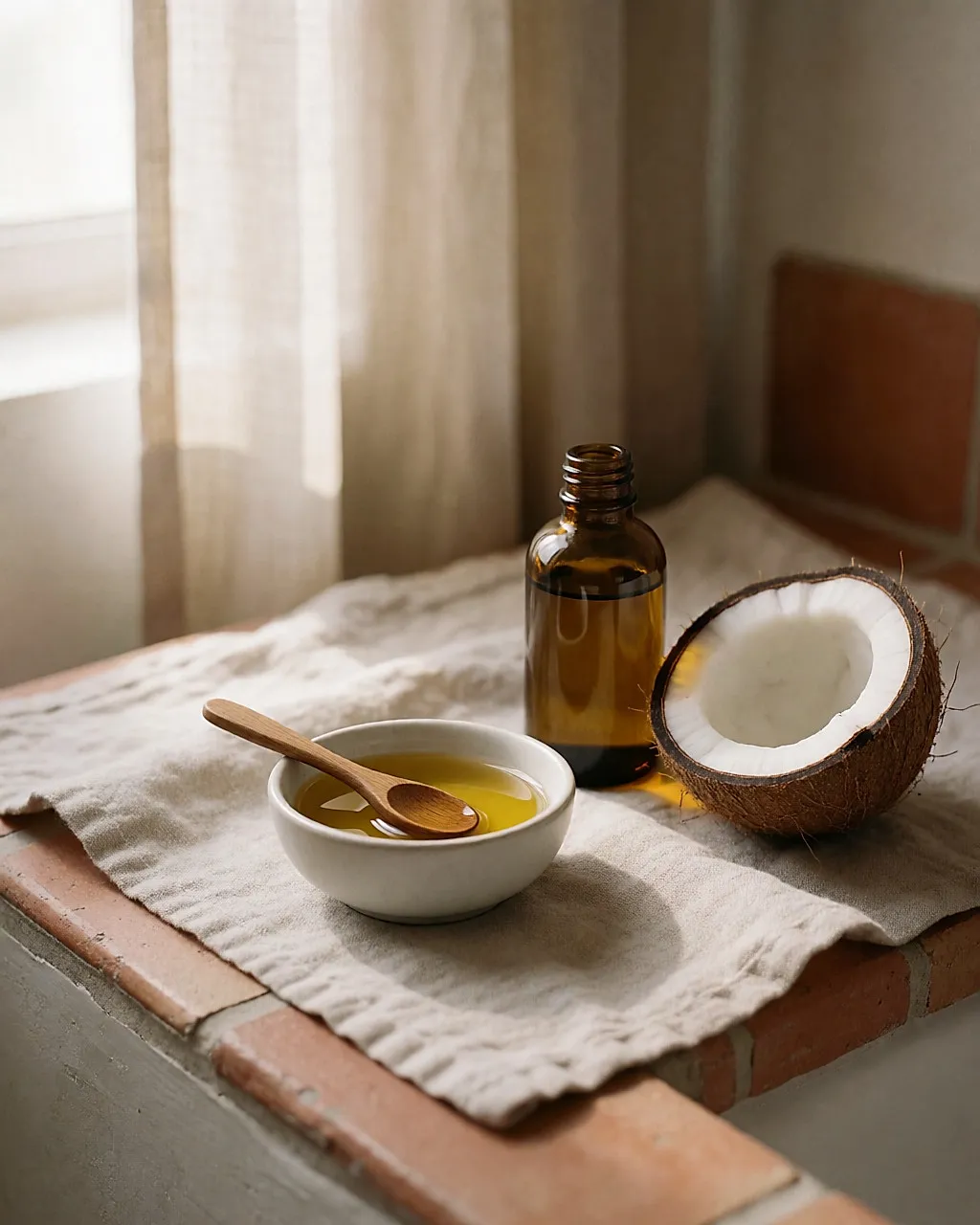
An oil treatment before shampooing, left for half an hour on the mid-lengths and ends, is still a good habit. Coconut or argan, for example, are among the oils often recommended to nourish hair. Follow with a gentle shampoo and a conditioning mask, then rinse with lukewarm water.
Then, on towel-dried hair, apply a hazelnut-sized amount of smoothing serum to the mid-lengths and ends only. Roots don’t need it. Then dry it completely. Passing damp hair through straighteners turns water into steam beneath the cuticle: this is sometimes called bubble hair, which weakens the fibre. No heat protectant can replace drying it completely.
Using the straighteners
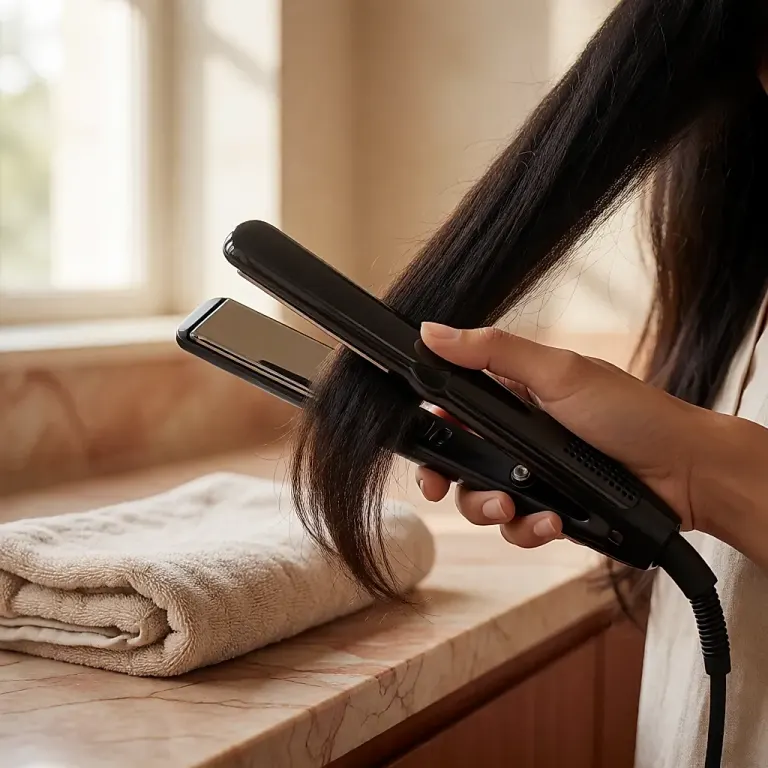
Detangle with a wide-tooth comb. Clip up the top section and release the sections at the nape. Work from the bottom up, letting down more hair as you go.
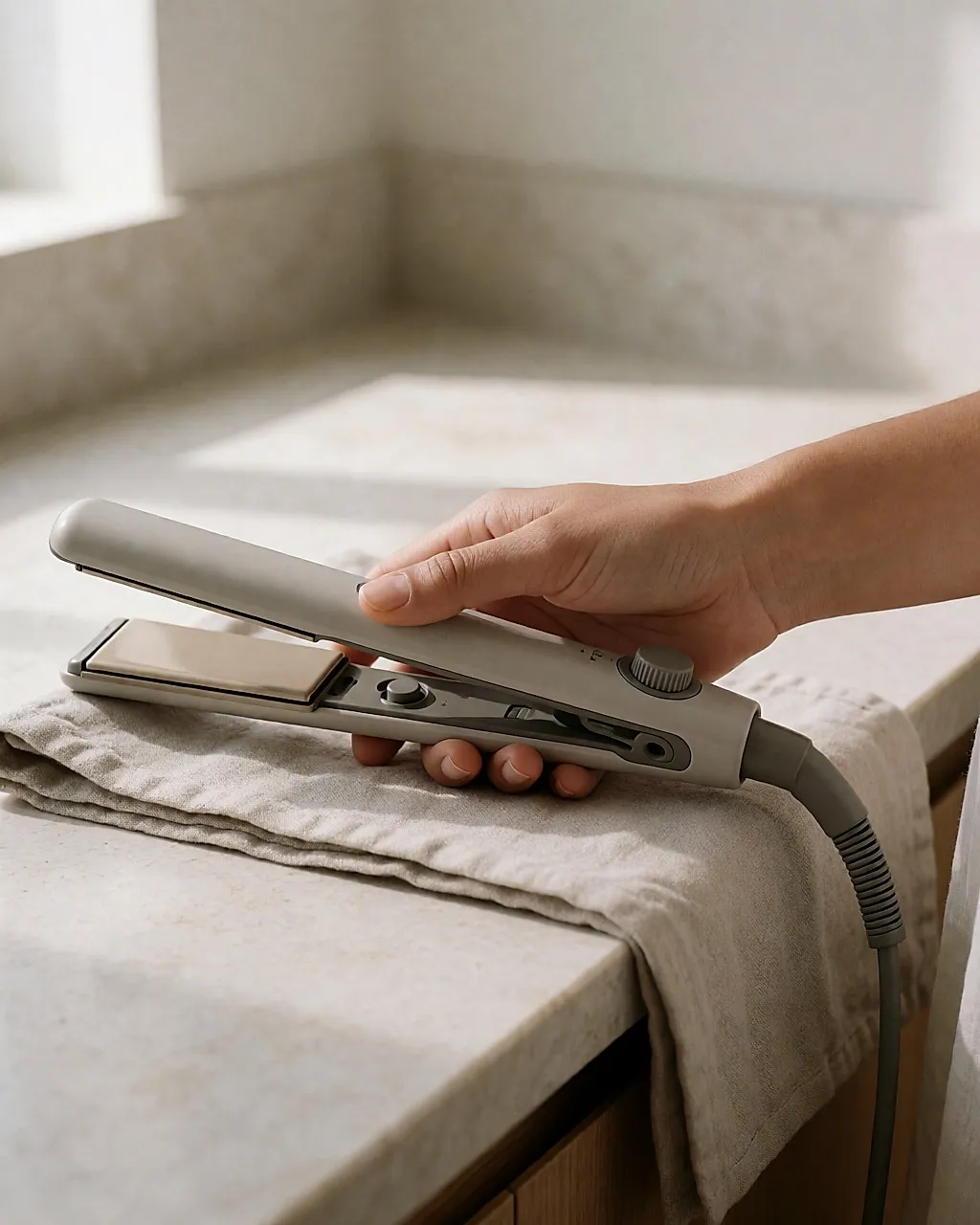
Three settings make the difference: fine sections, no more than two fingers wide; one slow pass; a sensible temperature. Start at 150°C on fine or coloured hair, go up to 170–180°C if the hair resists. Above 200°C, the risk of weakening the fibre rises sharply. If you have a flat brush, glide the plates just behind it: the tension does the work for them. To finish, emulsify a drop of serum between your palms and smooth over the ends, and use a light hairspray at a distance if you want it to last the day.
Quick test before turning up the heat: straighten a two-centimetre test section at the nape. If it stays supple and glossy, keep that setting. If it crackles under your fingers, go down ten degrees.
Budget
When it comes to straighteners, no device is truly ‘eco’. The sensible compromise is a pair of straighteners you’ll keep for years: a long warranty, available spare parts, a cord long enough that you don’t have to tug at it.
- Straighteners: £17–35 at the budget end (supermarkets and high street), £50–110 for an accessible haircare brand, £130–215 for a professional brand. Cordless models start much higher — I haven’t tested them, I mention them only to give a sense of the range. What changes the price: accurate temperature control, the type of plates, the warranty.
- Heat protectant: £7–17 in supermarkets or pharmacies, £17–35 for a salon brand.
- Conditioning mask: £4–13 in supermarkets, £13–30 in professional ranges.
- Organic plant oil: £7–17 for 50–100 ml.
- Flat bristle brush: £9–25.
Where to buy: salons or professional hair wholesalers for pro brands; beauty halls and pharmacies for care; supermarkets and high street for the rest. Online, stay alert to counterfeit straighteners, regularly reported on marketplaces.
Sources
- UK Cosmetics Regulation — GOV.UK
- Office for Product Safety and Standards, cosmetics guidance — gov.uk
- COSMOS-standard — cosmos-standard.org
- WRAP, responsible consumption guides — wrap.ngo

Comments
Your opinion matters: rate the article, react and reply to comments.
Comments are moderated; AI-assisted comments are flagged. Text emoticons (8-), :-), <3…) are automatically shown as images.