

How permanent hair straightening works
Frizzy, curly, wavy and stubbornly fluffy hair — sound familiar? The long, glossy manes you see in adverts can feel like pure fantasy. Not so fast. A straightening technique "made in Japan" has quietly bedded in over here in recent years: permanent hair straightening. The idea is simple enough — smooth most hair types for the long haul.
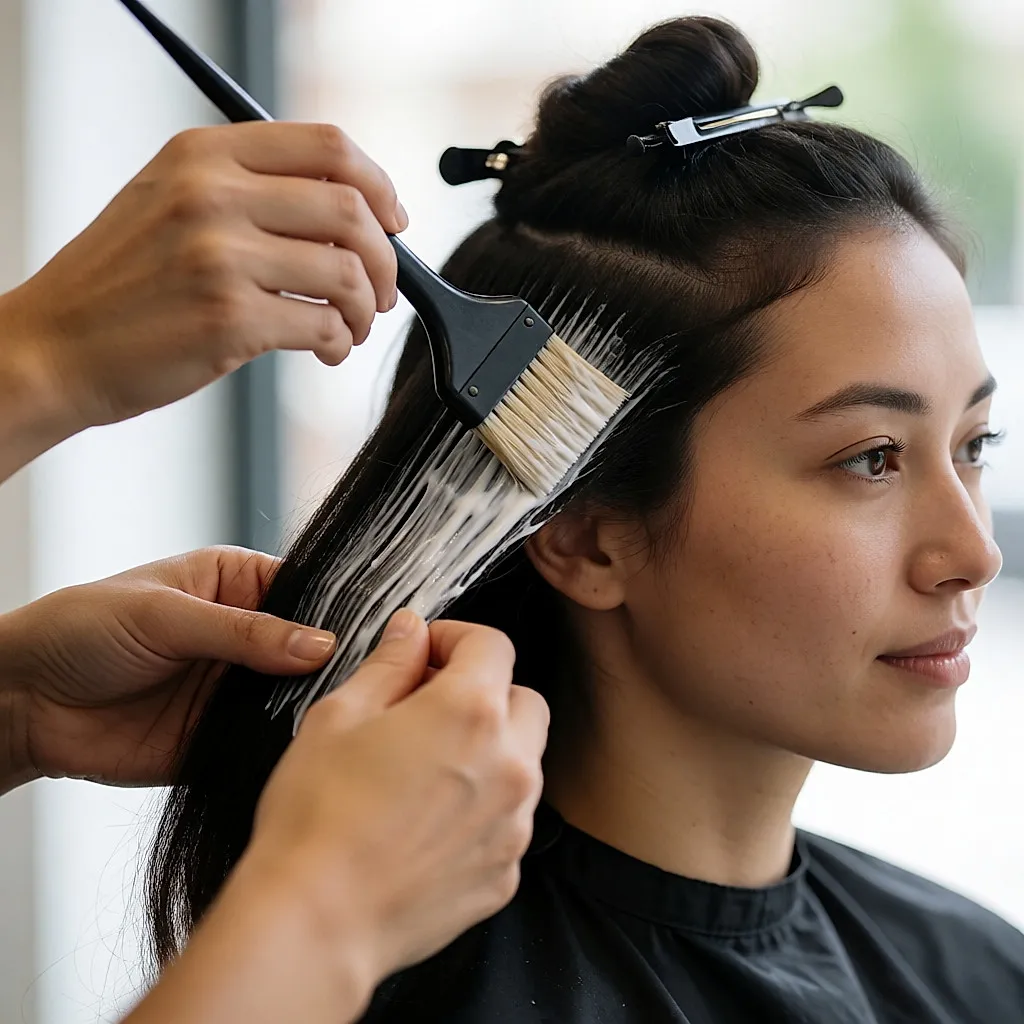
The hair is treated in the salon — set aside a good half-day. The treatment chemically alters the hair's internal structure (the disulphide bonds) to give it a long-lasting smooth shape; the cuticles may look smoother too, but that isn't the main mechanism. The effect survives shampooing and generally holds up to humidity, though results vary, and untreated roots grow back with their natural texture.
Sounds lovely? It can be, especially if you currently do battle every morning with heat tools and a fresh round of frustration over frizz. With the Japanese technique, you claw back time, save your energy, and your hair more or less styles itself.
The catch
And yes, it's true: anything that sounds too good usually has a few weak spots, and permanent straightening is no exception.

The first weak spot? Permanent straightening can't be done on highlighted hair. It doesn't matter if your highlights have since been covered over with tint, colour or anything else: unless they've fully grown out and been cut off, the treatment can't go ahead.
Why the hard line? For your sake. Permanent straightening on highlighted hair produces a poor result: hair that's frizzier and drier than it is straight, because the two processes simply don't get on.
Permanent straightening is a chemical treatment: it alters the fibre along its whole length, and it doesn't wash out. Before you commit, ask for a strand test and make sure your stylist is experienced in the technique — on bleached, very damaged or weakened hair, it's often best to leave well alone.
The second catch is a big one too: permanent straightening is expensive, and prices vary widely from salon to salon and with the length of your hair. So not everyone can afford the dazzling, TV-heroine mane — at least not until a good chunk of hair has grown out and they've saved up for a few months.
How long does it last?
How long it lasts varies a lot; the result holds for several months, until regrowth makes a touch-up necessary — often after a few months. Only the new roots show their true texture: hair that has been straightened stays straight.
What it costs
On price, expect somewhere in the region of £150 to £500 depending on length, hair density and the salon you choose — big-city salons tend to charge more. The service usually includes the consultation, the application, the straightening and a finishing treatment. Ask for a detailed quote before you settle into the chair: application time, which is longer on thick hair, is part of the bill too.


Comments
Your opinion matters: rate the article, react and reply to comments.
Comments are moderated; AI-assisted comments are flagged. Text emoticons (8-), :-), <3…) are automatically shown as images.