
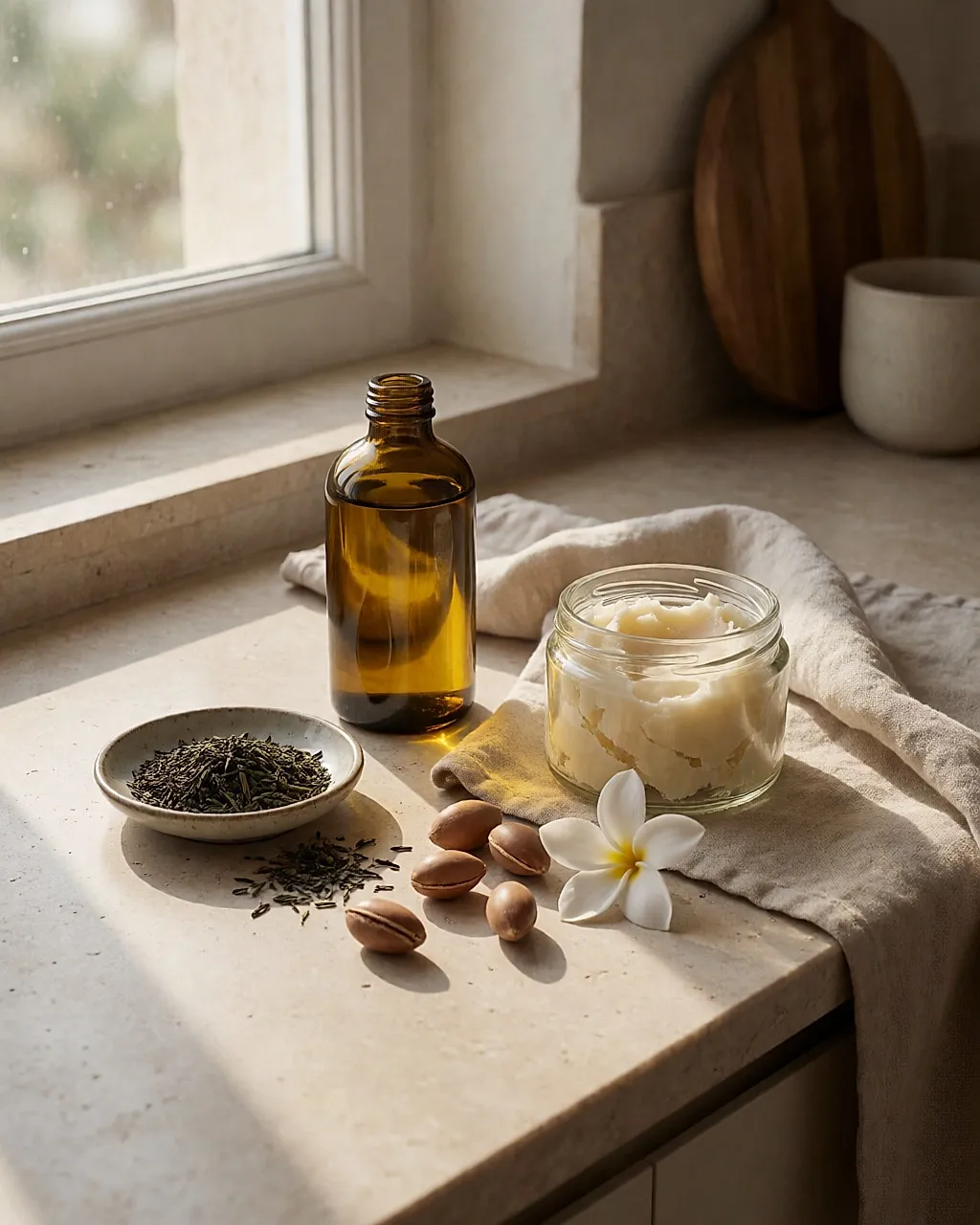
Last week I helped a friend clear out her bathroom before she moved. Final count: eleven half-used bottles, including a monoï oil bought for a summer in Biarritz and never opened again. What she actually reached for every day? One oil, one butter and a bit of method.
Plant-based cosmetics were doing their job long before marketing got involved, and they don't need invented superpowers. You do still need to know which one to pick, how to apply it, and what you can honestly expect from it.
Why a plant can't do the work on its own
A fat doesn't add water to your skin: it forms a film that limits water loss, which is the emollient and occlusive effect. A plant oil soothes tightness, but it won't rehydrate a dehydrated epidermis. For that you need a humectant (glycerine, hyaluronic acid) with the oil on top to seal it in. Butter, being denser, seals even better, at the risk of smothering combination skin.
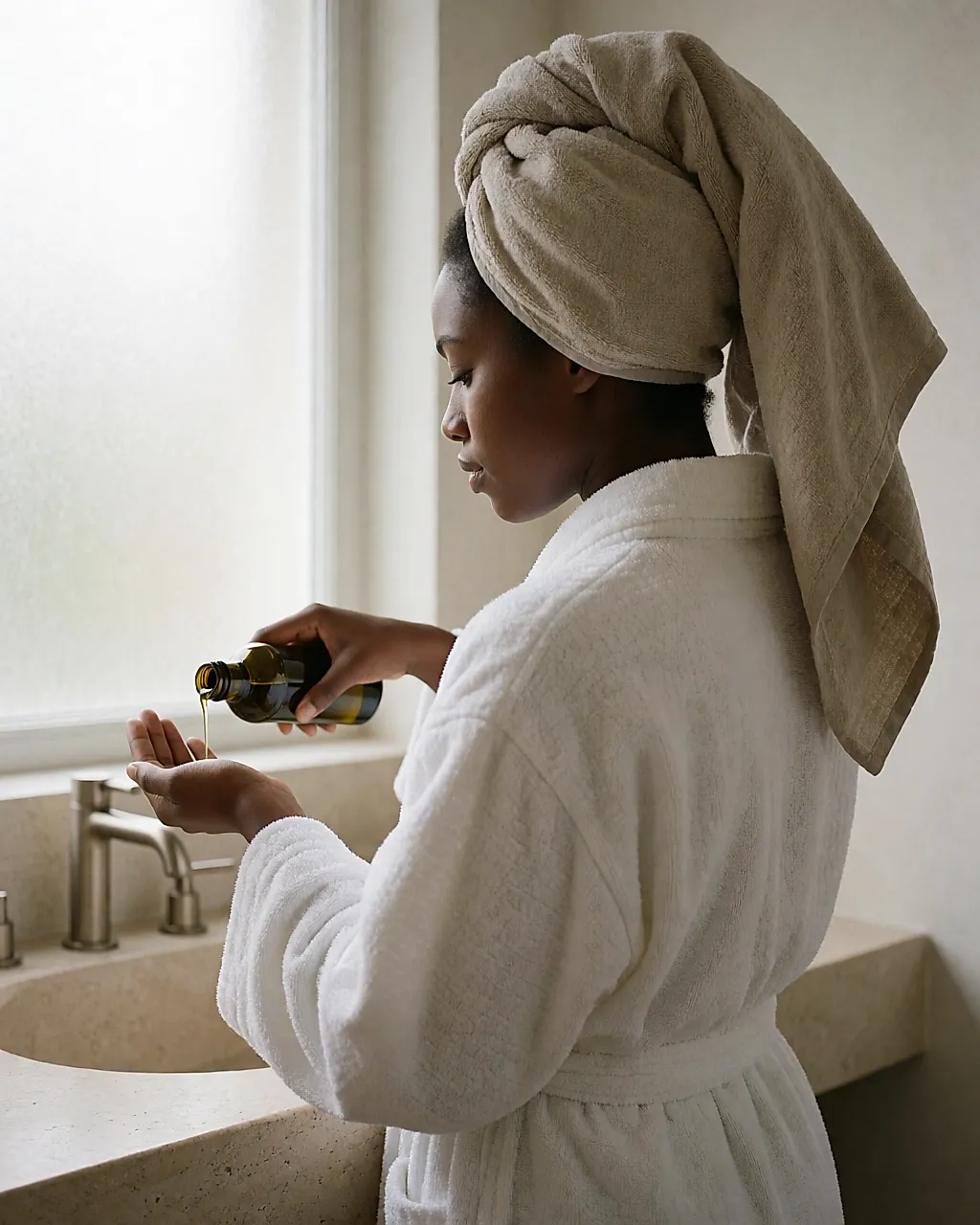
The one habit worth adopting: apply your oil while your skin is still damp, straight after a shower. You usually get through less and it spreads far more easily.
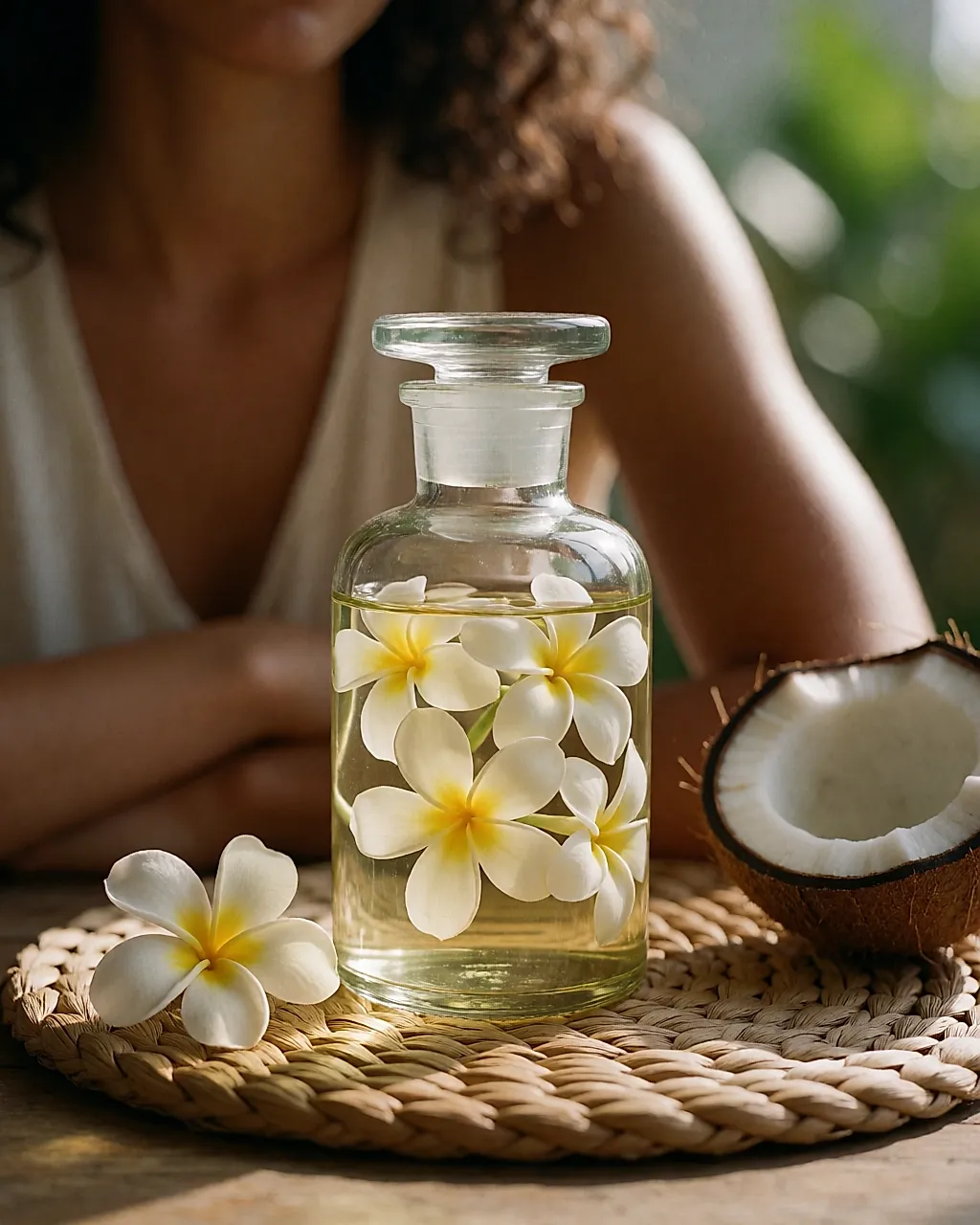
Monoï de Tahiti is for hair, not for lying on the sand
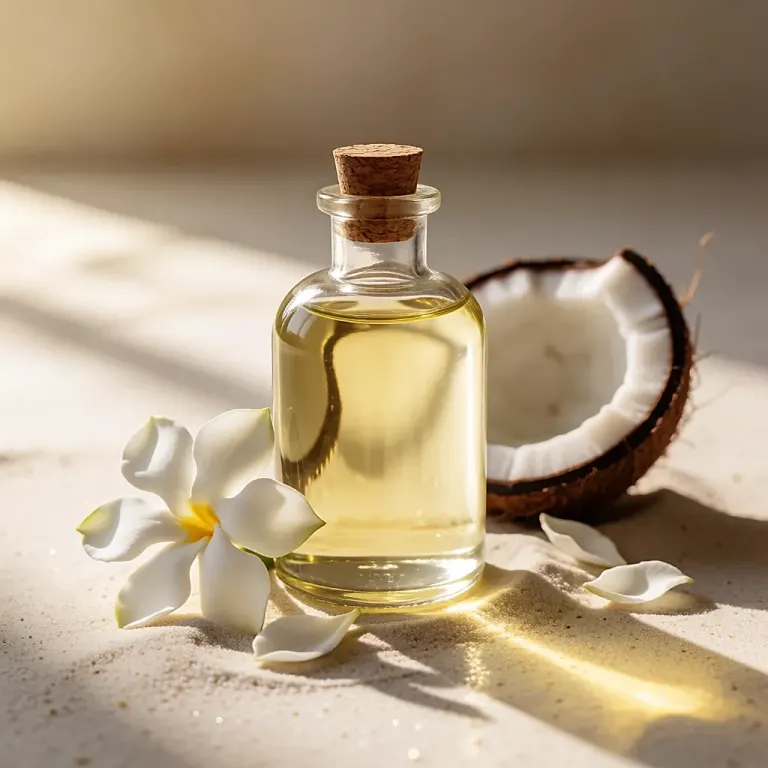
Real monoï is fresh tiare flowers steeped in refined coconut oil. The name "Monoï de Tahiti" has protected status in France: an oil that is merely scented with tiare doesn't qualify, so check the exact wording on the label rather than the pretty beach illustration.
Its original job was never to make you tan. As a pre-shampoo oil treatment, or massaged into the bits that feel tight, such as elbows and heels, it does the job very well. Oil plus sun, though, means sunburn sooner: it offers no real sun protection, and an SPF is still essential if you're going to be out in it.
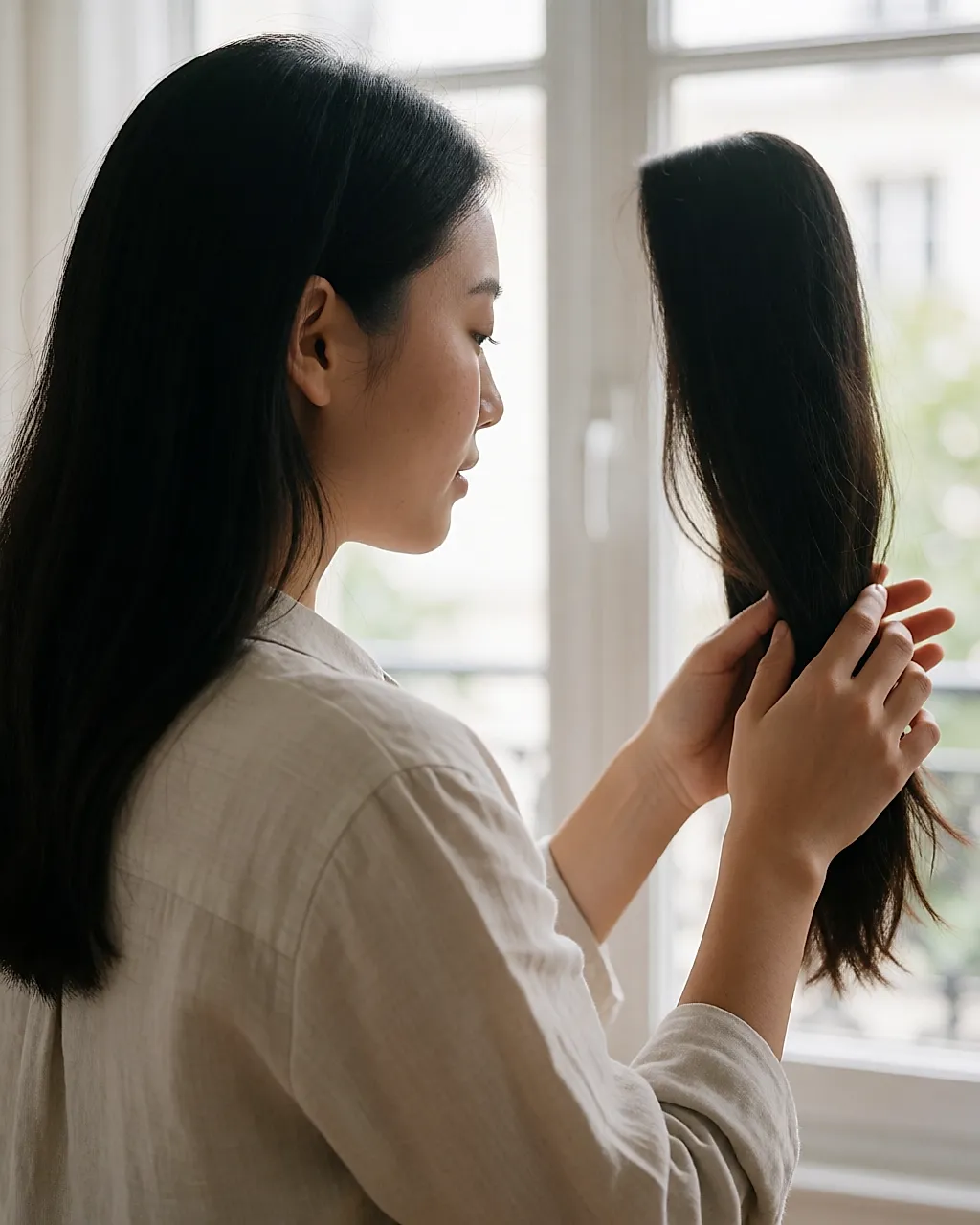
Argan brings comfort, not a facelift
Argan oil comes from southern Morocco, where the argan grove is a UNESCO biosphere reserve and where women's cooperatives play an important role. Cold-pressed, rich in unsaturated fatty acids and vitamin E, it has a fine texture that can suit reactive skin well.
What you can honestly expect: suppleness, comfort, a skin barrier that feels less easily irritated. When you buy, look for "Argania Spinosa Kernel Oil" near the top of the INCI list and a tinted glass bottle, which protects the oil from light better. Some "argan" serums are mostly other oils, often cheaper ones.
Shea butter for hands, lips and dry ends
Shea grows in West Africa and is still largely gathered wild: the tree takes many years to produce its first fruit. Raw butter keeps its unsaponifiables and its thick texture, and on lips, hands, heels and dry ends it's a classic that doesn't disappoint. On the face, a pea-sized amount is enough, and it's best avoided if your skin is oily.
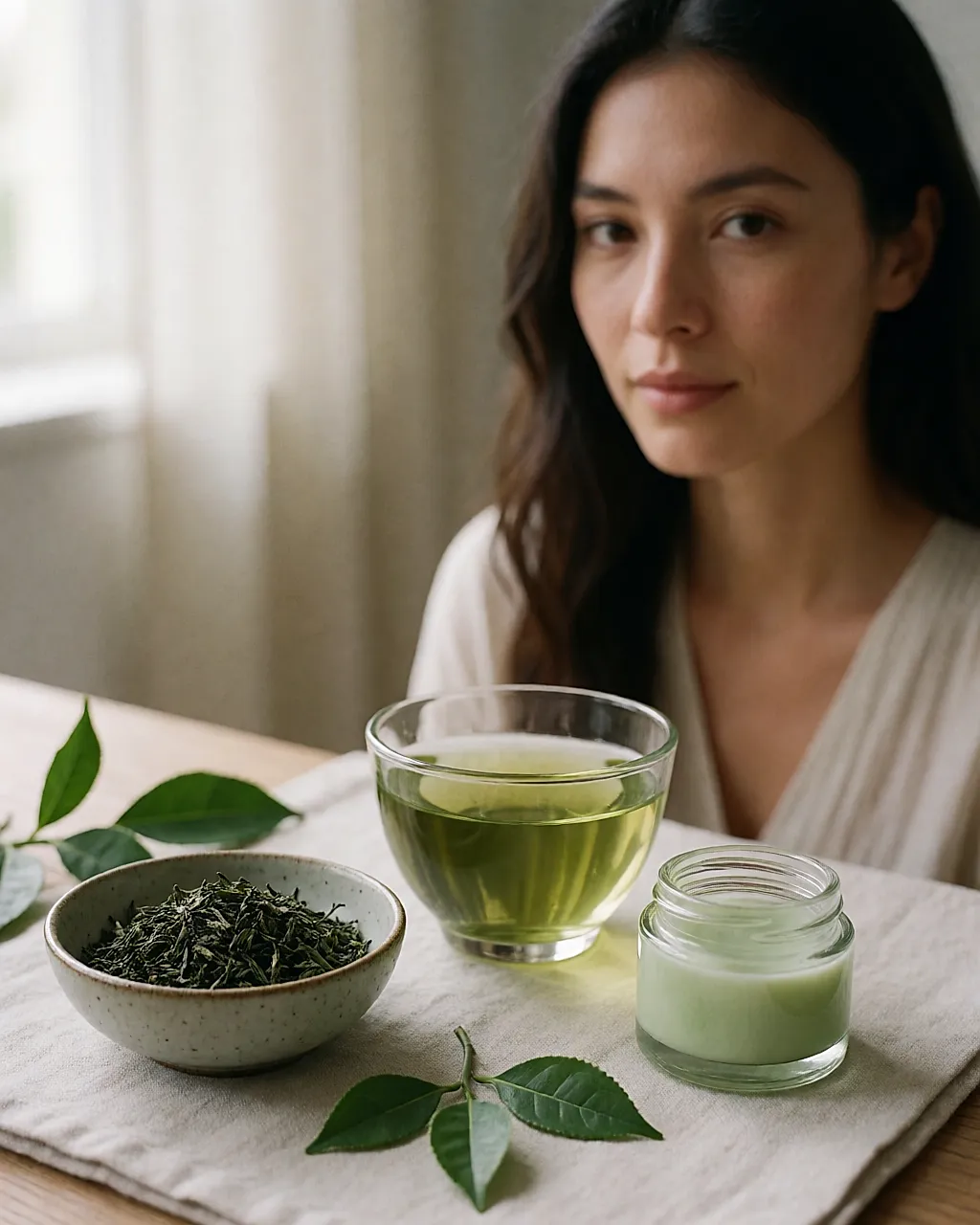
Green tea for a fresher-looking complexion
Polyphenols, EGCG: the laboratory studies are numerous, the evidence on human skin is more modest. In practice, a product with green tea extract can give a feeling of freshness and a fresher-looking complexion. Treat "draining" or "slimming" claims with caution: a topical product replaces neither exercise nor a varied diet.
Iris and chocolate: what's worth it, what isn't
Iris pallida rhizome extract is used for radiance and its powdery scent; the story of crushed leaves that "heal" remains a tradition without solid evidence. Cocoa butter is a pleasant emollient, but in a slimming product it's a marketing argument, not an active ingredient. Truth be told, a good shea butter does more for your skin than a wildly expensive chocolate treatment.
The sceptic's shortcut: read the INCI, not the story. As a rule, the main ingredients are listed at the top, in descending order above 1%; below 1%, the order is free, and an extract listed at the end is often there for the label. The COSMOS standard, used by Ecocert and Cosmébio, has two levels, COSMOS ORGANIC and COSMOS NATURAL; their exact certification criteria are worth checking in the standard's official reference, as they set requirements for natural-origin and organic ingredients. A useful framework, which says nothing about efficacy.
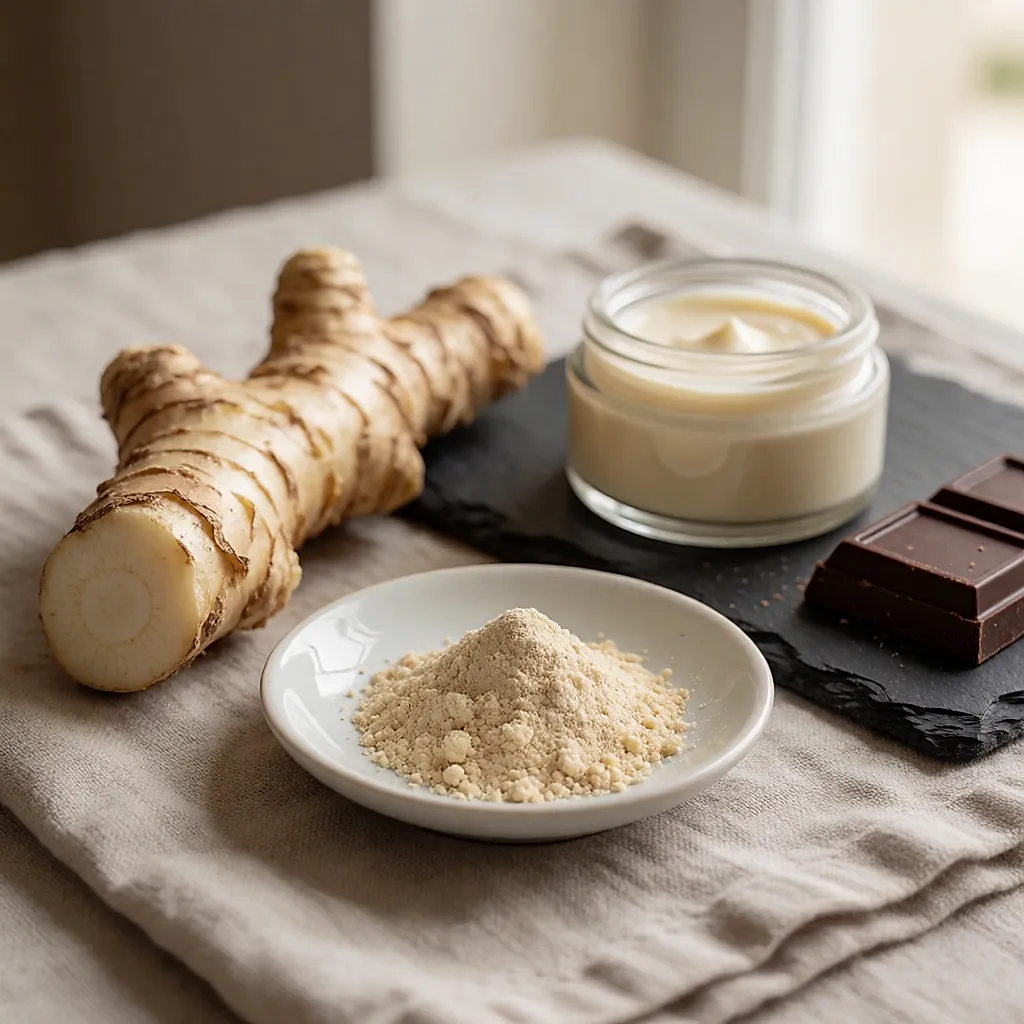
What it costs
Price depends mainly on purity (pure oil or a blend) and on the packaging: a tinted glass bottle costs more, but it protects fragile oils better. Expect to pay in the region of:
- Argan oil, 30 ml: roughly £8 to £18, from a pharmacy, health and beauty retailer or online.
- Raw shea butter, 100 g: around £6 to £12, cheaper in a 250 g tub, from health food shops or online.
- Monoï de Tahiti with the protected name: around £10 to £20 a bottle, from pharmacies or specialist online retailers.
- Green tea or iris face products: around £15 to £40, from department stores and online.
Prices vary with retailer and formulation, so shop around. An expensive "argan" serum may contain only a few per cent: for daily body use, plain oil or raw butter is usually the cheaper option.

Comments
Your opinion matters: rate the article, react and reply to comments.
Comments are moderated; AI-assisted comments are flagged. Text emoticons (8-), :-), <3…) are automatically shown as images.