
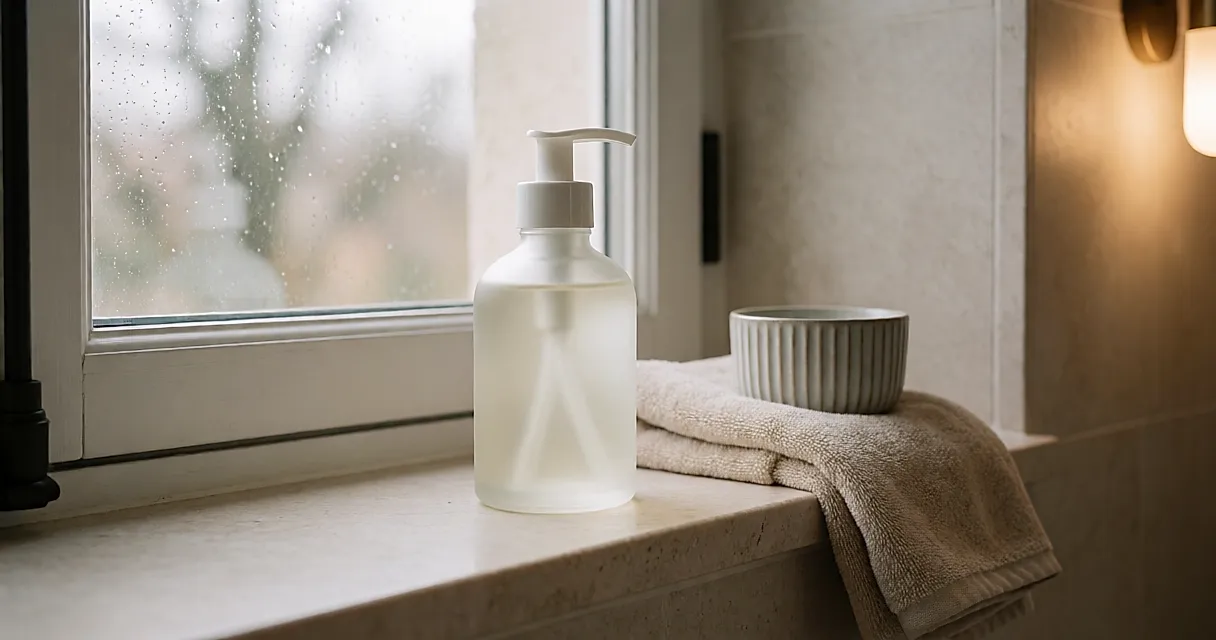
On a November evening, the overhead light forgives nothing: your forehead shines like it’s June, and your cheekbones feel tight the moment you smile. So you went out and bought the richest cream on the shelf? That’s usually where it goes wrong: before you add oil back in, it sometimes helps to stop stripping it out in the first place.
First question: foam or gel?
Foam gives you that instant, almost audible sense of clean. We love it. But a very foamy gel — especially a perfumed one promising to degrease — can leave skin squeaky clean and, well, tight. In November, that tightness shows up on your cheeks.
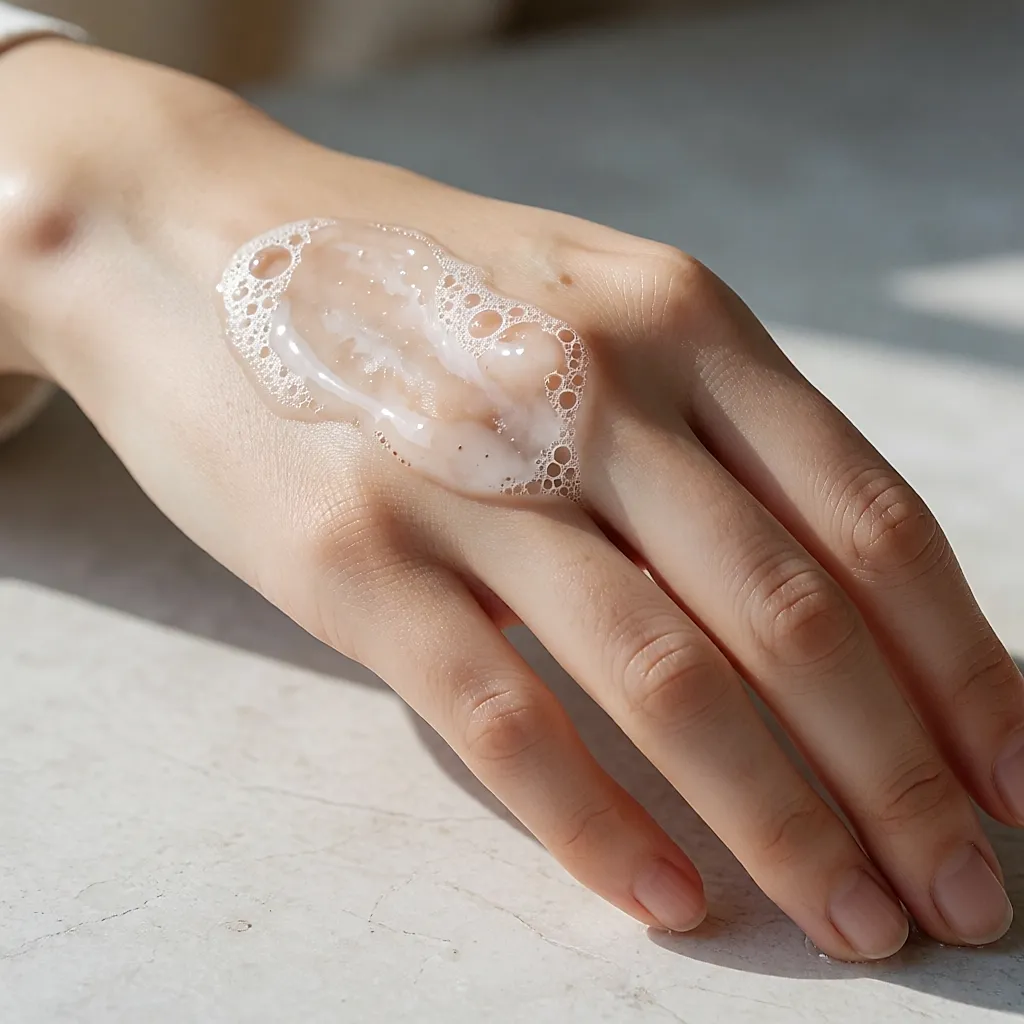
The marker to keep in mind is a soap-free cleanser — look for "syndet" on the label — or a gentle formula at a pH close to skin’s own. It’s less dramatic in use: it barely foams, it sometimes barely smells of anything, and that’s precisely why the tightness eases. It’s a choice between the drama and the comfort; at 8am, comfort has plenty going for it.
Second question: do you rinse or not?
No-rinse micellar water has enormous charm at 11pm when bed is calling. Except that over time, a no-rinse formula can leave a slightly tacky "almost clean" film on the skin. A handy marker: if your skin feels more supple after rinsing than before, you’re onto something.

The other variable is temperature. Scalding water is glorious in November, and it can also strip away what your skin was trying to hold onto. Lukewarm water, clean hands, a few moments: there’s no need to do more, and no need to scrub as if the day were stuck to your face.
Morning or evening: are you overdoing it?
In the evening, cleansing makes sense: make-up, SPF, city air — all of it deserves to go. In the morning, though, we often wash out of habit, with the same product, on skin that hasn’t got much to remove. If your cheeks feel tight by 9am, try a plain lukewarm rinse — or a very gentle cleanser — for a few days, and see what happens.

Now, we’re not going to promise you transformed skin in seven days: that’s not how it works, and anyone selling you that is selling you something other than skincare. But changing your cleanser is one of the rare beauty moves that doesn’t have to cost a penny more than what you were already spending.
The test after cleansing — straight after washing, with nothing applied, take a look: does it feel tight? Does it tingle? Does it stay comfortable? Run the test over several evenings, with the heating on. It’s your best indicator, often more telling than a label.
Combination skin: the compromise worth making
Here’s the real November headache: a shiny forehead and tight cheeks don’t want the same product. The compromise is to accept not degreasing thoroughly. A gentle cleanser all over, a slightly firmer pass over the T-zone — forehead, nose, chin — and shine gets handled elsewhere.

Where is elsewhere? Loose powder, blotting papers, a targeted mattifying product: you deal with shine when it appears, not in advance with a gel that dries you out. It’s less heroic, but it holds. And in the evening, nothing obliges you to use the same cream everywhere: richer on the cheeks, lighter on the forehead — no one’s going to check.
What it costs
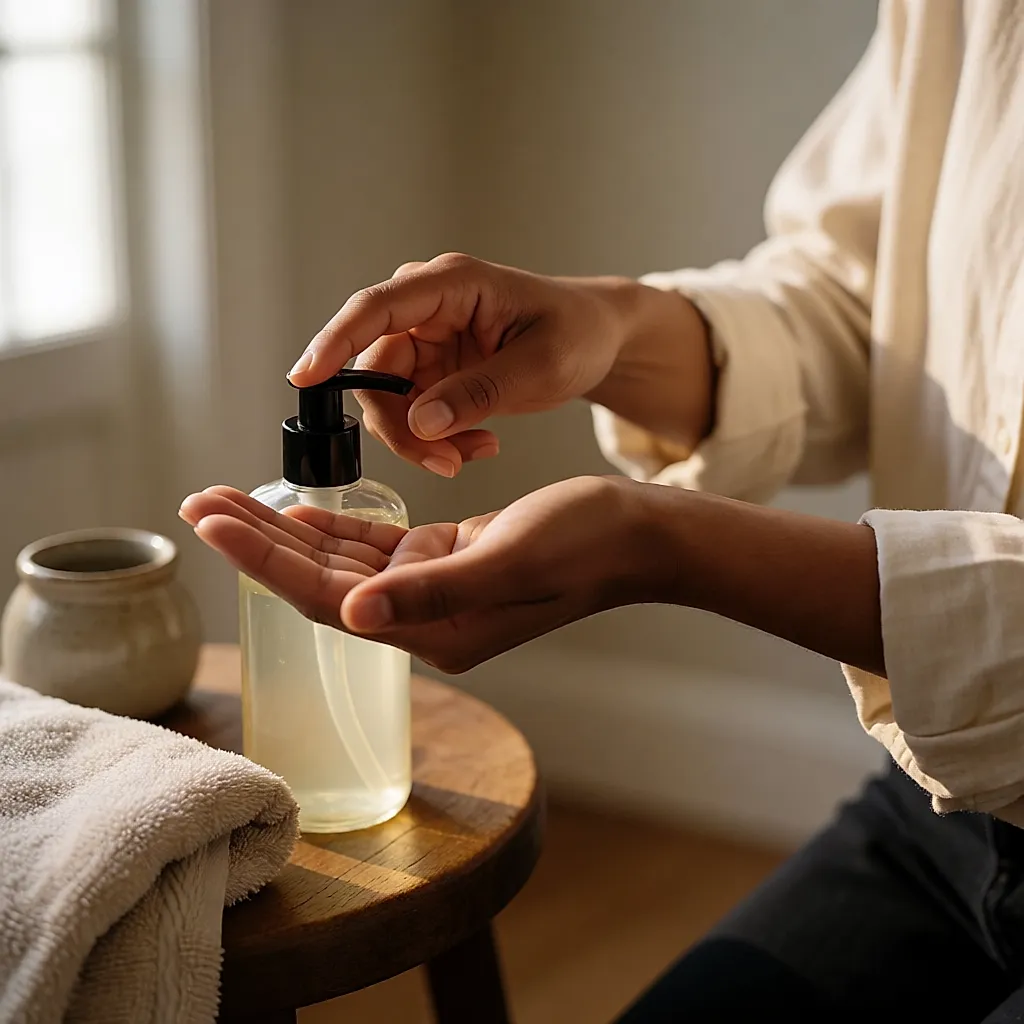
There’s no need to head for the most expensive end of the shelf. A gentle soap-free cleanser comes in at around £8–£20 in supermarkets and pharmacies, and more like £20–£40 in the skincare brands that make a fuss of the packaging too — glass, refill, card. A soap-free cleansing bar or solid cleanser often sits between £8 and £15, and can last longer than a bottle, provided you don’t mind the slightly rougher feel.
Where to buy it? Supermarkets, pharmacies, health food shops, the brand’s own online store: the product matters more than the setting. If natural is your priority, look at the certifications (Cosmos Organic, for instance), whether a refill exists and the ingredient list: a well-formulated gentle gel doesn’t need twenty plant extracts to do its job. We’re talking here about types of product, not one specific item — these are formulation markers, not a best-of list.
The habit that sticks
If you take one thing away: change your cleanser first, not your cream. Give it a few days, heating on, scarf and wind included, and look at your forehead and cheeks separately. If it still feels tight, then we’re talking about moisturiser — and possibly a word with your GP or pharmacist, because skin that’s permanently tight deserves better than an amateur diagnosis. It’s a move that can make a real difference, and it takes moments, every day, even on the days when all you want to do is go back to sleep.

Comments
Your opinion matters: rate the article, react and reply to comments.
Comments are moderated; AI-assisted comments are flagged. Text emoticons (8-), :-), <3…) are automatically shown as images.