
What the water used to do
A conventional cleanser is water, surfactants and preservatives. But water is a medium that micro-organisms enjoy, so it needs protecting. Take it out and the formula simplifies: many powders skip preservatives altogether, or use a reduced dose. That doesn't make powder sterile, though: the way you use it is what makes the difference.
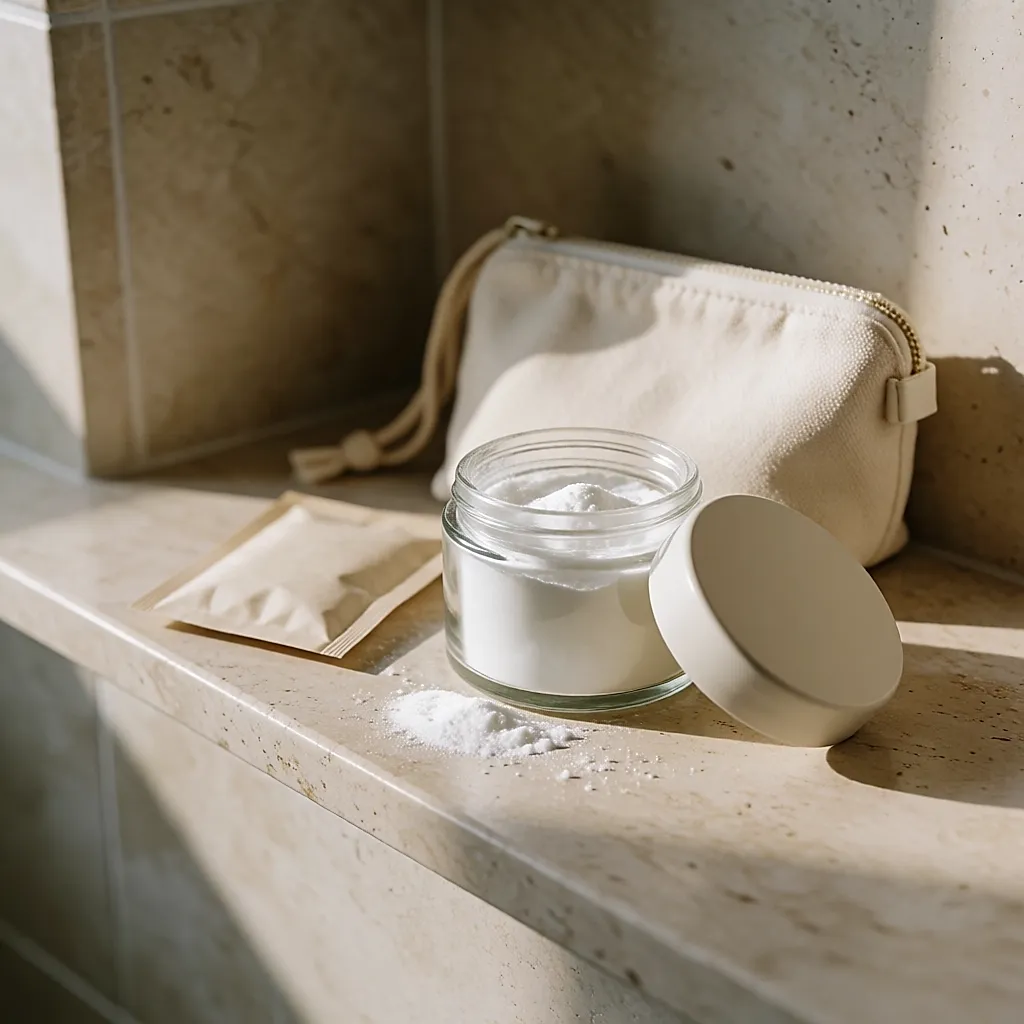
The trade-off comes down to a very simple habit: keep your hands dry before you dip your fingers into the pot. A little water in the bottom and the powder clumps, hardens and becomes that little stone you scrape at with a fingernail, sighing. When it comes to packaging, you're mostly carrying dry matter — a pot, sachets or a refill — so there's less weight. It isn't all green, though: a thick plastic pot is still a thick plastic pot, and cost per use matters more than how the packaging looks.
A pinch, a splash of water, and the lather gets going
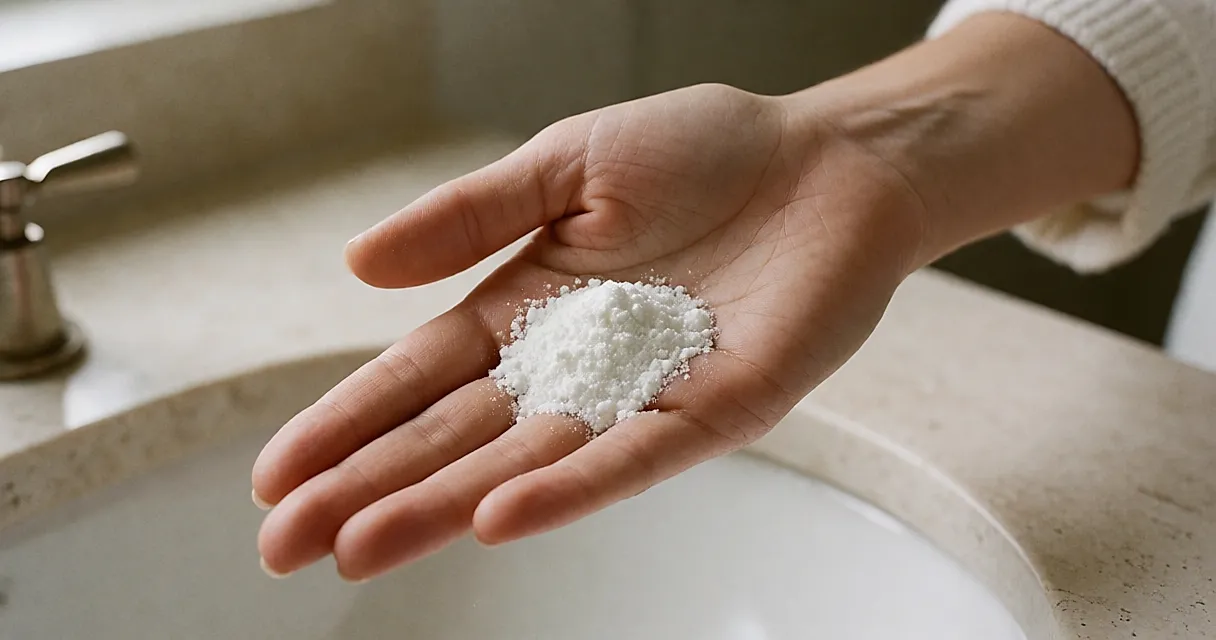
The instructions fit into one sentence: a pinch in the palm, a little water, work it between your hands until it lathers, then massage in, paying extra attention to your forehead, nose and chin. Rinsing deserves a moment's care — hairline, creases around the nose, along the jaw: that's where residue settles and skin feels tight afterwards.

The real plus with powder? You can see the dose. A pump gives you the same pea-sized amount each time, sometimes too much; a pinch can be adjusted — a little more on an oily evening, a little less if your skin is sore or reactive: you're in charge. Other formulas, based on clay or rice, barely lather at all. As for very hot water, it has never done much for anyone.
Fine grain or coarse: the decision that matters
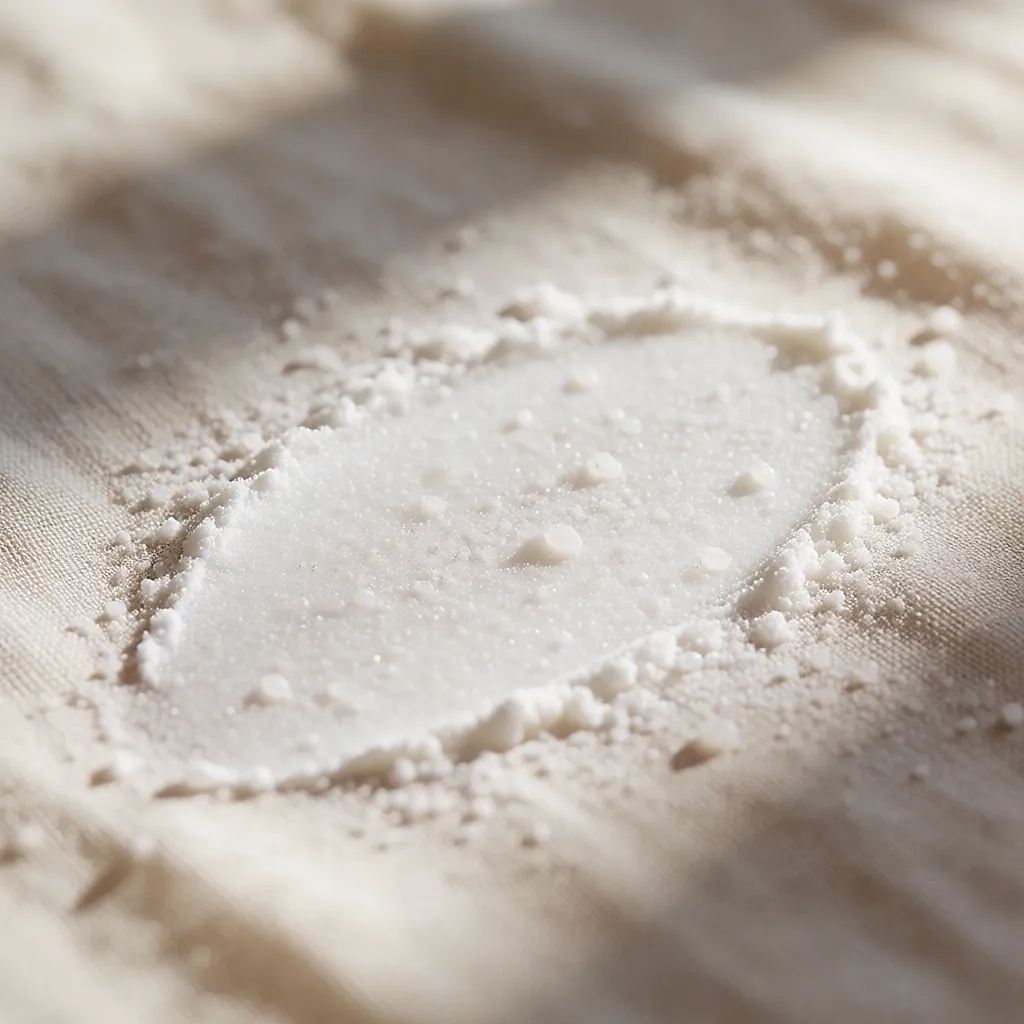
Before the brand name, read the ingredient list. The base can be rice, oat, corn or white clay, sometimes silk powder; depending on the formula, enzymes may be added — papaya or pineapple, for example — along with plant powders of varying fineness. That fineness decides everything: a tight grain suits reactive skin and frequent use, while a coarser grain exfoliates more and should be spaced out according to your skin's tolerance.
The golden rule is the same as for exfoliation: skin that feels tight after cleansing isn't clean, it's been stripped. If you're already using an exfoliating treatment that evening, it's better to choose one or the other. And if your skin stays red or stings, put the pot away and speak to a pharmacist or GP rather than pressing on.
Pharmacy, health-food shop, beauty hall: three places to buy, three approaches
In pharmacies and at specialist skincare counters, you'll find powders from dermocosmetic brands, often very finely milled and designed for reactive skin — Dermalogica is one. Advice from behind the counter is a real bonus; the price climbs, and the plastic pot is almost always part of the deal.
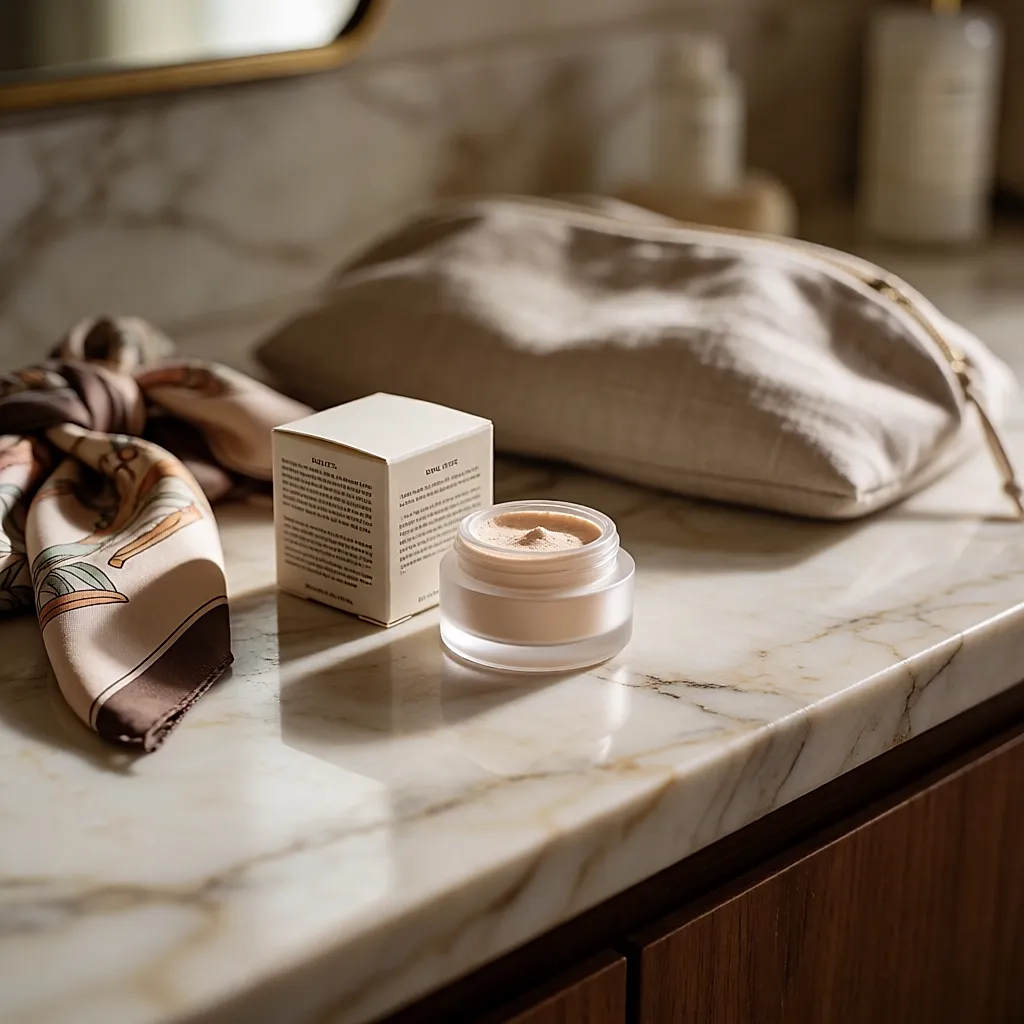
In health-food shops, or from a specialist raw-ingredients supplier, you're more likely to buy simple powders — rice, oat, clay — to use as they are. Short ingredient lists, bulk buying and a very low cost per use; in exchange, the lather is less spectacular and no one will guide you on dosage. In beauty halls and at Japanese beauty counters, extra-fine powders from houses such as Tatcha are handy for travel; check the packaging, which can be heavier than it needs to be.
The habit that saves the pot: tip the powder into a perfectly dry hand, close the lid before you turn on the tap, and store the pot away from shower steam. If the powder has hardened, crush the blocks between two spoons: it can still be used, though it won't return to its original fineness.
Budget
Expect to pay roughly £10–£20 for a small Japanese pot or a box of sachets, £25–£50 for a 50–100g pot from a pharmacy or beauty hall, and £5–£15 for 100g of base powder from a health-food shop. Used by the pinch, a 75g pot can last several months, which makes the cost per cleanse very reasonable, provided you don't let the powder turn to stone. You'll find them in pharmacies, beauty halls and health-food shops, and some raw-ingredients suppliers sell them in bulk.
It remains to be seen whether powder lives up to its promises day to day. What can be said is that it puts dosage back in the hands of the person using it, lightens the travel bag and shakes up a routine that had sometimes been going round in circles. The sensible start is a pinch, with no set frequency: if your skin wants more, it will let you know — and if the lather amuses you along the way, that's not a manufacturing fault.


Comments
Your opinion matters: rate the article, react and reply to comments.
Comments are moderated; AI-assisted comments are flagged. Text emoticons (8-), :-), <3…) are automatically shown as images.