
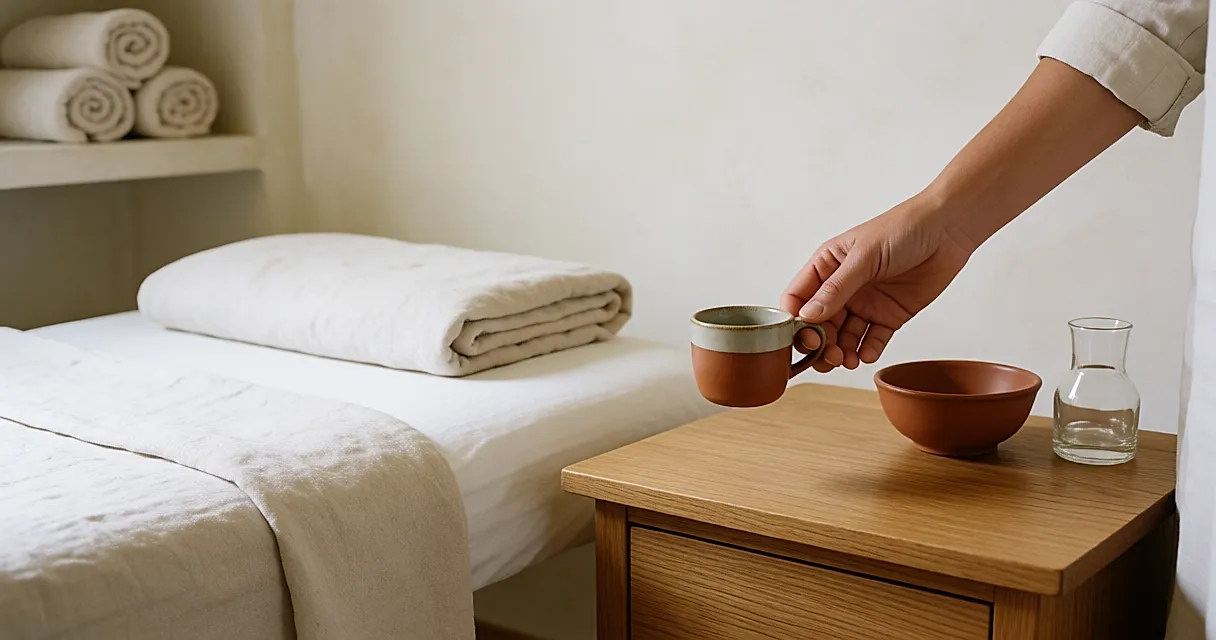
A traditional salon gives you your treatment, then walks you to the door with a smile and a date for next time. The newer sort, the one opening up on high streets near you, sits you down, makes you a coffee and seems in no great hurry to see you leave. The difference isn't just decorative: it changes what you book, what you pay and what you're entitled to expect from the chair.
Time as the new currency
Look at the furniture before you look at the price list. An oak counter, two stools, a carafe of water and a machine humming away: it's a set-up you'll now come across in plenty of neighbourhood salons. Between the moment you push open the door and the moment you're taken to the basin, there's an in-between space — somewhere to put your coat, your phone and, incidentally, your day.
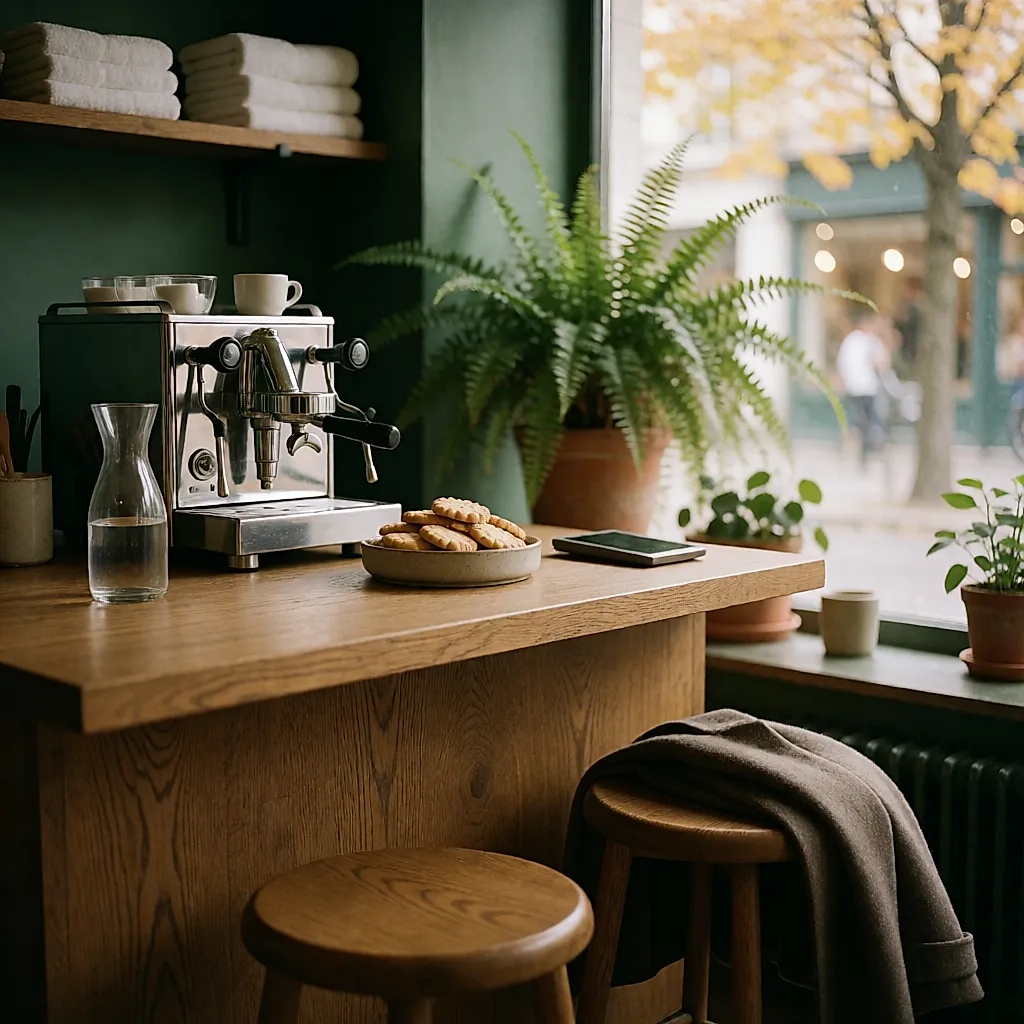
Why the shift? Because in practice a place where you feel at ease is one you'll gladly go back to, and the neighbourhood salon no longer sells just a technical service: it sells time spent on the premises — and that can be given away or charged for, but it can't be improvised. I found no solid public figures on how many salons have installed a coffee corner; what you can see, though, is how consistent the styling is, right down to the little branded cup.
What the products on the counter tell you
The second thing to scrutinise: the bottles. A salon that looks after its coffee corner tends to make a show of its certifications. That's a clue, not a guarantee: the décor tells you nothing about the formula. **Cosmos Organic** and Cosmébio (the French label built on the same standard) guarantee a specific set of rules: the proportion of naturally derived ingredients, the percentage of organic ingredients, the ingredient families ruled out. These are genuinely useful markers — not proof that the formula will suit your scalp, a distinction that matters if your skin is reactive and your patience short.
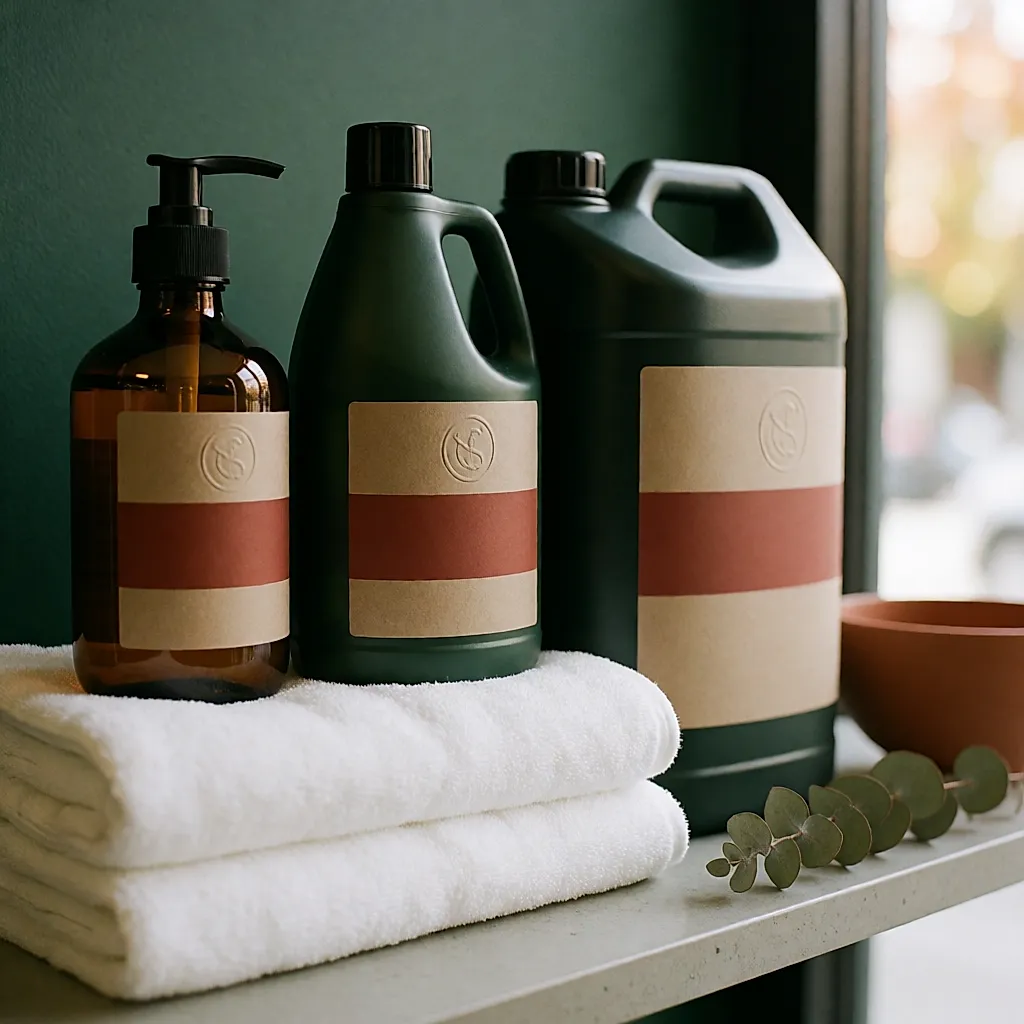
So the question to ask, plainly, is twofold: which brand do you use, and why that one? Some salons work with professional ranges that carry no certification and are perfectly good; if that's the case, ask for the INCI list, which is usually available. The eco side of the trade-off plays out elsewhere too: five-litre refills rather than individual bottles, refill pouches, glass containers, European manufacturing. If the talk stays vague, be wary: a coffee corner doesn't make a formulation green by association.
How long the appointment really takes
This is the awkward bit, and the one we forget to check. The slot can run well over the advertised time the moment colour is involved, because development time can't be compressed. Ask on the phone what the slot includes: consultation, shampoo, cut, blow-dry, processing time. The answer will also tell you whether you're left in peace during development, with a magazine, or hurried out of the chair.
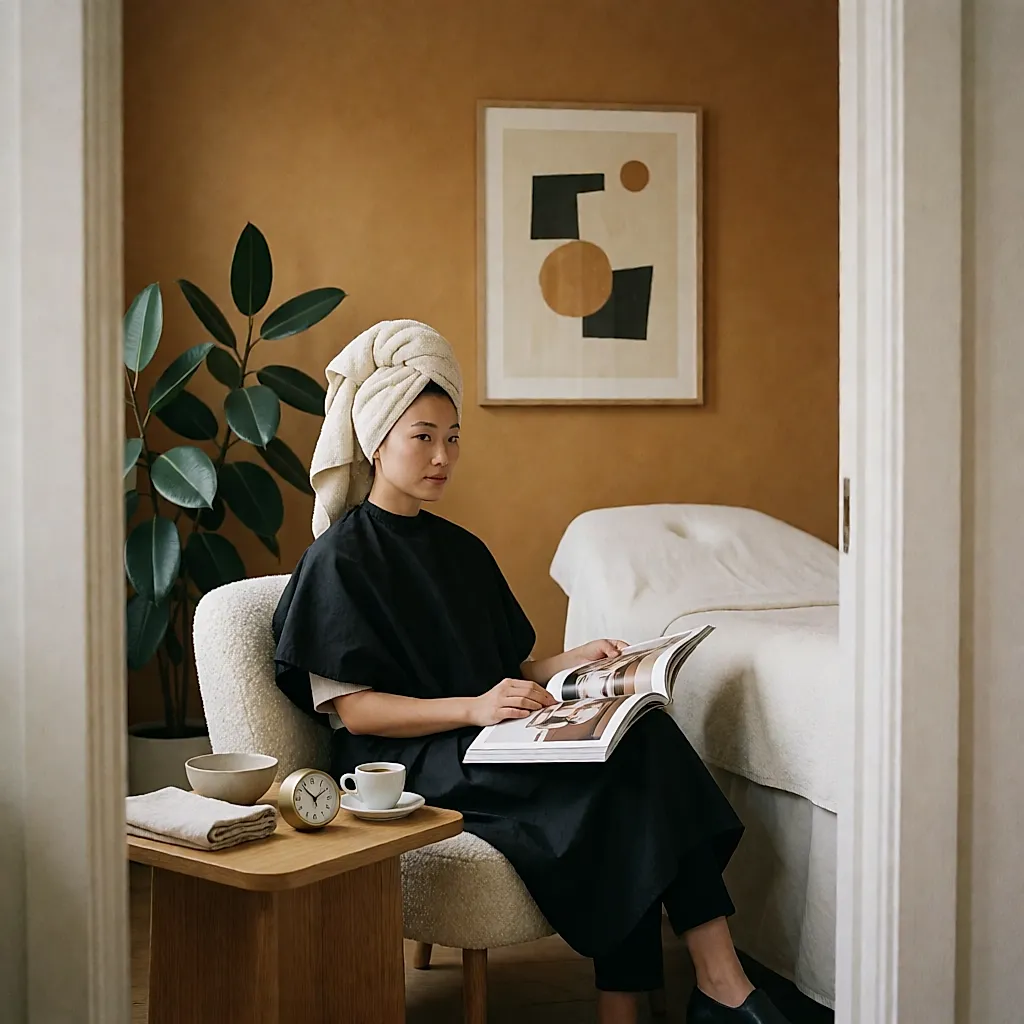
And that time isn't wasted. It's often the best moment to ask the real questions — your routine, your ends, the serum you don't know what to do with. A salon that lets you stay is a salon that has thought about its space, not just its diary. An easy test: see whether anyone other than you is sitting down with no scissors nearby.
Budget
As a rough guide rather than a quote, expect somewhere in the region of £25–55 for a cut, depending on the city and the length of your hair, £20–40 for a treatment applied in the treatment room, and £60–110 for a plant-based colour, which takes longer and is more technical to apply. Packages advertised as "cut + treatment + time" in neighbourhood salons tend to land between £45–80. The coffee, meanwhile, is almost always free — and sometimes very good, which does no harm at all.
Where to book? The independent neighbourhood salon is still the most likely to offer the space and the visible product range; chains are following, with more standardised protocols. Online, check that the advertised duration matches the treatment rather than the marketing slot.
Three questions to ask before you book: which range do you use, and can I see the ingredients list? How long does the appointment really last, development time included? Can I stay after my treatment, or do I need to free up the chair?
In the end, the coffee corner says something simple: we no longer come only to leave looking neater, we come for a stretch of time that doesn't feel like the rest of the week. So next time, before you compare prices, compare the stools — and see whether anyone offers you a seat.


Comments
Your opinion matters: rate the article, react and reply to comments.
Comments are moderated; AI-assisted comments are flagged. Text emoticons (8-), :-), <3…) are automatically shown as images.