

Straight hair may still be the safe default, but there are days when you fancy a change without doing anything drastic. That's where curls come in: they add movement, style and shine, they're relatively easy to do, and they let you have a bit of fun without much fuss. You will need the knack and the right kit, mind. The good news is there's more than one way to go about it — curling tongs, straighteners, rollers or a trip to the salon, depending on your budget, what's already in your drawer and the finish you're after. So today we're running through how to curl your hair, the pros and cons of each method, and then it's over to you.
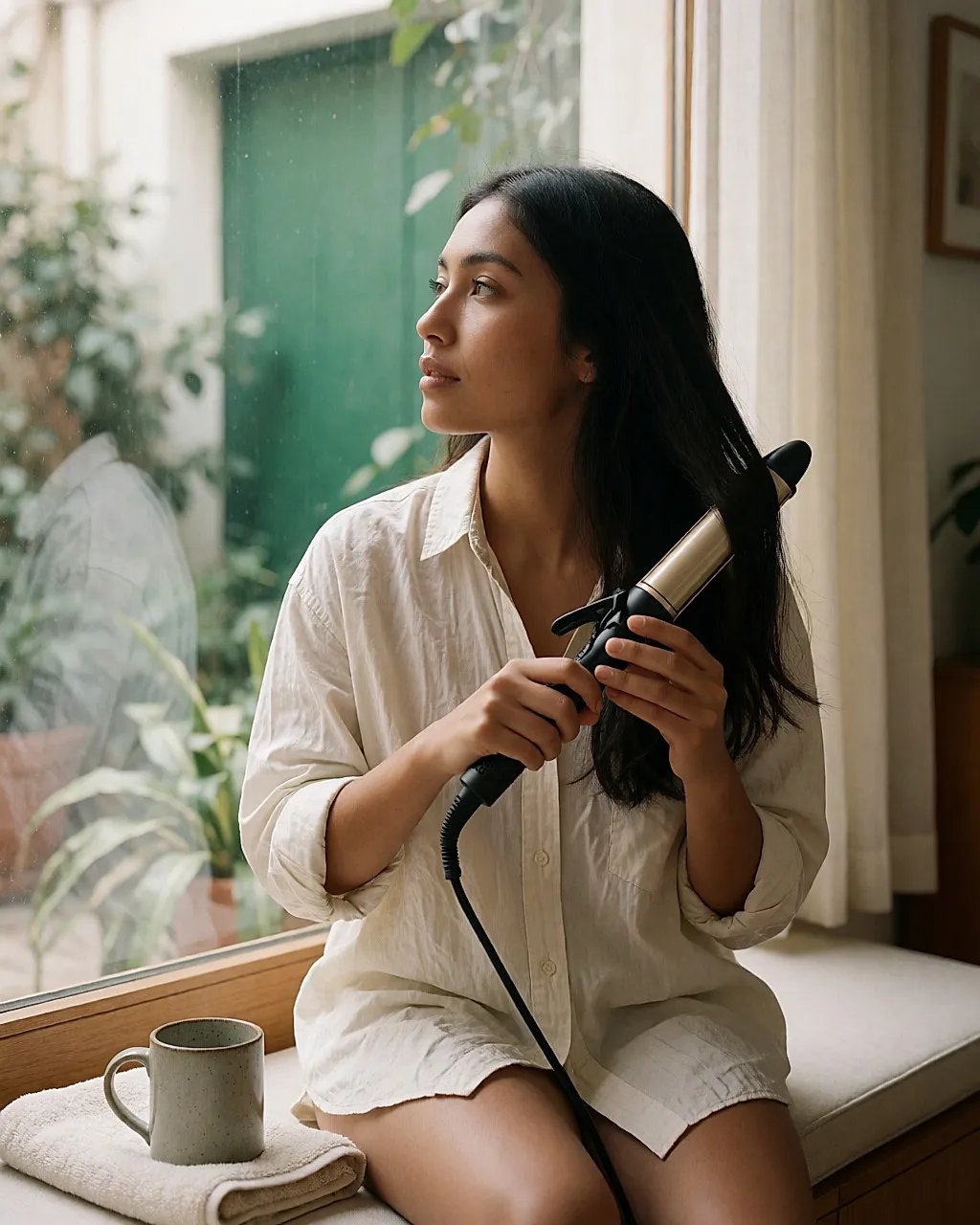
With a curling tong
Curling tongs are generally very effective, though we should be honest: the result depends first on the quality of the tong and then on your hair type. It's only natural that soft curls which hold through the lengths are harder to achieve on very straight, fine hair. It can be done, but you'll need a strong-hold hairspray to set them.
On the practical side, a few things worth knowing: curling, like straightening, is done on dry hair — not wet, not damp — so the heat of the tong doesn't burn it.
So first things first: dry your hair completely. With very straight hair, some people suggest waiting until it isn't freshly washed. If your hair doesn't get greasy quickly, the ideal is to curl it the day after you wash it. If, on the other hand, your hair takes a shape easily, you can curl it straight after washing and drying.
You can apply a styling mousse before you start if that helps you manage it, then work in sections.
Start with the hair underneath, clipping the rest out of the way. Work in small sections for a properly defined curl.
If your hair is on the short side, you may need a hand with the back of your head.
Hold each section wrapped around the tong for a good 10 seconds, then release it without pulling: just open the clamp and let it slide. Don't tug at the curl — simply set it in place with your fingers.
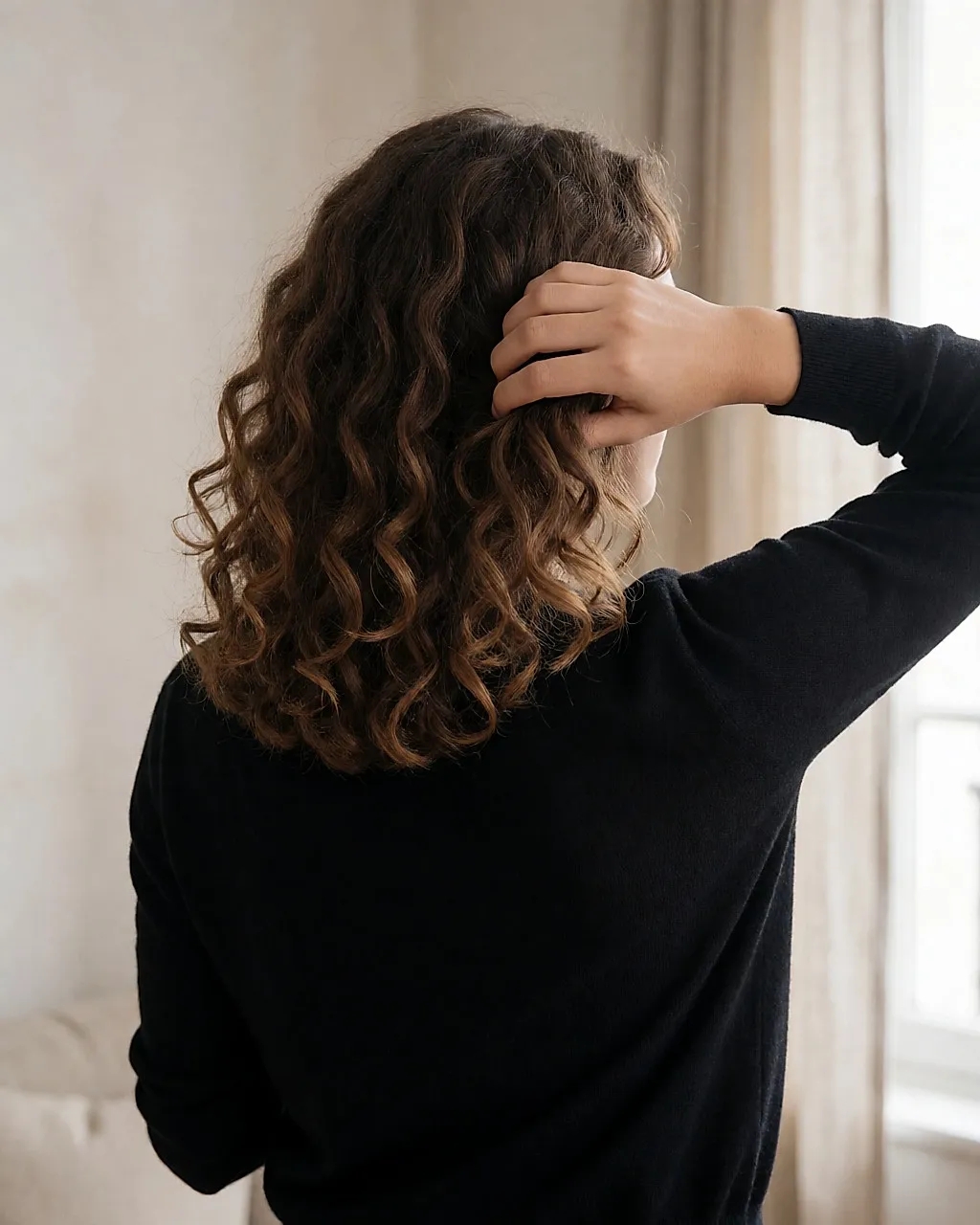
Once the whole head is done, spritz on hairspray and, most importantly, don't brush it out. Shake gently at the roots to lift the curls and add volume.
With rollers
This one is a little fiddly and takes time and patience — best to say so up front.
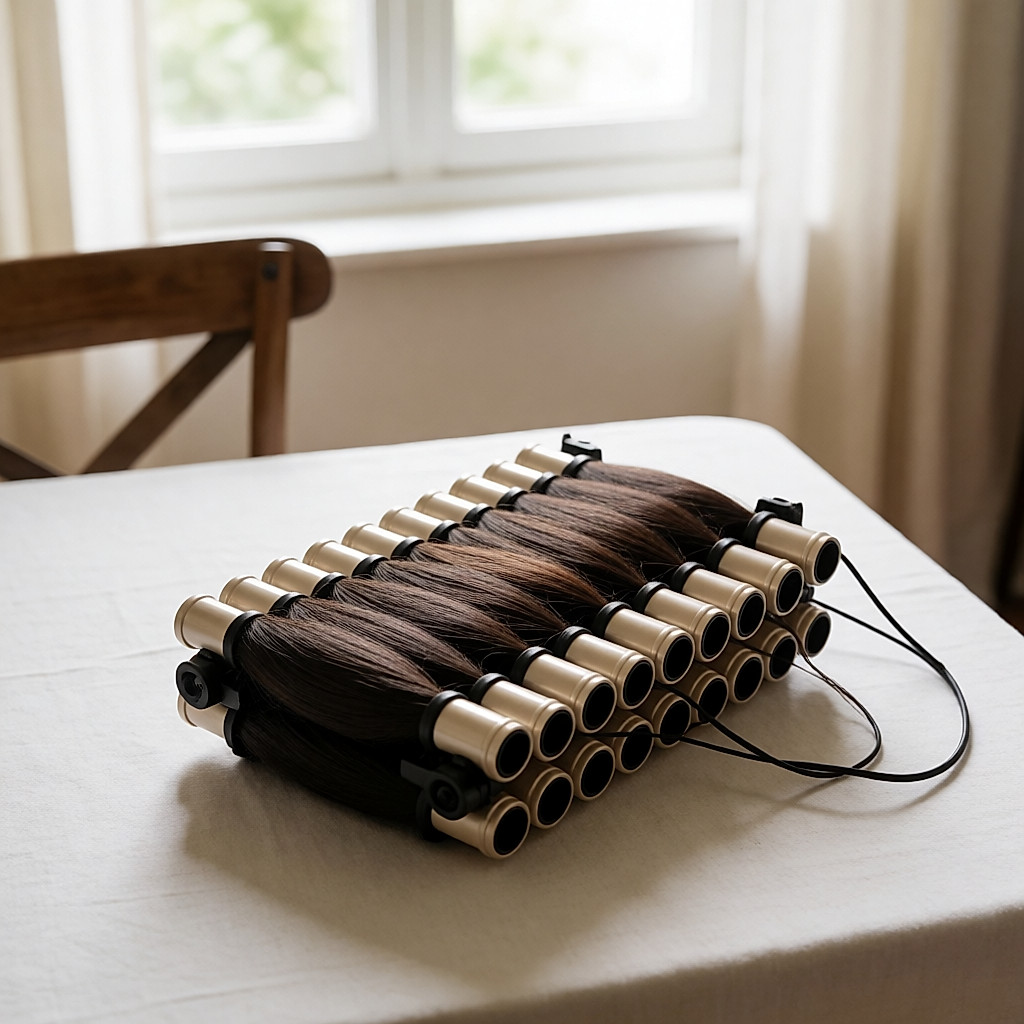
To begin, choose your rollers carefully. Forget your grandmother's pin-and-clip rollers, which are too long and too much of a faff. Go for the newer generation of rollers that grip the hair with a velcro-style coating. Pick the size according to the length of your hair and the curl you want.
Large rollers for long hair and big curls or waves; small rollers for short hair or tight curls.
Rollers go on damp hair, so towel-dried and roughly pre-dried. Work as you would with tongs, in small sections, starting at the underneath. Once every roller is in, leave them for a good while, until the hair is completely dry. You can speed things up with a hairdryer, but don't take them out too early unless you want to have wasted your time entirely.
Then unwind the hair gently and reshape each curl with your finger, winding the section around it. Finish with hairspray over the whole head.
At the salon
Less requested than it was a few years ago, the perm is still going and has come on a long way. It was often criticised for that sheep-like frizz, which has nothing to do with the soft curls or waves people are after today. A perm can give you several different effects; the result depends on the rollers used.
The most popular perm creates soft waves and is done with large rollers, but you can also go for tighter or looser curls depending on the length of your hair.
One thing to be clear about: perming weakens the hair and is strongly not recommended if your hair is dry and brittle, or if it has recently been through a lot of treatments — colour, bleach, straightening. It's about the result, yes, but also about the survival of your hair.
So ask your hairdresser for advice, and bear in mind that the look and how long it lasts will also vary with your hair type and condition.
Curling your hair with straighteners
And yes, you don't necessarily need to invest in a curling tong if you already own straighteners: you can create lovely curls with a flat iron. It's all in the knack — once you've cracked it, it's very straightforward.
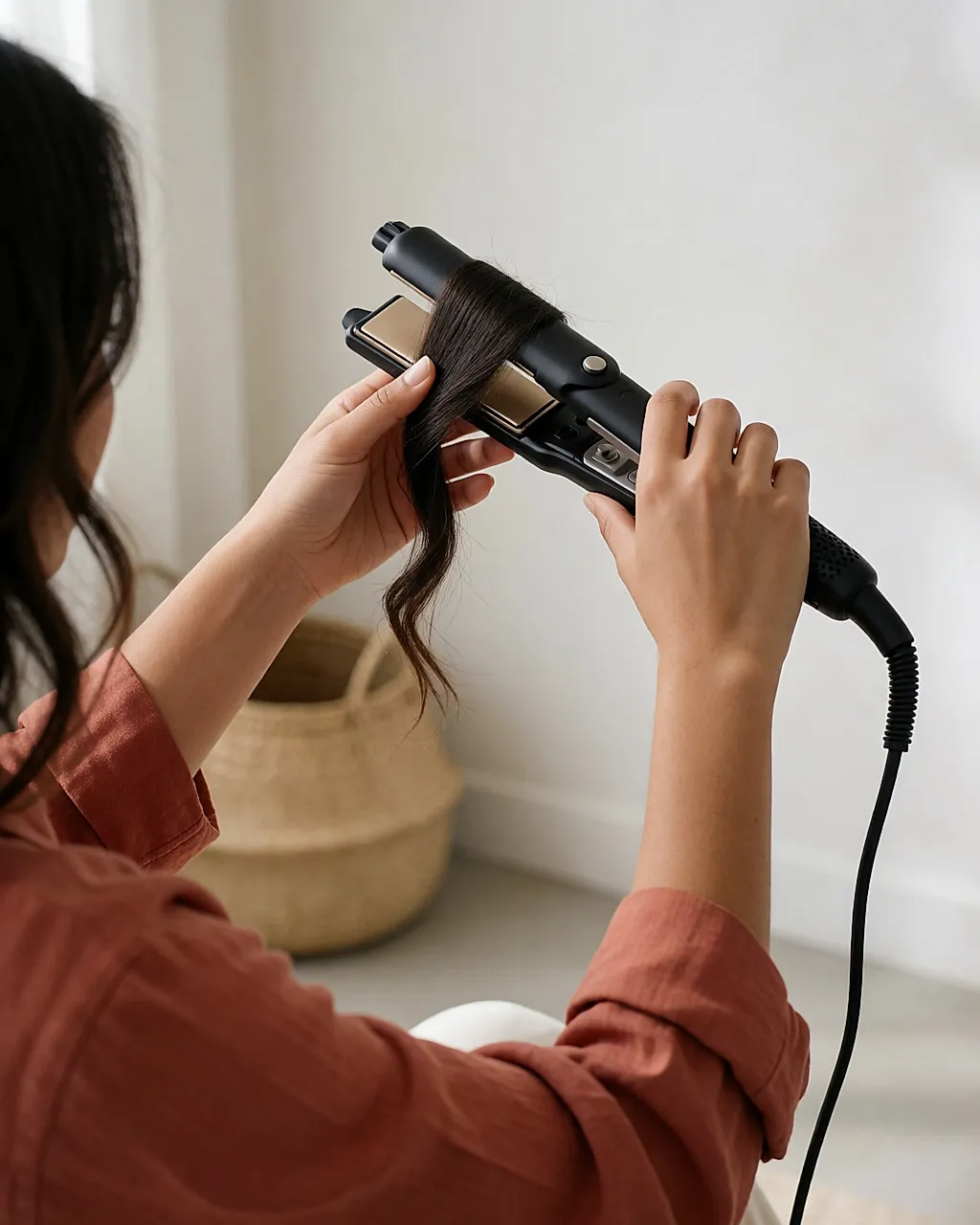
And because the manoeuvre is a bit hard to explain in words and it's always better in pictures, we still remember a video by two women posting under the name 2MakeUpTwin, nicely explained and nicely filmed — worth hunting down online if it's still there, but after that, you're away.
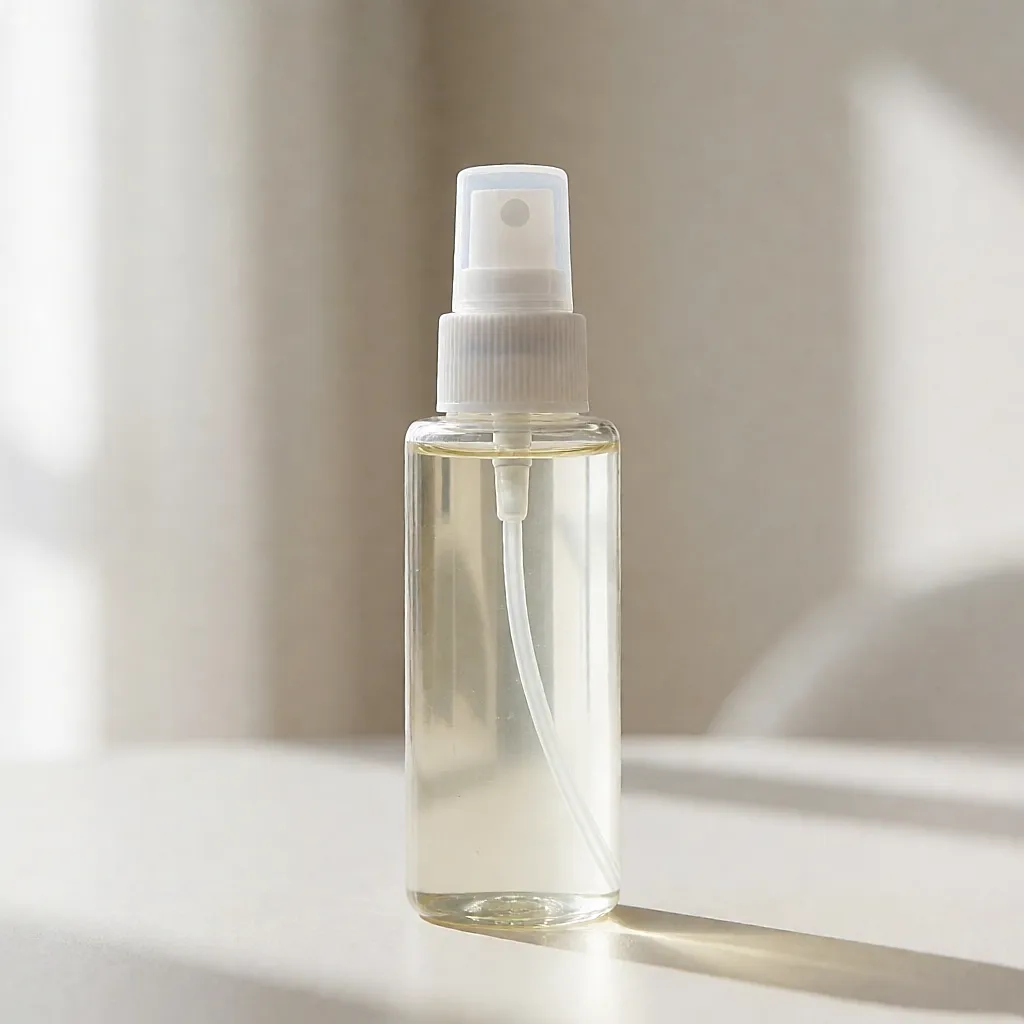
The move that changes everything: apply a heat-protect spray before you go in with the iron, and let the curl cool down completely before you touch it — it takes its shape as it cools. An iron that's too hot, or a curl handled too soon, and the whole thing drops within minutes.
Budget
Budget-wise, it all depends on your kit. Entry-level curling tongs start at around £20; models with temperature control, which are more consistent and gentler on the hair, usually sit somewhere between £45 and £130. A set of velcro rollers remains the cheapest option, generally under £20, while a hairspray or styling mousse costs from a few pounds to around £15 depending on the brand. In the salon, expect more like £60 to £150 for a perm, depending on length, hair condition and the stylist — ask for a quote beforehand, it's the simplest way. These ranges shift with brands, promotions and retailers, so it's best to compare online or in store before you buy.
Comments
Your opinion matters: rate the article, react and reply to comments.
Comments are moderated; AI-assisted comments are flagged. Text emoticons (8-), :-), <3…) are automatically shown as images.