

A scalp serum is not a hair mask in miniature. A mask nourishes the hair fibre and gets rinsed out; a serum is applied to the skin at the roots and left there. Two gestures, two places, two different jobs. And that is exactly where plenty of us have been going wrong for years.
Because the habit is ingrained: we pick up the bottle, squirt some into our palm, and smooth it through the mid-lengths and ends — exactly what we would do with conditioner. The trouble is that your scalp has different needs from your mid-lengths and ends, and a product designed for one will not do the other any favours.
Your scalp is skin, not a strip of hair
Your scalp is skin: thin, well supplied with blood vessels, with follicles and sebaceous glands. Your mid-lengths and ends are keratin — material that does not ‘feed’ in the way skin does. Putting a rich mask on your scalp is like buttering toast on the wrong side: the roots can get greasy fast, the lengths can stay dry, and you end up washing more often, which dries them out further. Cue the hair-care version of a vicious cycle.
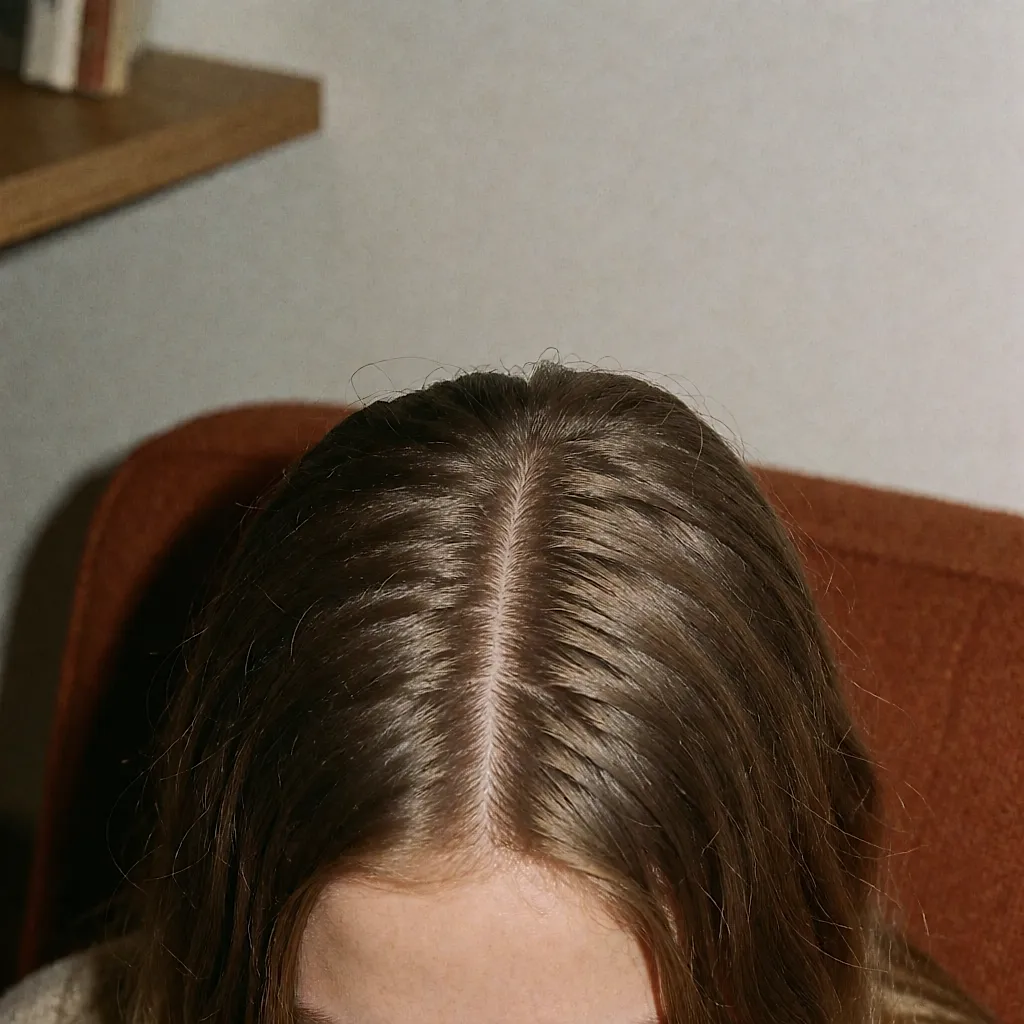
A scalp serum is usually light: a watery texture, a fluid gel, sometimes a dry oil. It is not rinsed out, is designed not to weigh hair down, and goes where a mask never does. That may explain the number of little pipette bottles that have appeared on shelves over the past few seasons. If your scalp itches badly, flakes or has patches, though, it is no longer a cosmetic-care question: show it to a healthcare professional, who can diagnose it.
Counting the drops
In practice, aim for roughly one small pipette — a few drops — spread over several points rather than a single puddle at the crown. No single amount suits every formula: textures vary enormously from one product to another, and the product instructions remain your best reference. The key is the logic: little, but well distributed.
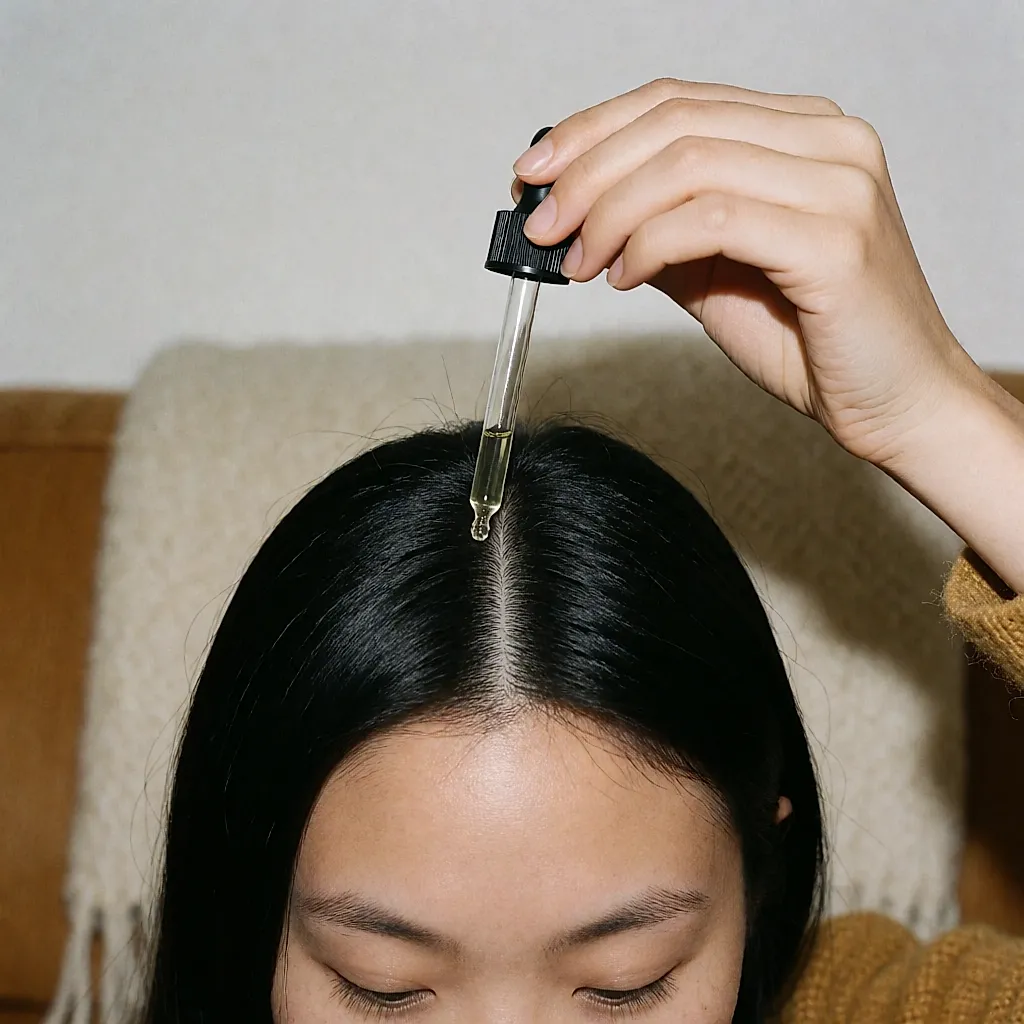
And on dry or towel-dried hair? Both work, but not for the same reasons. On dry hair, partings hold better and the product stays exactly where you put it. On towel-dried hair (after shampooing, that is), the serum slips more easily and spreads faster — just do not work on a dripping scalp, or the serum will head for the ends in three seconds. One last detail that matters: some serums are for evening use only or require you to avoid sun exposure. Always check the instructions.
Parting your hair is the step that counts
It is the move that changes everything, and the one we skip. Without partings, serum lands on the hair, not the skin. So go parting by parting: four to six partings, from the forehead towards the nape, zigzagged rather than straight so you do not leave a visible line. At each opening, the applicator tip touches the scalp, you deposit a drop, and you move on by one or two centimetres.

Then tap with your fingertips, without rubbing or massaging as you would shampoo — there is no lather to chase, because there is none. Give it a minute on the clock, which is manageable even on a Monday morning when you are already late. The classic trap? Applying it ‘just in case’ to the mid-lengths and ends, out of habit. That is exactly what to avoid: the product is wasted there, and your ends are unlikely to gain anything more than they would from your usual oil.
The format decides the gesture
The glass pipette has precision and dosage on its side: you can see what you are depositing, and you control it. Its downside is in the hand: squeeze too hard and it sends out a drop that runs down a strand and disappears. So pinch gently, almost vertically, with the tip in contact with the scalp.
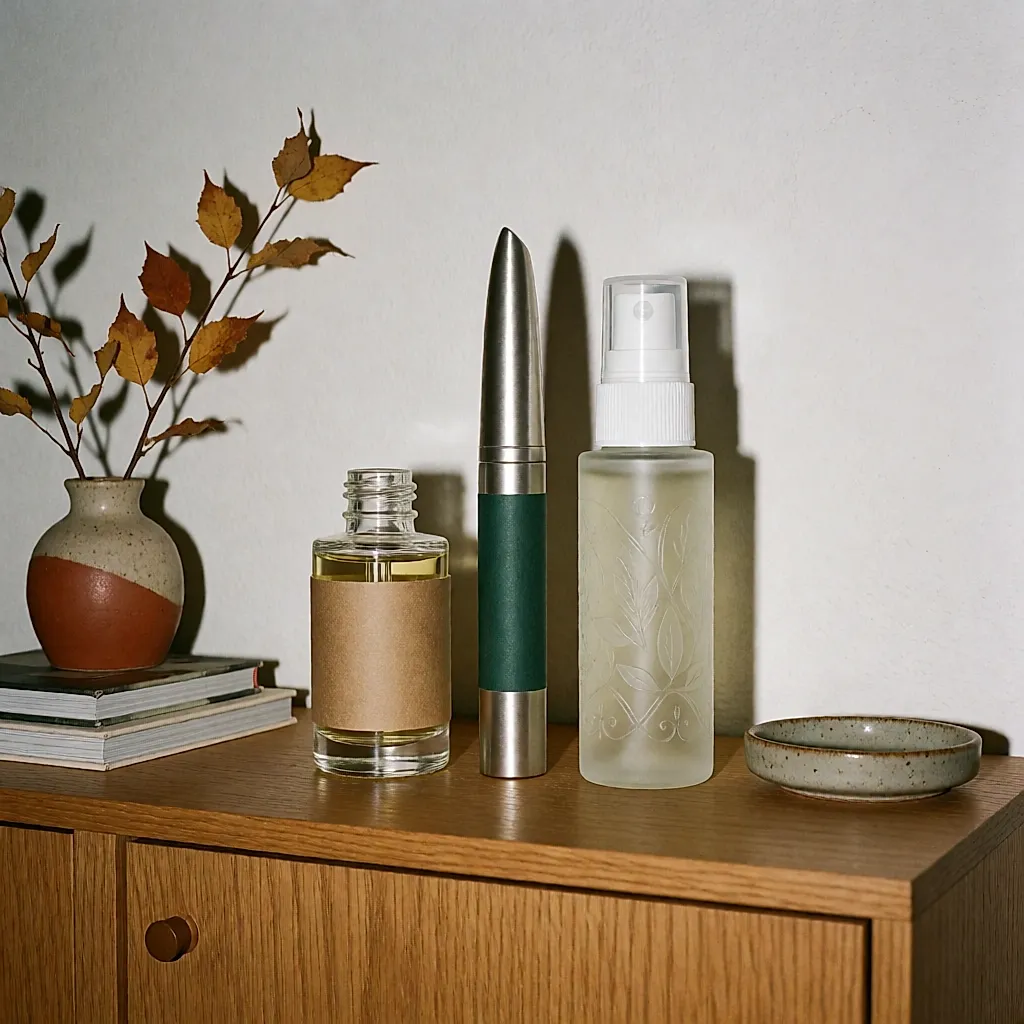
The applicator pen — metal tip or built-in comb — can solve a good part of the problem: you deposit point by point, along the parting, without going through your hand. The gesture becomes more regular, you get it everywhere without thinking about it, and the back of the head becomes reachable. The limits: the reservoir is smaller, refills are not always available depending on the model, and cleaning the tip takes a little discipline. The spray, meanwhile, is quick but far less precise; handy as a supplement, not as your main method.
The real change of gesture is there: a mask, by design, is spread over the lengths. A serum, by design, forces you to aim for the skin. The format does half the work.
Budget
Price-wise, expect a wide range: in France, count roughly €10 to €25 for a simple pipette bottle on the high street, in a pharmacy or online, and roughly €25 to €60 for a more developed formula from a beauty retailer or a premium hair-care brand. The bottle size depends on the format you choose: how long it lasts varies with the format and how often you use it.
What pushes the price up: volume, where you buy it, whether there is a glass pipette or a pen, and whether you can buy a refill. On the environmental side, look at the packaging (glass rather than plastic, a refill where one exists), the ingredients list and any mention of where it is made when it is stated. A very well-made conventional serum can still sometimes be the best choice — do not let that make you feel guilty.
Three habits worth getting right
- Always place the tip in contact with the scalp, not on the surface of the hair.
- A clean parting before each application: without it, the product stays on the fibre.
- No extra layer ‘to be safe’: beyond a few drops, serum can weigh hair down instead of helping.
A scalp serum is not just one more product in your cupboard: it is care for a part of the body we had simply forgotten to treat. A few partings, a few drops, one minute — and the gesture becomes as natural as brushing your teeth. If you take one thing away: aim for the skin. The rest will follow.



Comments
Your opinion matters: rate the article, react and reply to comments.
Comments are moderated; AI-assisted comments are flagged. Text emoticons (8-), :-), <3…) are automatically shown as images.