
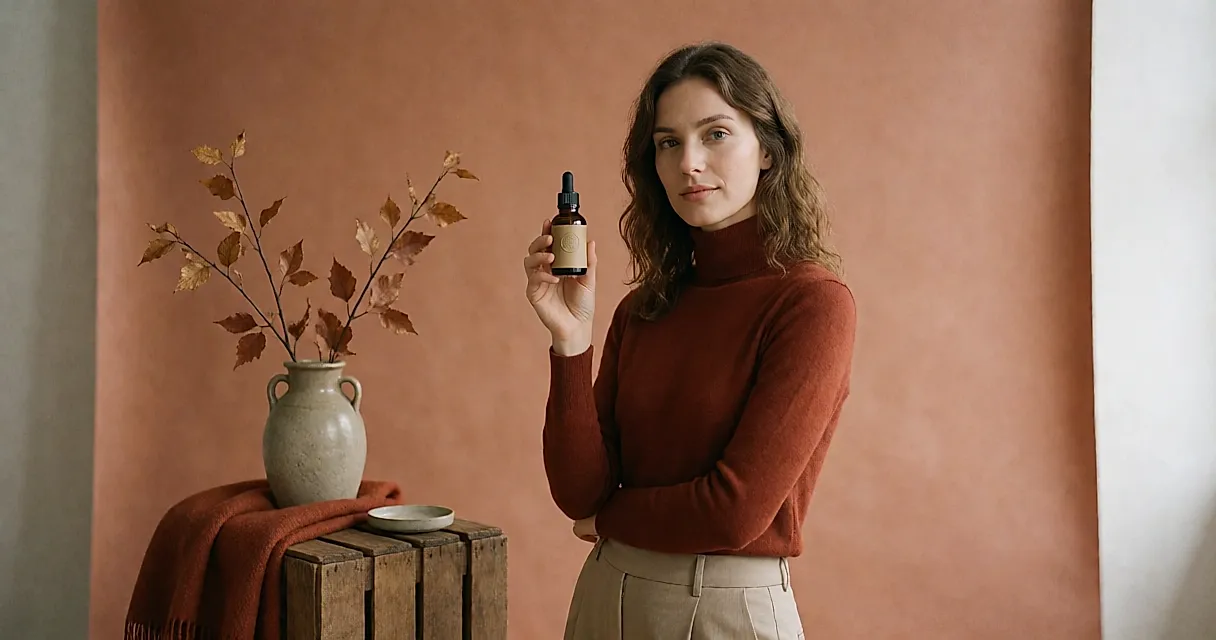
“Your skin is stressed.” On a serum bottle, that line does a job — a bit like a pair of scales announcing your mood for the day. We already had dull skin, tightness and redness turning up uninvited; now we are invited to read the lot as an internal bulletin. And if the bottle starts talking about sleep, fatigue and balance, it is worth knowing what it is really saying.
A skin effect is not a health check
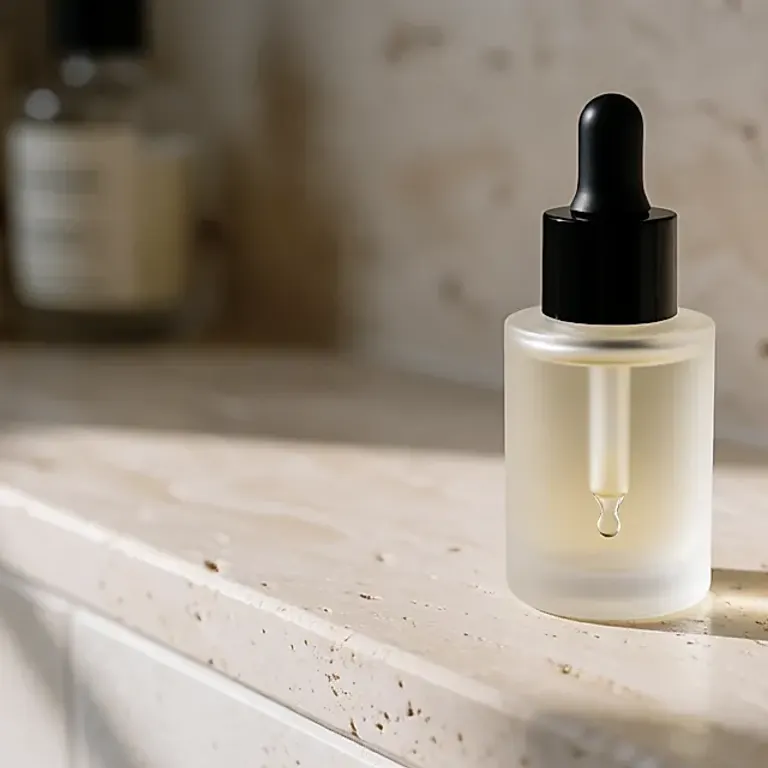
Let’s be precise about what a serum does: it goes on the skin, stays there and works at the surface. What you can notice is feel and visible change — discomfort that calms, a softer texture, a less dull complexion, make-up that sits better on a Monday morning. That is already a lot, and you can measure it yourself without a spreadsheet. What the same bottle cannot do is tell you whether your sleep is good or your mental load is overflowing.
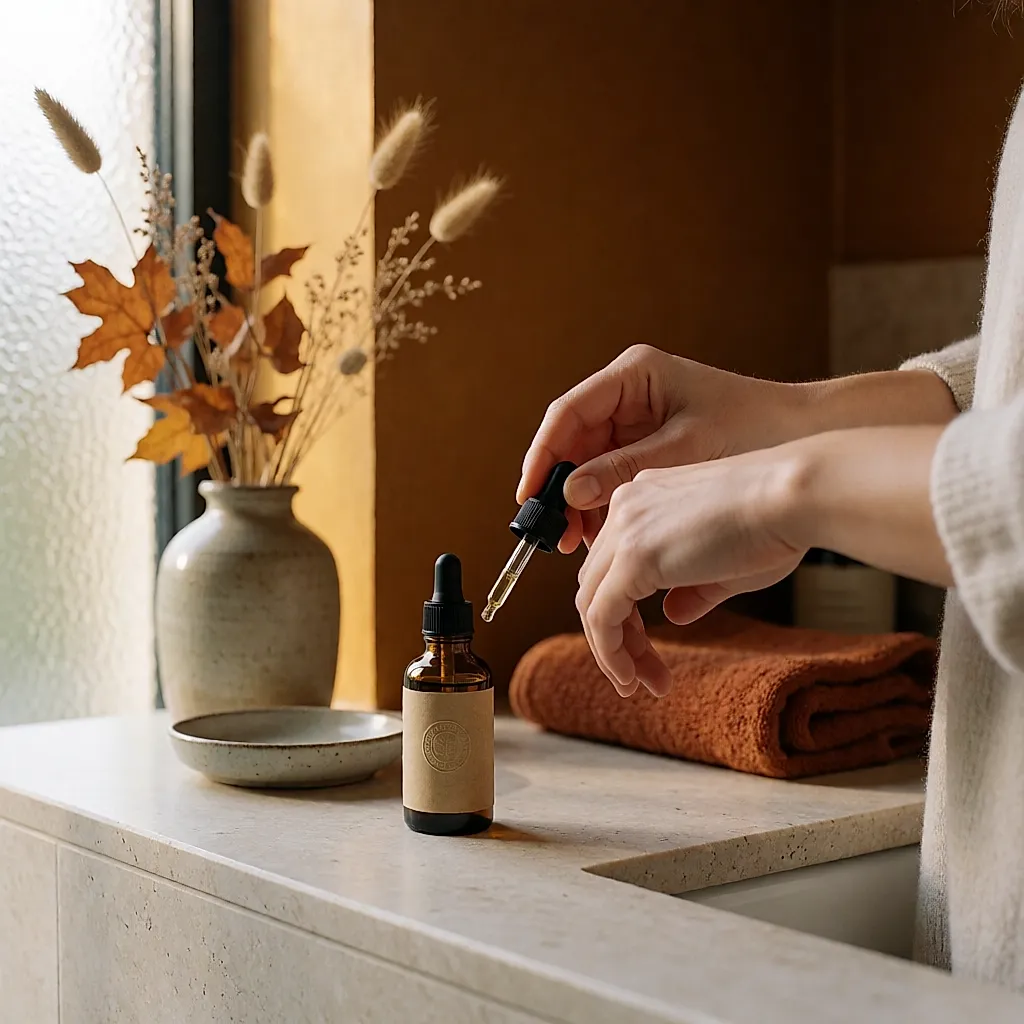
Skin does react, it’s true: a short night, a busy week, dry November air, and your complexion lets you know. But linking a spot to an emotion is a shortcut even a dermatologist would not take without examining you. I’m not a doctor, and I’m wary of bottles playing doctor: a skin effect is judged on the skin, not on a general feeling of wellbeing. If your skin is worrying you persistently, see a healthcare professional — not a bottle, however seductive.
The measurement vocabulary, decoded without the headache
“+72% hydration”, “comfort index ×2”, “skin wellbeing score”… These numbers are impressive, and that is their job. The question to ask is always the same: measured on whom, over how long and using what method? A percentage without a protocol tells you nothing — 30 people or 300, after one application or after eight weeks, is not the same story. And an in-house index, however pretty, is still an index invented by the brand, not a recognised threshold.
Another phrase to look at closely: “clinically tested”. It means a test took place, not that the result is spectacular. In the UK, as in the EU, a cosmetic cannot claim a therapeutic effect, which already limits the biggest promises. For the rest, look for the small print: the study, its duration, the number of participants. If the bottle stays vague, it is often because precision suits nobody.
When serum meets supplements
The real novelty is not in the bottle; it is in the system: serum in the morning, capsules at night, an application that reminds you to breathe, a routine that claims to support skin and mood. On paper, the idea is appealing — we like a nightly ritual that does two things at once. In practice, it changes the nature of the purchase: you are no longer buying a skincare product, you are buying a programme, with its monthly budget and its tick boxes.
And here, caution still applies. A food supplement is not something to take lightly. Pregnancy, breastfeeding, current medication, a particular health condition: seek professional advice, not an Instagram story. The stack of serum + capsules + oil + mask is not automatic either; multiplying products mainly increases the risk of discomfort and the bill. A well-chosen serum, applied regularly, already does its job. The rest is an option, not an obligation.
What you’re actually paying for
On price, expect roughly £15 to £30 for a serum from a chemist, pharmacy or supermarket, £30 to £70 in department store beauty halls and from established skincare brands, and £80 to £150 for premium. What moves the figure: the concentration of active ingredients, the format (15 or 30 ml), where you buy it and the city. For the full breakdown of retail channels, our article “Does a £90 serum cost you more than a £100 one?” covers the comparison in more detail.
In front of the bottle, three questions are enough: what skin effect do you really need (comfort, glow, an even tone)? Does the brand document its measurements, or only its vocabulary? And does this product replace a step you already do, or add to a pile that is already overflowing?
A serum does not need to read your life to be useful. Put it on at night, on clean skin: a few drops, the time it takes — and let it keep the modest role it does very well: that of a skincare product. Wellbeing is read elsewhere: in a slightly longer night, one more glass of water, a day when you stop measuring everything. That is often where the complexion follows.
Food supplements do not replace a varied, balanced diet and a healthy lifestyle.
Comments
Your opinion matters: rate the article, react and reply to comments.
Comments are moderated; AI-assisted comments are flagged. Text emoticons (8-), :-), <3…) are automatically shown as images.