
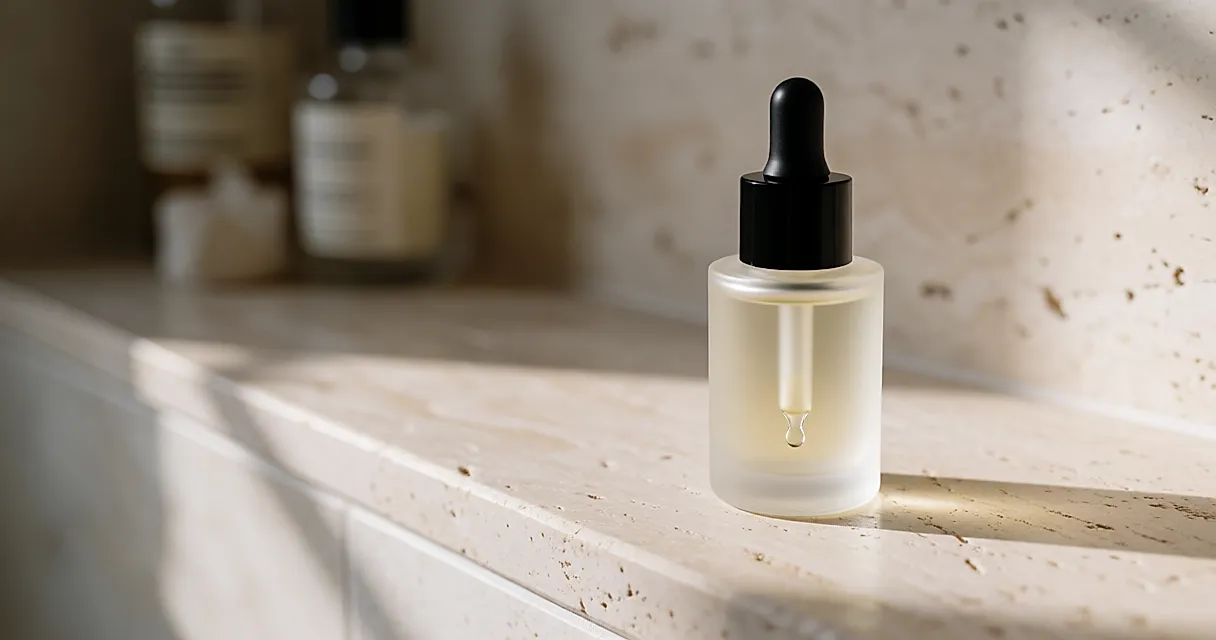
"0.2%?" The message landed in the group chat somewhere between a photo of someone's cat and a link to a squash recipe. It's the kind of number you read twice before wondering what you've actually bought. A friend had just turned her serum bottle over — full price, naturally — and finally read the tiny line of percentages. For years we were sold a number. Now, sometimes, we're sold a very small number. And oddly enough, the pitch can get more interesting.
The percentage arms race had a problem at its core
Admit it: we've all chosen a serum because it said 10% when the one beside it said 5%. That reasoning holds up for about four seconds — more must be better, right? Except a percentage tells you nothing about the purity of the raw material, how the active is built into the formula, or what happens to the bottle three weeks after you open it. Two serums labelled "10%" can behave like two strangers who were never properly introduced.
The number had another charm: it was loud. It reassured you at the till, it filled product pages, it looked great in a photoshoot. But it never answered the only question that matters: what does your skin make of it? On reactive skin, the answer can be "ouch", and you'd put the lid back on and promise to come back to it.
What a low dose changes in the formula
Sometimes a product page leans less on a percentage and more on how the low dose is built in: at what concentration, in what base, alongside what, and on where it's made — where the molecule comes from, how it's produced, sometimes which site. It's less glamorous on a bottle. It's far more useful when you're trying to work out what you're buying.
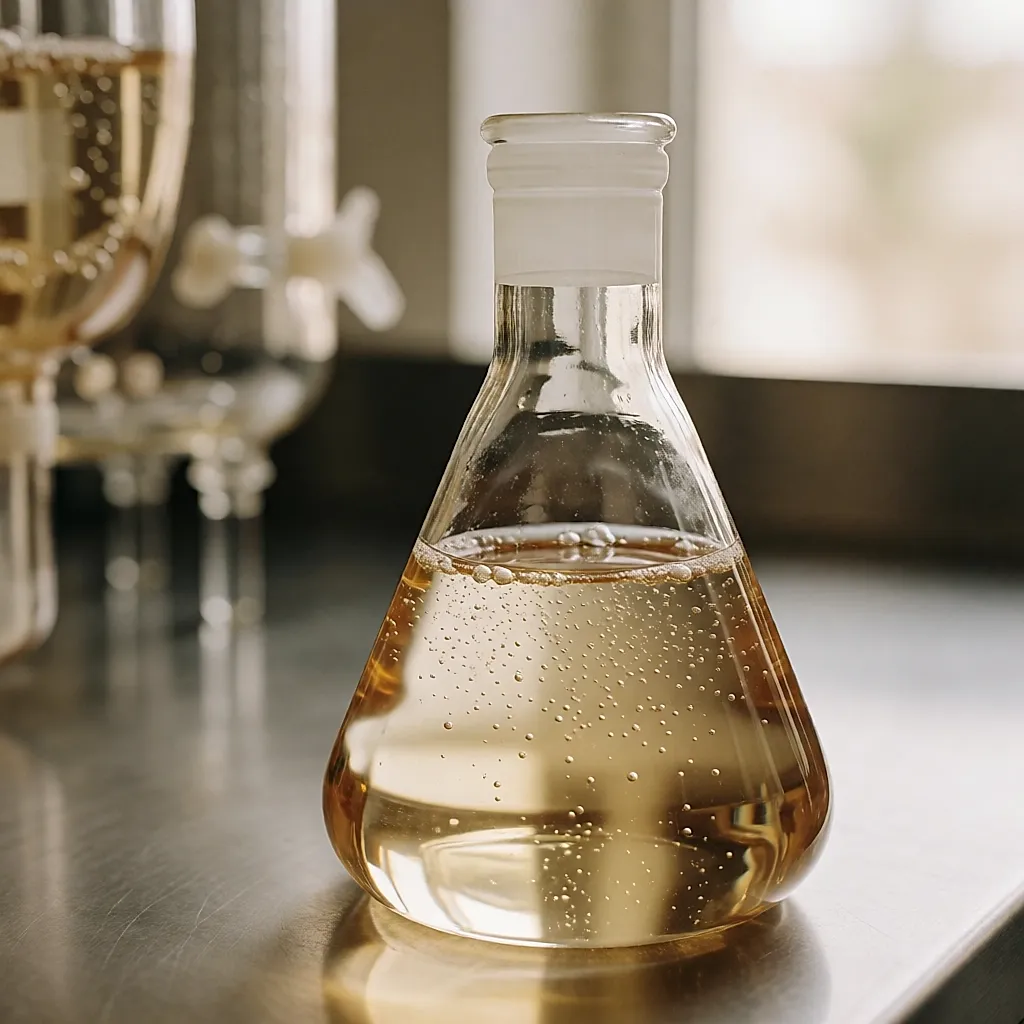
A biotech active, in this context, doesn't come from a field: it's often the result of fermentation, with a calibrated strain and process. It isn't necessarily a plant, and it isn't necessarily a petroleum derivative either — and that's exactly what makes the shelves confusing. A brand can hardly tick the "natural" box without saying what it means by it. At last, a conversation about what's in the bottle rather than the number on the front.
Reactive skin: a low dose won't do all the work
Less active can mean less stinging. Which is why skin that flares at the first serum it meets should look at the dose before it looks at the name in capitals on the label. A lightly dosed formula, designed for daily use, can give skin time to get used to it — which is not the same thing as promising a result.

One caveat, though: an active at a low dose in a base loaded with fragrance, alcohol or essential oils can irritate more than a higher dose in a stripped-back formula. A low dose is a lead, not a free pass. And if your skin tightens, goes red or keeps stinging, don't improvise — ask your GP, who can refer you to a dermatologist — and set the product aside in the meantime.
The price didn't come down with the dose
Here's the sticking point. A low dose hasn't brought the price down; quite the opposite, in many cases. Controlled fermentation, batch testing, European production — all of it costs money. The quietest bottle on the shelf is sometimes the most expensive one, and the brands behind it tend to be perfectly comfortable with that.
Is that a reason to reach for your card? Not automatically. Origin is a supply-chain argument, not a skin argument. And "made in France" — or "made in the UK", for that matter — doesn't mean better tolerated. Paying more for traceability, yes, if that's what interests you. Paying more in the belief that you're buying gentleness, no. I haven't had these formulas in my hands yet, so I won't describe textures I haven't seen — but on paper, the argument isn't about the same thing.
What to expect to pay
Expect to pay roughly £15–£30 for a serum from a pharmacy or high-street retailer, £30–£60 for a dermatology brand, and £70–£120 if you're looking at premium ranges with a biotech active on the front. A salon treatment with a consultation often sits somewhere between £50 and £90, depending on where you live.
What moves the price: the concentration, the packaging (glass, airless pump, refill where there is one) and where you buy it. A refill, when it exists, can cost less than the full bottle — assuming it's actually in stock, which can feel like an Olympic sport. Have you ever managed to find one?
What I check before I pay
- Two pieces of information on the box: the percentage of the active and where it's made. If one is missing that's not an automatic no, but it tells you how straight the brand is playing it.
- The formula as a whole: fragrance, alcohol or essential oils near the top of the list change the experience as much as the dose of active.
- A sample, where one exists. A serum is something you watch over several weeks, not on an influencer's photo.
In the end, when a product page puts the dose and the origin up front, it's suggesting a simple shift: from beauty as a trophy cabinet to beauty as precision. One habit still makes all the difference and costs nothing: read the box all the way to the bottom — thirty seconds, watch in hand. If a brand owns its dose and its origin, good for it — and good for you. If not, put the bottle back and keep your money for a formula that plays straight.
Comments
Your opinion matters: rate the article, react and reply to comments.
Comments are moderated; AI-assisted comments are flagged. Text emoticons (8-), :-), <3…) are automatically shown as images.