

Tuesday, 2pm, the treatment room. You come out with a pink cheek, a little warm, and the odd feeling that you've somehow caught sunburn in November. On the Tube home one question goes round and round: what do you put on tonight? Then, two days later, the other question — the expensive one: when do you start your serum again?
Your skin isn't asking for one more active
After a laser, skin is temporarily sensitised: it feels tight, it's warm, it flushes, sometimes it prickles. For how long exactly? That depends on the device, the area, your skin and how intense the session was — in other words, the person who did the treatment sets the timetable, not an article, and certainly not a 2011 forum thread.

What it isn't asking for, though, is a pile of bottles. A "repair" serum is not a plaster you stick over a battered skin barrier; a barrier cream plays a more modest and more useful part: it protects, it limits water loss and it lets your skin get on with its own job. That's already a lot, and it costs a good deal less than your twenty-fifth serum.
The timetable comes before the bottle
So the real question isn't which active, but when. While the redness and sensitivity are settling, press pause on anything that exfoliates or heats the skin: acids (AHA, BHA), retinol, grainy scrubs, masks that tighten. Not for a fixed three months on principle — just until your skin calms down, and here too the instruction you were given in the room trumps ours.
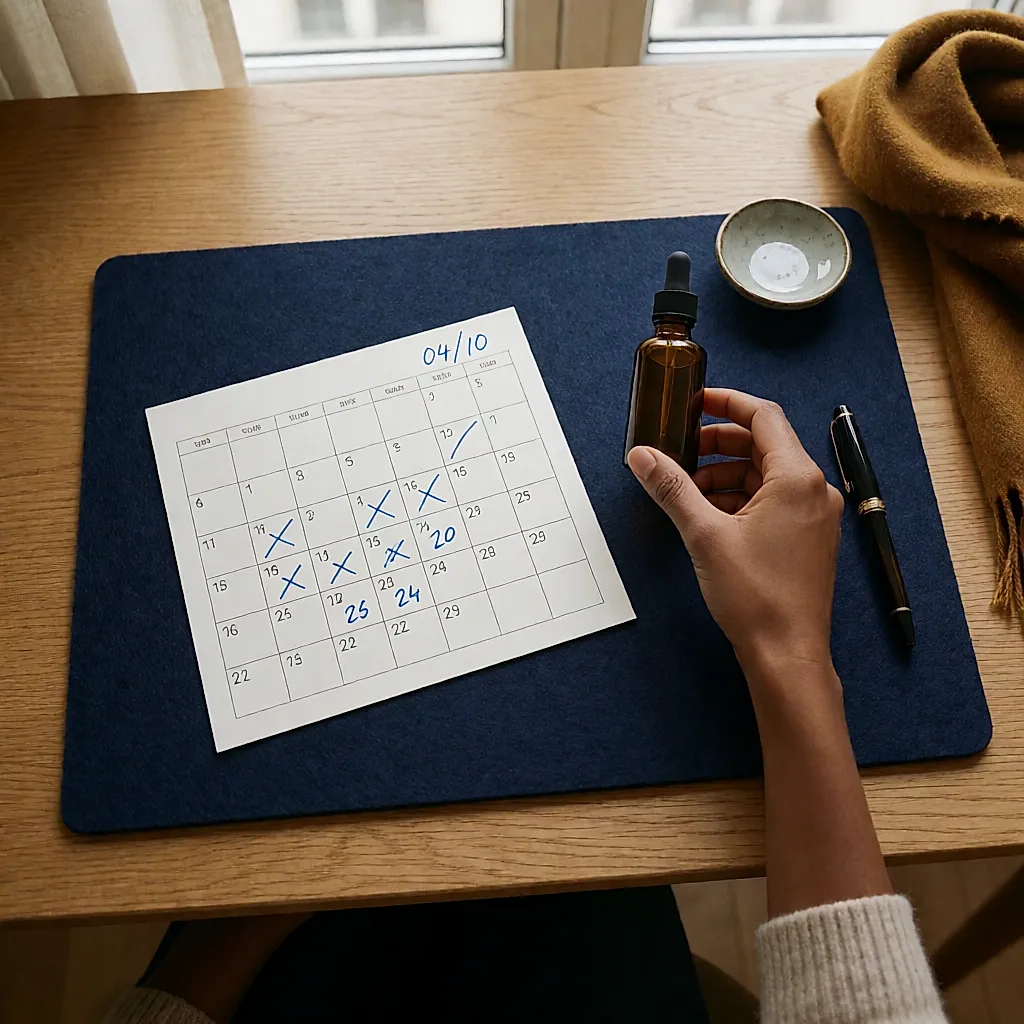
Next comes the bit that takes a little discipline: one active at a time. Bring one product back, give it a few days, see what your skin says before adding the next. It's less of a thrill than an eight-step routine, but it's a simple way to know what's doing you good and what's making you flush.
I'm not a dermatologist, and I won't be the one deciding what suits your skin: if the area stays hot, weeps or worries you, that's a job for a healthcare professional, and don't wait.
Three barrier steps that take two minutes
On the cleansing front, keep it simple: a gentle, fragrance-free cleanser with no grains, two pumps into your palm, lukewarm water, smooth it on, rinse, pat dry without rubbing — the Sunday-night-in-a-hurry move, only slower. Forget the scratchy cotton pad and the wipes that sting.

Then a pea-sized amount of barrier cream morning and night, on slightly damp skin, plus an SPF 50 every morning. After a laser, skin can be more sensitive to the sun: cover the area (hat, cap, scarf) and ask in the room how long for. And here's the good news: three products can replace half the drawer.
And the serum you'd been dreaming of?
Do the audit — it does you good: count the bottles with a finger's worth left at the bottom, the ones you never open any more, the ones that cost as much as a decent lunch. One more serum doesn't solve a timetable problem — it just adds another line to the list.

On the packaging side, take the chance to look at glass, at refills where the brand offers them, at short formats rather than double doses. And if you're after a label, note that Cosmebio or COSMOS mainly set standards for the proportion of natural and organic-origin ingredients: they don't certify any efficacy after a procedure. Here, the criteria that really count are the words fragrance-free and a short ingredient list.
What it costs
Expect to pay somewhere around £8 to £18 for a gentle cleanser, £10 to £25 for a barrier cream and £10 to £25 for an SPF 50, from a pharmacy, a beauty or health-and-beauty retailer, on the high street or online. Prices move with size, range and where you shop, and a large fragrance-free format often does the job as well as a small, beautifully dressed pot.
Worth remembering: the laser sessions themselves can be a significant cost depending on the area and the practitioner — which is all the more reason not to add three unnecessary products to the bill.
Three questions before you click
- Did the person who did the treatment give you a timetable for restarting?
- Does this product replace something you already do, or is it an addition?
- Is it fragrance-free, in glass or refillable, and big enough to actually finish?
And if tonight you've only got two minutes and no wish to think about any of it: lukewarm water, cream, bed. The rest of the timetable can wait until tomorrow — your skin has never needed you to hurry.
Comments
Your opinion matters: rate the article, react and reply to comments.
Comments are moderated; AI-assisted comments are flagged. Text emoticons (8-), :-), <3…) are automatically shown as images.