
A friend called me the other day, a bit deflated. ‘My serum isn’t doing anything any more.’ We went through her routine together. Three products, two actives, and not a single exfoliating step for months. Her skin was covered in dead cells that were stopping everything else from getting through. The real story? The step that made the biggest difference took two minutes a week. You just have to do it in the right order and with the right texture.
What exfoliation actually does
Your skin renews itself continuously. When that cycle slows down, dead cells build up on the surface: dull complexion, rough texture, products that sit on top and no longer sink in. Exfoliating doesn’t force anything; it simply supports the process.
Second benefit, more concrete: ingrown hairs after shaving or hair removal. Regular exfoliation may help clear the follicle and reduce those little bumps. In truth, that’s often what convinces people.
The downside exists too. Over-exfoliating can damage the skin barrier — redness, tightness, stinging. Generally, once or twice a week is enough, for both body and face.
How to do it, in the right order
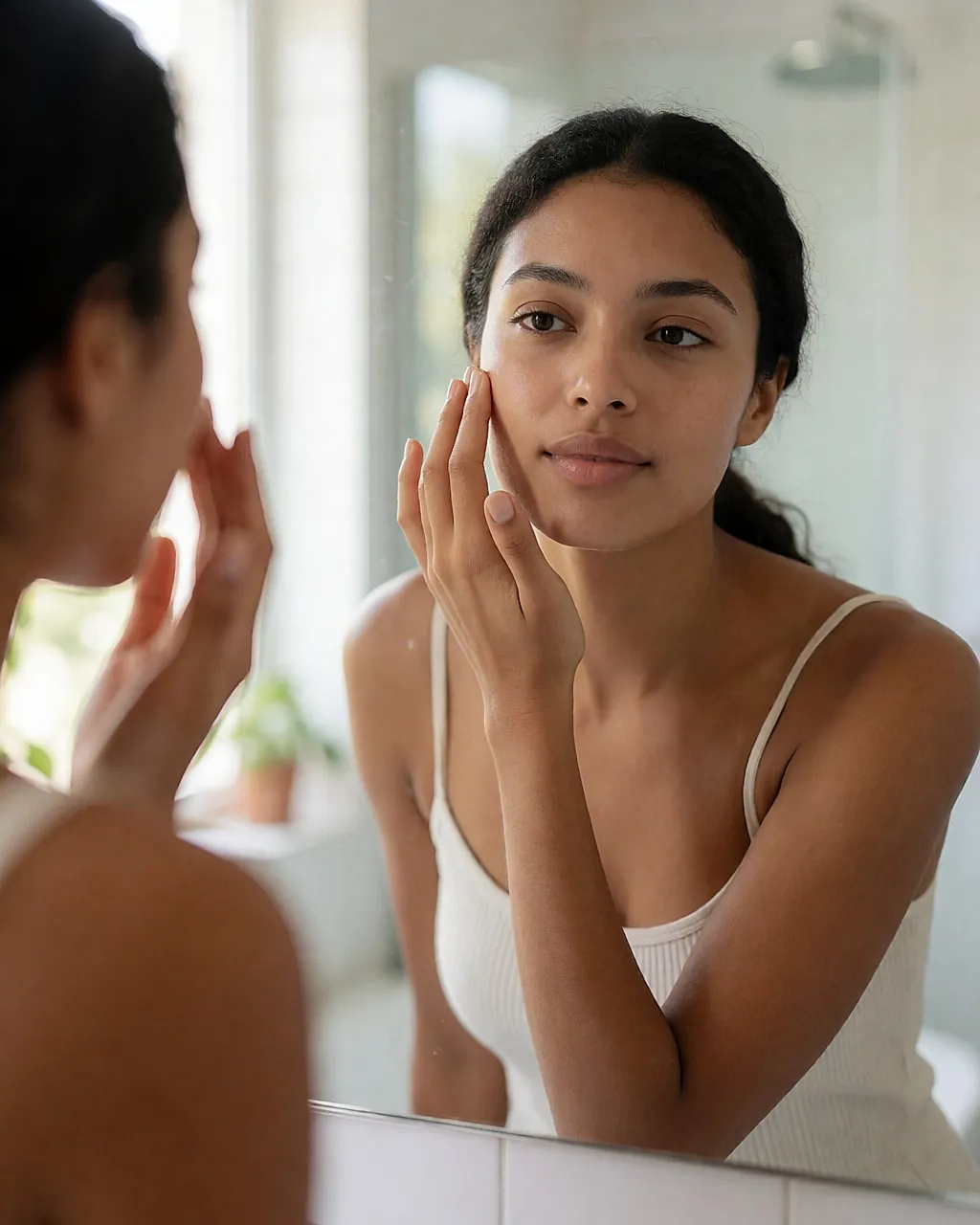
Start in the shower, on wet skin. On dry skin, the grains catch and irritate. After washing, take a walnut-sized amount and massage in circular motions, without pressing: it’s the particles doing the work, not your force. Spend extra time on thicker areas — elbows, knees, heels.
Rinse with warm water, never hot. Then moisturise straight away: exfoliated skin drinks it in better. This is the ideal moment for plant oil or a rich cream.

Body and face need different textures
A body scrub with sugar or salt grains is invigorating. If your skin is dry or sensitive, choose an oil-based formula or fine grains such as almond powder. Crushed kernels are for the body — avoid them on the face.
On the face, two families share the field. Mechanical exfoliation — fine grains, powder to rehydrate — is generally used once a week. Chemical exfoliation (AHA, BHA, fruit acids) works without rubbing: the formulation makes all the difference. A cleansing gel with salicylic acid can be used daily if your skin tolerates it; a concentrated peel, no.
Useful detail: in the UK, plastic microbeads in rinse-off products have been banned since 2018.
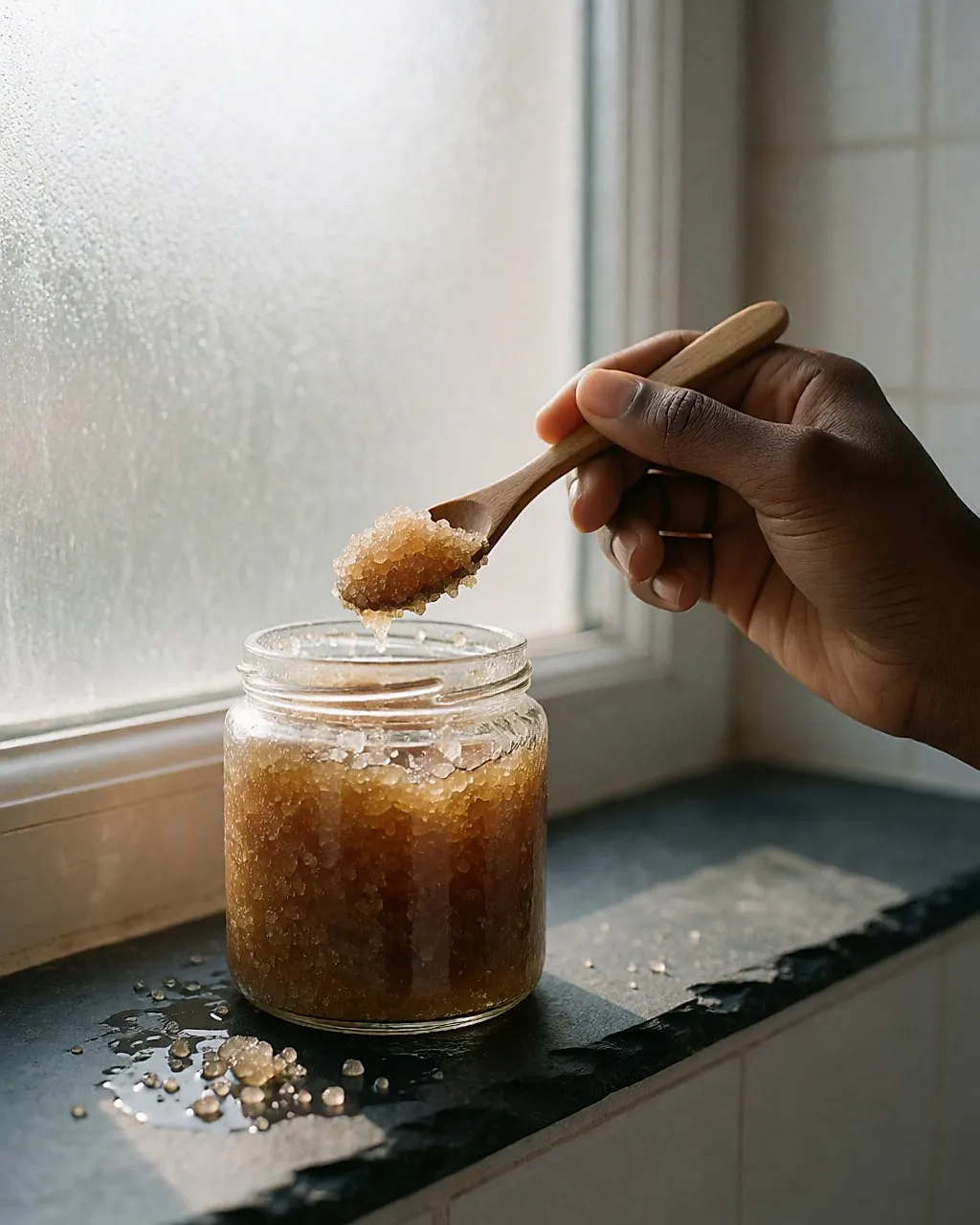
A sensible homemade scrub. Two tablespoons of brown sugar or almond powder, two of plant oil, one of honey. Massage, then rinse. No lemon: it’s too acidic and photosensitising. Make it and use it straight away — no preservative.
Choosing well and reading the packaging
On a body scrub, look at the base before the fragrance. Certifications such as COSMOS Organic (or Cosmébio in France) set limits on natural and organic ingredients; the word ‘natural’ on its own guarantees nothing. When it comes to disposal, choose a glass jar or cardboard tube, refillable if possible. In France, since 2023, plastic packaging goes in the yellow bin; in the UK, recycling rules vary by council, so check locally. Glass is usually collected separately.

For the face, the method matters more than the price of the pot: a well-formulated exfoliating lotion is better than an overly aggressive grainy scrub.
What it costs
- Body scrub: expect to pay around £4–£10 in supermarkets or pharmacies; £10–£22 for a certified organic formula.
- Face scrub or exfoliating lotion: around £7–£18 in a chemist or online; £22–£40 in a department store or beauty retailer for a branded peel.
- Salon: around £35–£70 for a body exfoliation treatment, depending on the city and treatment length.
- At home: around £3–£6 for plant oil and sugar, enough for several months of exfoliating.
Prices vary with certification, size, retailer and how often ranges are reformulated. There’s little point spending £40 on a jar if you only exfoliate once a month.
One last very practical tip: keep your scrub in the shower and moisturise within three minutes. That habit makes more difference than the brand on the lid.


Comments
Your opinion matters: rate the article, react and reply to comments.
Comments are moderated; AI-assisted comments are flagged. Text emoticons (8-), :-), <3…) are automatically shown as images.