
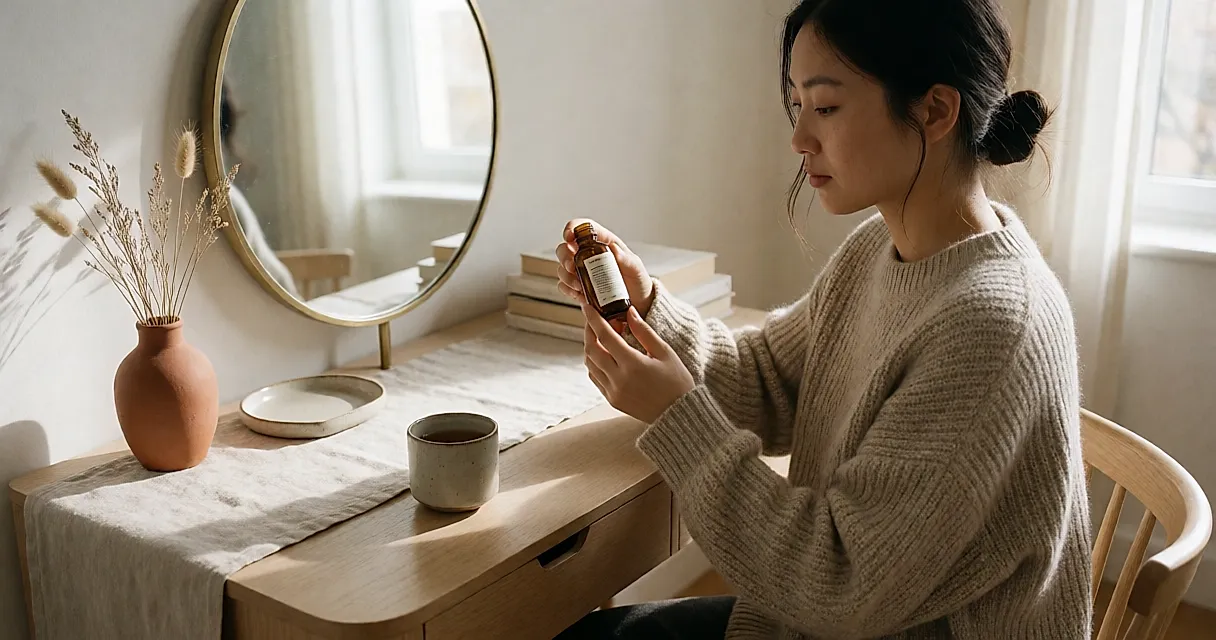
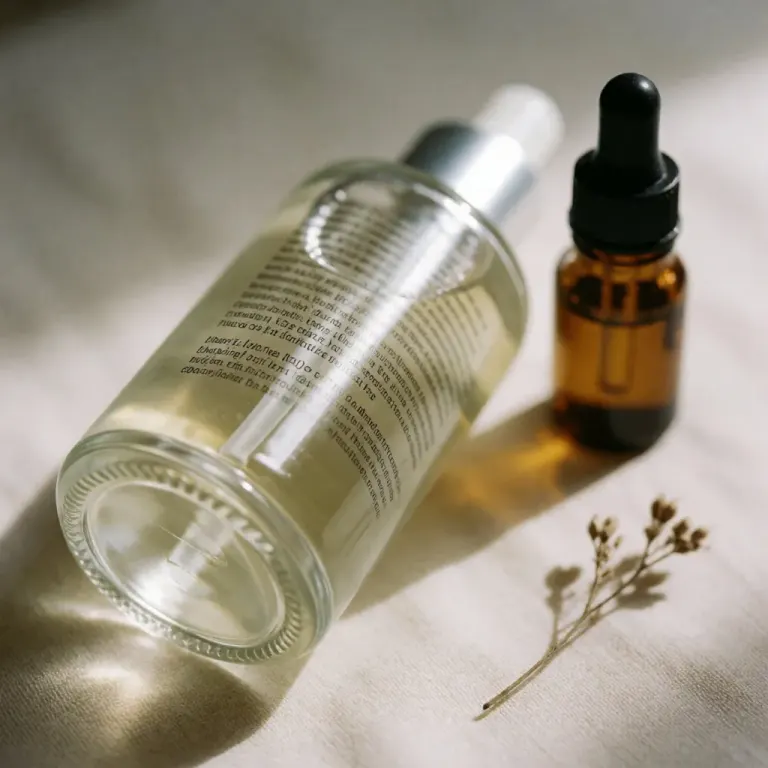
On a serum bottle, the INCI list is printed so small that you end up squinting at it. Yet it is the part that tells you what matters: what you are putting on your skin, in what order, and how far the bottle lives up to its promise. A dupe can be a good buy, as long as you are buying a formula rather than a name.
The bottle draws you in, but the label has the facts
A dupe first appeals through what it imitates: the colour, the ritual, the scent, the price. With a cleanser or a perfume, the calculation is often simple: you compare the budget, the feel, and whether you want to buy it again. With an active serum, the question changes. The same active name on two labels guarantees neither the same place in the formula, nor the same texture, nor the same tolerance.
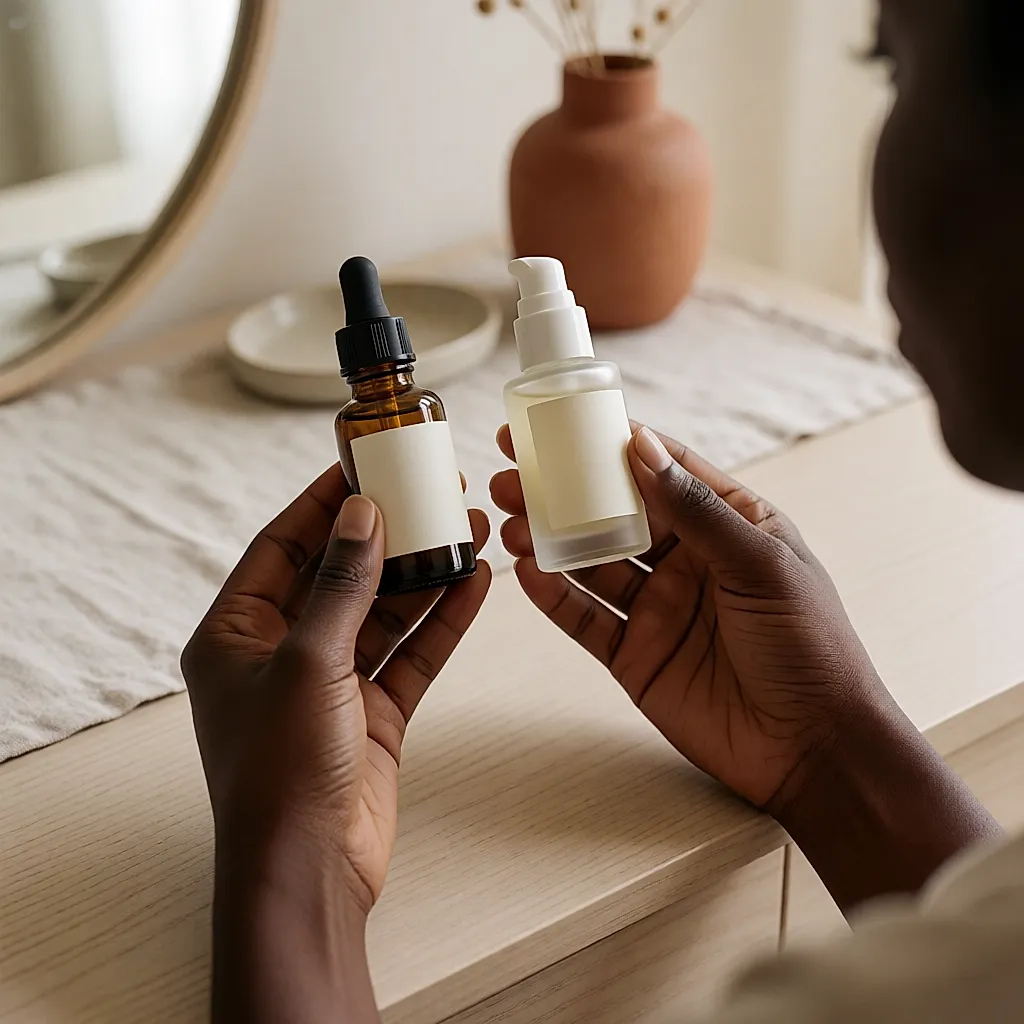
That is where you need to move the decision from the bottle to the formula. A dupe is not an equivalent: it is another product, with its own excipients, packaging and preservation. The useful question is not 'is this the same thing?' but 'does this formula suit me, at this price?'
First reading: the INCI list, from top to bottom
The INCI list is written in descending order down to 1%: the first ingredients are the most present; after that, the order can be more flexible. In other words, an active listed second does not carry the same weight as an active listed after the fragrance. That is not enough to judge a formula – some actives work at a low dose – but it helps you avoid paying for a name that sits right at the bottom.
Look too at what surrounds the active: water, oils, butters, alcohols, fragrance, preservatives. A heavily fragranced formula or one rich in essential oils may suit one skin and irritate another. And if you have reactive skin, the absence of fragrance or alcohol may matter more than the star ingredient on the bottle. The list does not say everything, but it already says a great deal.
Second reading: relative concentration, not the name on the bottle
Two serums can list the same active and look nothing alike. One places it near the top of the list, the other slips it in after several emollients; one is fluid, the other syrupy. Relative concentration cannot be read to the millimetre, but it gives you an order of magnitude. Is the active at the top or buried at the end of the list? If you are after a specific active, compare its position, not just its presence.
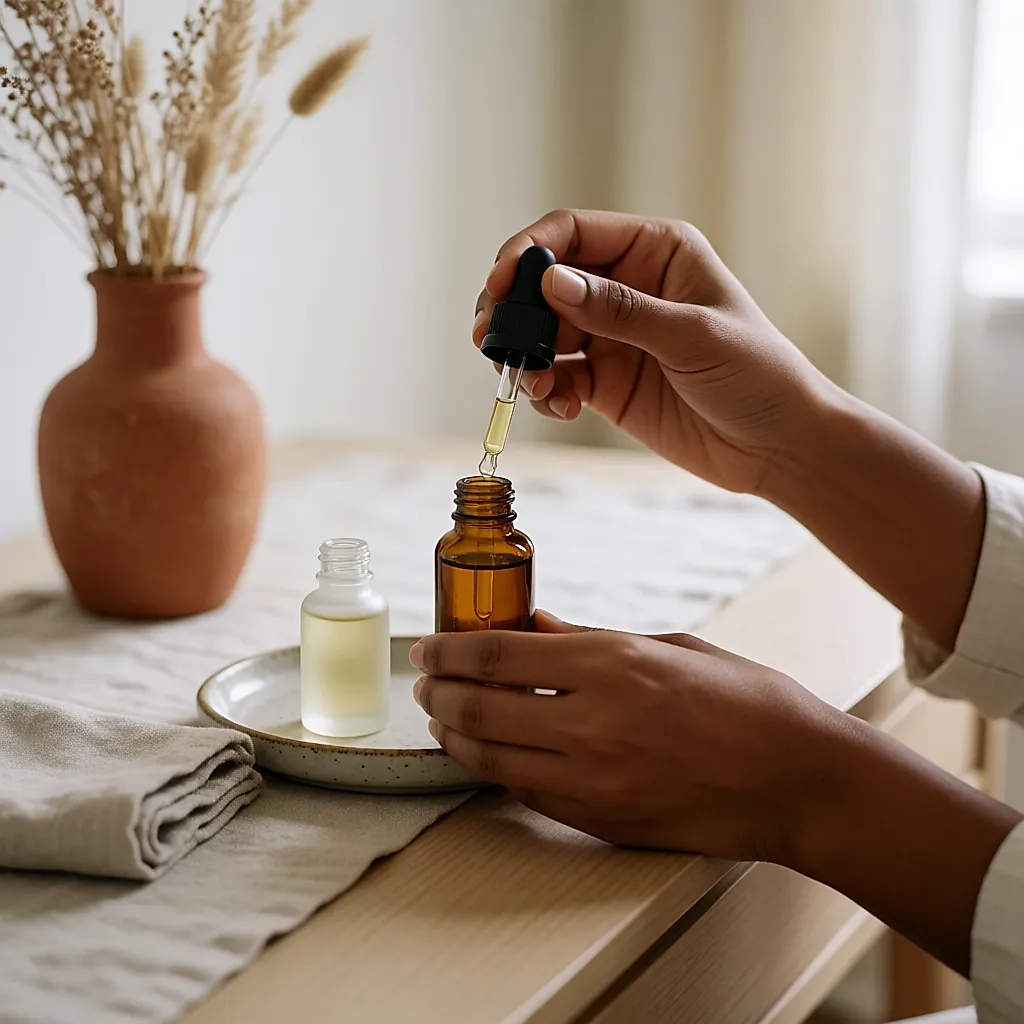
Tolerance, meanwhile, cannot be deduced from a logo or a price. It depends on your skin, how often you use the product, and the other products in your routine. A dupe may suit you very well, or it may cause tightness you never had with the original. No one can promise you the opposite. The only sensible move is to try it on a small area, then watch it for a few days before committing to the whole bottle.
Third reading: packaging and the opening date
A good serum in poor packaging will age badly. The container is part of the formula: opaque bottle, airless pump, dropper, wide jar. Each lets in more or less air, light and fingers. For sensitive actives, a pump bottle or an opaque tube is often more reassuring than a clear jar. Is a wide jar automatically out? No, but it asks for a little more discipline. It is not an absolute guarantee, but it is a sign of care.
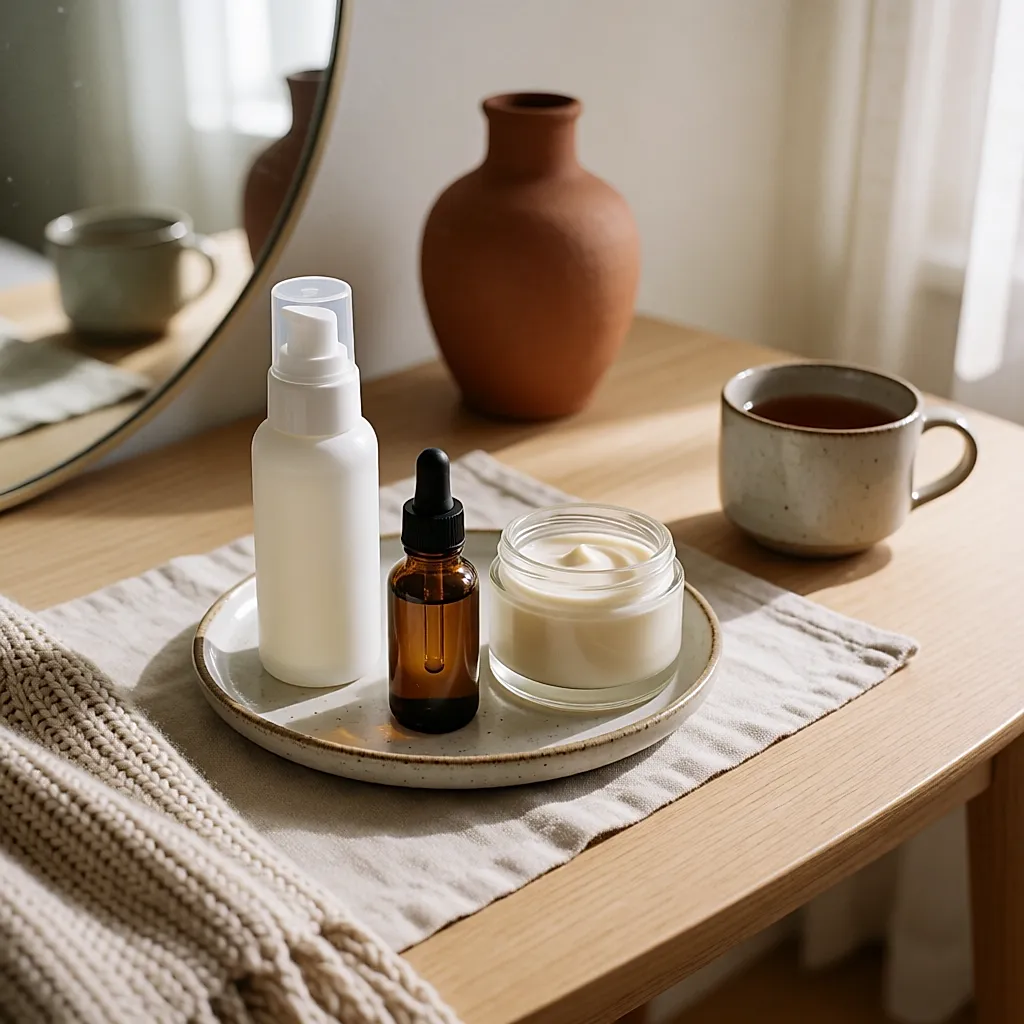
Also look for the opening date or the PAO symbol on the packaging: the latter shows how long the product keeps after opening. Write the opening date in marker if it is not given, especially on a serum you use morning and night. On the eco side, favour glass, cardboard or a refill, provided the refill really exists and you can find it easily. A 'responsible' container that you never refill does not save much.
Where the real saving lies
As a rough guide, expect to pay around £10–£30 for a basic dupe serum from a supermarket or online, £30–£60 for a branded serum from a pharmacy or beauty retailer, and £60–£100 for a department-store or perfume-shop serum, depending on size and range. A perfume dupe often costs £15–£40, against £60–£150 for a bottle from a perfume shop: the price and the scent trail do not tell the same story. Prices vary by town or city, by retailer and with promotions.
The real saving is not paying less at the start, but avoiding three bottles that do not suit you. Is a small size available? A sample or a discovery set can reduce the risk. And if the natural or organic product you are considering costs more, check what the label actually guarantees: the word 'natural' on its own says nothing about the full formula.
The three-read check
- Read the INCI list from top to bottom and note where the active appears.
- Compare that position with the original, without expecting a perfect copy.
- Check the packaging, the PAO and the opening date before you commit.
At heart, a dupe is neither a magic promise nor a trap: it is a bet on a formula. With a cleanser or a perfume, you can take that chance for the budget and the pleasure. With an active serum, take the time to read the label, compare where the active sits and listen to your skin. The best buy is not the one that looks most like the original: it is the one you use to the last drop, without wincing and without regret. And no dupe can promise that on your behalf.

Comments
Your opinion matters: rate the article, react and reply to comments.
Comments are moderated; AI-assisted comments are flagged. Text emoticons (8-), :-), <3…) are automatically shown as images.