
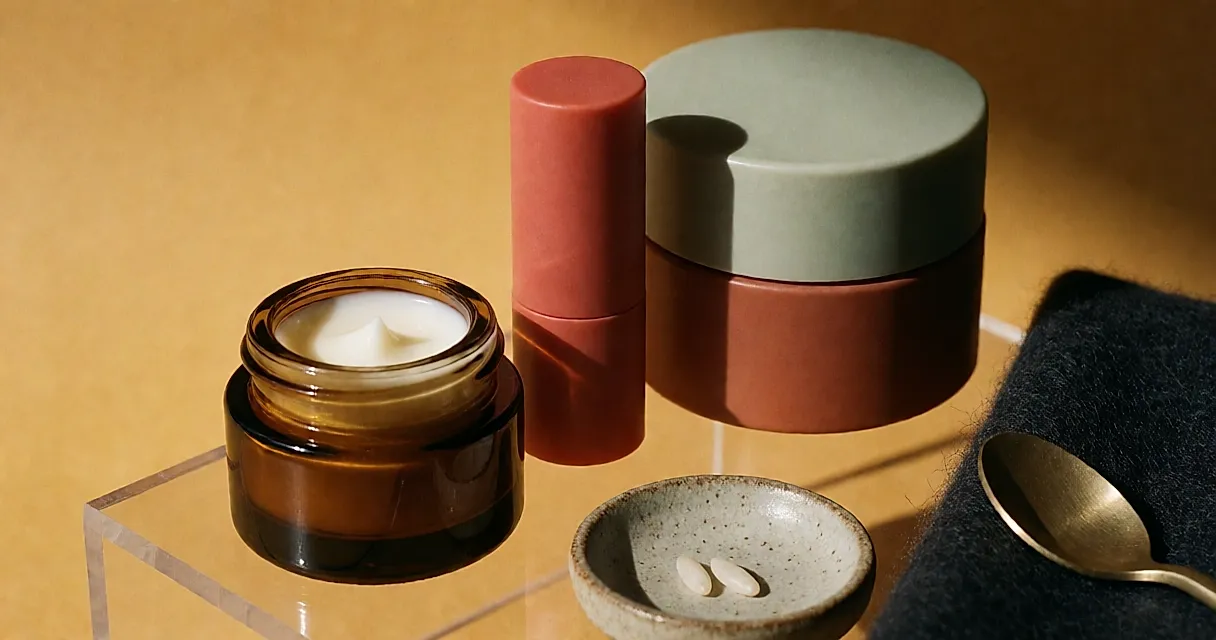
Your face cream does the job perfectly well — right up to your eyelids and lips, or so we tell ourselves to avoid buying a second tube. Except that a 15 ml eye product from the pharmacy isn't promising the same thing as a 50 ml pot: not the same texture, not the same dose, not the same gesture. The question is whether the price gap holds up in real life — the kind where you take your make-up off one-handed while thinking about the morning.
The format is more than a shelf gimmick
A 50 ml pot has to sit well on a forehead, cheeks and nose, and get through the day without shine. A 15 ml tube has no such brief: it targets one area, usually the most delicate part of the face. The skin around the eyes is among the thinnest on the body, and lips are no thick hide either — hence lighter, less greasy textures and, for lips, more occlusive balms designed to hold moisture in.
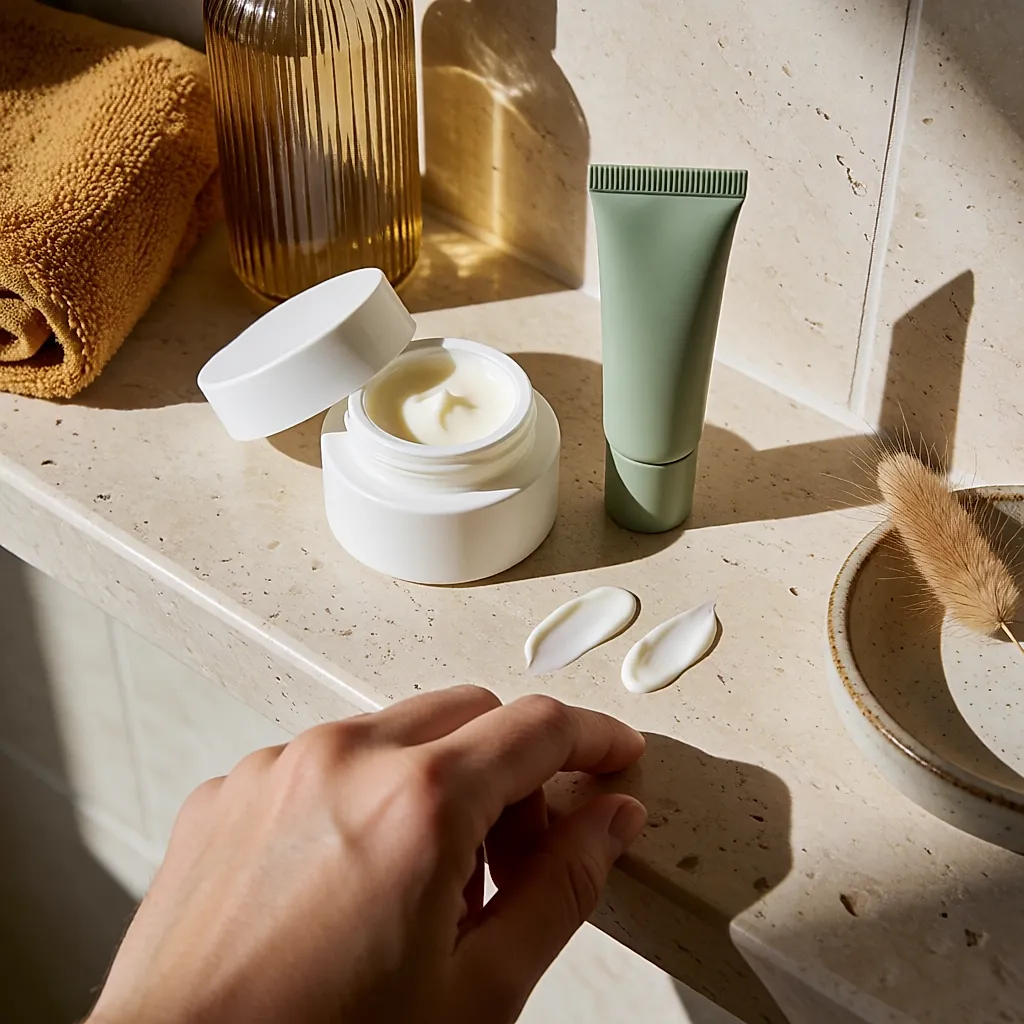
In practice, a fairly rich face cream spread on an eyelid has two flaws: it migrates towards the eye at the first blink, and it leaves a thin greasy film that makes mascara smudge. That's not the cream's fault; it's a question of use. A dedicated product is formulated for a narrow gesture: little product, one precise area, fingertips only.
The dose matters more than the bottle
Take your face cream: a pea-sized amount, two cheeks, a forehead, and sometimes the neck when you're being conscientious. On an eyelid, that pea is already too much. The right amount is about one grain of rice per eyelid — a handy rule of thumb that does the rounds everywhere, not a prescription set in stone, but enough to stop application turning into an eyelid mask.
This is where the small format quietly scores points: its finer texture forgives a heavy hand. With a rich cream, the slightest excess shows, is felt, and ends up in your eye. For lips the maths runs the other way: you reapply ten times a day, so the tube goes fast. That's not a design flaw; it's the whole point of a balm. And let's be honest: nobody actually measures their lip balm consumption.
Cost per gram: let's look at the numbers
A 15 ml eye cream from a pharmacy costs roughly between £15 and £40, which works out at about £1 to £2.70 a gram. A 50 ml face cream at £20 or £35: 40p to 70p a gram. Put another way, the targeted product can cost anywhere from about one and a half to almost seven times more per gram than the pot it doubles up on.
Is that outrageous? Not necessarily, because the comparison stops where the gesture begins. What matters is the price per gram you actually use — and a 15 ml tube you finish is worth more than a 50 ml pot where half goes on out of habit. The real bad buy is the tube bought with enthusiasm on a Tuesday and forgotten behind the toothbrush.
So when is a dedicated product justified?
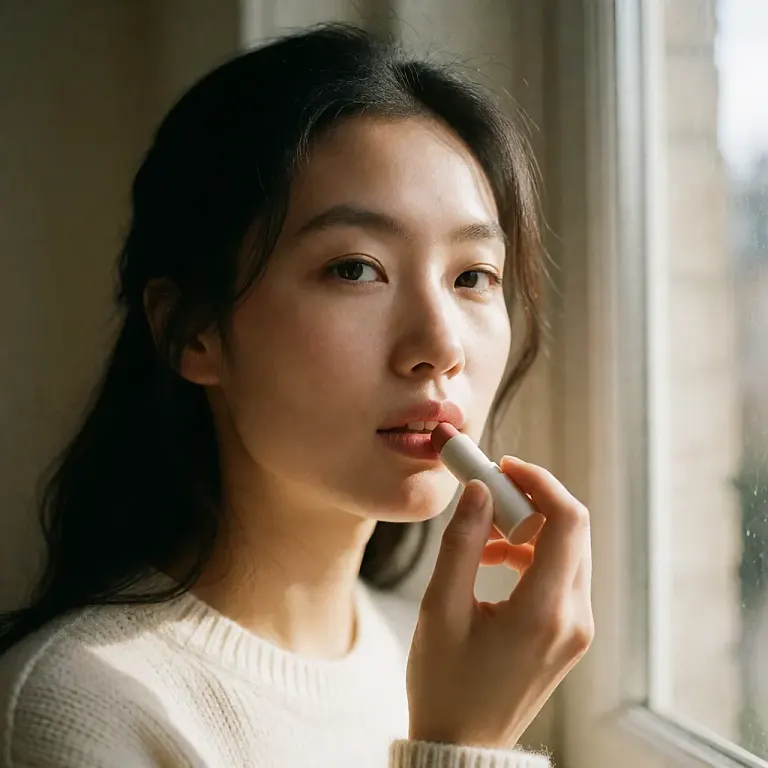
Two situations clearly argue for the separate format. Eyelids that feel tight by the end of the day, when screens have taken over and taking your make-up off at night has become unpleasant: there, a light texture and a few taps are more comfortable than a layer of rich cream. Lips that crack at the first wind of November, that catch and can no longer be stretched without wincing: a simple balm, with an oil and a plant wax, does the job — no need for an expensive product.
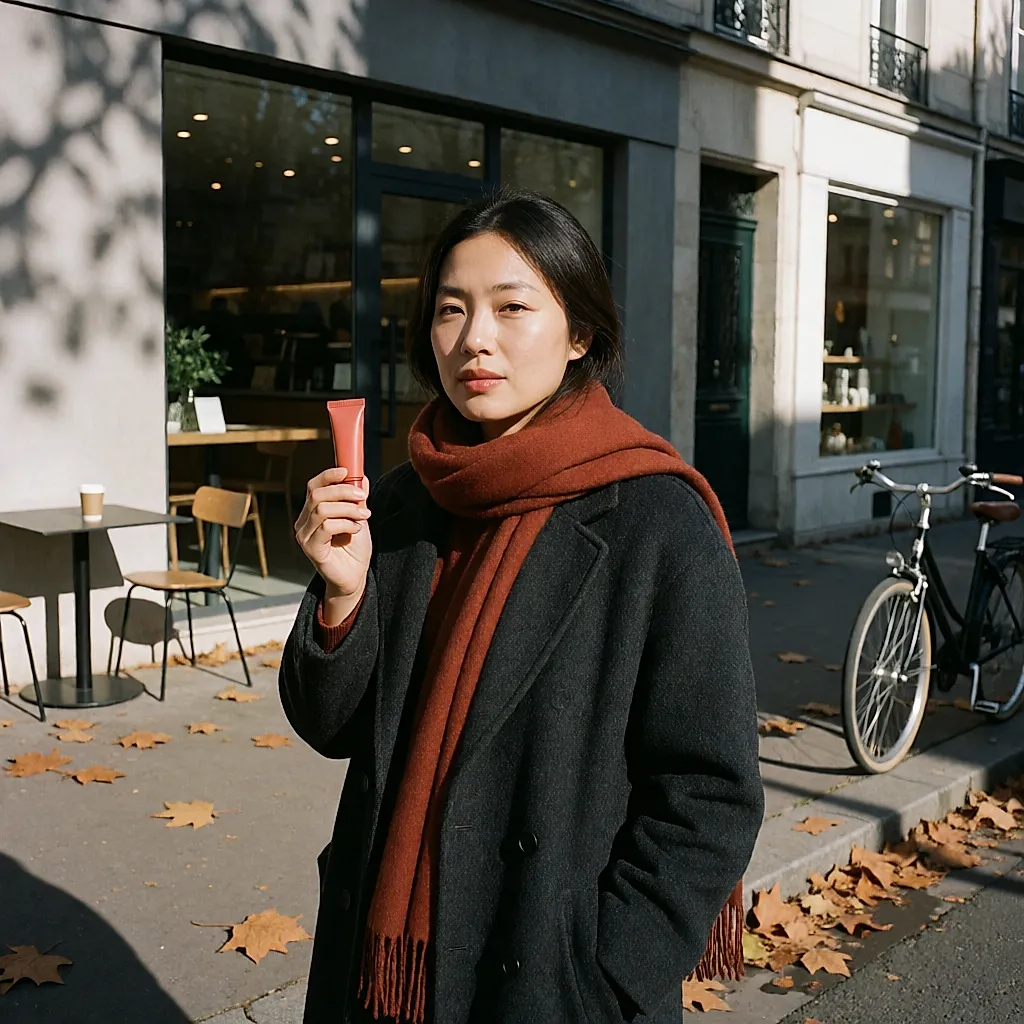
And the case we forget: if your face cream contains exfoliating acids or retinol, the question doesn't even arise. You don't smear something that stings across your eyelids: there, the dedicated product isn't a whim, it's a precaution. Conversely, if your skin doesn't react, doesn't feel tight and your cream is gentle and lightly fragranced, apply a thin layer to your eyelids — nobody will judge you for it, and neither will your bank balance. If it stings, reddens or persists, a dermatologist's opinion is worth more than a third tube.
Budget
Expect to pay £4 to £15 for a lip balm from a pharmacy or beauty retailer, and £1.50 to £5 in the supermarket for basic formulas. For eye cream, a reasonable range is £15 to £40 in a pharmacy; beyond that you're often paying for the bottle, the fragrance or the name on the box rather than the formulation.
Also look at the packaging: a tube rather than a pot, which is more hygienic and lighter to travel with; a refill where the brand offers one; card or glass where possible. And a label such as COSMOS Organic certifies a set of organic and environmental standards — not proof of efficacy, but verifiable information.
The routine that survives when you've only got five minutes: a small amount of product, from the inner corner outwards, tapping — never rubbing. For lips, a thin layer in the morning, a thick layer at night, and then sleep.
In the end, a dedicated product is justified neither by its format nor by the promise on the bottle, but by what it makes you do: a smaller dose, a gentler touch, a texture that doesn't spill over. If your current cream manages without drama, keep your money for something else. And if you really have to decide, ask yourself one thing: will you use it down to the last drop? That's the only performance that counts.
Comments
Your opinion matters: rate the article, react and reply to comments.
Comments are moderated; AI-assisted comments are flagged. Text emoticons (8-), :-), <3…) are automatically shown as images.