
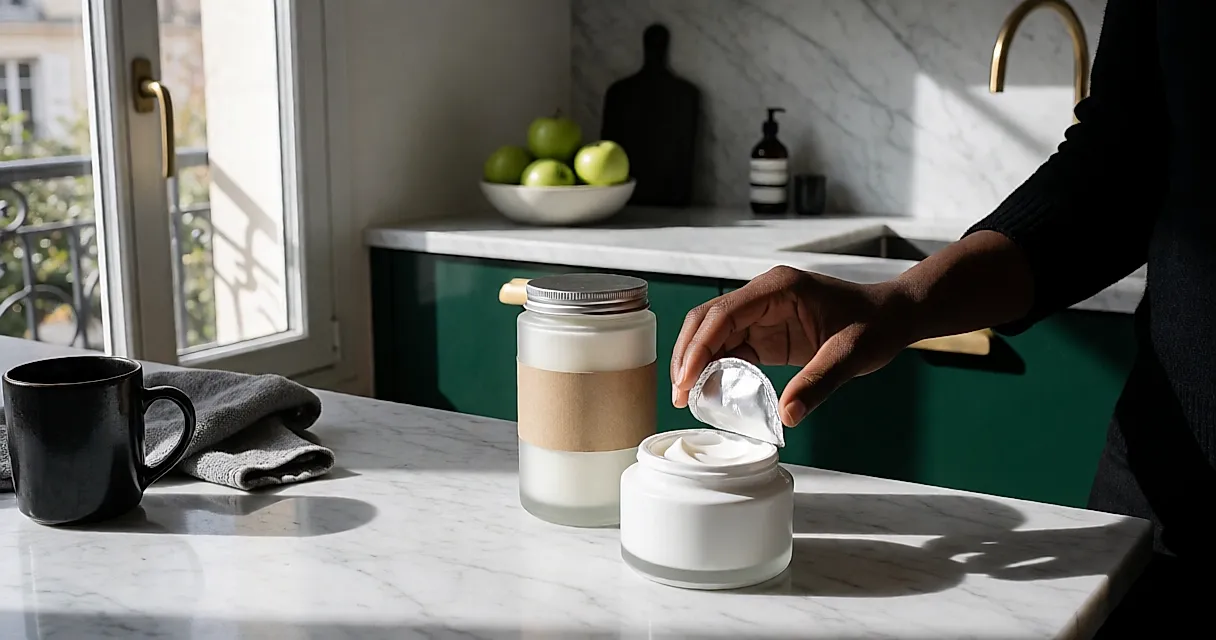
Two needs, one shelf: that's where it falls down. Dark skin and coily hair don't ask for the same things, yet the beauty aisle files them under one label. You go home with a tube marked 'for Black skin' and the real issue untouched — the skin barrier on one side, the hair fibre on the other. What if we treated the two as separate cases, as they deserve?
Dark skin: colour doesn't tell you what it needs
Dark skin isn't a skin type apart: it has a type — dry, combination, oily, sensitive — and concerns of its own. The first is pigmentation marks. A picked spot, a scrub that's too vigorous, inflammation left unmanaged can leave a brown mark that settles in for months. The colour says nothing about your skin type; it only means brown marks show up more readily. Hence the guiding idea: treat skin gently rather than roughing it up.
In practice, that means a gentle cleanse morning and evening, with no squeaky-clean soap, and exfoliating actives — AHAs, BHAs. Many people suggest using them once or twice a week, one active at a time — a practical rule of thumb, not an official recommendation. There's no question of stacking an acid and a retinol on the same night because you're in a hurry: two actives working at once is the quickest route to irritation, then a mark. And daily sun protection, even when the day doesn't feel beachy: it limits the darkening of marks that are only too happy to deepen.
The awkward subject remains: online products promising to 'clarify' the complexion. Their ingredients aren't always easy to read, and the claim often goes far beyond what a cosmetic can do. On that front, I won't make the call for a healthcare professional — a dermatologist's opinion is worth more than a basket filled at midnight.

Coily hair: the fibre calls the shots
Let's change aisle, and logic. Coily hair is a naturally dry fibre, more fragile at its bends, and it wants water and oils and butters long before a stripping shampoo. The move that matters isn't a wonder product; it's detangling: on wet hair loaded with conditioner, section by section, from ends to roots — never the other way, unless you want breakage where the fibre bends.

The rest is about less friction. Tight hair ties again and again, a bun pulled too taut, a cotton pillowcase that drinks up moisture for eight hours: all of it works against you. A satin bonnet or a loose braid at night, regular trims to lighten the ends, and less frequent washing — often once or twice a week, depending on your scalp — already make a real difference.
Be wary, though, of the famous 'glass-of-water test' for porosity: it does the rounds everywhere, but at best it gives you a hunch, not a diagnosis. What is reliable is what your hair tells you: brittle when dry, limp when overloaded, frizzy as soon as you touch it. Watch, adjust, and drop the labels.
In the aisle, shop for function, not colour
Here's the shift in habit: stop looking for a 'Black skin range' or an 'ethnic hair range', and prioritise what a product does. Cleanse without stripping, hydrate, protect. For skin, short formulas, glycerin, panthenol, plant oils and, as a general rule, as little fragrance as possible, especially among the main ingredients. For hair, a conditioner rich in oils and butters, a leave-in, and a flaxseed gel that sets the curl without making it stiff.
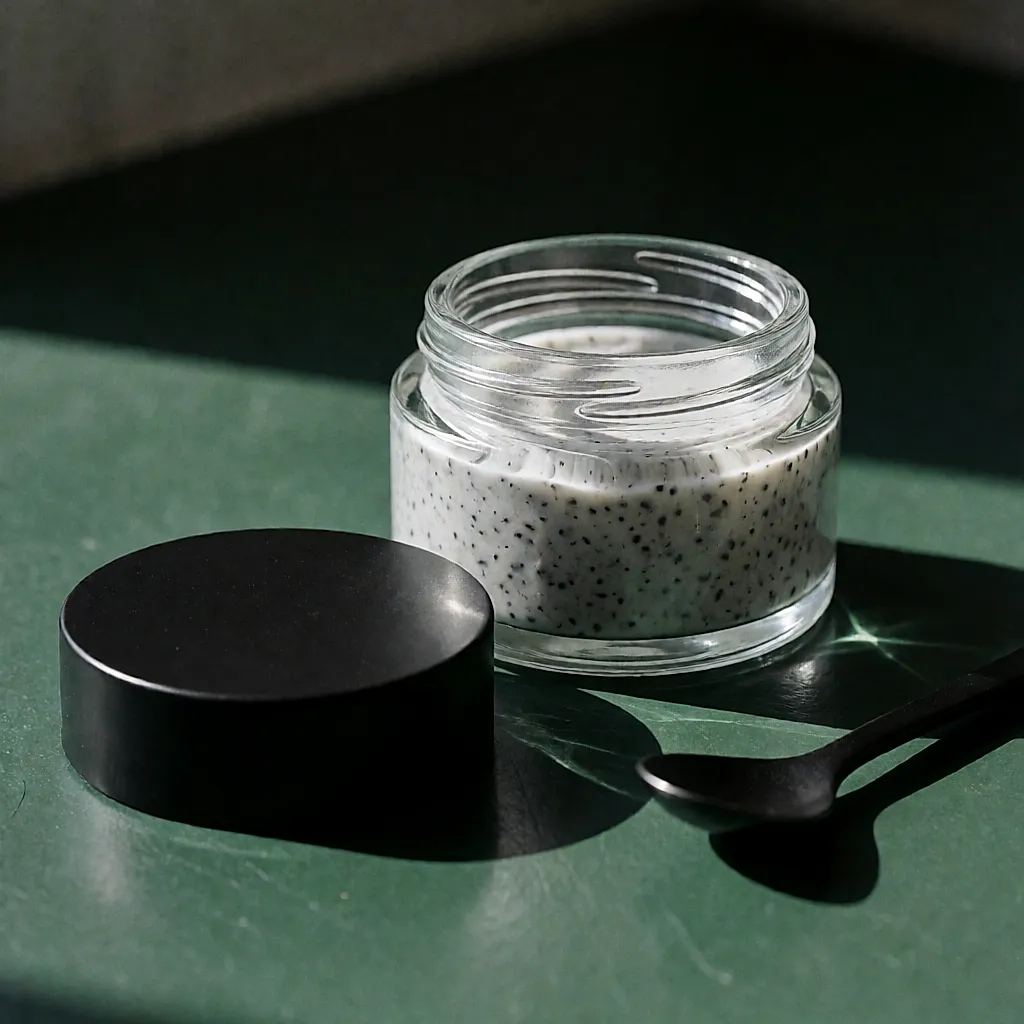
On solid and refillable formats, let's be honest: a refill cuts plastic, but a solid shampoo that's too stripping will dry out coily hair. Test it on one section before committing your whole head. And what about labels? Cosmos Organic, Cosmos Natural and Ecocert do not guarantee the same thing: Cosmos is a multi-level standard, Ecocert is a certification body, and the share of organic ingredients varies with the specification. These labels govern composition, not efficacy or tolerance: useful as a filter, not enough as a reason to buy.
Budget
For skincare, expect to pay roughly £10–£25 for a gentle cleanser from a pharmacy or beauty retailer, £15–£35 for a serum, and £12–£28 for a facial SPF. For hair, a rich conditioner tends to cost around £8–£22, a butter or mask £10–£25, and a leave-in £10–£22 — from supermarkets, pharmacies, specialist grocers or directly from brands. At a salon specialising in textured hair, a cut is more likely to cost around £50–£120 depending on city and length, and a deep treatment around £30–£60.
The five-minute habit: a small scoop of conditioner on soaking-wet hair, finger-detangle from ends to roots, a satin bonnet on the pillow. Nothing dramatic — which is exactly why it fits into a busy week.
Two families, two sets of logic, one basket can still work. Next time you walk past the aisle, ask what your skin is asking for before you look at what the label claims. And if you remember only one thing: colour is never a set of instructions.


Comments
Your opinion matters: rate the article, react and reply to comments.
Comments are moderated; AI-assisted comments are flagged. Text emoticons (8-), :-), <3…) are automatically shown as images.