

Have you ever stood in the beauty aisle with a jar turned upside down in one hand and your phone in the other, squinting at an ingredients list printed in minuscule type? On the front, 'collagen' is spelled out in letters this big. On the back, it's Latin, peptides and tiny asterisks. Between the two there's often quite a gap, and that gap is made of vocabulary.
What the word actually describes
Collagen is a protein. It's the most abundant protein in our skin, the scaffolding of the dermis, and that's precisely why brands invoke it: the word suggests structure, support, firmness. Except that on a jar it isn't a promise. It's an ingredient, usually animal-derived: bovine, porcine or marine, depending on the supply chain.

And that ingredient doesn't work like a render-and-repaint job. A whole collagen molecule is big: applied to the skin, it mostly stays on the surface, where it forms a film and holds water. That's not nothing, since comfortable skin is skin that feels better, but it isn't the same as plumping up the dermis.
On the back of the jar the word takes several forms: Collagen, Hydrolyzed Collagen, Soluble Collagen, Collagen Amino Acids. The distinction isn't decorative: hydrolysed collagen has been broken into smaller, more soluble fragments, which behave differently in a formula. And the rank in the list can tell you something: it gives a clue to the relative importance of the ingredients, though it won't let you read off a precise concentration.
The green prefix doesn't define anything
'Eco-collagen' sounds lovely, doesn't it? Except the term doesn't exist in INCI nomenclature, and no specific cosmetic regulation defines it. Same for 'plant collagen': plants don't make collagen, which is basic botany. Behind those names you'll usually find plant proteins — wheat or soya — that form a moisturising film, or extracts presented as boosting collagen synthesis. There is also collagen made by fermentation, though it's rarer.
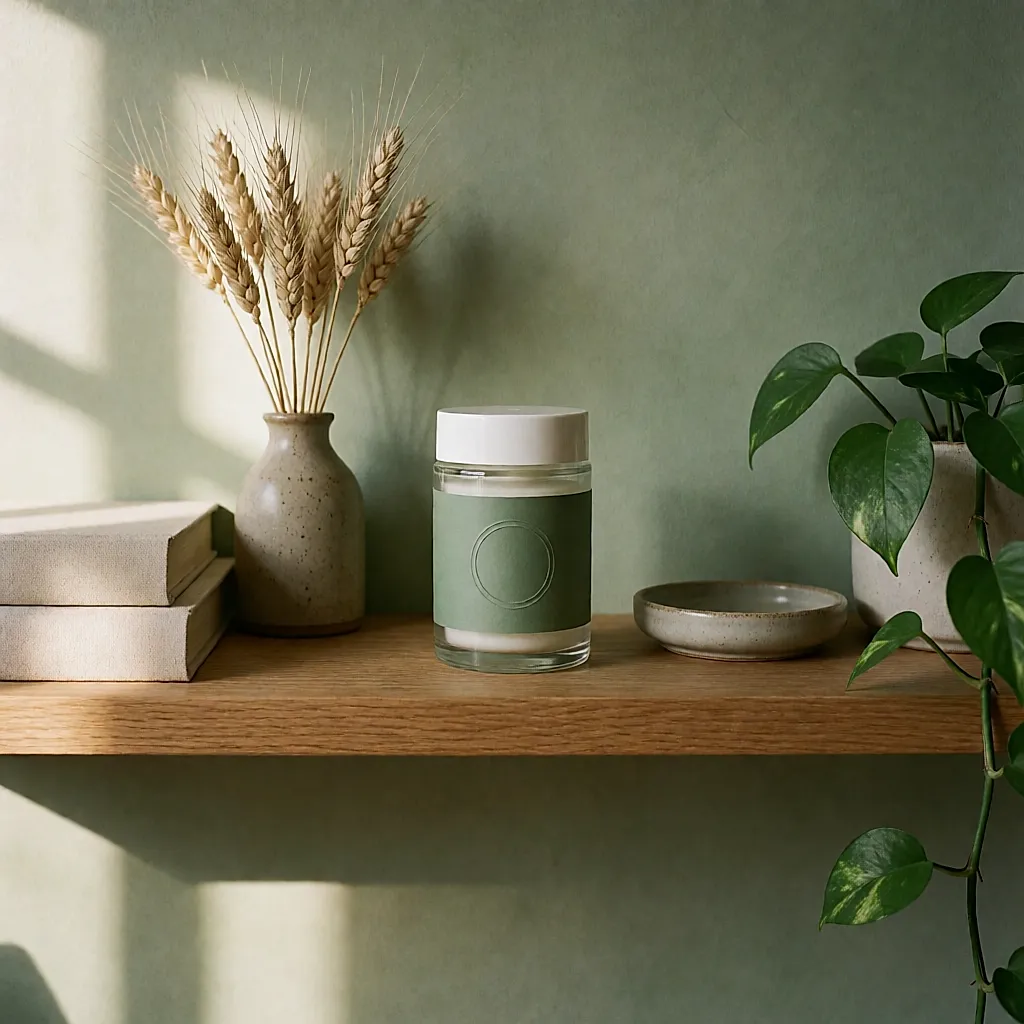
So what does the prefix tell you? Nothing you can verify. 'Eco' isn't tied to any official framework; 'organic', on the other hand, points to a certification of agricultural ingredients, with private standards setting the thresholds. One is a colour, the other is a set of specifications. To find out what you're actually dealing with, you have to look elsewhere.
Tripeptides tell you the size, not the family
Here we're in different territory. A peptide is a fragment of a protein, a chain of amino acids; a tripeptide has three amino acids. So the word describes a format, not an origin. When a jar announces 'collagen tripeptides', it's stacking two pieces of information: the size of the fragment and the family it borrows from. And plenty of the tripeptides used in skincare are synthetic peptides whose sequence copies a fragment of collagen, so the link is real but indirect.

What are they meant to do? Send a signal to cells, according to the mechanism described by the ingredient manufacturers. That's a working hypothesis, not a sentence you'll find on the label. So you turn the jar over: sometimes the word 'collagen' isn't on it at all.
The turn-the-jar-over reflex: read the first five ingredients, find the exact name of the collagen (whole, hydrolysed, soluble, amino acids only) and its position in the list. The font size on the front tells you nothing about concentration; the position in the list gives you a marker, though it isn't a measure of concentration either.
The words to look for, and the ones that are missing
Three things, in order. The exact INCI name and its rank, first: rank can give a clue to the relative importance of the ingredients, without letting you read off a precise concentration. Then the word 'hydrolysed' or the name of a peptide: they tell you these are fragments, not whole collagen. Finally, the origin, 'marine', 'vegan', 'fermentation-derived': with no detail at all, the safest assumption is animal collagen.
What the label will never tell you, though: whether the concentration is enough, whether the molecule crosses the stratum corneum, or what it will change on your skin. There's no point pretending otherwise, because that's the limit of the exercise. An ingredients list tells you what's in the jar, not what it will do. Most of the time, a collagen cream is still a moisturiser with a nice story wrapped around it.
What it costs, and what it's worth
Prices spread widely: in France, expect to pay roughly €5–€15 for a basic hydrolysed-collagen cream from a supermarket or chemist, €20–€45 for a peptide formula from a beauty retailer or online, and €50–€120 for the serums that lead with a patented active and a bottle carrying a serious weight of glass. Price tends to follow the texture and delivery system of the formula, the packaging and the brand story far more than the quantity of collagen. On the environmental side, the lever isn't in the name of the active: look instead at whether the jar is refillable, whether it's glass or card, whether the formula is short.

Which leaves one move, and it takes five minutes: turn the jar over before you buy. Read the first five ingredients, look for the exact word, check whether a refill exists. If the front promises firmness and the list is mostly water and glycerine, you'll know what you're dealing with. You can then buy for the right reasons, or put the jar back on the shelf with a clear conscience.

Comments
Your opinion matters: rate the article, react and reply to comments.
Comments are moderated; AI-assisted comments are flagged. Text emoticons (8-), :-), <3…) are automatically shown as images.