
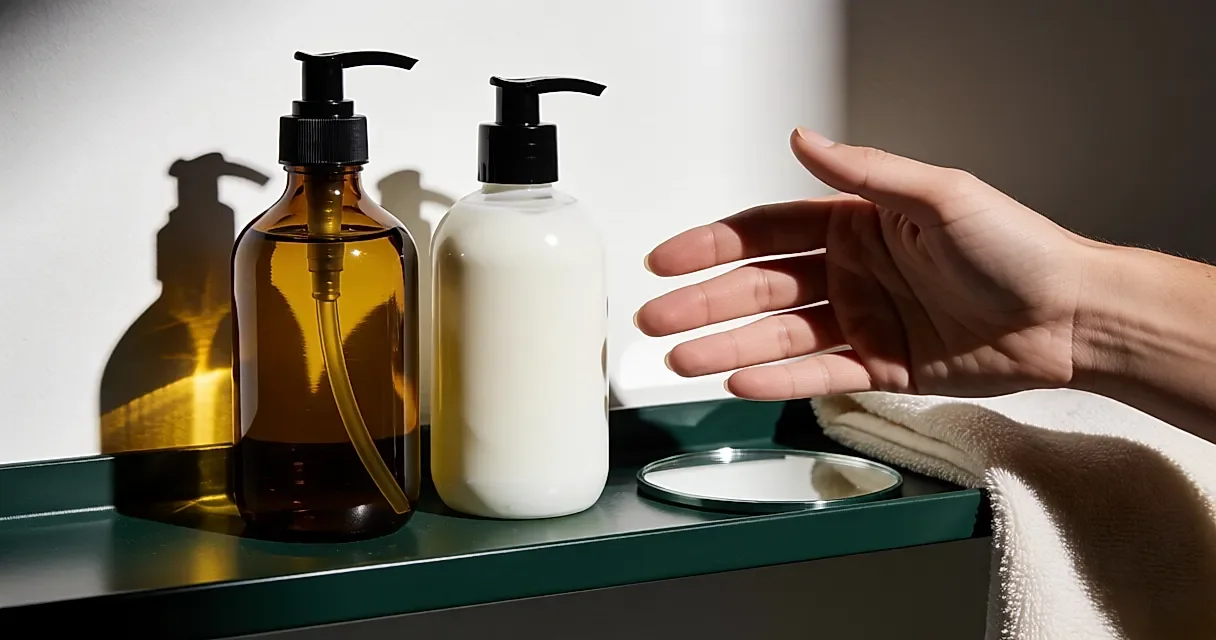
Body oil still carries a reputation for feeling greasy. Lotion, meanwhile, gets cast as the sensible choice — the one you reach for without thinking when you just want skin that feels comfortable. Except the real question isn't "oil or lotion". It's which skin, in what order, and in which season.
Oil and lotion do different jobs
A body lotion is water plus fats: it delivers hydration and emollients that keep skin supple. An oil is almost pure lipid — it brings no water of its own, it holds water in by forming a film. That's why they feel so different: lotion sinks in quickly and disappears, oil lingers a little on the surface. Which is exactly what makes it shine.
That film has two consequences. The good one: light catches the skin, it looks satin-smooth, dry shins look less rough. The less good one: overdo it and the oil leaves marks on the sheets and a tacky feeling. Between a lit-from-within finish and a chip-pan effect, the difference is often three drops too many.
Which skin needs which
Very dry skin, tight after the shower, shins that go white when you scratch them? Oil is your ally, perhaps in a thin layer under a lotion. Normal to combination skin, a shiny back, a chest that marks easily? Lotion is plenty, and the oil can be kept for the driest patches — elbows, heels, knees.

And oily skin? You can absolutely use an oil, as long as you pick a fluid one and keep it to your legs. The famous "one oil for everyone" line is a shelf-stacking simplification. In reality, watch your skin for a few days before you decide.
The order that changes things: lotion first, then oil, on damp skin
This is the step that makes the difference. Straight out of the shower, pat yourself with a towel without drying off completely: skin should still be damp. Apply lotion first, from ankles up to thighs, then seal it in with a few drops of oil warmed between your palms.
Why this order? The lotion brings the water, the oil keeps it there. Doing it the other way round works too, but lotion slides over the oily film and dosing gets fiddly. In practice, apply straight away. It's the one beauty ritual that survives being rushed — provided you don't skip the step.
Match the texture to the season
From November to February, skin wants fat: a rich lotion or balm, a generous layer of oil on the legs, a pea-sized amount on the arms if the heating is drying the air. Evening rather than morning, so the oil doesn't migrate onto your clothes.
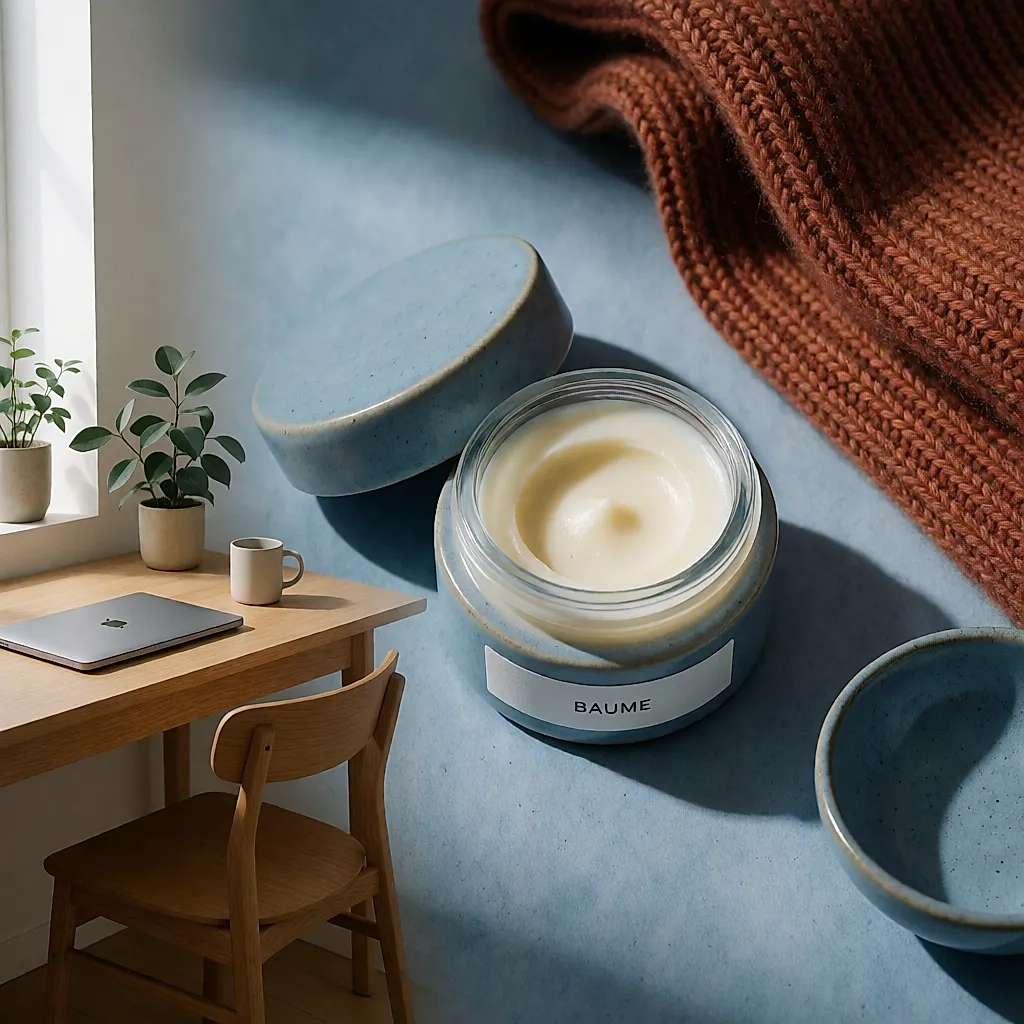
As soon as the first warm days arrive, lighten up: a fluid lotion, a so-called dry oil (thinner, sinks in faster), and half the quantity. In summer, an oil applied at midday to warm skin can, depending on the formula, leave skin tacky and clinging to dust. The rule of thumb? If you have to wait before getting dressed, you've used too much.
Packaging counts as much as the formula
Glass gets recycled if it goes in the right bin; with plastic, check your council's rules and whether the container is genuinely recyclable. A glass bottle is easy to reuse. Refills are appealing — but compare the price per litre, because some save very little. Loose refills exist for oils and some lotions in health food shops: you pay for the contents, not the bottle. I don't have a reliable figure for how much a refill actually saves from one bottle to the next, which is why it's worth getting the calculator out.

On the formula side, two labels come up often: **COSMOS Organic** and Ecocert. Bear in mind that "made with plant oils" means neither organic nor low on packaging. A raw jojoba or coconut oil in a glass bottle can be a sensible choice, depending on where it comes from, how it's produced and what it's sold in.
The five-minute routine: out of the shower, skin patted but still damp. Lotion on legs and arms, three drops of oil in your palms, warm them, smooth over, get dressed. No waiting time, no cling film.
Budget
A basic body lotion from a supermarket or high-street chemist: roughly £5–£12 for 250–400ml. Organic or beauty-retailer versions: around £15–£28. A pure plant oil: roughly £10–£20 for 100ml in a health food shop, £25–£45 for blended oils from established brands. A refill usually costs 10–25% less than the full bottle — a rough guide only, and one to check by price per litre rather than the shelf price. Treat these as starting points; prices shift.
Where to buy? Supermarkets and beauty halls for lotions, health food shops and refill stations for oils, pharmacies if your skin is reactive and you want advice. The real trade-off: a simple, well-chosen oil beats a "luxury" lotion you'll only get halfway through. Look at the volume, not the packaging.
The luxury in all this isn't the oil or the lotion: it's consistency. Choose the texture that makes you want to come back to it every evening, keep the dose small, and save your three drops for the end. Your skin doesn't need a ten-step ritual — just a little water held in at the right moment.


Comments
Your opinion matters: rate the article, react and reply to comments.
Comments are moderated; AI-assisted comments are flagged. Text emoticons (8-), :-), <3…) are automatically shown as images.