

In late October, out come the heavy jeans and you rediscover your legs the way you might catch up with a friend after six months apart: with a little adjustment time. You shave blind, skin pulls under wool, and the backs of your thighs have that sandpaper texture that never bodes well. Good news: this is exactly the moment to do something about it.
Why November is the right moment
Fruit acids — by which we mean AHAs, alpha-hydroxy acids — have one major drawback: they leave skin more reactive to the sun. Smoothing them on in July before a sunny afternoon outside is asking for trouble. By November, legs are under tights and trousers, the light is low and the sun is timid: the ideal window for a course of a few weeks without having to live under a hat.
There is a more prosaic reason, too. Skin that spends winter under two layers of cotton and wool is skin you look at less, so you stress about it less. You can let it get on with things, adjust, peel a little. That is all you ask of it, and it is already quite a lot.
What lactic and glycolic acids do
In a body lotion, the star active is almost always lactic acid, which is relatively gentle and helps the top layer of skin shed dead cells without going at them with a flamethrower. Glycolic acid, smaller and more penetrating, is sharper; you find it in more targeted formulas, and it deserves a little more respect. Citric acid often does the supporting act, adjusting the pH of the formula.
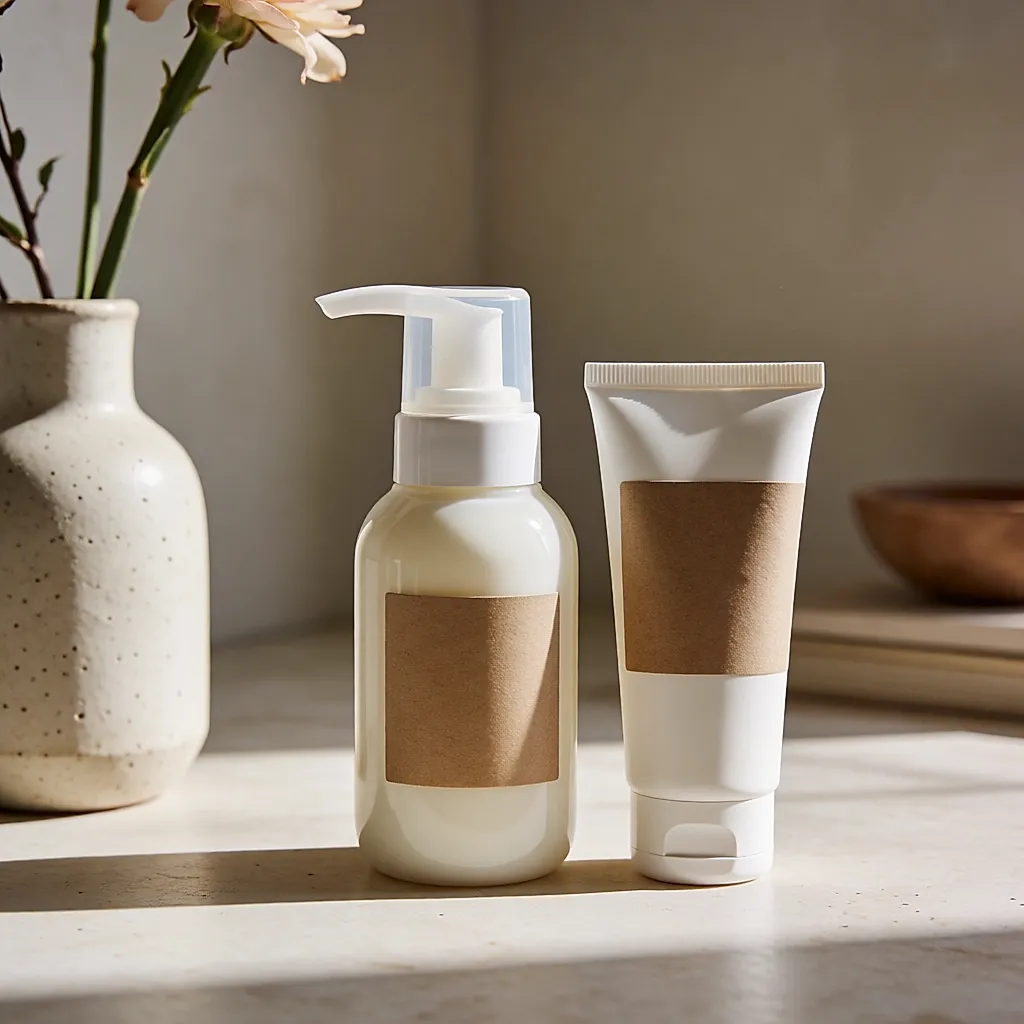
What does that actually give you? A smoother surface, smaller bumps fading, a finer skin texture. No transformation, no baby-soft finish. You are working on the surface, and the surface can be worked on.
The evening routine, without ceremony
In the evening, on dry skin — not straight after a shower, when hot water has already softened and sensitised your skin. Use a 50p-sized amount per area, spread it without rubbing, and leave skin alone. The time it takes: roughly one episode of a box set.
In practice, you can start with two applications a week. And put the grainy body scrub away for the duration of the course: stacking mechanical and chemical exfoliation is the best way to end up with legs that feel hot under the duvet.
Arms, thighs and keratosis pilaris
The areas that ask for it most: the backs of the arms, the outer thighs, the bottom. That is where skin thickens, where hair struggles to break through, where keratosis pilaris creates those little dots you have known as chicken skin since school and would happily send into retirement.
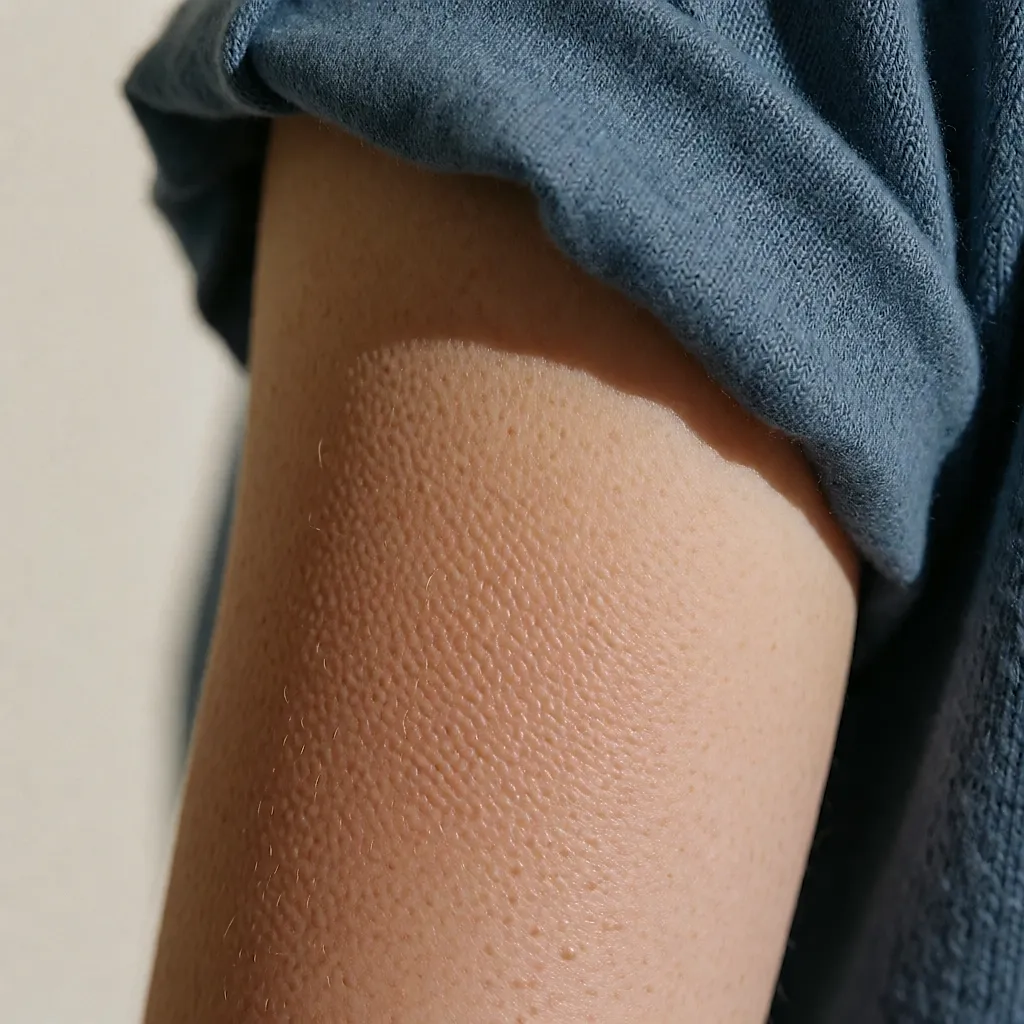
On keratosis pilaris, let us be realistic: a fruit-acid lotion improves the look, softens the bumpy texture and makes skin more comfortable to touch. It does not remove a predisposition. Above all, do not scratch or pick.
Three signals to ease off: redness that will not settle, tingling when you apply it, tightness during the day. Take a break if skin becomes irritated, then start again gradually while skin readjusts. Never force it on damaged skin, or on skin that has just been waxed or closely shaved.
Cover up during the day
In the morning, wear long sleeves or sunscreen on exposed areas: AHAs leave skin less protected against UV. It is the only non-negotiable step in the whole protocol; the rest can be adjusted.

And if redness persists for several days, or if water makes your skin burn, stop everything and speak to a GP or dermatologist. It is not a failure: it is skin that has said no, and it deserves to be listened to.
What to spend
Expect to pay £15 to £30 for a fruit-acid body lotion from a pharmacy or beauty retailer, in a 200–400 ml size. The price rises with active concentration and size; it comes down in supermarkets or online pharmacies, where you can find decent formulas for around £15.
On formulation, look for a Cosmos (Ecocert) label on the bottle: it guarantees a set of standards on ingredient origin and processes, not superior efficacy. A peach-scented lotion is not necessarily an AHA lotion.
The timeline nobody talks about
So when do you judge the results? Not in a few days. In practice, you often need four to six weeks of consistency to see a difference in texture — a practical benchmark, not a promise of results. No study will give you an exact date, and anyone selling you a precise calendar is mostly selling you impatience.
The real question is not really does it work, but can I keep up the pace in November. A layer of sun protection in the morning, a grainy body scrub sent on holiday, and we will see in spring whether jeans rub less. That is all we could wish for you.


Comments
Your opinion matters: rate the article, react and reply to comments.
Comments are moderated; AI-assisted comments are flagged. Text emoticons (8-), :-), <3…) are automatically shown as images.