

It's the same story every autumn: night falls earlier, the throw blanket finds its way back to the sofa, and your hand starts rummaging in the cupboard before you've actually decided anything. You might be in bed by 10pm, yet that little evening voice still wants its due. Is it a lack of willpower? No. And it isn't an inevitability that returns with the fallen leaves either.
Autumn unsettles the body more than we think. Here we suggest a three-step method to try over a week. No counting, no scales, no guilt — just enough to see more clearly what really triggers the craving, and what might help calm it.
What we know, and what we don't yet know
Rhythms change with the season: we go out less, move less, and sometimes sleep worse. Current data suggest that fatigue and low light exposure can affect appetite and sugar cravings. There's nothing magical in that, but it is context worth knowing.
However, the exact share of each factor in any one person remains hard to pin down. No one can tell you, 'it's 60% fatigue and 40% light.' So it makes more sense to observe your own triggers rather than apply a ready-made rule. This isn't a diagnosis; it's an exploration — and let's be honest, that distinction changes everything.

Step 1: identify your trigger
Three profiles come up most often in what people describe: fatigue, boredom, and the chill. Are you coming home from an overfull day or too short a night? Evening snacking often slips in right after. Do you settle on the sofa with a series and your phone? The craving isn't hunger then; it's an occupation, an automatic gesture that becomes part of the scenery.
And then there's the chill. You come home frozen, cheeks flushed, and the cupboard door is open before your coat is even on the hook. It's striking how quickly the body reacts.
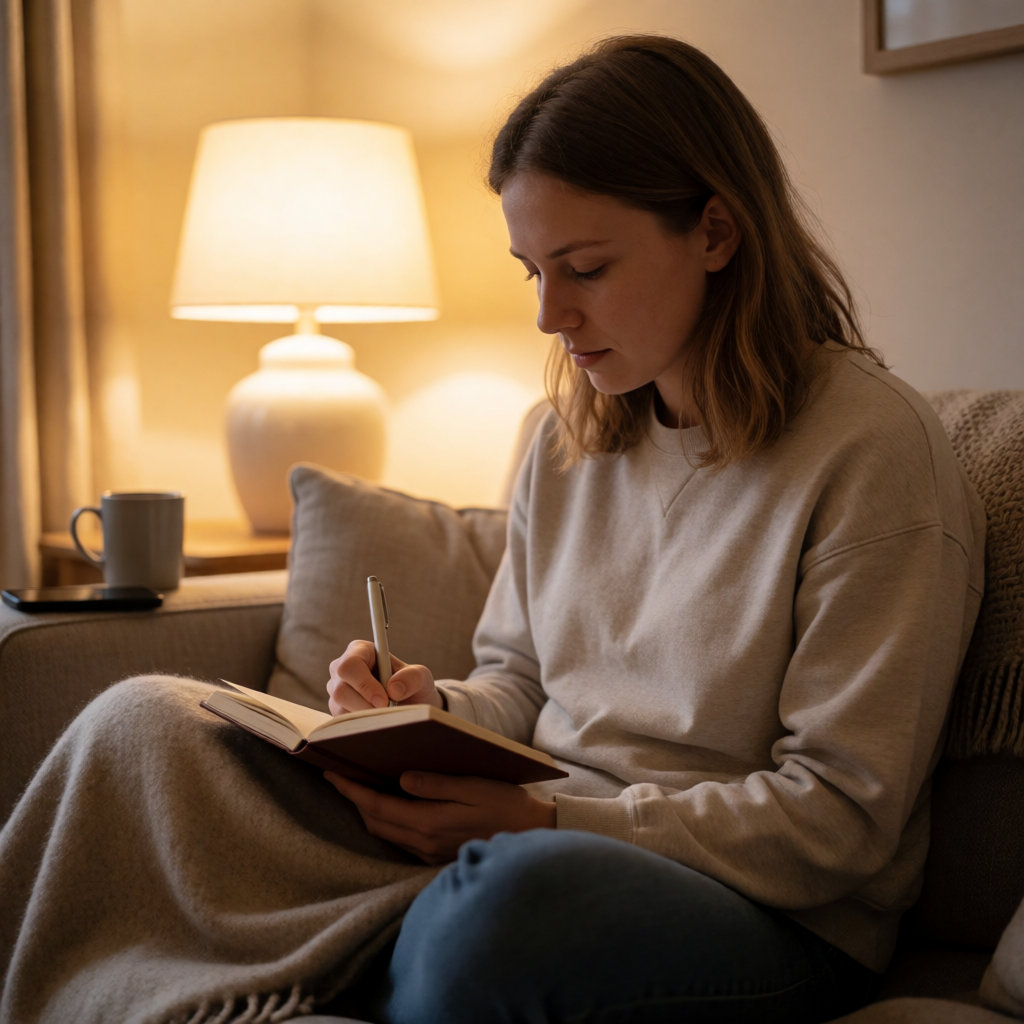
For seven days, note three things: the time, the feeling, the food. No judgement, no maths. It's an observation, not a verdict. This record is often enough to reveal a pattern — and that's already a lot!
Step 2: make a dinner that sticks with you
A dinner that doesn't last three hours sets you up for a craving. It's almost mechanical: your stomach rumbles at 10pm, and by then it's too late for a proper meal. In practice, that means combining four elements in the same meal, without weighing anything.
Protein, fibre, a wholegrain carb, and a little fat. That's the baseline. Look to eggs, fish, lentils, chickpeas, tofu or cottage cheese for the first category. For fibre, anything in season — roasted vegetables, crunchy raw veg, thick soup. Wholegrains take over: wholemeal bread, potatoes, brown rice, quinoa. And for fat, a drizzle of olive oil, a few walnuts, or a quarter of an avocado work very well.
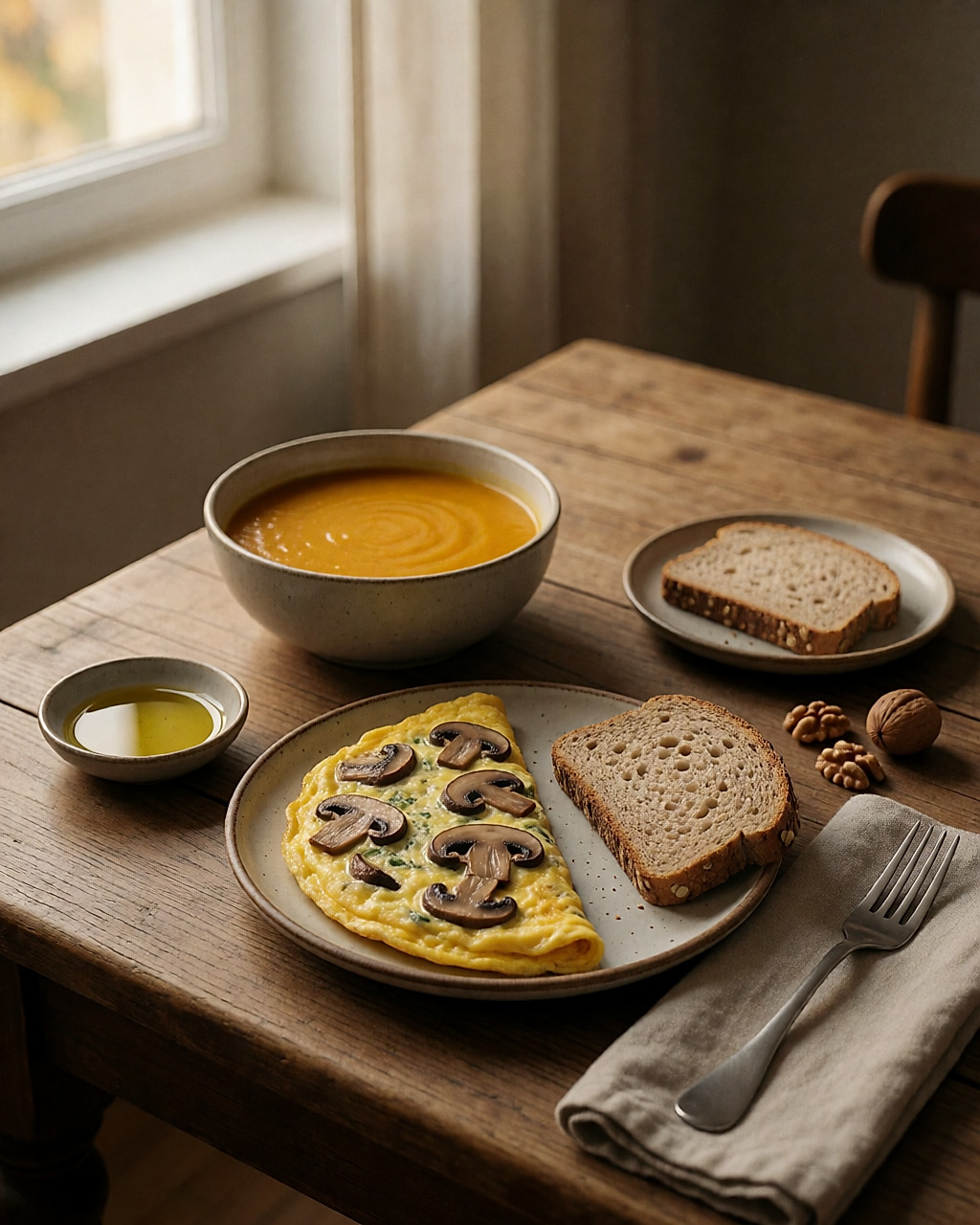
A simple example: squash soup, a mushroom omelette, and a slice of wholemeal bread. Another option: a warm lentil salad with a soft-boiled egg and a drizzle of olive oil — the kind of quickly assembled dish that genuinely keeps you going. Worth noting: this kind of meal keeps you satisfied for longer than a bowl of cereal eaten in front of a screen, or a ready meal eaten standing up. No mystery, just substance.
Step 3: plan a pleasurable fallback
Planning a fallback isn't cheating. Choose a pleasure you genuinely enjoy, and save it for when the urge rises. A warm herbal tea — verbena, chamomile, rooibos, mint — ticks several boxes: preparing it counts as much as the drink itself. A fruit eaten slowly, an apple, a pear, two clementines or a few dates also keeps your hands busy.
Then there's the option that often works: a ten-minute walk, even just around the block. The snacking habit breaks more easily than you might think. The idea isn't to replace a pleasure with a punishment — let's be clear on that — but to let the peak pass.

Evening cravings are common and most often linked to lifestyle. But if they come with lasting fatigue, unusual thirst, unexplained weight changes or badly disrupted sleep, speak to a healthcare professional. Diagnosis and ongoing care are for a doctor — not an article, however well-meaning.
Budget
For herbal teas, expect around £3 to £7 per 100g loose leaf organic, from a herbalist or specialist shop. In supermarkets, a box of 20 tea bags is more like £2 to £5. Online, 250g loose leaf often costs £8 to £18 depending on the plant and certification. Prices vary with city, where you buy and quality — from one shop to another, differences can be marked.
For fruit, budget around £2 to £4 per kilo in season for apples, pears or clementines, more out of season. Nuts cost more: expect more like £12 to £25 per kilo loose. Market, supermarket or health food shop — depending on where you are, differences remain significant.
Loose or by the box is often the best compromise: less packaging, and a generally gentler price per gram. Check for organic certification, such as the Soil Association logo or the EU leaf: it guarantees production that meets a set of rules banning synthetic pesticides and GMOs, among other requirements. The rest is often marketing: don't be fooled.
One week to try it, without counting
The principle is one sentence: seven days, three steps, no numbers. You spot a trigger, adjust a dinner, prepare a fallback. No need to weigh anything or open a calorie-counting app.
If a craving comes back anyway, observe it without judgement: it teaches you something about your day, about what's missing, about what's weighing on you. After a week, read your notes calmly. If evening cravings become less frequent, you have a simple lever to keep for the whole winter. If nothing changes, or if fatigue sets in, that's the moment to talk to a healthcare professional. In practice, remember this: it isn't a cure, it's a tool that belongs to you.
Sources
- NHS — Eat well, healthy eating guidance and practical advice.
- British Nutrition Foundation — Nutrition information, evidence-based resources and updates.
- NHS Better Health — Healthy eating, tools and practical tips.
- GOV.UK — Healthy eating: applying All Our Health, public health prevention policy.



Comments
Your opinion matters: rate the article, react and reply to comments.
Comments are moderated; AI-assisted comments are flagged. Text emoticons (8-), :-), <3…) are automatically shown as images.