
Every summer, the same scene plays out. You park the pushchair as best you can in the shade of a plane tree, notice a fine sheen of sweat on the back of your baby's neck, and the questions come thick and fast. Is your baby too hot? Should you take off a layer? How should you dress them when the thermometer soars?


The answer comes down to one simple idea: a baby cannot protect themselves from the heat. They depend entirely on the adults around them. Current evidence suggests that a few well-applied preventive steps can help reduce risky situations — but if you are unsure, speak to a healthcare professional, not an online forum.
Why a baby overheats more quickly
In adults, sweating lowers body temperature. In a baby, this cooling system is not yet mature: they sweat little, release heat poorly and dehydrate quickly. Their skin also makes up a larger proportion of their body surface than ours, which speeds up fluid loss even more. They cannot move into the shade by themselves, take off a hat or ask for a drink. A baby can therefore become overheated without showing obvious signs at first.
And as heatwaves become more frequent and longer, this vigilance becomes more useful every year. It is not about panicking; it is about common sense: the more you understand how it works, the more calmly you can act.
Sun, outings and clothing
Before age three, general guidance advises against direct sun exposure. In practice, remember three habits: go out before midday or after 4pm, seek shade rather than full sun, and keep the parasol up even near a wall — radiation reflected from sand or tarmac remains high. This is the kind of detail that is easy to forget and can change everything on an afternoon at the beach!
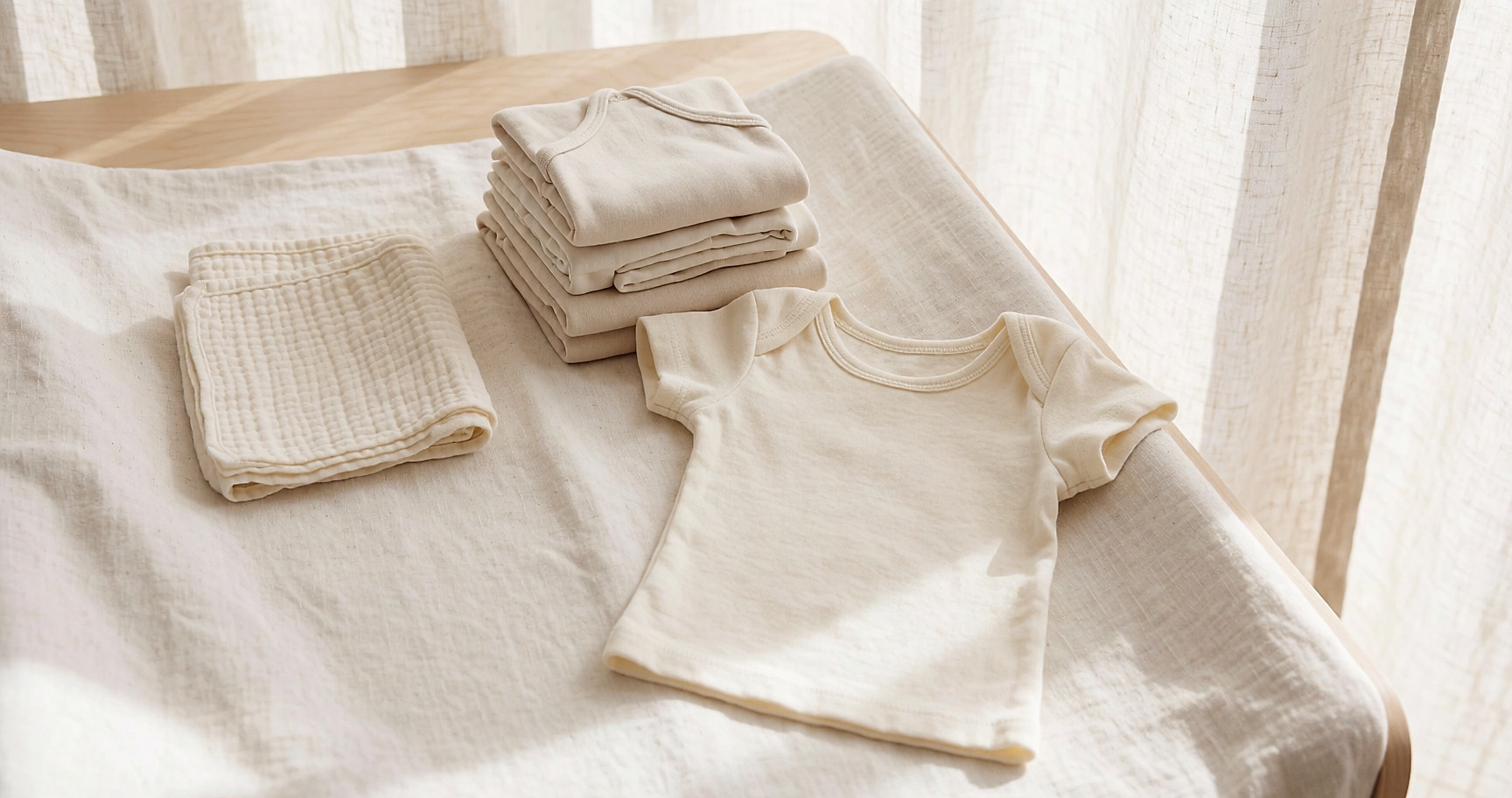
For clothing, the combination that really works: a wide-brimmed hat, age-appropriate sunglasses, and a light, pale cotton T-shirt. When it comes to fabric, choose something light, soft and breathable, such as fine cotton or linen, comfortable against delicate skin and easy to wash. Before six months, shade and covering clothing are generally preferred; sun protection should be chosen with advice from a healthcare professional.
Hydration: thirst comes too late
In young children, thirst is a late signal. Water needs change with age and diet, and hot weather changes the rules. Before six months, feeding is usually based on breast milk or infant formula: any questions about hydration should be put to a healthcare professional, not to friends and family.
After that age, water becomes the drink of choice — fruit juice, fizzy drinks and very sugary squash have no place in good hydration. Also think about bottles left in the sun: milk turns quickly. A simple habit: offer drinks often, before your baby even asks, because they will not think to do it themselves.
Bedroom, pushchair, car: three classic traps
In the bedroom, the logic is simple: open windows wide early in the morning and at night, close shutters and curtains during the day, and check the temperature with a thermometer rather than by feel. A mosquito net helps prevent bites when the window stays open. For naps, dress your baby lightly, in cotton, perhaps in just a single layer. If the room becomes too hot, move their bed to the coolest spot.

A pushchair heats up like a small greenhouse. Contrary to a stubborn myth, covering the opening completely with a muslin cloth makes the temperature inside rise! It is better to use a parasol, a sunshade designed for the pushchair, and take regular breaks in the shade.
As for the car, the rule is non-negotiable: never leave a child alone in a car, even for a few minutes, even with the windows slightly open. In high heat, the interior quickly reaches lethal temperatures, as the UK Health Security Agency repeats every summer.
Heatstroke: a medical emergency Heatstroke is a serious condition that needs rapid medical care. Do not try to manage it alone: contact a healthcare professional or emergency services without delay, who will tell you what to do.
Diarrhoea and nappy rash: when to ask for advice
Diarrhoea is common in summer and increases the risk of dehydration. Nappy rash is made more likely by heat and moisture under the nappy. If your baby has diarrhoea, persistent irritation or you have any doubt about their condition, a GP, paediatrician or pharmacist can tell you what to do and which products are suitable for their age.
Budget
You do not need to clear out the pharmacy shelves. Expect roughly:
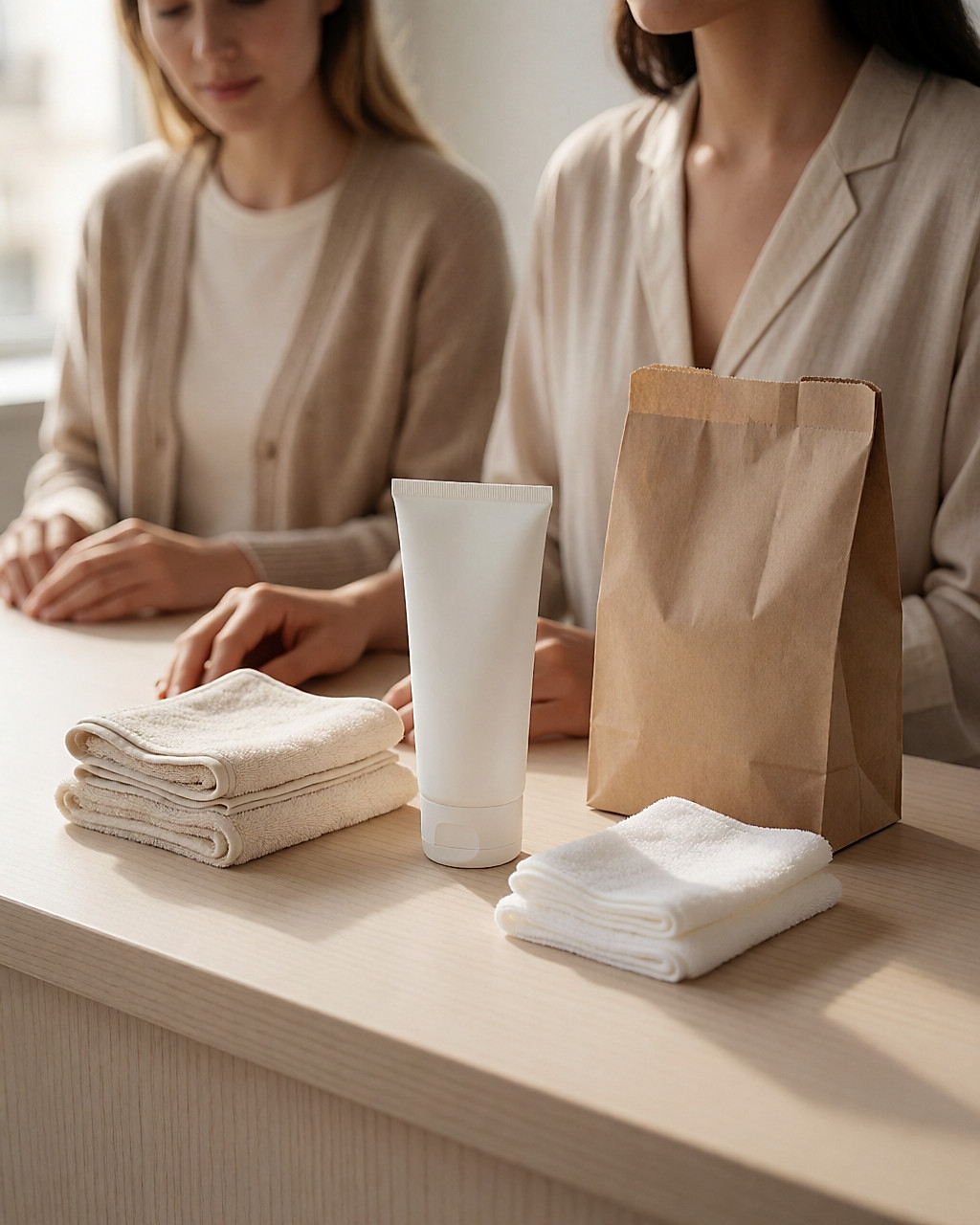
- wide-brimmed UV hat: £6 to £20 depending on size and material, from supermarkets, specialist shops or charity shops — a hand-me-down from an older sibling works perfectly well;
- children's sunglasses: £8 to £35, looking for CE or UKCA marking and a category 3 filter, also available from pharmacies or opticians;
- baby sunscreen: £8 to £20 for a 50 ml tube in pharmacies and health and beauty shops, more like £5 to £12 in supermarkets. Mineral filter formulas often leave a whiter cast; if your priority is a texture that is easy to spread on a wriggling baby, a conventional formula may still be the best compromise;
- pushchair parasol or sunshade: £12 to £35 depending on the fitting system;
- room thermometer: £4 to £15, the cheapest accessory and probably the most useful.
The real money-saver remains shade and covering clothing: free, reusable and often more effective than a purchase!
Sources
- UK Health Security Agency — Beat the heat: staying safe in hot weather, 2025.
- NHS — Sun safety for children, 2024.
- World Health Organization — Heat and health, 2024.
- GOV.UK — Heat-health alerts, 2025.



Comments
Your opinion matters: rate the article, react and reply to comments.
Comments are moderated; AI-assisted comments are flagged. Text emoticons (8-), :-), <3…) are automatically shown as images.