
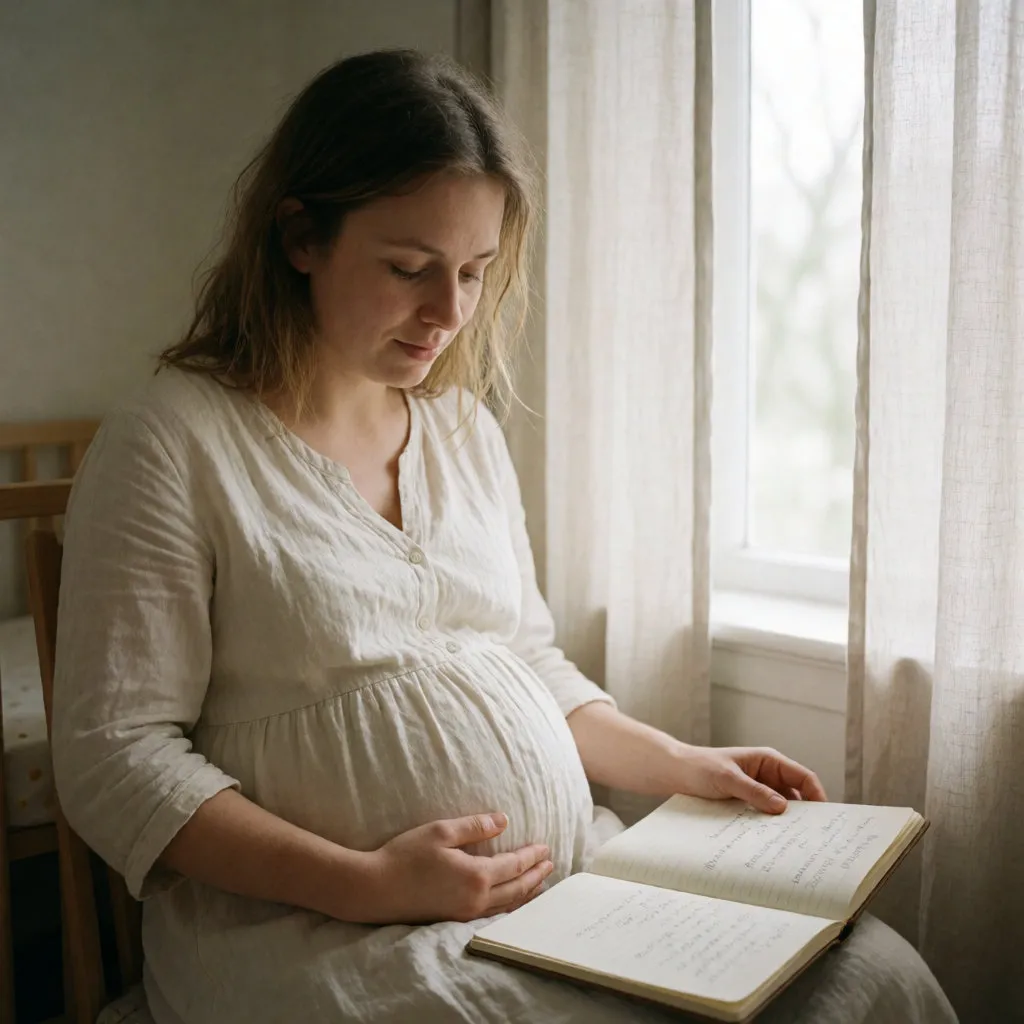
Are you expecting a baby, and finding that choosing a name takes up a good part of your evenings? Or are you simply curious about what the babies being born right now are called? Either way, the latest figures on the names given at birth are worth a look. They reveal a generation of short, soft, warm names — and, above all, the trends that are holding firm, or fading away without a fuss.
What the data tells us
Every year, the Office for National Statistics records the names given to babies born in England and Wales, drawn from birth registrations. The most recent figures cover the 2025 intake, published this year. In 2026 the first patterns are starting to show, even if the full picture will come later. Around a handful of safe bets, a generation of brief names is emerging: often ending in 'a' for girls, with crisp, clean sounds for boys.

For boys: Oliver and the rest
Oliver remains one of the most popular choices. Three syllables, a soft opening, an ending that sits easily in the mouth — it ticks every box. Its origins are debated: an olive tree, an Old Norse root, a medieval hero of legend. Around it, the list is dense: Noah, George, Leo, Arthur, Luca, Theodore, Oscar, Henry, Harry, Jack. George, from the Greek, means earth-worker — hardly glamorous, yet it has worn remarkably well. Leo is Latin for lion. Arthur's roots are much argued over, with a Celtic origin often suggested. Theodore, meanwhile, is Greek for gift of God.
Two families emerge. The biblical names — Noah, Elijah, Isaac, Samuel — are back in force. Then the names ending in 'o' — Leo, Theo, Luca — which charm with their roundness, even if their momentum is slowing. Luca comes from Italy and has climbed steadily; Noah, from the Hebrew, sits at the very top. Jack, a diminutive of John, is still everywhere. Harry and Oscar complete the picture with rather more mixed fortunes.
For girls: Olivia and her crowd
Olivia has been among the most given names for baby girls in England and Wales for years. The recipe is a small one: an 'a' ending, a soft sound, an easy rhythm. It pulls along in its wake Amelia, Isla, Ava, Ivy, Freya, Lily, Florence and Mia — the same formula, the short name that is as easy to say as it is to spell.
Their origins are very varied. Amelia comes from the Germanic amal, 'work', though it is often linked to Emily. Isla is Scottish, from the River Isla, or Spanish for island — the experts disagree. Lily is simply the flower, and Mia a short form of Maria. That diversity does not prevent a real coherence: these are brief, warm names, remembered without effort.
Ivy plays a different card: that of a name with a natural ring, the climbing plant that stays green all winter. Freya, from Old Norse, named after the goddess of love and beauty, and Willow, the tree, confirm this pull towards old, brief, bright names. Ava closes the list, carried by the same 'a'.
The fashion for 'a': a question of sound
What strikes you in this line-up is the place of the final 'a' for girls, and of the 'o' endings for boys. That open sound gives an impression of softness and is easy to hold on to. Beyond that, it is hard to say why a fashion takes hold: observers often see a blend of sound, family history and media influence. Nothing very scientific, then — just affinities that cross paths.
What has held, what has faded
In hindsight, the picture is instructive. Some names keep their place: Olivia, Amelia, Isla and Freya are still among parents' favourites, as are Oliver, George, Leo and Arthur. Others, once everywhere, have slipped back, such as Alfie and Ella. Noah remains very common, while Harry still sits high in the rankings.
In the other direction, recent years have installed a few newcomers: Maeve, Ottilie, Nova, Ezra. A sign that name fashions move fast, and that a list only a few years old reads above all as a snapshot of its time. The current figures suggest that parents are often looking for a balance between a familiar name and a touch of the singular.
No need to rush. A name is chosen together, tried out loud, written on a piece of paper to see how it looks. Ask yourself how it will sound at 5, at 20, at 60. And if a doubt persists — a fear of getting it wrong, anxiety around your pregnancy care — talk to your midwife or your GP, who will listen without judging. A name is not a diagnosis: it is an intimate decision, and no one but you and your co-parent can make it.
In practice
Three simple markers can help. First, check how common the name is: a very popular one will be shared in the classroom, a rare one will draw attention — neither is a problem in itself. Next, think about spelling: complicated variants can make paperwork heavier. Finally, say it out loud with the surname, to catch any unfortunate sounds.
A word on time, too. What pleases you today may tire you in ten years — that is normal, we change. Many parents choose a name that has a story in the family; others prefer something rarer, even if it means spelling it out often. Both hold up.
What we know, and what we do not yet know: the ONS figures describe trends well, but no number will ever say whether a name 'suits' your child. That is your story — and your family's.
Sources
- Office for National Statistics, Baby names in England and Wales — 2025 data on names given at birth, published in 2026.
- ONS, annual releases on the names of newborn babies.

Comments
Your opinion matters: rate the article, react and reply to comments.
Comments are moderated; AI-assisted comments are flagged. Text emoticons (8-), :-), <3…) are automatically shown as images.