
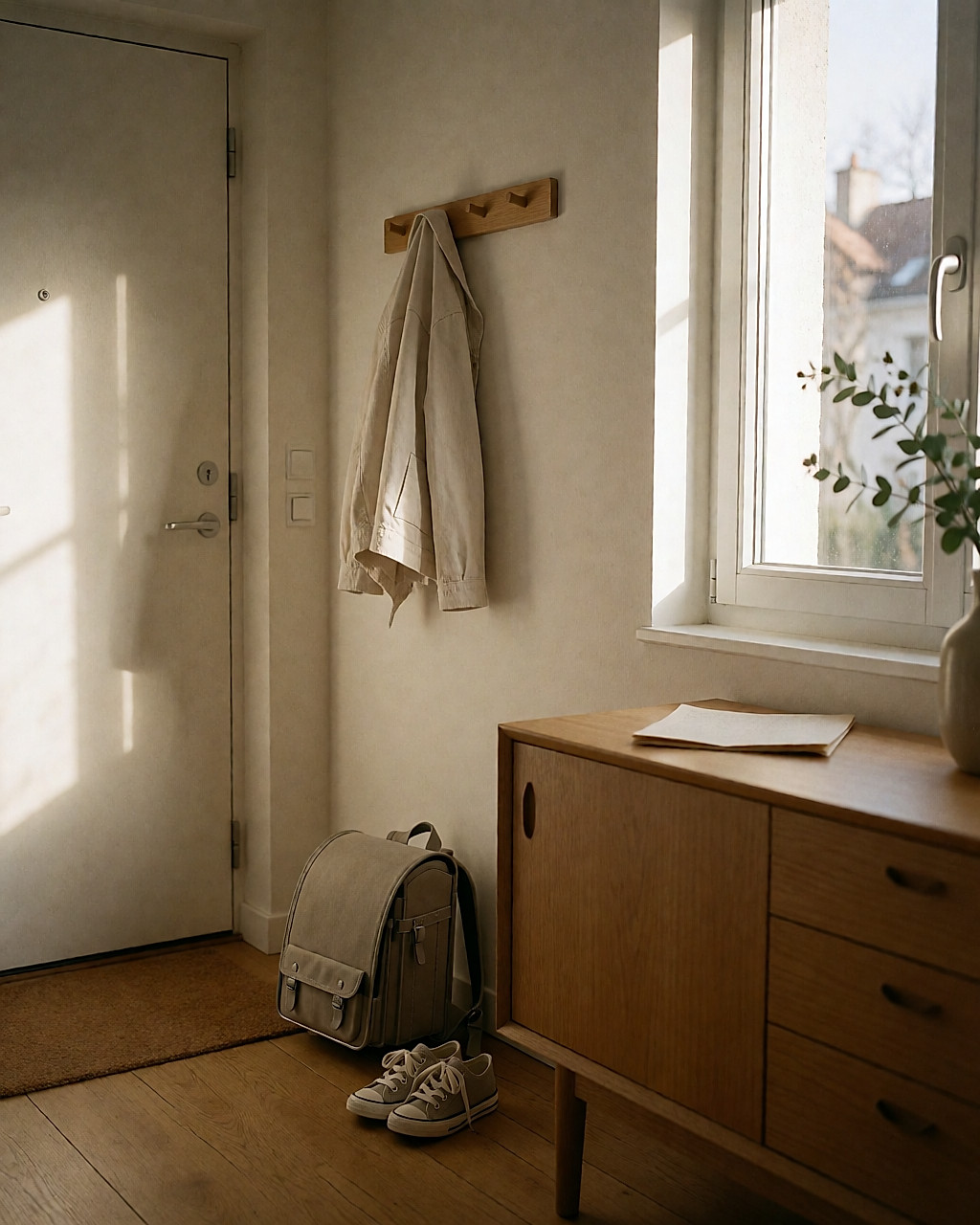
School refusal
The alarm goes off, and the day is already off to a bad start. Stomach aches, tears, sometimes shouting — and that child who ends up staying at home, again. If this scene feels familiar, you are not the only one wondering where the line falls between a whim and real distress. Because, no, they are not the same thing.
Behind this repeating picture often lies an anxiety disorder that clinicians now call anxiety-based school refusal. The older term 'school phobia' is still the one families use — and that is understandable, because it says something about the intensity of the fear. But it describes poorly a mechanism in which anxiety can be about school, about separation, or both at once. What we know, what we do not yet know: that is the task, because this ground deserves careful steps.
What exactly are we talking about?
Anxiety-based school refusal is a lasting inability to go to school, linked to intense fear. It has nothing to do with defiance, or with wanting to provoke. The child gains nothing by staying at home — they lose friends, routines, often their school year. That is exactly what puzzles parents: it is not a whim.
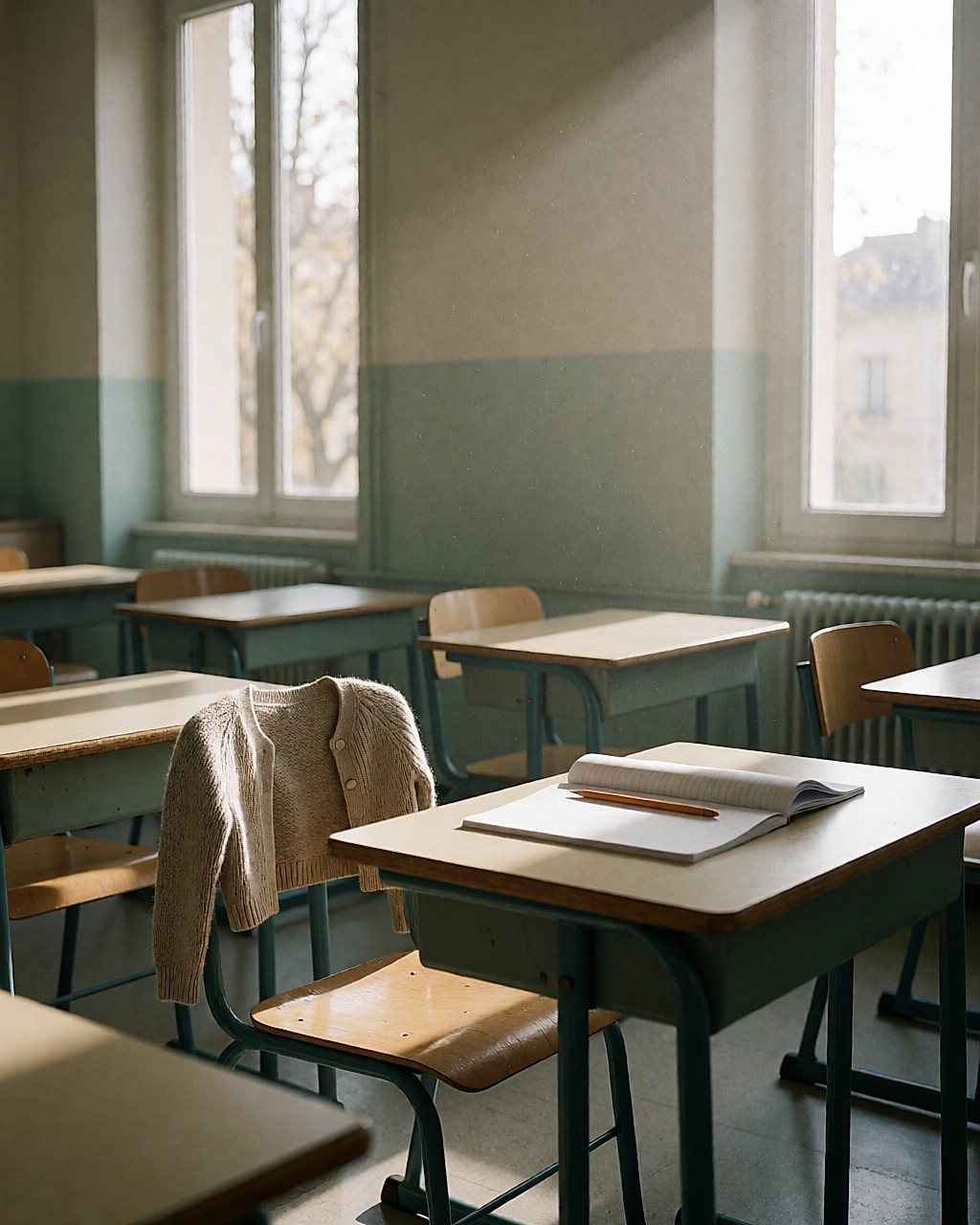
In practice, it is distinguished from several similar situations: truancy, where the pupil is fine but stays away; disengagement through boredom; and absences with a purely physical cause. One clue comes up often in families — symptoms ease at weekends and during holidays, then return when it is time to go back. That little Sunday-night pattern is something you may have noticed without knowing what to do with it.
On the numbers, caution is still needed. Estimates vary depending on the studies and definitions used, and child and adolescent psychiatrists mention a minority of school-age pupils, with a peak in adolescence, without any percentage being agreed. Current data suggest a real phenomenon, but one that is difficult to quantify precisely — so be wary of overly round figures, the ones circulating on social media and causing needless alarm.
In practice, child and adolescent psychiatrists and school health teams often report a rise in consultations for performance anxiety, bullying or burnout, especially since the 2010s and after the pandemic. Long confined to the sidelines, the subject is now discussed in secondary schools, local education authorities and community clinics. That is already progress: what can be named is spotted earlier and supported more easily.
An old phenomenon, better recognised
Refusing to go to school is not new, and it is almost reassuring to know that. It has been documented in child and adolescent psychiatric literature since the 1930s–1940s. Once school became a place everyone passed through, refusing it became a visible symptom — that is the whole story.
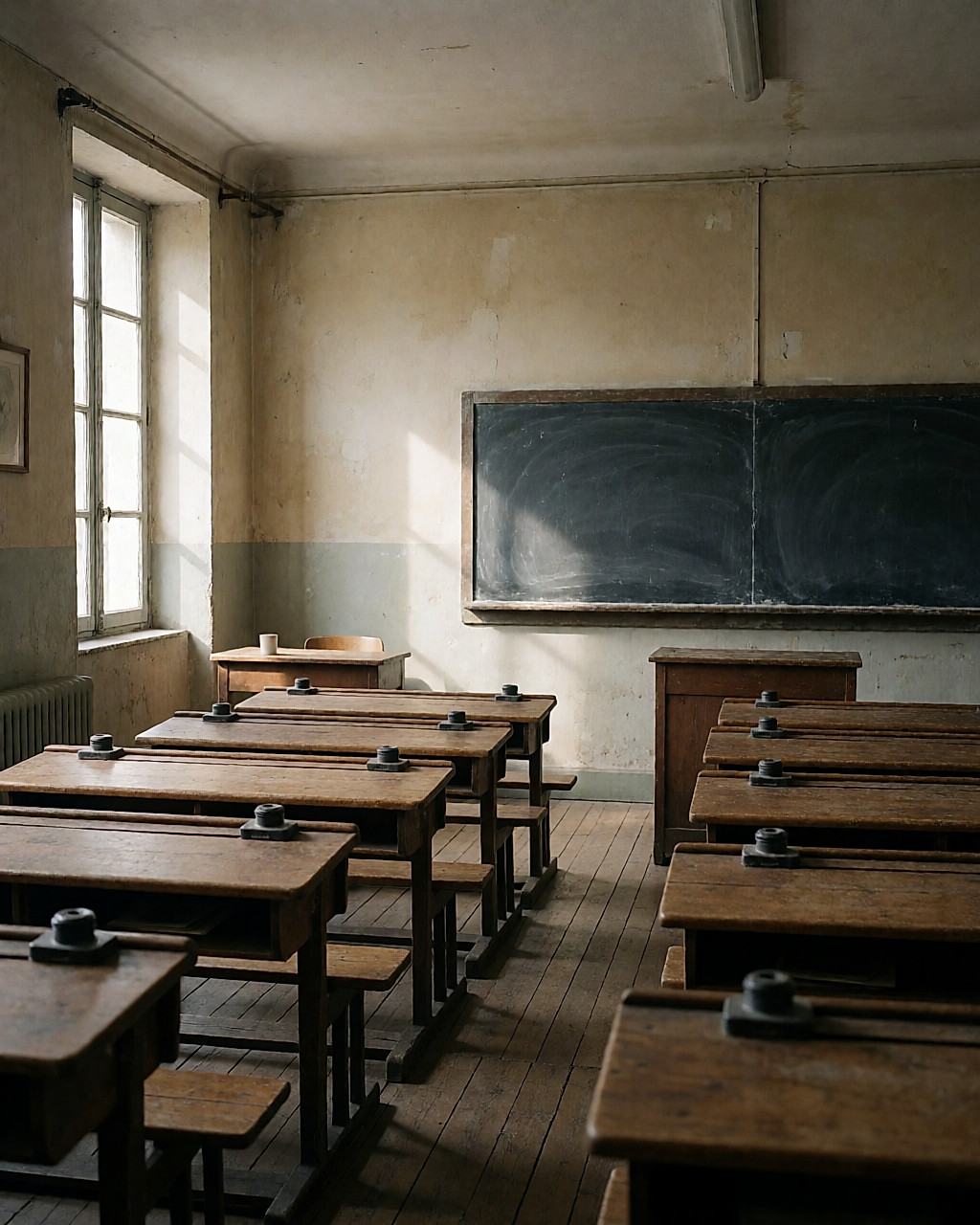
The term 'school phobia', also an old one, was used in clinical literature for a long time, and some families still have it in mind because it captures panic well. Terminology has moved on since, because the word 'phobia' wrongly suggests that school is the only object of fear. Yet sometimes it is not school that frightens the child: it is leaving home, the parent, the bedroom.
Why some pupils can no longer cope
The causes are multiple and often intertwined — and that is where to be wary of ready-made explanations. Care teams identify several, frequently combined. Separation anxiety first, when leaving a parent, home or reassuring environment becomes overwhelming. Social anxiety next, with fear of judgement, of being questioned, of speaking in front of others or simply crossing the playground. Performance anxiety finally, between perfectionism, fear of failure and a feeling of never being good enough.

Added to these are triggering factors: changing school, moving house, bereavement, illness, bullying or cyberbullying. And frequent co-occurring conditions — generalised anxiety disorder, depression, ADHD, autism spectrum conditions, and dyslexia or other specific learning difficulties. Suffice to say the picture is never simple, and no one benefits from looking for a single culprit.
The body speaks too, and often before words do: nausea, headaches, palpitations, insomnia. These physical symptoms explain long medical journeys — looking at the stomach, eyes, ears — before the anxiety dimension is identified. It is not play-acting, and it is not 'all in the mind' in the way that phrase is sometimes used as an accusation.
Spotting it early, without minimising
The warning signs are fairly consistent, and recognising them changes everything: repeated absences, meltdowns at leaving time, social withdrawal, a drop in grades, guilt, refusing to leave the bedroom. Taken one by one, you can always tell yourself it is tiredness, a difficult age, a bad patch. Taken together, they tell a different story.
The trap is well known: the longer avoidance lasts, the harder the return can become. This is the point care teams stress most — early recognition, without dramatising or dismissing it. The good news is that acting early does not require understanding everything straight away: just talking to someone whose job it is.
What care teams most often suggest
Tell the school and your GP, who can refer you to the school health service or a child and adolescent psychiatrist. Keep a sleep routine, maintain links with classmates and keep up some schoolwork, even if reduced. Take guilt out of the equation: the child is neither lazy nor merely being difficult. Protect hobbies and interests, which remain valuable anchors. And support parents, who need to be supported, not judged.
What support is available today?
The recommended approach combines several levers, and it is rarely a single professional who sorts it out. NICE cites cognitive behavioural therapy, with graded exposure to anxiety-provoking situations, among the best-documented approaches. Family therapy, mood monitoring and, sometimes, medication prescribed and monitored by a doctor complete the support. Coordination between care and school is a key point — it cannot be repeated often enough.
On the education side, several options exist. Home tuition or hospital education may be arranged by the local authority — your local authority education department can explain how. There is also teaching organised in hospital, in child and adolescent mental health wards, and day hospitals. Reintegration programmes allow a gradual return to the original school. Online schooling is sometimes used as a temporary solution, provided it forms part of a plan to return rather than becoming a long-term refuge — that is the whole nuance.
Return is often built in stages: a reduced timetable, a later start, a quiet room or resource base, tutoring, a personalised support plan. The goal is not immediate performance, but reconnecting. You move forward in small steps, and every small step counts.
In practice, remember this: most often, a child does not refuse school out of simple defiance. Refusal is a signal, and a signal that can be treated. Supporting it brings together three partners — family, school and health professionals — and it is often this three-way alliance that makes the difference. If you spot these signs in a child, talk to a health professional: your GP, school health service or child and adolescent mental health services (CAMHS), without waiting for the situation to become fixed. No one will ask you to solve everything alone, and certainly not overnight.
Sources
- NICE — Guidance and publications, accessed 2026.
- Department for Education — Education otherwise than at school and supporting pupils with medical conditions, accessed 2026.
- NHS — Children and young people's mental health services, accessed 2026.




Comments
Your opinion matters: rate the article, react and reply to comments.
Comments are moderated; AI-assisted comments are flagged. Text emoticons (8-), :-), <3…) are automatically shown as images.