
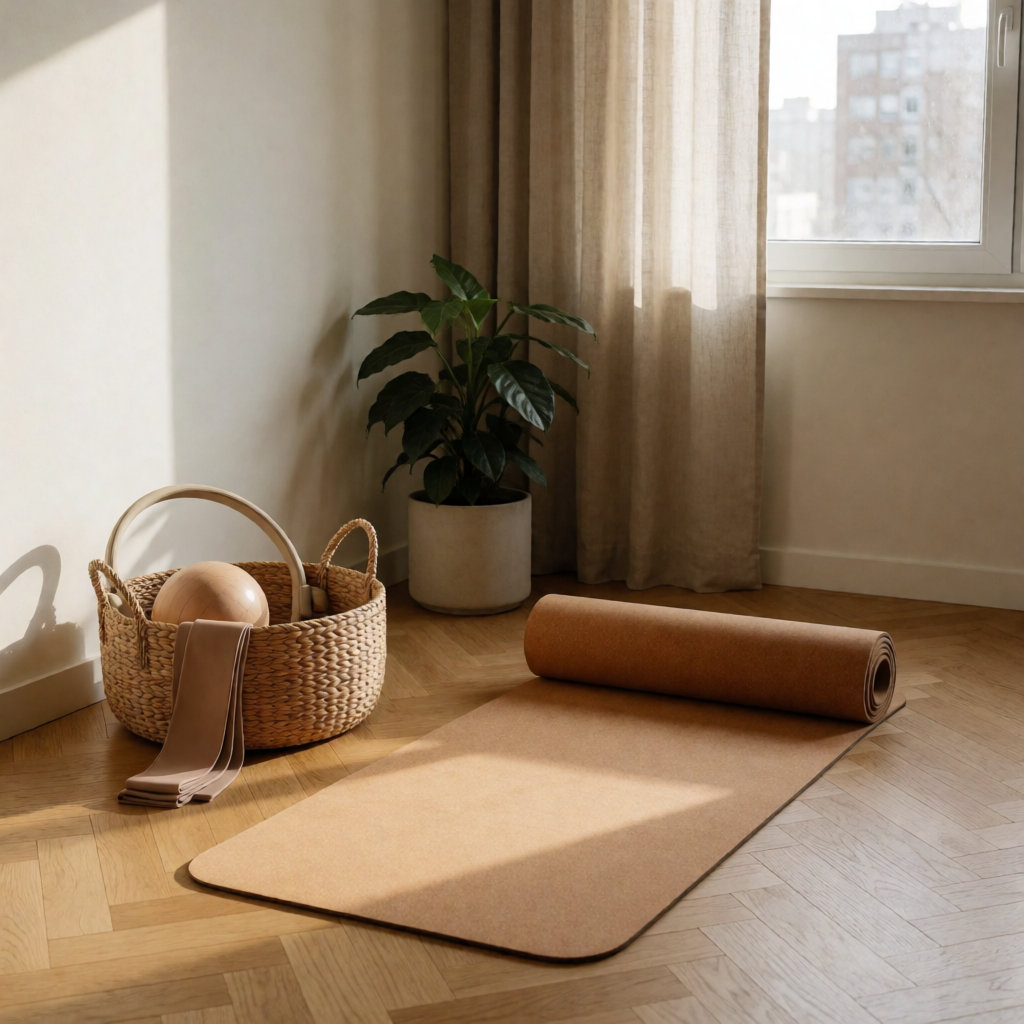
Mat Pilates doesn't need a studio. A space the width of a bath mat is enough, in a corner of the bedroom or between the sofa and the window. Good news! Then comes the sorting, because the sports aisle promises you the earth. In practice, four or five purchases cover the whole routine.
What is it really for? Moving regularly, without heavy equipment or a subscription. Current evidence suggests a moderate effect of Pilates on chronic low back pain, though the level of evidence remains limited: it's a good movement tool, not a treatment.
The mat: the only non-negotiable item
It's what makes the difference between a comfortable session and wrists that ache. Three criteria matter.
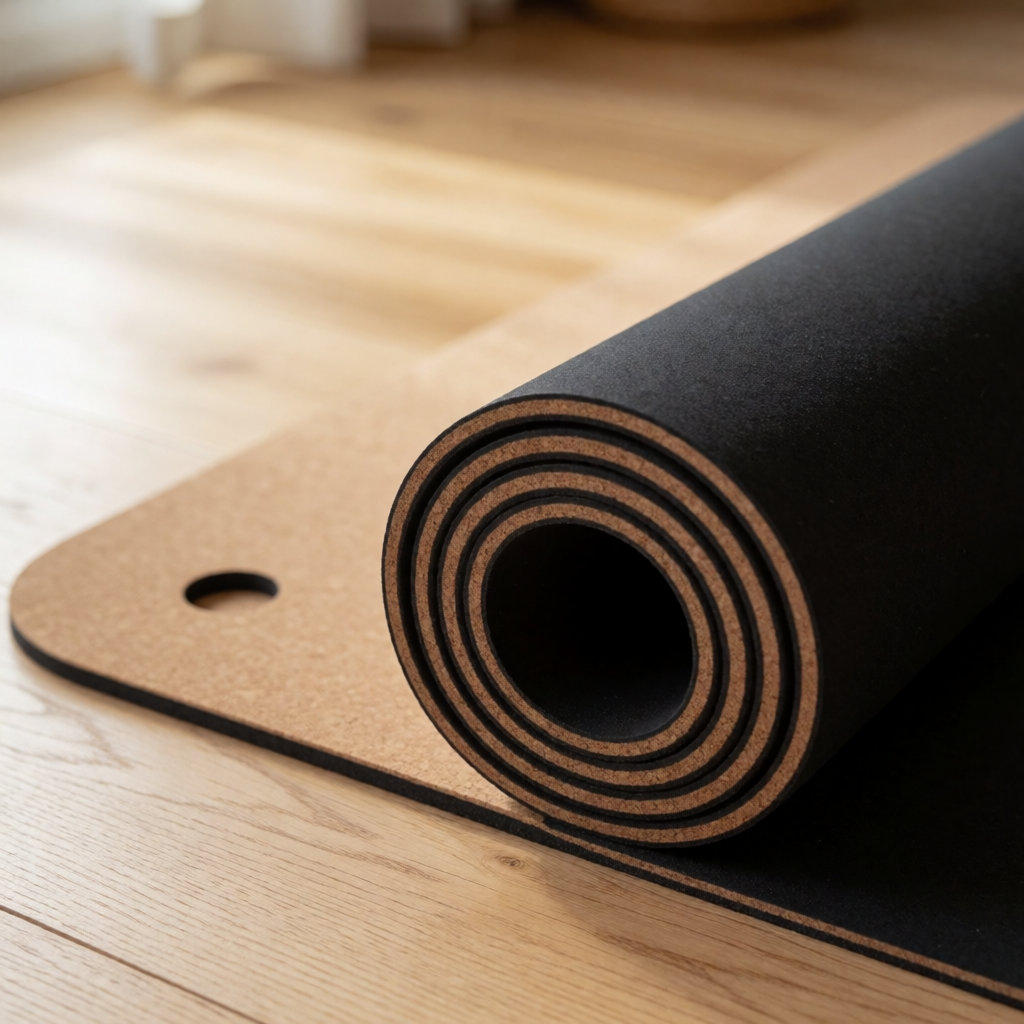
Thickness. Too thin, it lets pressure points — sacrum, knees, forearms — reach the tiles. Too thick, it becomes unstable: you lose your balance cues and your pelvis floats. Look for a mat that cushions without sinking.
Grip. How do you test it in ten seconds? Kneel on it on your floor and push it sideways. If it slides, you'll feel it as soon as you move from sitting to standing.
Material. PVC is flexible and cheap, but it often contains plasticisers, and some phthalates are covered by UK and EU regulations. That doesn't make it a banned product, but you spend time with your skin against it, and PVC recycles poorly. PVC-free TPE is lighter, sometimes made from recycled materials, and its new smell often fades faster. Natural rubber often offers good grip, but it's heavy to carry. Cork, bonded to a rubber base, has a pleasant, durable surface: plan on gentle care, without abrasive products.
On labels, check what they actually guarantee. OEKO-TEX Standard 100 covers harmful substances in the finished product, not where the material comes from. GOTS only applies to textiles from organic farming: it applies to an organic cotton face, not the foam.
The ring and mini ball: two purchases that earn their place
The ring is a hoop around 30 centimetres across. You squeeze it between your knees or ankles to work your inner thighs, or between your hands for the upper body. It slips against a wall, under the bed, and takes up almost no space.
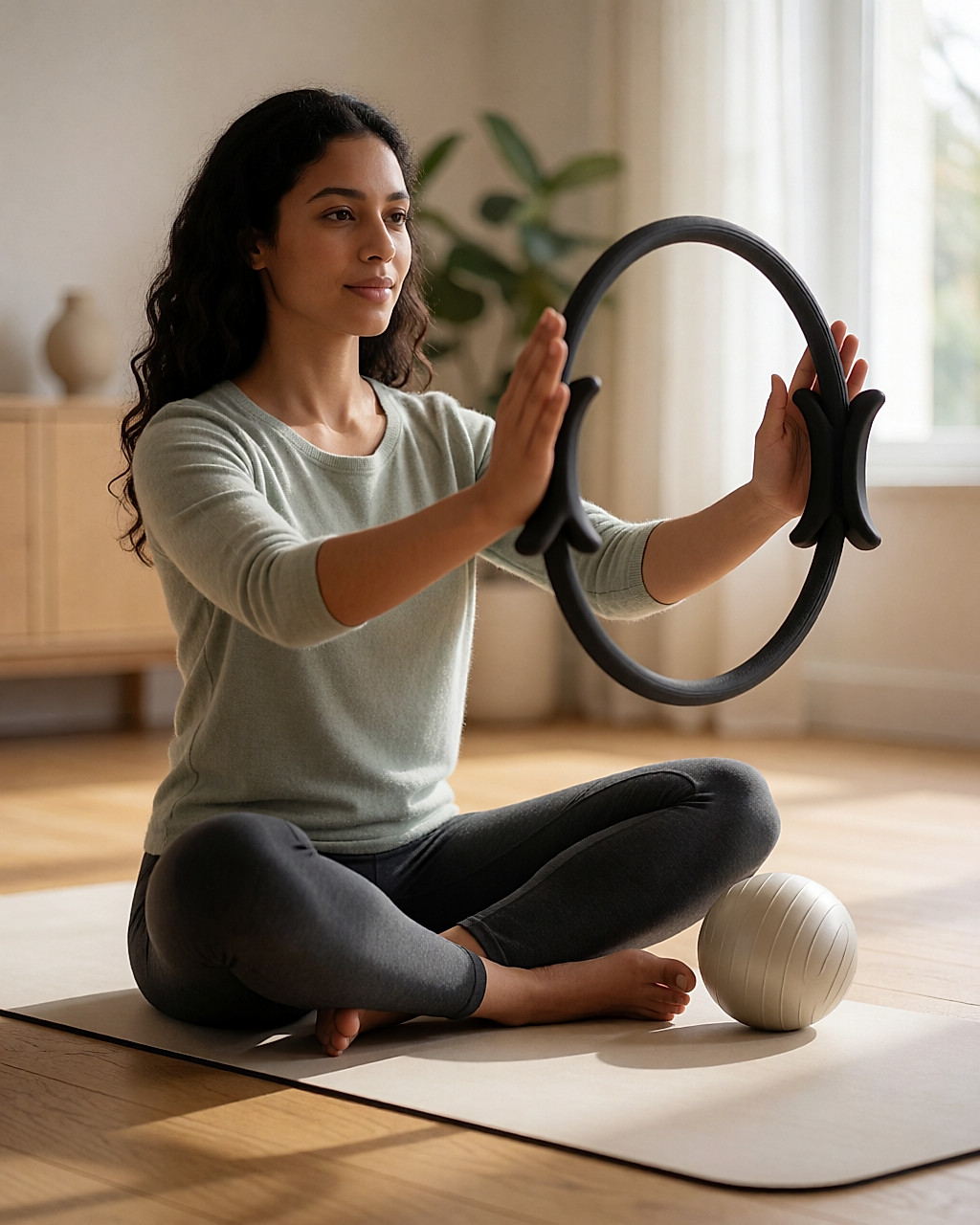
Do you need both? No. The mini ball is often enough: under the pelvis, between the knees, under one foot, it adds instability. Choose a soft one rather than a hard one, and inflate it to your liking.
Resistance bands: little space, lots of use
A band is upper-body stability work: rows, pulls, lateral raises. Natural latex dominates, and it comes from the rubber tree. Choose talc-free ones if you can: talc is used to stop them sticking in the mould and leaves a white residue on your hands. If you're allergic to latex, fabric bands without latex take over.
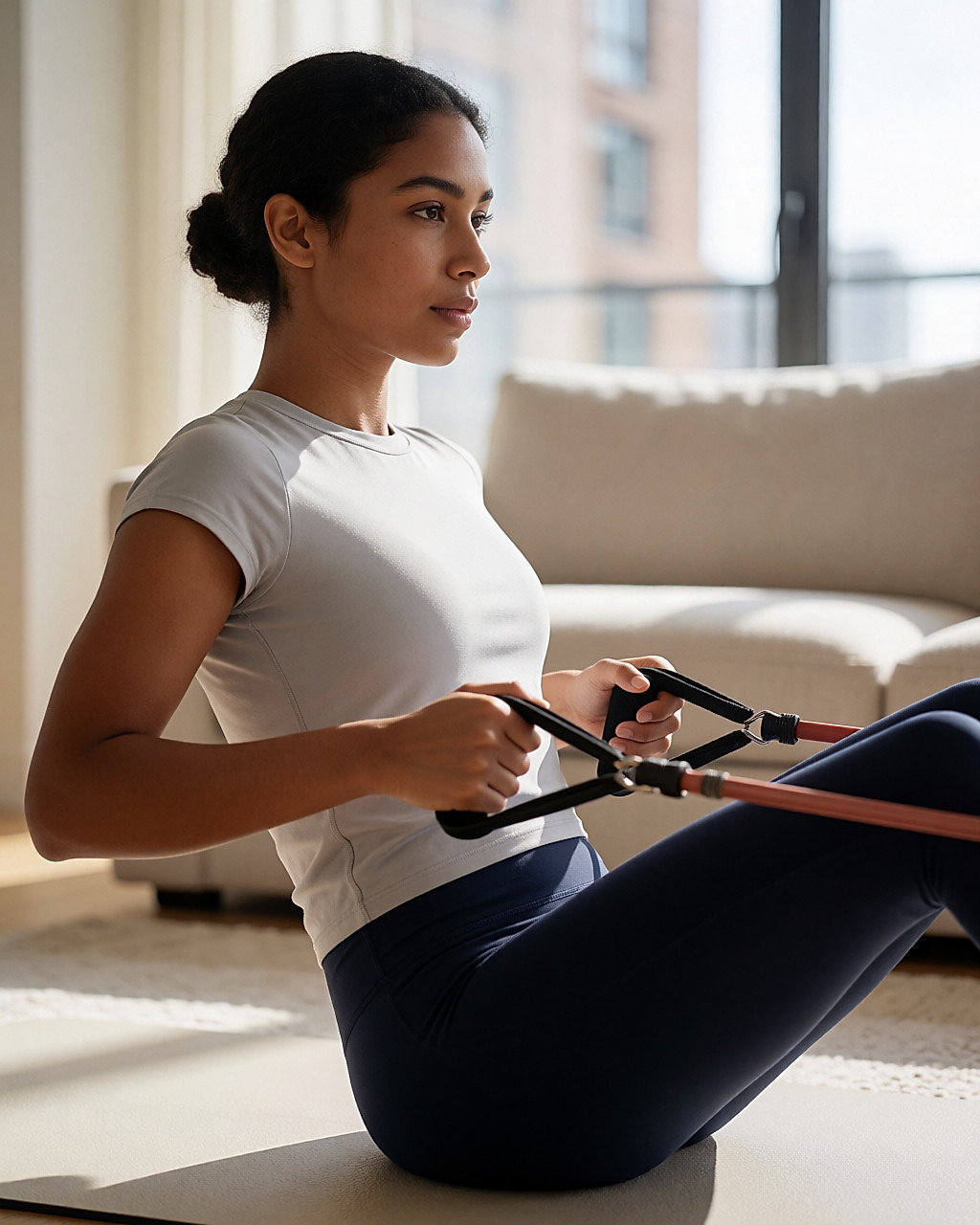
The environmental trade-off is fairly good: renewable material, often cardboard packaging, long lifespan. The weak points remain talc and dyes.
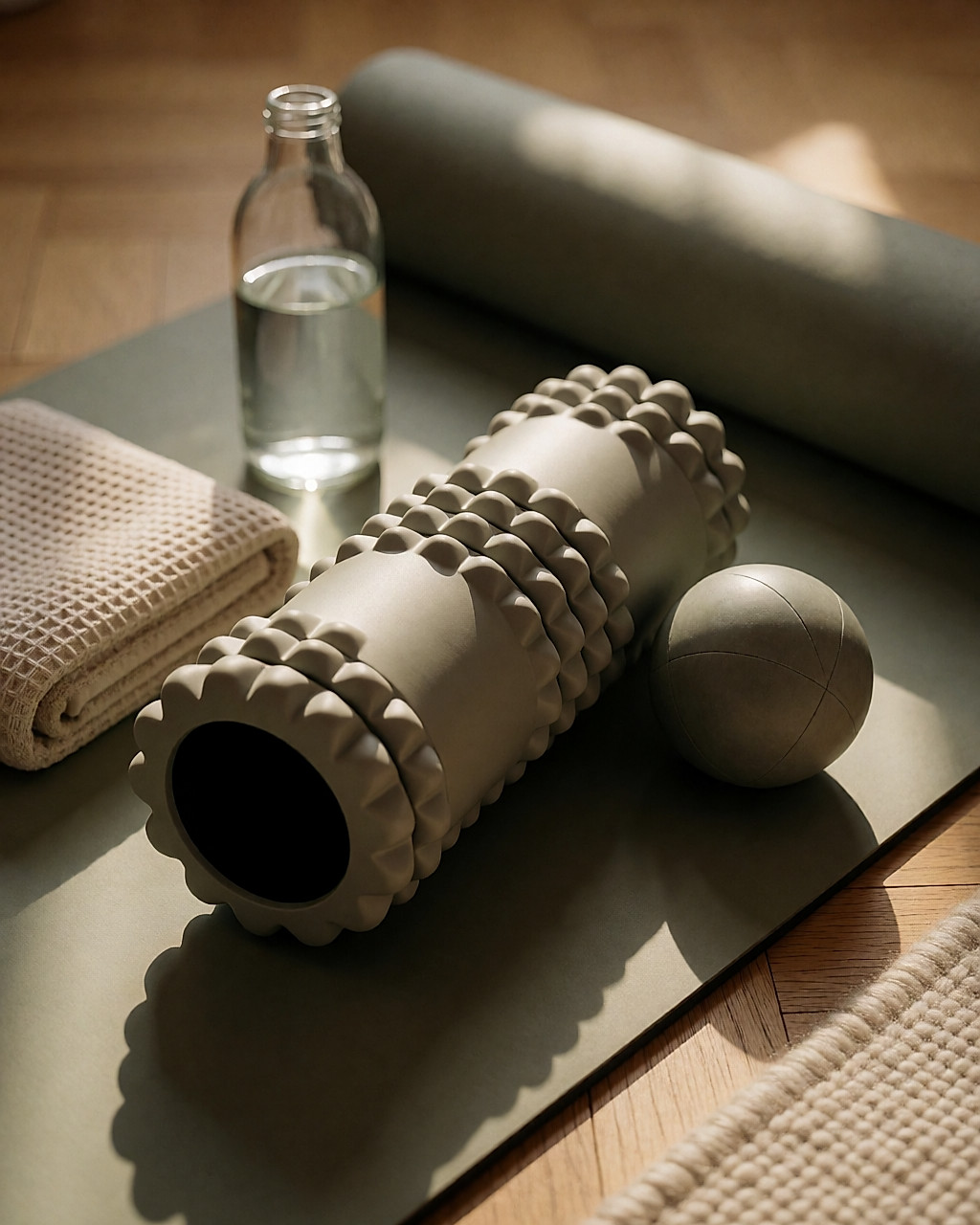
Spiky roller or massage ball: for recovery days
These two aren't for training but for recovery: easing tension in your back and calves between sessions. The roller takes up the length of a mat, the ball fits in a shoe. Start with the ball; the roller becomes relevant if you also run.
If pain travels down your leg, wakes you at night, or is clearly triggered by a specific movement, don't push through it and don't stretch. This is the time to speak to a health professional — a physiotherapist or GP. Recovery equipment doesn't diagnose anything and doesn't replace ongoing care.
Budget
The figures below are typical UK prices, in shops and online. Expect roughly:
- Mat: £12 to £25 for an entry-level TPE mat, £20 to £50 for a thick TPE or natural rubber mat, £50 to £95 for a cork mat. The price rises with thickness, non-slip backing and brand.
- Ring: £8 to £20.
- Mini ball: £6 to £15, often sold in pairs.
- Resistance bands: £8 to £20 for a set of three.
- Massage ball: £6 to £15. Spiky roller: £12 to £35.
Where to find them? Large supermarkets and specialist shops stock the mat, ring and bands in their sports aisles. Health food shops or wellness stores more often stock cork and massage balls. Online, there's a wider choice of recycled materials — but check the returns policy if the grip isn't right for you.
One purchase a month, and you'll have everything in three or four months, without a full trolley.
Sources
- World Health Organization, WHO Guidelines on Physical Activity and Sedentary Behaviour, 2020.
- Santé publique France, recommendations on physical activity and sedentary behaviour.
- Yamato TP et al., 'Pilates for low back pain', Cochrane Database of Systematic Reviews, 2015.
- OEKO-TEX (Standard 100) and Global Organic Textile Standard (GOTS): what the labels cover.


Comments
Your opinion matters: rate the article, react and reply to comments.
Comments are moderated; AI-assisted comments are flagged. Text emoticons (8-), :-), <3…) are automatically shown as images.