
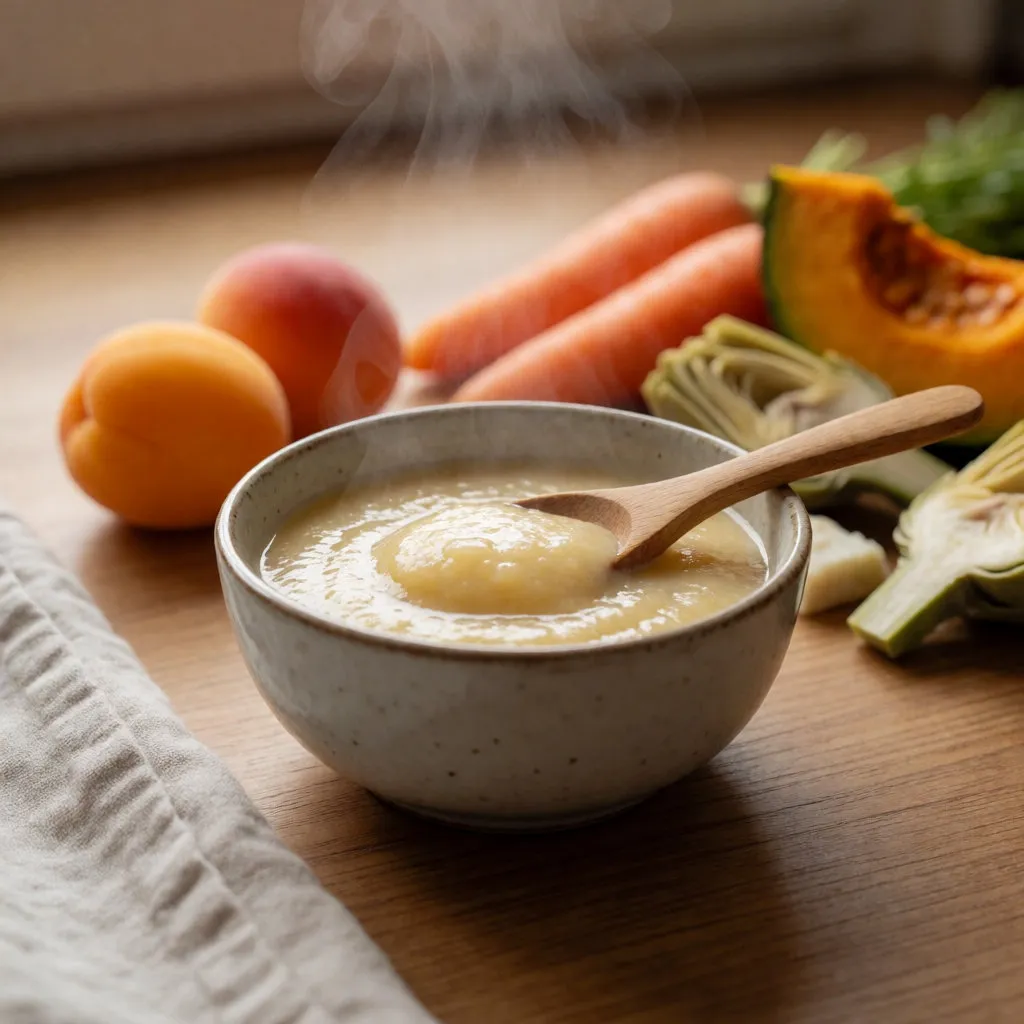
From around 4 months, the original French guidance suggests that new foods can be introduced to your baby — including fruit itself, offered like any other food rather than automatically excluded, while you watch for tolerance — and green vegetables, steamed and well blended. In the UK, NHS advice is generally to start weaning at around 6 months, unless a health professional advises otherwise for your baby. Textures then move gradually: smooth purées, then mashed, then small soft pieces, following your baby's development and advice from your health visitor, GP or paediatrician. Thicken, mash, leave a few small pieces, so your baby can get used to different textures little by little. Drinks are different: stick to water and milk. Fruit juice, even with no added sugar, is not recommended before 1 year.
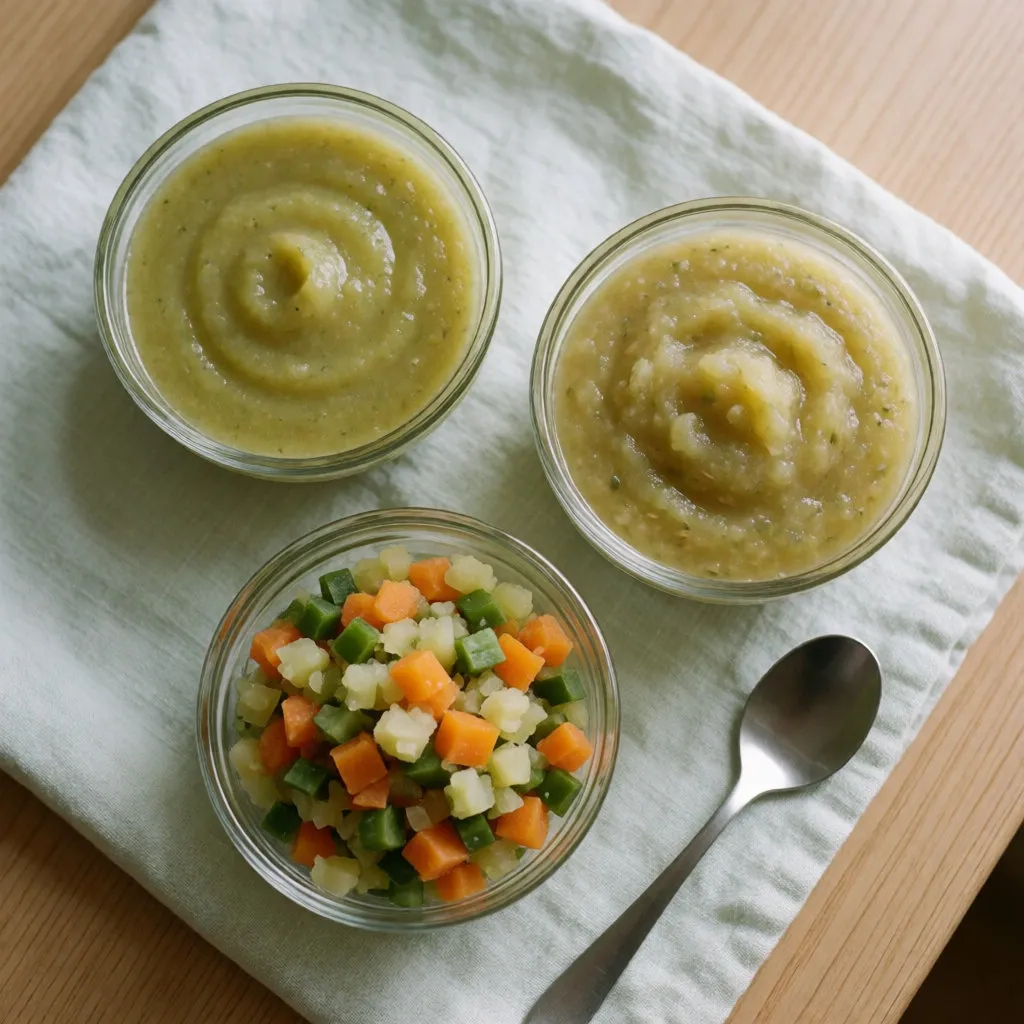
Where vegetables are concerned, cabbages — cabbage, cauliflower and Brussels sprouts — should be introduced gradually, in small amounts, while watching for digestive tolerance.
From 6 months, or according to advice from your health visitor, GP or paediatrician, you can introduce meat, fish and dairy in small amounts. Beef works well for little ones, preferably cooked without fat. For fish, choose cod or pollock, cooked en papillote or poached. Well-cooked eggs can also be offered from the start of weaning, in small amounts, without automatically leaving out the yolk; and don't hold back on yoghurt and fromage frais (choose unsweetened).
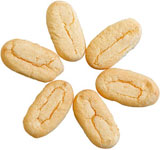
Starchy foods can be offered from the start of weaning, in an appropriate form (smooth purée, then mashed), following advice from your health professional: potatoes, pasta (choose small shapes), fine semolina, biscuits. You can also introduce cheese, grated and melted into a purée, for example.
Herbs and spices can be used early, with no added salt; chocolate remains a treat to offer later, in small amounts and according to advice from your health professional.
A quick note of caution while you're in the first-spoon stage: honey should not be given before 1 year, because in rare cases it can expose a baby to infant botulism. Otherwise, keep it simple — ripe fruit rather than added sugar, gradual textures, gentleness — and don't hesitate to talk to a health professional who knows your child's history: your GP, health visitor or paediatrician can adapt all this, without stress or pressure.
The recipes
Baby at 4 months
Apricot compote
You need 4 ripe apricots: ripe fruit is enough, so there is no need to add sugar.
Wash and stone the apricots. Put them in a saucepan with half a glass of water. Simmer gently for 15 minutes, then blend the mixture. Leave to cool slightly and serve to your baby.
Carrot and pumpkin purée
You need 50g carrots, 150g pumpkin, 60ml first infant formula and 5g butter.
Peel and chop the pumpkin and carrots, then steam until very tender. Blend them carefully with the milk and butter. Serve warm, but not too hot.
Milk and apple-pear baby food compote
You need 2 tbsp apple and pear baby food (Nestlé, for example) and 200ml first infant formula.
Heat the milk until steaming, but do not let it boil. Then, off the heat, stir in the apple-pear compote. Leave for 2 or 3 minutes, blend the mixture, pour it into a small bowl and offer it on a spoon rather than in a bottle. Serve neither too hot nor too cold.
Baby at 6 months
Spring vegetable velouté
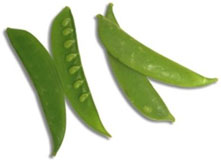
You need 50g carrots, 50g shelled peas, 50g green beans, 1 sprig parsley and a small knob of butter.
Wash the vegetables thoroughly, peel the carrots and cut them into rounds or small dice. Top and tail the green beans. Cook everything in 300ml boiling water for about half an hour. Blend once the vegetables have cooled slightly, then add the butter.
Cherry and fromage frais compote
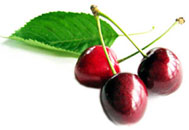
You need a good handful of ripe cherries and 60g fromage frais.
Wash the cherries, remove the stones and stalks. Put them in a saucepan with 3 tbsp water. Cook gently for about 15 minutes, stirring well so the fruit breaks down, then leave to cool. Serve mixed with unsweetened fromage frais, ideally.
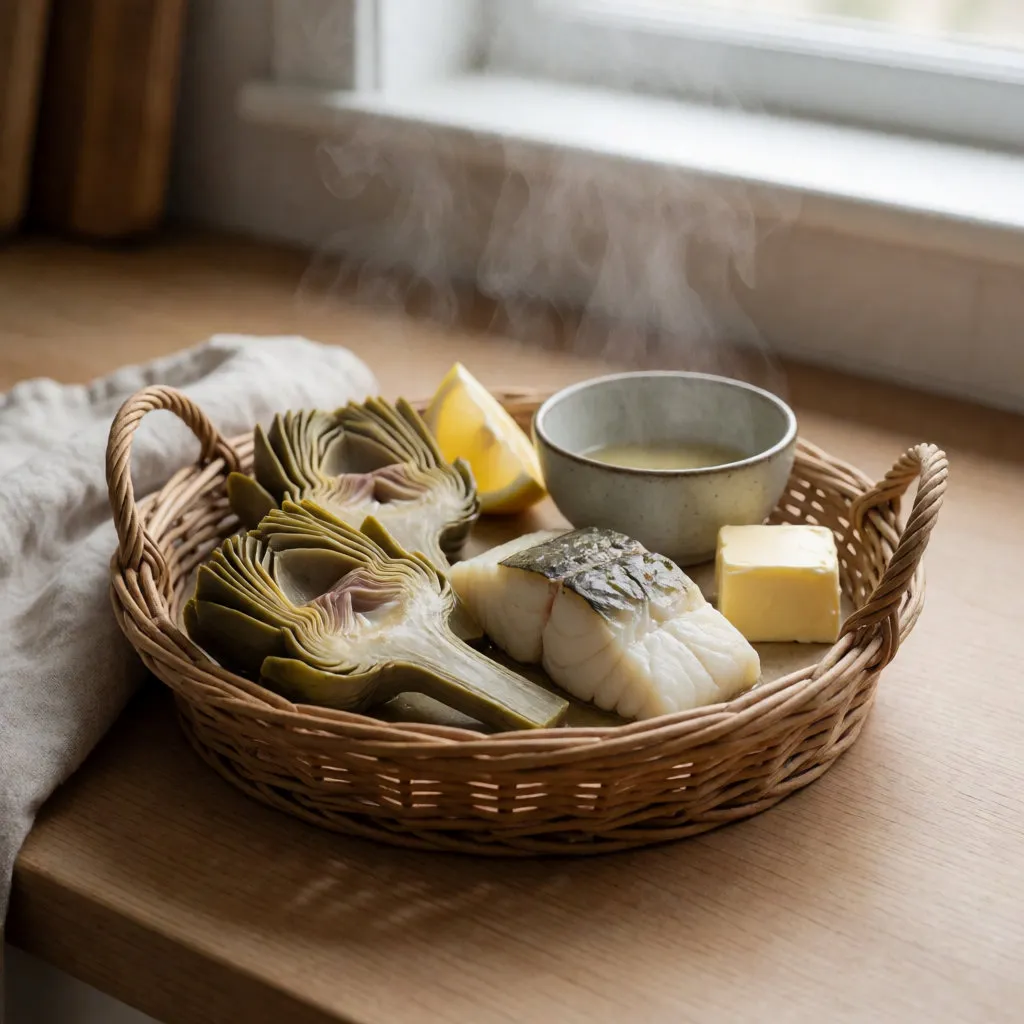
Artichoke and cod purée
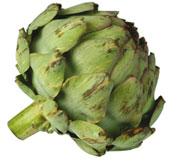
You need 20g cod fillet, 2 artichokes, a small knob of butter and a few drops of lemon juice.
Wash the artichokes and steam them. Meanwhile, remove the bones from the fish and poach it in court-bouillon or a light unsalted stock. Once the artichokes are cooked, remove the leaves and keep only the hearts. When the fish is cooked too, blend it with the artichoke hearts until you have a smooth, even purée. You can add a few drops of lemon juice to stop it discolouring, and add the knob of butter. Mix and serve at a good temperature.
Baby at 9 months
Lentil velouté
You need 50g lentils, 20g carrots, 1 tbsp crème fraîche and 1 sprig parsley.
Wash the lentils carefully, peel the carrots and chop them. Wash the parsley and put the lentils, carrots and parsley in a saucepan with 500ml water. Bring to the boil, then reduce the heat and simmer for a good hour. Once cooked, blend the mixture. Stir the crème fraîche into your baby's bowl with the velouté.
Peach cereal porridge
You need 20g cereal flakes, 180ml second-stage follow-on formula, 4 tbsp peach baby food and 3 slices of banana.
Heat the milk over a very low heat, then add the cereal flakes. Leave to swell for 2 minutes, then stir in the peach compote and the mashed banana. Mix until fairly creamy.
For more baby recipes from 4 months to 2 years, you can look for Le petit livre des recettes pour bébé by Caroline Bach, a dietitian with the Petits Gourmands service, published by First.
Budget
The original French article estimated around €0.50–€1.50 per portion for a seasonal vegetable purée, a little more if you add a small portion of meat or fish. A shop-bought jar was around €1–€2 depending on brand, size and retailer. Those figures are not directly transferable to the UK, but the same principle often holds: homemade purées can cost less than you might think. As a rough UK guide, shop-bought baby food jars typically cost around £1–£2 each, while a basic stick blender starts at about £15–£30 and small purée storage pots around £5–£12. Prices vary with the season, where you shop (market, supermarket, health food shop) and whether you choose organic.
Sources
- NHS — advice on introducing solid foods and feeding babies and young children.
- WHO — guidance on infant botulism and honey before 12 months.
- Santé publique France and ANSES — French public health recommendations on feeding children aged 0–3, cited in the original article.



Comments
Your opinion matters: rate the article, react and reply to comments.
Comments are moderated; AI-assisted comments are flagged. Text emoticons (8-), :-), <3…) are automatically shown as images.