

You come back from the beach with your shoulders still warm, trying to work out what caught you out this time. The sun is not just pleasant light. It is radiation, with specific wavelengths and measurable effects on your skin. One part of the spectrum is enough to trigger sunburn, pigmentation or that rash that returns every summer.
What sunlight actually contains
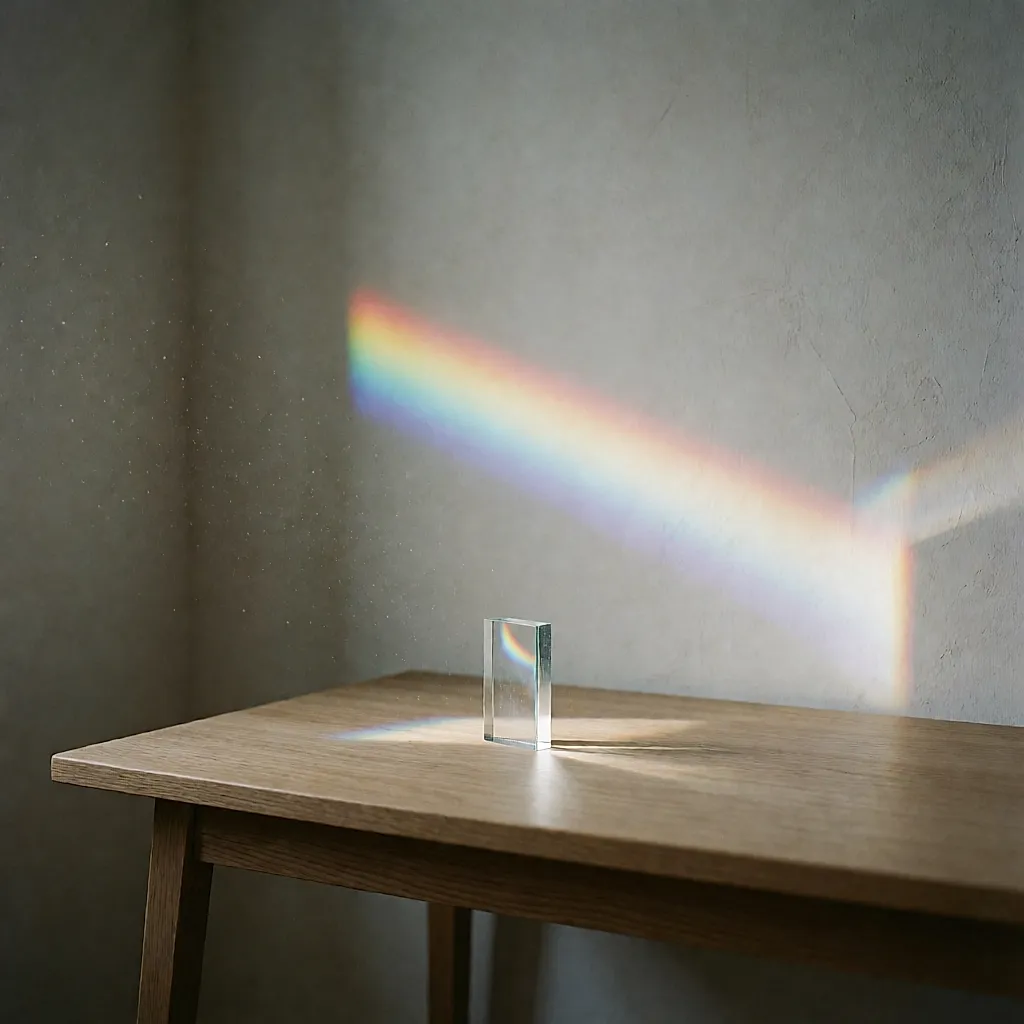
Ultraviolet radiation falls into three groups, and not all of them reach us.
UVC, between 200 and 280 nanometres, is stopped by the atmosphere and does not reach the ground.
UVB, from 280 to 315 nanometres, is the most energetic of the wavelengths that reach us. It affects the epidermis, causes burning and triggers vitamin D synthesis. UVB is what turns an afternoon outdoors into sunburn.
UVA, from 315 to 400 nanometres, makes up the vast majority of the UV that reaches us. It passes through cloud and window glass and reaches the dermis. It does not burn immediately, but it causes pigmentation, ages the skin and triggers some allergies.
The UV index, from 1 to 11 and above, sums up the intensity at that moment. It rises with altitude and near water, sand or snow, which reflect radiation.
What it does to your skin
Sunburn is a burn, not a holiday ritual. Repeated sunburn, especially in childhood, is among the risk factors for skin cancer. Cumulative exposure and burns matter more than the colour of the tan you end up with.

UVA, meanwhile, acts quietly: dark spots, wrinkles, loss of elasticity. It gets through sunscreen that has been poorly applied, and that is the trap.
Then there are photosensitivities. The most common in summer is polymorphic light eruption (PMLE), sometimes called benign summer light eruption: a rash of small, itchy red bumps. It appears shortly after exposure, on the chest, shoulders and forearms; the face is often spared. It fades without leaving a scar. It is fairly common and often returns year after year.
What we know, and what we do not yet know: no cream or capsule replaces shade and clothing. Food supplements are not a substitute for sun protection, and caution is advised with supplements in general.
Prevention in practice
- Choose a high SPF — 50, for example — for your first exposures, and check for the circled UVA symbol on the tube.
- As a guide, half a teaspoon is often used for the face and neck, and a small glass for the whole body — far more than most people usually apply.
- In practice, many advise reapplying every two hours, and after swimming or sweating heavily.
- Stay in the shade during the strongest sunshine, when the UV index is at its highest.
- Add a hat, category 3 sunglasses and protective clothing: they protect without wearing off.

On filters, mineral options — zinc oxide and titanium dioxide — stay on the surface and suit reactive skin. Some leave a white cast, and water resistance depends on the formulation: many mineral products are now formulated to be water-resistant, so check for the words 'water-resistant' on the tube before buying. In practice, a cream or lotion formula, applied by hand, is easier to measure out.
If the rash is already there
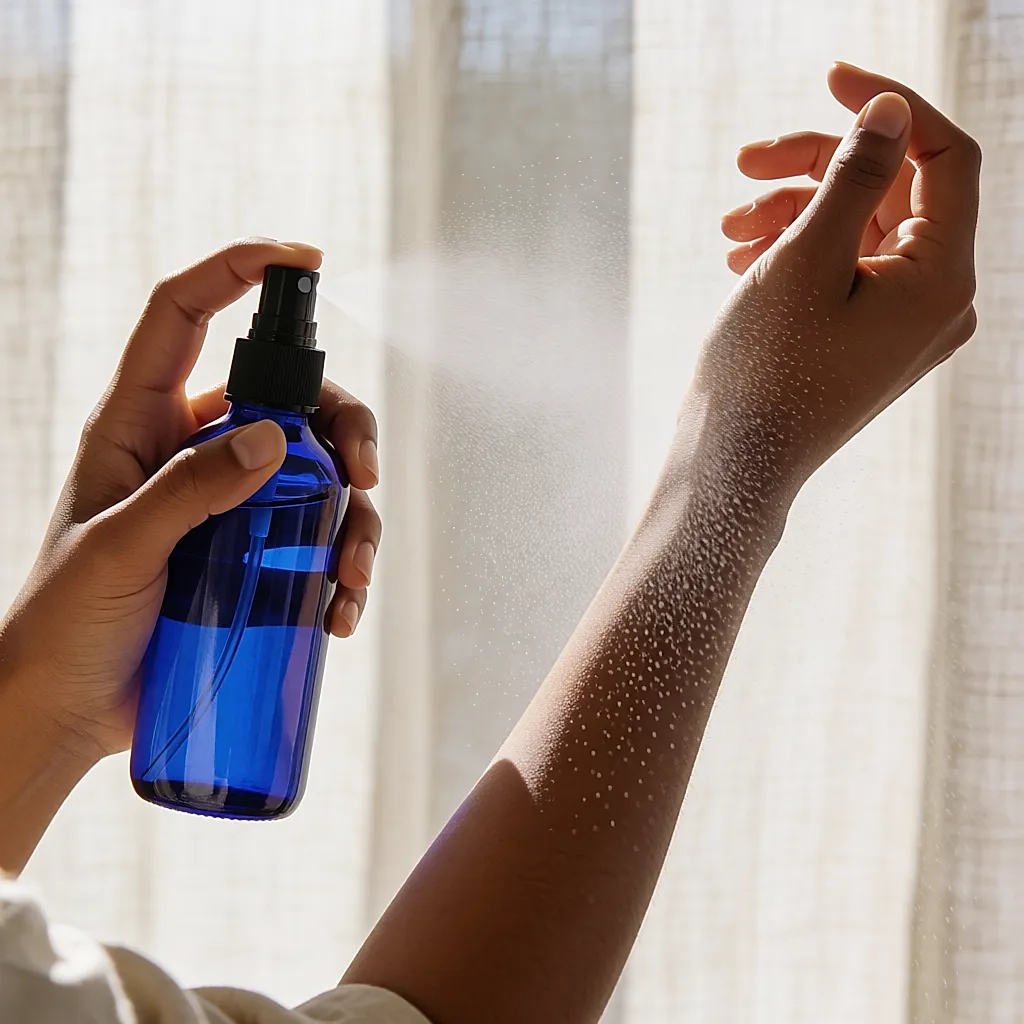
Stop sun exposure until it has completely cleared. Shower in lukewarm water with a soap-free cleanser formulated for sensitive skin. Apply thermal spring water or a fragrance-free soothing product in a thin layer. Speak to a healthcare professional if the rash is widespread, if itching prevents you from sleeping, or if the diagnosis is unclear: other photosensitivities exist, and only a doctor can tell them apart.
What it costs
Prices depend mainly on the SPF, the type of filter, the label and the size. Expect to pay roughly £10 to £25 for a 50 ml face cream with SPF 50 from a pharmacy or health-and-beauty retailer, or more like £8 to £15 in a supermarket. A 200 ml body fluid or lotion is usually around £12 to £30. A certified organic mineral formula (Cosmos Organic, Ecocert) often rises to £15 to £35 per 100 ml, because mineral filters are used at high concentrations. Add £8 to £18 for a 300 ml thermal spring water spray, and £8 to £20 for a 200 to 400 ml soap-free cleanser. Food supplements cost £10 to £30 per course, but remember: they are not protection.
Where to find them: pharmacies and health-and-beauty retailers for advice, supermarkets and fragrance or beauty retailers for price, and brand websites and online pharmacies for the rare refills or glass containers in this category — worth checking if you want to reduce plastic, though with this type of formula refills are still the exception rather than the rule.
Food supplements do not replace a varied, balanced diet and a healthy lifestyle.



Comments
Your opinion matters: rate the article, react and reply to comments.
Comments are moderated; AI-assisted comments are flagged. Text emoticons (8-), :-), <3…) are automatically shown as images.