
When you get back into exercise, the same ritual returns: group classes fill up all at once, morning runs are rearranged, and that old grey pair of leggings — the ones kept out of habit — comes back out of the wardrobe. Perhaps this year you really will kit yourself out properly. The good news is that sportswear has opened up to the city: you can run, then go for a coffee without looking as if you have put on a costume. The bad news is that this is probably the aisle where the most unverifiable promises are made.
One point of transparency before we begin: nothing here has been tested in real workouts. These are pointers for choosing, not fitting-room favourites.
Move first, dress second
The WHO recommends that adults get 150 to 300 minutes of moderate activity a week, plus two muscle-strengthening sessions. Physical inactivity remains a recognised risk factor for several chronic conditions, and consistency matters more than intensity. In other words, a pair of leggings does not make anyone sporty. In reality, it mainly makes the session more comfortable — which is not nothing. So the useful question is not 'which jacket flatters you most?' but 'what do you need to move twice a week, even at 7pm after work?' And if pain settles in, if breathlessness feels unusual, or if you are returning after a long break, your GP is the one to advise — not an article.
Fabric before pattern
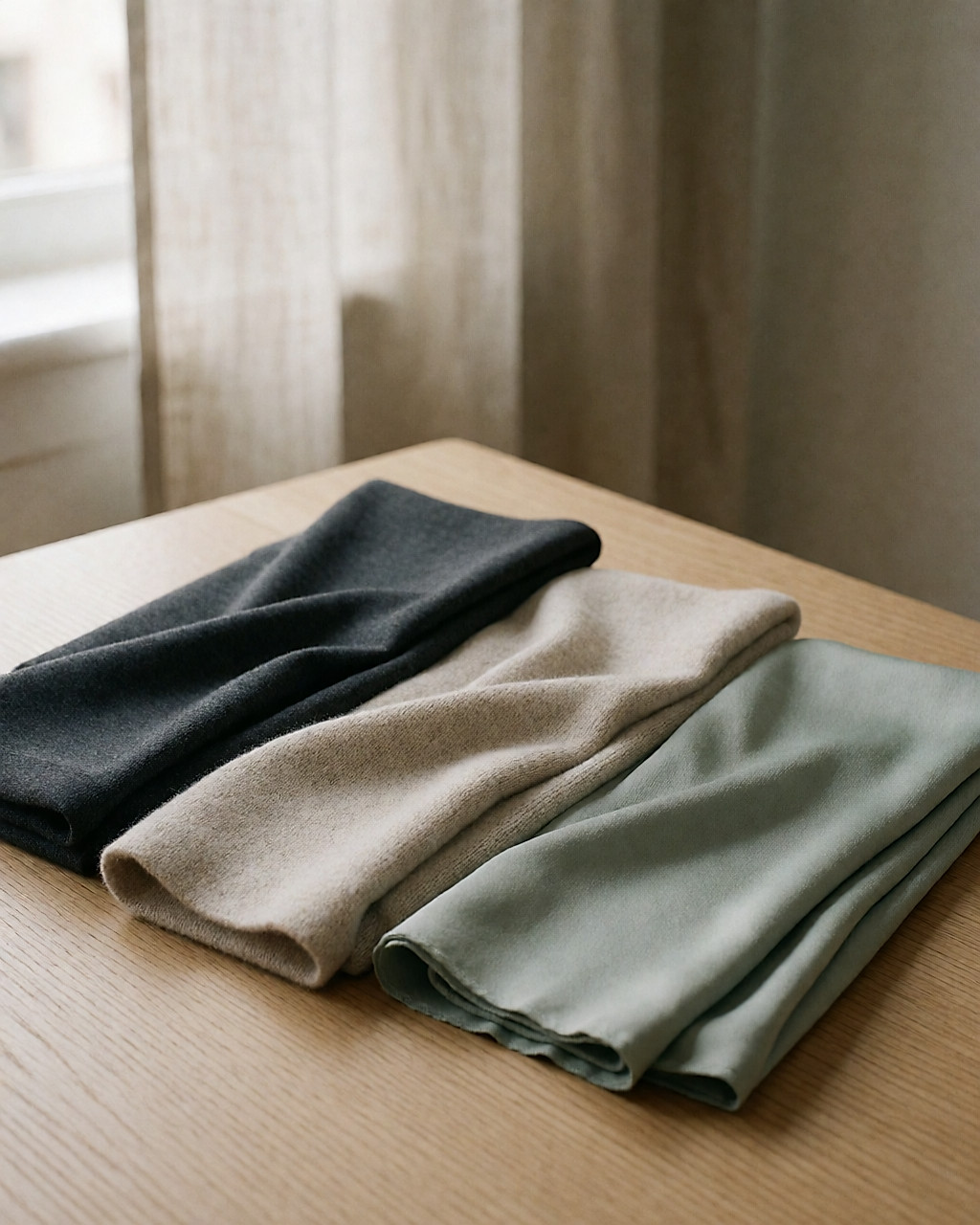
Before you fall for a print, turn over the label and read the composition. That is where the essentials lie, far more than in the colour of the month.
- Recycled polyester: hard-wearing, quick-drying, it holds up through repeated sessions. The GRS (Global Recycled Standard) label certifies the share of recycled material and its traceability, not the lifespan of the garment.
- Merino wool: breathable, slow to develop odours, ideal for outdoor sessions in cool weather. More expensive and more delicate: washing takes a little care.
- Lyocell: a cellulose fibre, pleasant in a city piece with a fluid drape; look for a forest-management label (FSC) or the EU Ecolabel.
- OEKO-TEX Standard 100: certifies the absence of undesirable substances in the finished product. Useful, but it is not an overall environmental label — unlike GOTS, which also covers social conditions, or bluesign, which focuses on production sites.
Support and fit: what to check in the fitting room
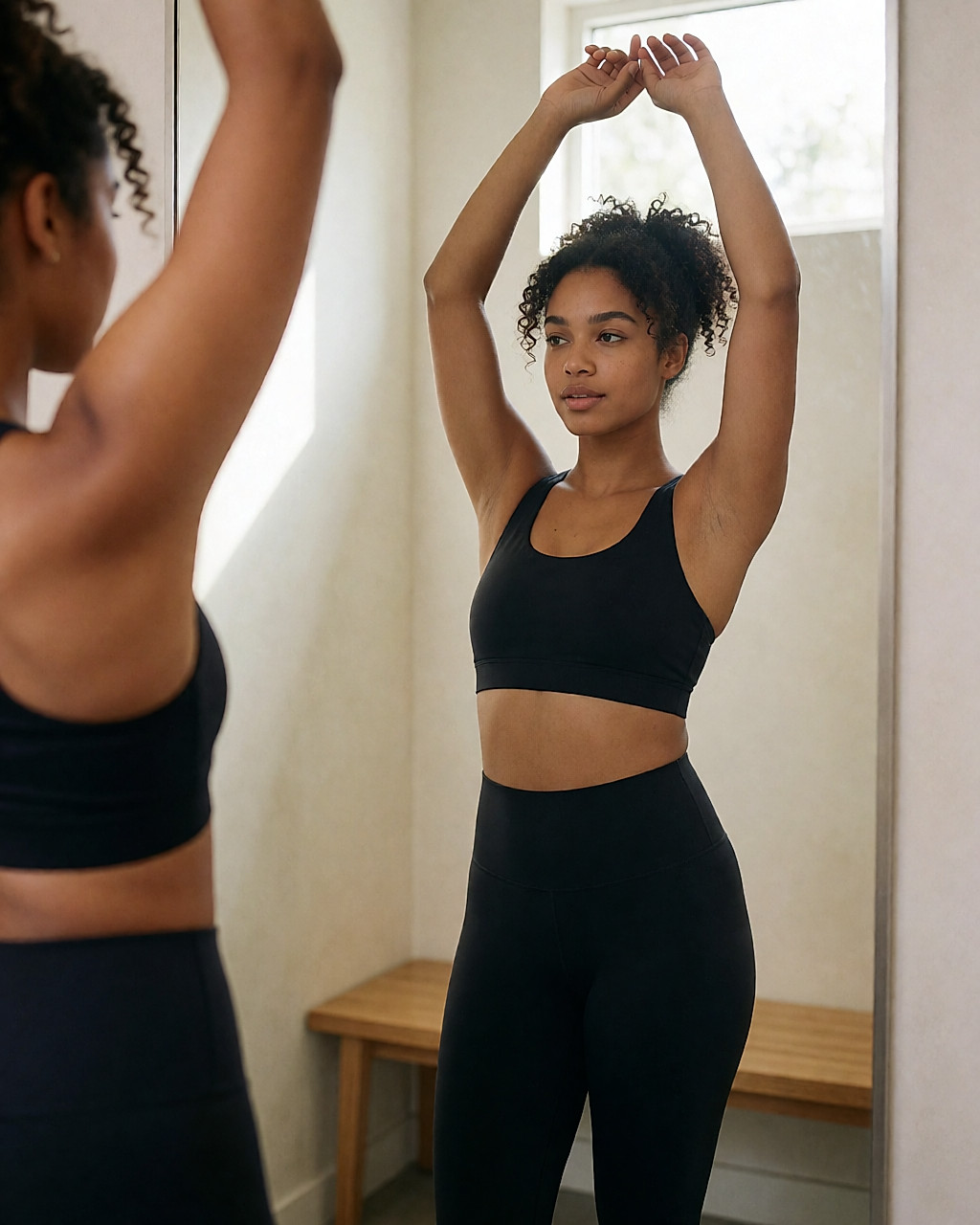
With a sports bra, the underband matters more than the cup size. The simple test: raise your arms. If the band rides up, it is too loose, and poor support means discomfort throughout the session. With elastic worn three times a week, stretch often gives way over time: as soon as support weakens, it is time to replace the piece.
On the bottom half, do five squats and one lunge in the fitting room. The waistband should neither roll down nor dig in. On drape, a thick matte jersey holds the silhouette better than a shiny fabric that creases and highlights tension points. For high-impact support, a specialist shop remains the place to try things on standing up, with proper advice.
From studio to street
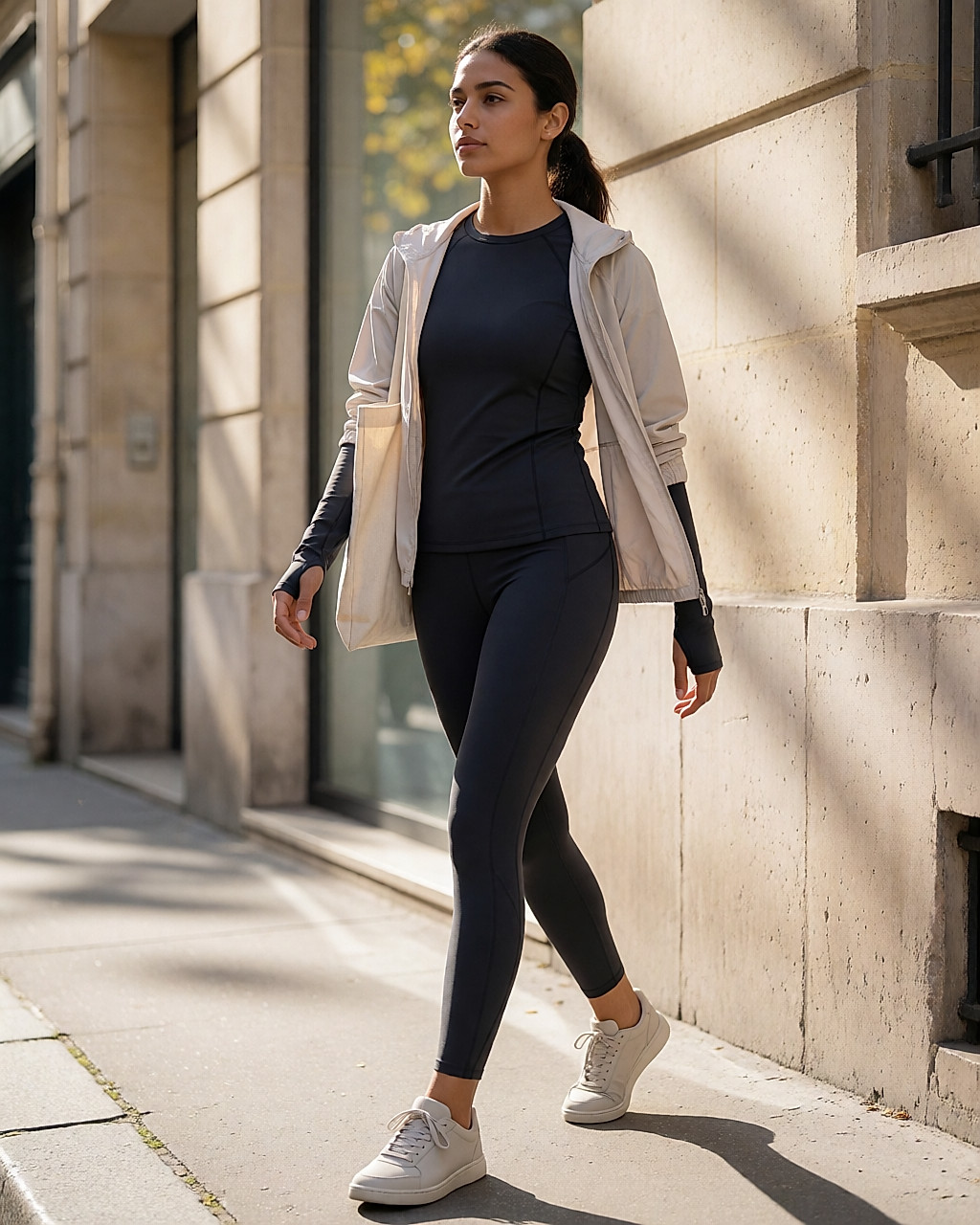
Three pieces are enough to build a complete look that does not shout 'gym': a dark bottom, a technical top, and an overshirt or windproof jacket with a clean cut. Layering works as long as the layers stay thin under the jacket — otherwise the silhouette becomes heavy. Keep one statement piece, an asymmetric cut or graphic print, and leave the rest neutral. Accessorise with a stainless-steel water bottle and a sturdy bag rather than a collection of logos.

Wash less, keep longer
Every wash wears the fibres and releases microfibres, especially synthetics. The habit that changes everything: air the piece after your session, wash at 30°C, without fabric softener, and air-dry. A filtering laundry bag captures some of them, but not all. And when a piece has really been worn, UK textile recycling schemes vary: many charity shops and textile banks accept clean, dry items, even with holes, and some retailers run take-back schemes. Check locally before you bin it.
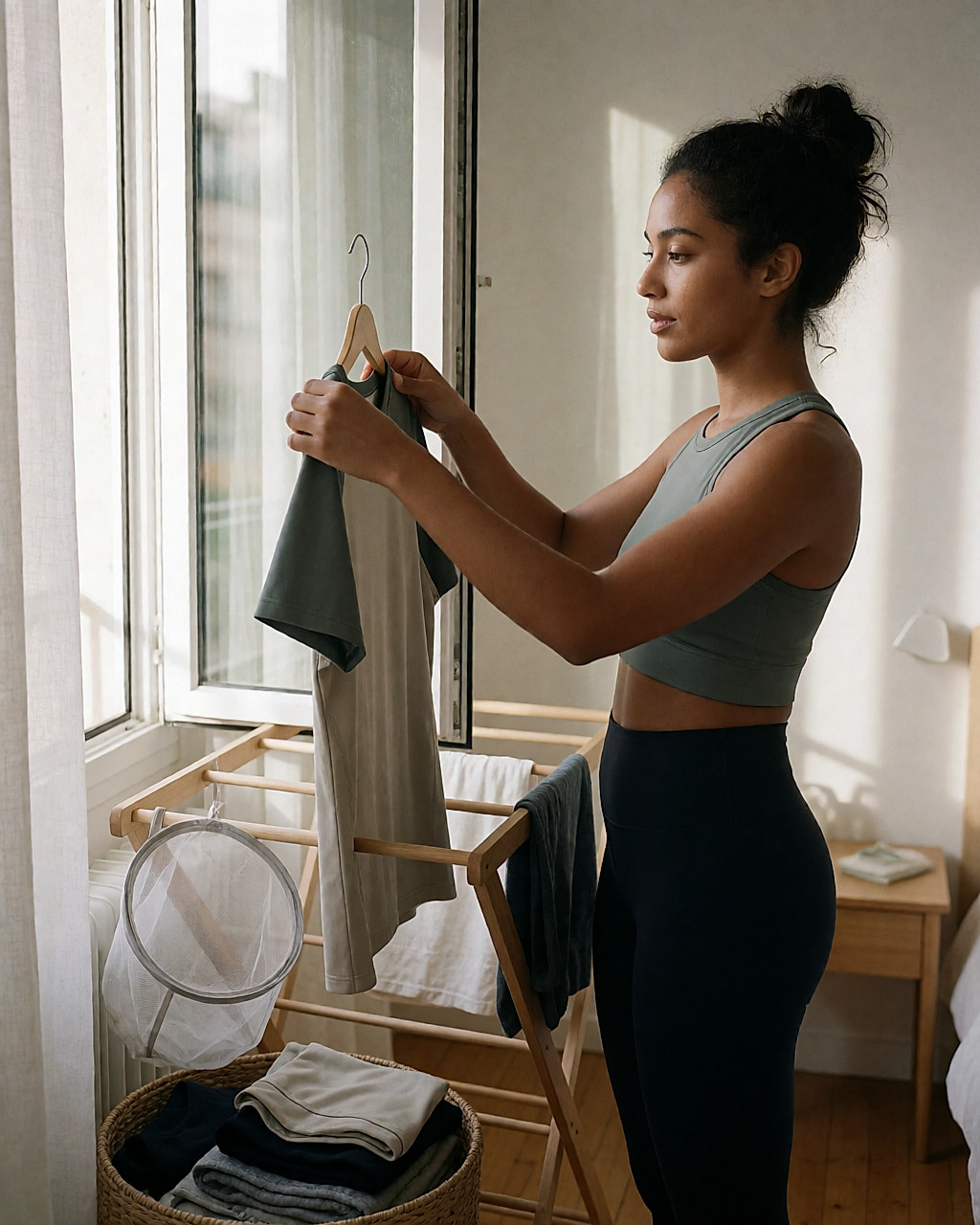
The one-minute fitting-room test. Put the piece on, do five squats, raise your arms, sit down. If the waistband rolls, the top rides up, or a seam pulls, put it back. No workout will make up for an uncomfortable piece.
Budget
Typical UK ranges, excluding promotions:
- technical T-shirt: £15 to £40 at a large sports shop, £40 to £80 from a specialist brand;
- sports bra: £20 to £70 depending on the level of support;
- leggings: £15 to £100;
- windproof jacket: £40 to £150;
- running shoes: £80 to £150 for most models;
- second-hand: £5 to £30 at charity shops or between individuals.
What moves the price: composition, complexity of cut, country of manufacture and how recent the model is. Where to buy: large sports shops for entry level, specialist shops to try on and get advice, online brands, charity shops and resale platforms. Having a hem or zip repaired at a local alterations service extends the life of a piece, usually for a modest cost.
Sources
- World Health Organization (WHO) — physical activity recommendations, 2024.
- NHS — physical activity guidelines, accessed 2026.
- WRAP — textile waste and environmental impact, accessed 2026.
- UK Government — textile waste and environmental labelling, accessed 2026.
- OEKO-TEX — Standard 100, accessed 2026; bluesign — the standard, accessed 2026.
- GOTS — Global Organic Textile Standard, accessed 2026; Textile Exchange — Global Recycled Standard, accessed 2026.
- Department for Environment, Food & Rural Affairs — environmental labelling and textile waste, accessed 2026.


Comments
Your opinion matters: rate the article, react and reply to comments.
Comments are moderated; AI-assisted comments are flagged. Text emoticons (8-), :-), <3…) are automatically shown as images.