

Smoothies
A slightly over-ripe banana languishing in the fruit bowl, a handful of berries straight out of the freezer, a pot of yoghurt, thirty seconds in the blender: admit it, the recipe lives in everyone's head, and the habit has become a reflex of the rushed breakfast. We love the idea of getting our fruit quota down in a single glass, without even sitting down. Except that what really happens in that glass deserves a two-minute pause — because your body doesn't quite get the same message as it does from fruit you crunch.
In the glass, the fibre stays, the structure changes
No, the blender doesn't make the fruit's fibre disappear: most of it is still there. What it changes is the structure of the food. Cell walls burst open, the sugars naturally present in the fruit become available much faster, and you drink in three minutes what you'd have taken ten minutes to chew.
In practice, the feeling of fullness often doesn't last as long as with a whole fruit, while the sugar hit arrives all at once. Nothing alarming in that — it's simply a good reason not to let a smoothie replace all the fruit in your day. Fruit you crunch in the morning, a smoothie for a snack: that's a split that holds up.
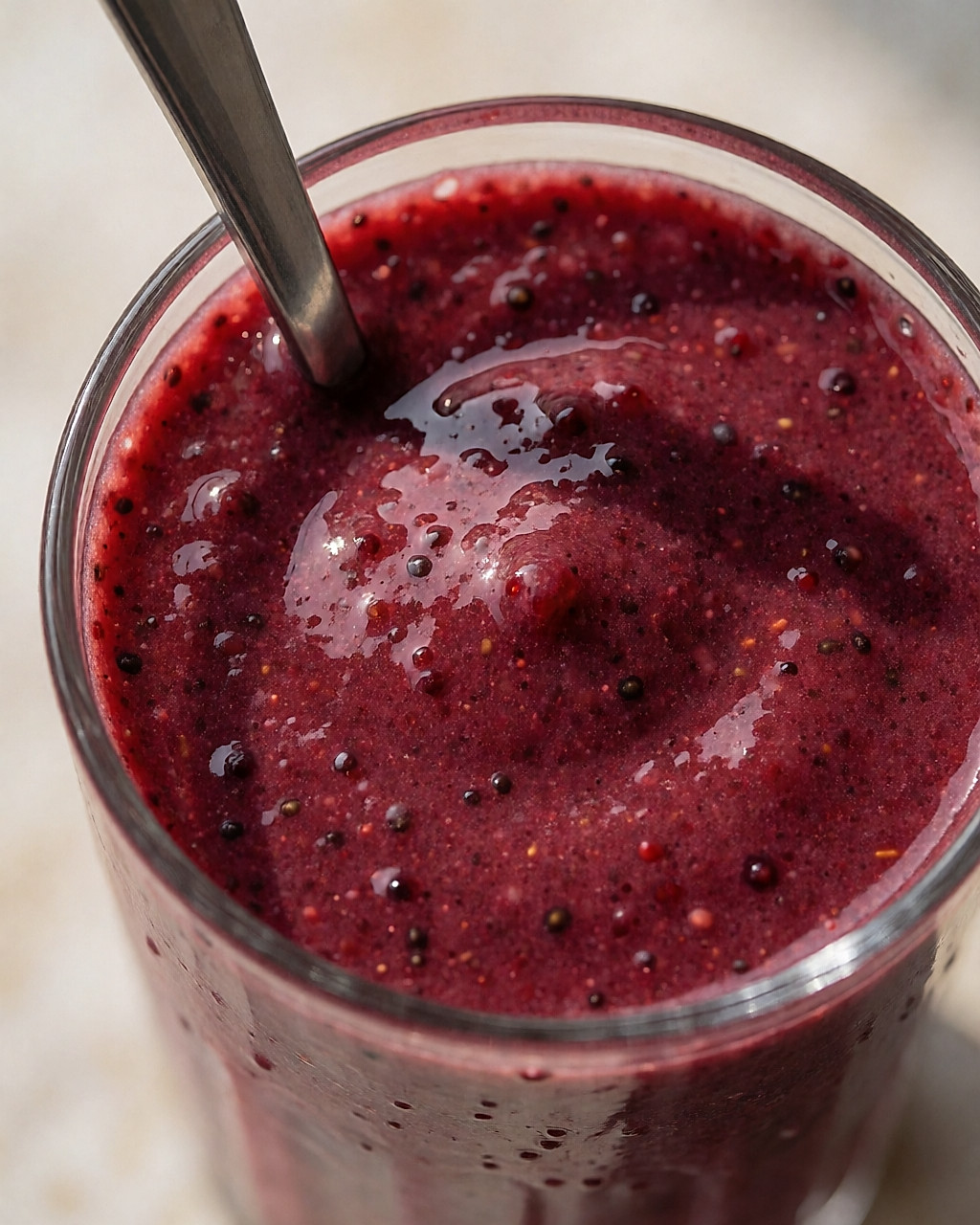
Five a day, one glass, and a bit of maths
Official guidance still talks about at least five portions of fruit and veg a day. A portion is roughly 80 to 100 grams: a small apple, two apricots, a handful of strawberries. A homemade smoothie can therefore count as one portion, not three — even if you blended three fruits into it, the glass is bigger, the portion isn't.
Another marker to keep in mind: fruit juice doesn't count towards those five portions, and is limited to a small glass (150ml) a day (NHS). A smoothie keeps the pulp and some of the fibre, which makes it preferable to juice, but it still doesn't replace fruit you crunch. On free sugars, the World Health Organization recommends staying under 10% of energy intake, with a more protective target set at 5%.

What's hiding in the bottles on the chilled shelf
What we know, what we don't yet know: a bottle marked 'no added sugar' can still be very sweet, since the sugar comes from the fruit — sometimes from juice concentrates used precisely to sweeten. The ingredients list remains the most reliable guide, and '100% pure fruit' says more than the word 'natural'.
Another point not to forget: a homemade smoothie that hasn't been heated won't keep. After a few hours in the fridge, micro-organisms on the fruit skins can multiply. The simplest option is to drink it within a few hours.
The blender, your ally
No need for restaurant kit to get a smooth texture: a simple blender is more than enough. For a homemade smoothie, allow one banana, 150g of frozen berries, the juice of half a lemon, 200ml of milk or a soya-based drink, and a plain yoghurt if you prefer a creamier texture. You blend, you taste, you adjust.

Three details really change the result:
- frozen fruit replaces ice cubes without diluting the flavour;
- a handful of spinach or a chunk of cucumber goes unnoticed behind the banana;
- a smoothie is drunk within the hour, or goes straight into the fridge.
And if you live with diabetes, follow a particular diet, or you're thinking of a child who drinks several smoothies a day, talk to your GP or a registered dietitian. The question isn't the smoothie itself, but the place it takes in your day.
Budget
Indicative price ranges in the UK:
- Ready-made smoothie (250ml bottle, chilled shelf): around £2 to £4, up to £5 or £6 in a specialist shop or for a cold-pressed juice.
- Fresh fruit: it all depends on the season; berries often sit between £4 and £12 a kilo. Plain frozen bags generally work out cheaper and cut down on waste.
- Blender: £25 to £50 for an entry-level model, £60 to £150 for a mid-range one with a glass jug and spare parts available, £200 to £500 for a high-performance model.
What moves the price: the season, whether it's organic, fresh or frozen, the power of the motor and the availability of spare parts. You'll find these products in supermarkets, at the greengrocer or market, in health food shops, in the frozen aisle and online.
On the fruit side, go organic when you can: UK organic certification restricts synthetic pesticides — and the peelings go on the compost. Frozen organic berries keep for several months, which saves you throwing away over-ripe fruit. For the appliance itself, a glass jug and a repairable motor weigh more heavily in the balance than a pretty design.
Sources
- NHS, the Eatwell Guide — guidance on fruit and vegetables
- NHS — how sugar in our diet affects our health
- World Health Organization — recommendations on free sugars
- UK government — organic food and farming




Comments
Your opinion matters: rate the article, react and reply to comments.
Comments are moderated; AI-assisted comments are flagged. Text emoticons (8-), :-), <3…) are automatically shown as images.