
For reactive skin, the most useful rule is still no fragrance. As a rule, a product labelled fragrance-free doesn't contain added fragrance, so it has a better chance of being gentle, less likely to sting or flush. This isn't a dogma — if your skin never reacts, a little natural fragrance is no scandal. But when you're trying something new, it pays to keep things plain.
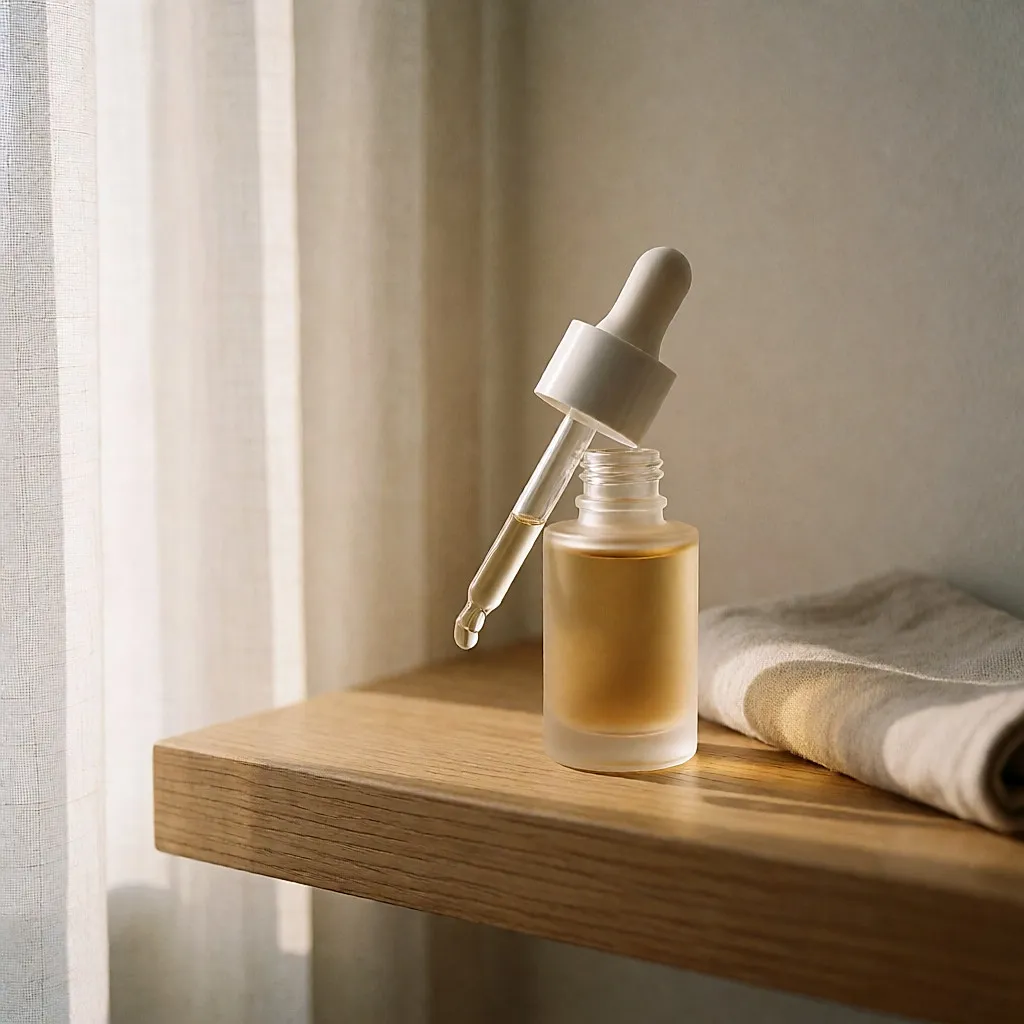
Packaging matters too. Tinted or opaque glass is still common for serums, since it can limit the formula's exposure to light. Refills, where they exist, are a genuine plus: you keep the bottle, you replace the pump. On one condition, and it's a big one — check on the brand's official site or in store that the refill really is sold. Just because a bottle is marketed as "refillable" doesn't mean it is in real life.
The routine: two products, no more
The temptation is to pile it on. A postbiotic serum, a ferment cream, a "balancing" mist… Hold back. Two products at most — a serum and a moisturiser, or a single product if the texture is rich — is enough to see what a formula does to your skin.

Application doesn't change: onto clean skin, morning or evening. Evening is the more comfortable moment to try something new, because you sleep on it and make-up doesn't get in the way. Keep it simple: cleanser, serum, moisturiser. A rough, tight-feeling patch of skin that's short of moisture tends to improve quickly; anything deeper takes consistency. And if redness or stinging appears, stop. No dramatic promises here — just a gentle, considered product.
Budget
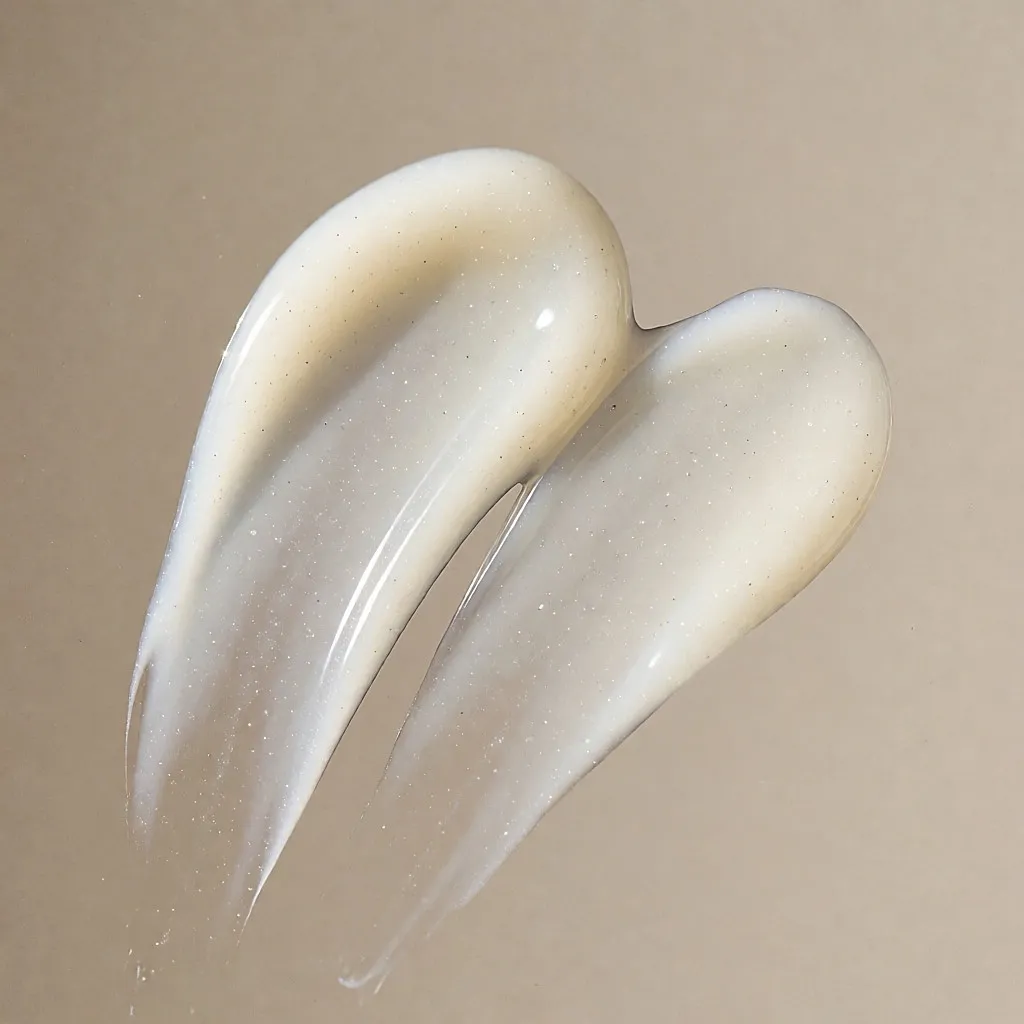
Price-wise, the category stays accessible. Expect £18 to £35 for a 30 ml serum from a pharmacy or a beauty retailer, often a little less for the matching moisturiser. In supermarkets and on the high street, some options dip below £15; a comparable formula from a premium skincare brand can climb past £55. Refill formats, where they're offered, often bring the cost down at the next purchase — not always, but it's worth checking.
Where to find all this? A pharmacy, where you can test textures before you buy; online, direct from the brands; the high street for the mid-range. Social media buzz, however well done, is no substitute for reading the INCI list.
On the bottle, check three things: the ferment named in the INCI list (not just a "patented complex"), the absence of fragrance if your skin reacts, and whether a refill genuinely exists. If one of the three doesn't stack up, the product can wait.
What we know, and what we don't
Research into postbiotics is active but far from unanimous. Some studies point to effects on the skin barrier or on redness; trials on living skin are rarer, and results vary from one formula to another. The fact that a brand cites a study doesn't mean the word "effective" belongs on the bottle.
A fair amount also remains uncertain — how much ferment stays active in a bottle, how the formula crosses the skin, how often to apply it. Nobody can promise you transformed skin. What you can observe is your own comfort: tightness, glow, redness, over a few weeks. If it suits you, great. If nothing shifts, nothing obliges you to carry on.
And for a skin problem that settles in — acne, rosacea, dermatitis — the first step is still to talk to a healthcare professional. Your GP, or a pharmacist, is a sensible place to start. A cosmetic doesn't replace an appointment. It lives alongside one, in the bathroom, without making a fuss.
Ultimately, postbiotics ask only one thing of you: stay curious and don't rush. A glass bottle, a short ingredient list, a simple step. If your skin says thank you, that's plenty. And if it says nothing at all, there's no shame in moving on to the next thing — this is a trend you can follow without having to believe in it hard.
Sources
- ISAPP — Consensus statement on the definition of postbiotics, 2021.


Comments
Your opinion matters: rate the article, react and reply to comments.
Comments are moderated; AI-assisted comments are flagged. Text emoticons (8-), :-), <3…) are automatically shown as images.