

You have seen bookshop tables fill with titles promising to change your life. Then meditation apps arrived, with their gentle notifications. Then coaches appeared everywhere, in your feed. The phrase 'personal development' now has decades of essays, enthusiasms and excesses behind it. It deserves a calm look, without throwing the baby out with the bathwater—and without swallowing ready-made promises.
From a community centre to meditation apps
In the early 1980s, in a city community centre, a group formed around a few practitioners. People came for ongoing group workshops, to learn helping skills, sometimes to train for communication roles. Decades later, those who passed through meet and tell their stories.
This story is not just anecdotal: it describes the real shift of those decades. In-person places, a small stable group, a clear framework—then an explosion into a huge offer, accessible from your phone, often without a shared framework. In practice, remember this: in-person is not outdated, and a screen is not magic. What helps is the framework, regularity and the person in front of you.

What we know, what we do not yet know
Some practices from this current have joined the field of evaluated care: cognitive behavioural approaches, breathing work, psychoeducation. Others remain poorly documented, especially so-called emotional release techniques, manifestation programmes and highly structured retreats. Current data suggest that feeling positive after a workshop says nothing about its medium-term effectiveness—and that nuance matters when you come out of an emotionally intense weekend.

On guidance, NICE publishes recommendations on psychological therapies. Annual reports from the French body MIVILUDES regularly flag personal development among the sectors where abuses are reported; in the UK, organisations such as Inform and the Charity Commission have also raised concerns about coercive practices in some wellness and coaching settings. Since the French law of 24 August 2021, the legal toolkit against these abuses has been strengthened. In the UK, consumer protection law and advertising rules require claims to be truthful, but there is no equivalent blanket regulation of coaches. The framework exists—you just need to know where it ends.
Expressing yourself is not a substitute for treatment
The example of the Plancher de Jeannot, rue Cabanis in Paris, at GHU Paris Psychiatry & Neurosciences, is telling: a parquet floor engraved with capital letters, made in 1971. Other cultural venues, museums and art centres also explore this dialogue between art, the unconscious and modernity.
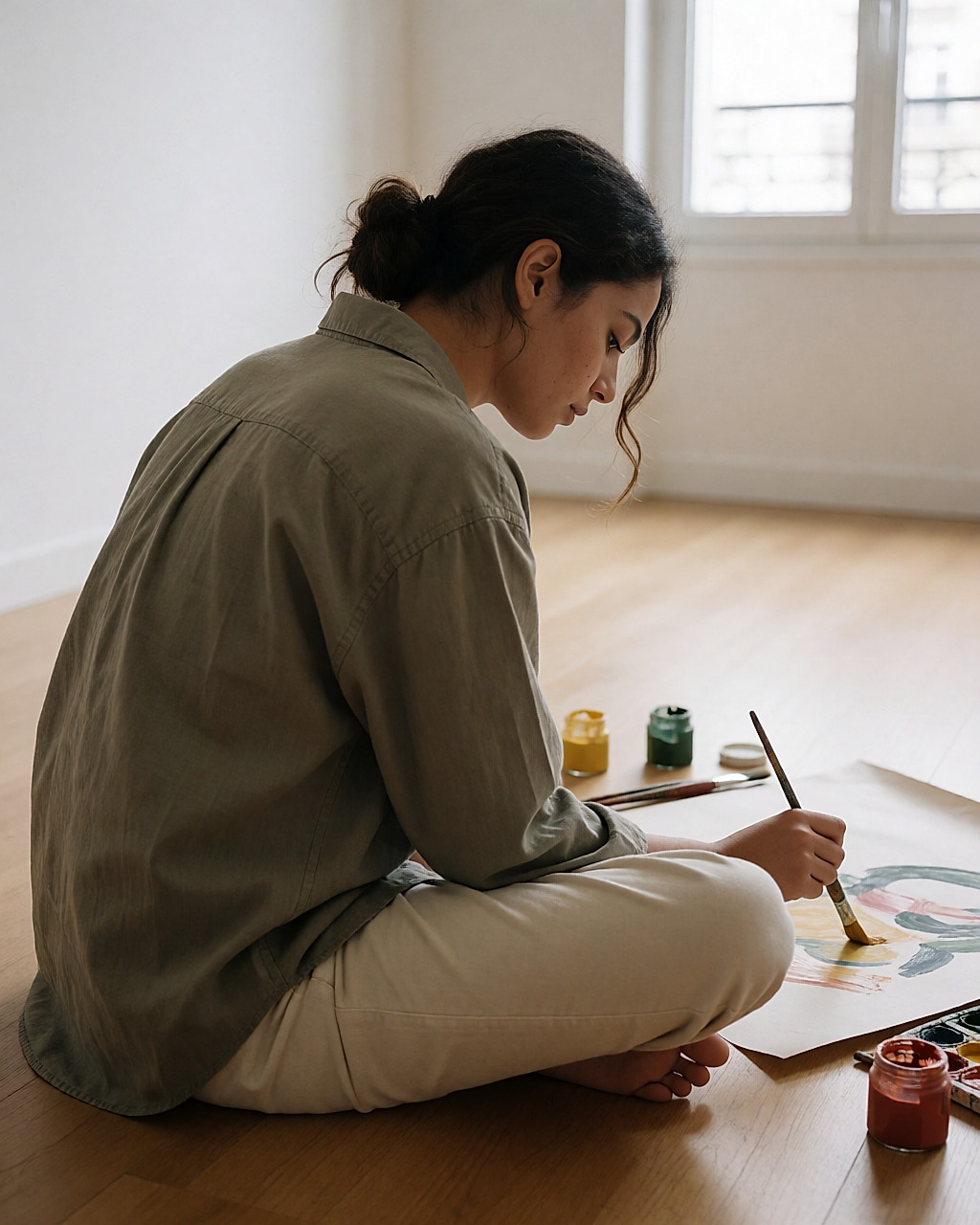
What should you take from these works? That expressing yourself is not a substitute for getting treatment. Writing, painting, dancing: yes, and it is precious—we can never say it enough. But letting a group decide your health for you? No.
In the UK, titles such as 'clinical psychologist' and 'psychiatrist' are protected, but 'coach', 'counsellor' and 'psychotherapist' are not protected in the same way. Before you commit, ask about the training undertaken, whether there is a recognised framework, a code of ethics, and a clear refusal to promise outcomes. If you are struggling with your mental health, speak to a health professional.
Remote support: possible, with conditions
Video coaching and telephone consultations have changed the picture. NHS Talking Therapies, free on the NHS, offers self-referral and a set course of sessions. Fewer geographical barriers, more flexibility—but also a risk of flitting from one practitioner to another without ever digging deep. Distance works better with a clear goal and a set number of appointments.

It is a paradox of these tools: they make support accessible, but they demand a discipline that in-person work imposed by itself. A time slot, a place, a group waiting for you: that is what a screen does not provide. So if you choose remote work, ask yourself before you start: how many sessions, for what precise goal, and how will you know you are making progress?
Budget
Typical UK ranges, as a rough guide:
- Private therapy session: around £45 to £120; private psychologist: often £80 to £150. NHS Talking Therapies: free, via self-referral.
- One-to-one coaching: £60 to £250 an hour; workplace coaching is often paid for by the employer and can be higher.
- Weekend workshop or group: £150 to £500; residential retreat: £400 to £1,500.
- Meditation app: free to about £60 a year. Paperback: £7 to £15.
What changes the cost: the practitioner's reputation, the city, the length, whether the format is group or individual, and whether it is funded. Where to look: private practice or health centre, NHS Talking Therapies, teleconsultation platforms, local charities, bookshops, adult education centres.
Today, personal development remains a mix of useful habits and fragile promises. It is up to you to sort through it—without fear and without illusions, but with curiosity!
Sources
- NICE — Guidance on psychological therapies, accessed 2026.
- NHS — NHS Talking Therapies, accessed 2026.
- MIVILUDES — Annual reports, accessed 2026.
- Légifrance — Loi n° 2021-1109 du 24 août 2021 confortant le respect des principes de la République, 2021.
- GHU Paris Psychiatrie & Neurosciences — Le Plancher de Jeannot, rue Cabanis, Paris, accessed 2026.
- Inform — Information on cults and coercive groups, accessed 2026.
- Charity Commission — Guidance for charities, accessed 2026.
- Legislation.gov.uk — Consumer Protection from Unfair Trading Regulations 2008, accessed 2026.




Comments
Your opinion matters: rate the article, react and reply to comments.
Comments are moderated; AI-assisted comments are flagged. Text emoticons (8-), :-), <3…) are automatically shown as images.