
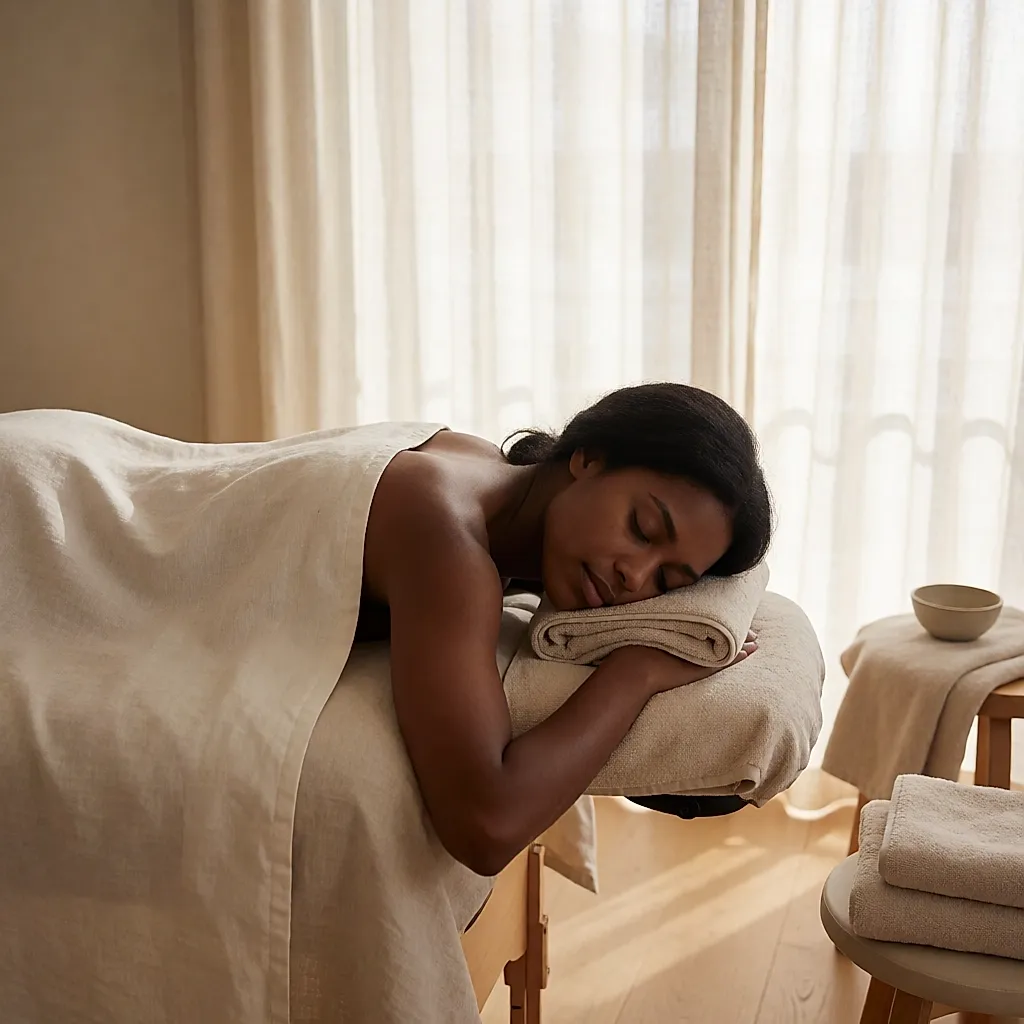
You come out of the session with your shoulders lower and your neck finally unknotted. That's what a good massage can do—and no, it's not a luxury reserved for holidays.
Let's be honest up front, because it avoids a lot of confusion: a wellness massage is not a medical treatment. In the UK, therapeutic massage can be provided by a chartered physiotherapist registered with the Health and Care Professions Council (HCPC), often via NHS referral or privately. Wellness massage, however, is not a statutorily regulated profession: no state-issued qualification is required to practise, though professional certifications do exist. So how do you know who to trust with your back? Check the practitioner's training before you lie down. What we know, what we don't yet know: current evidence suggests an effect on some chronic pain, particularly low back pain, and a feeling of relaxation, but the quality of studies is mixed.
Thai massage
Here, no oil, and loose clothing. The practitioner alternates slow stretches, palm, thumb and sometimes foot pressure, and rocking. The work follows lines of the body called sen—not Chinese meridians, as is often written. The broad movements mobilise joints and the spine: if you have a slipped disc, a prosthesis, are pregnant, or have fragile bones, ask a doctor before, not after!
Shiatsu
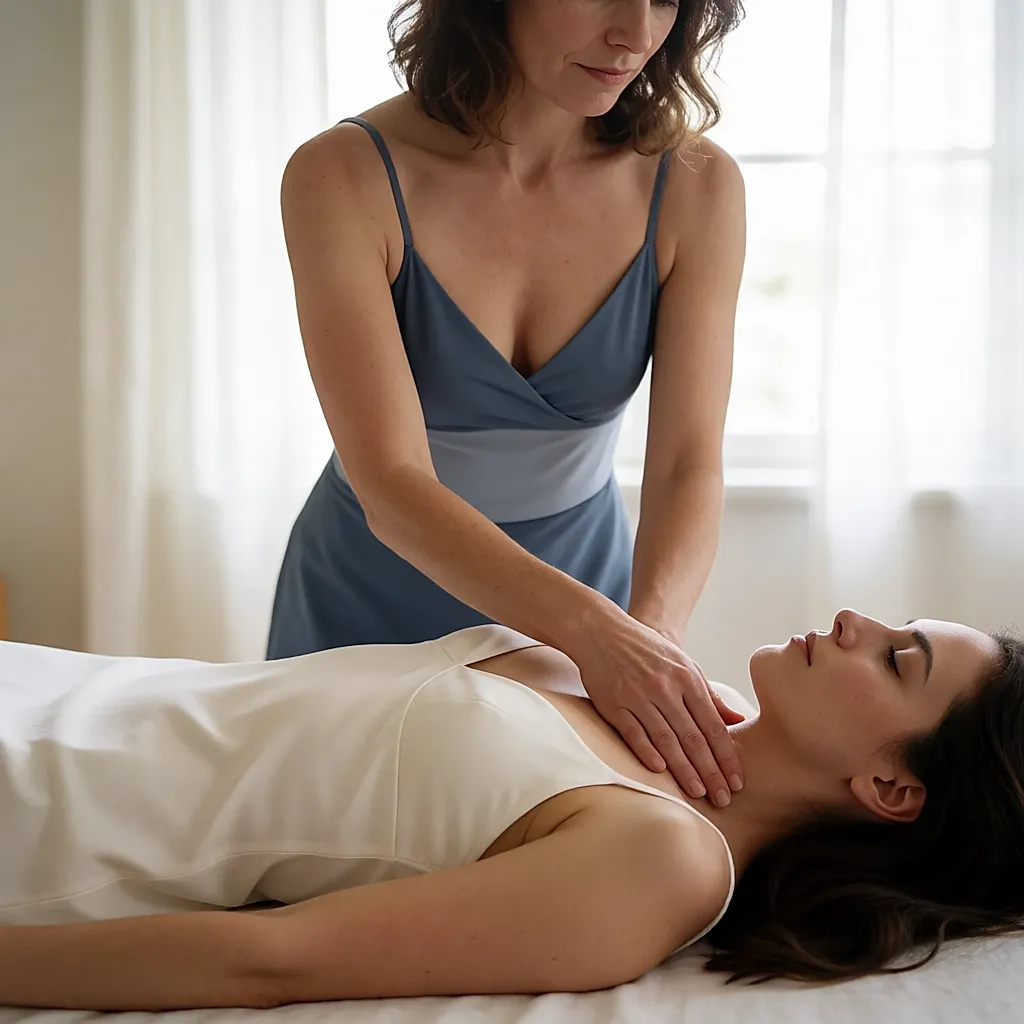
Japanese, literally "finger pressure". A session lasts 45 minutes to an hour, is done fully clothed, on a futon or chair, and focuses mainly on the neck, shoulders, back and hips. Shiatsu is not a statutorily regulated healthcare profession in the UK. Professional associations may set training standards, which can help you choose a reputable practitioner—but this is not equivalent to statutory regulation.
Ayurvedic massage
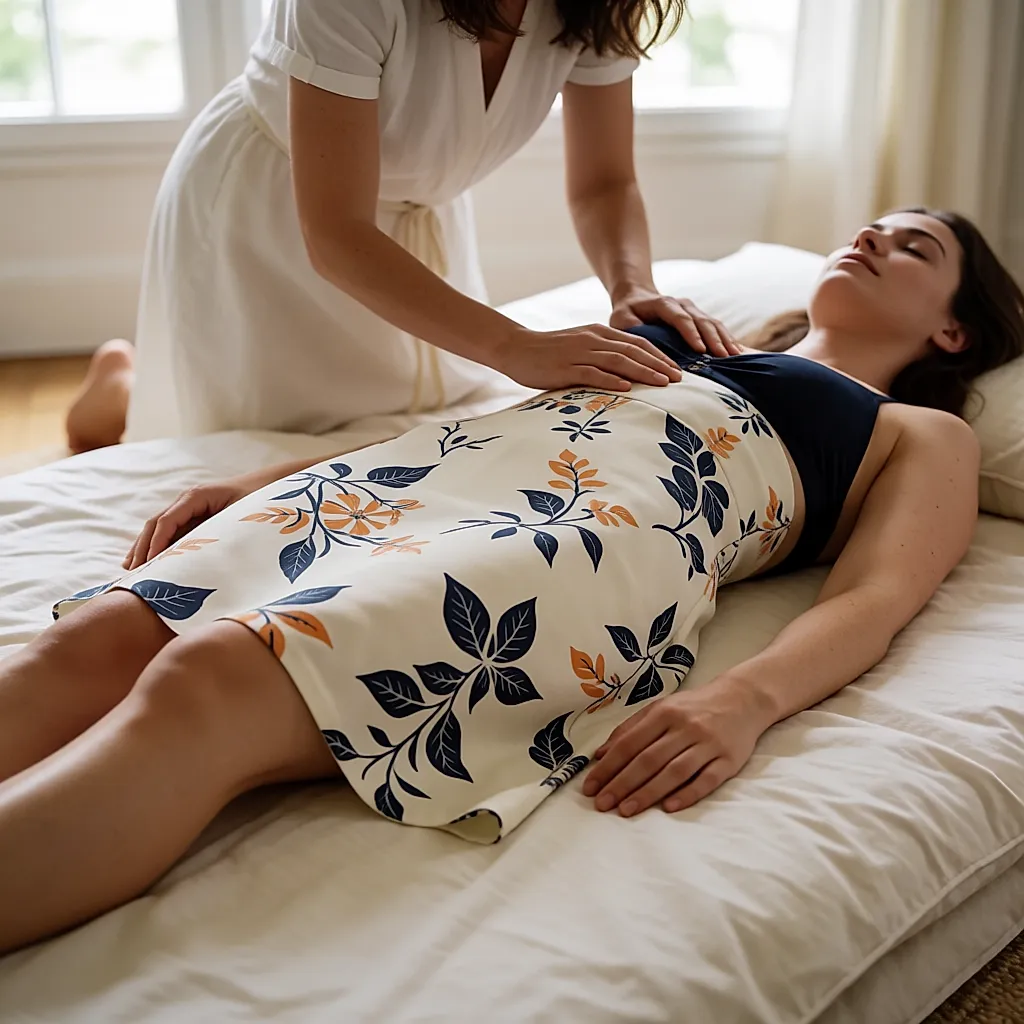
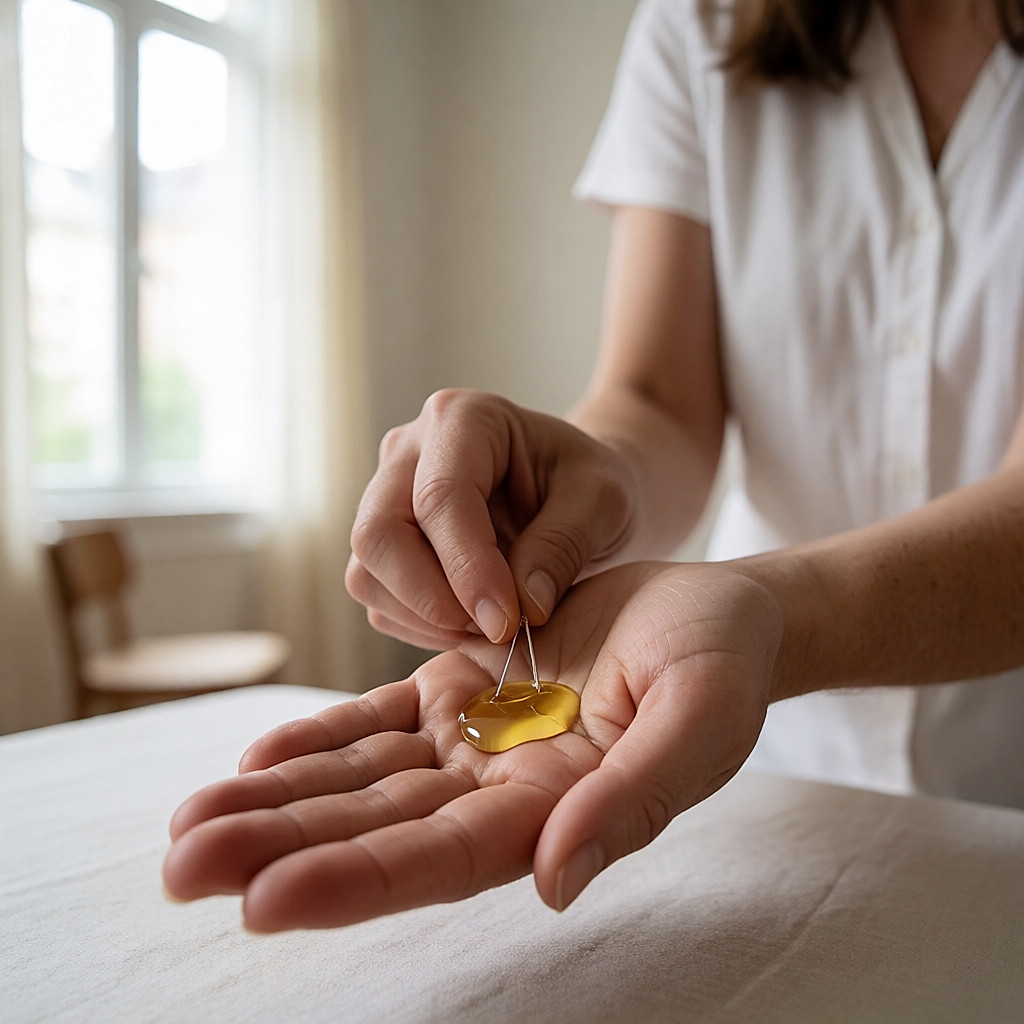
It comes from India and is based on abhyanga, a warm oil massage. The tradition describes three forces—vata, pitta and kapha—whose balance is said to govern health. Bear in mind, though: this framework does not map directly onto modern clinical research. What we do observe is an enveloping touch and warm oil that encourage relaxation. However, it is not intended to treat insomnia or depression: these two topics should be discussed with a doctor, and it's better to talk to a healthcare professional than to expect too much.
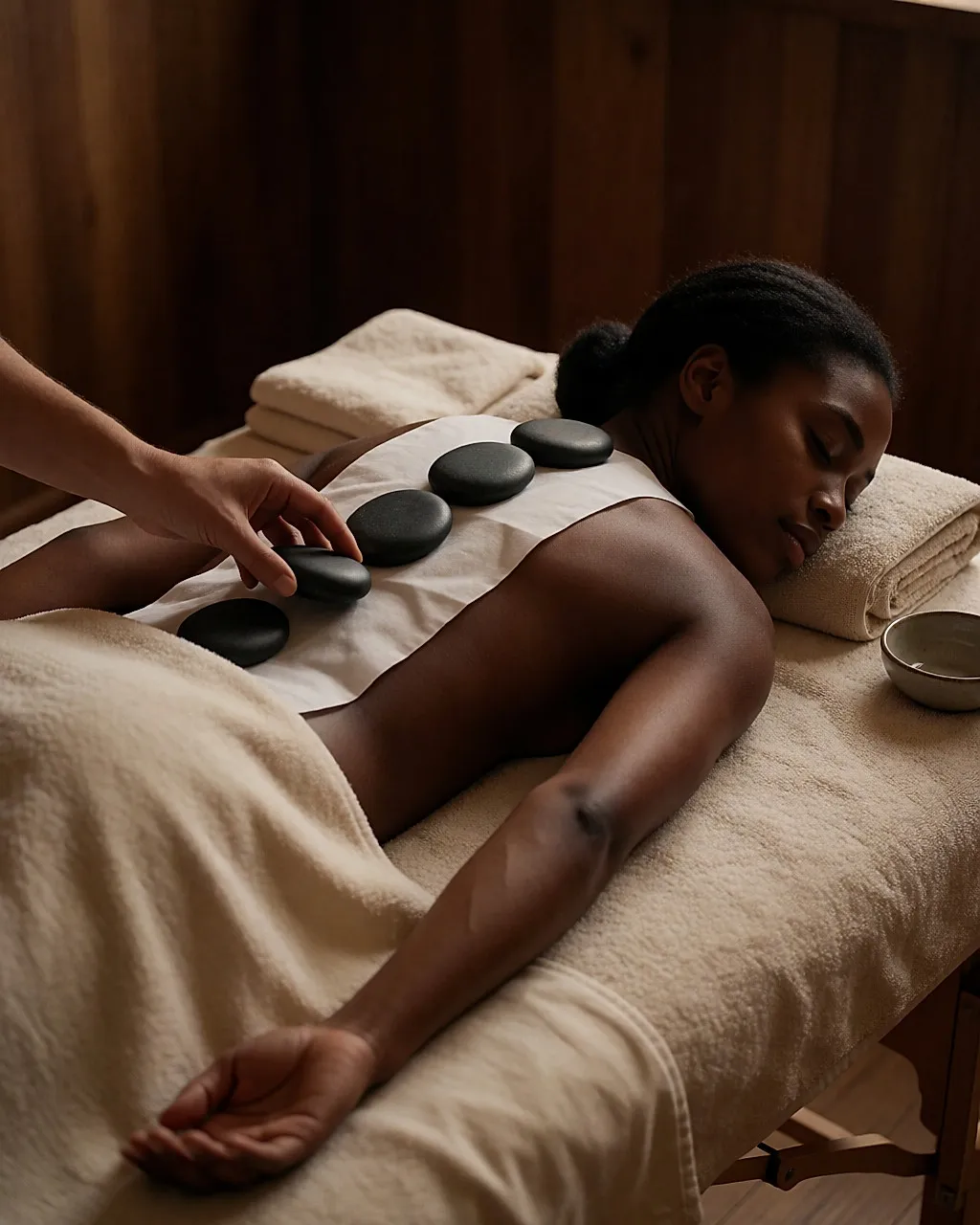
Hot stone massage
Basalt stones are heated in a thermostatically controlled bath, then placed along the spine, in the palms, between the toes. Some practitioners alternate with cold stones. The sensitive point—and it matters—is the heat: when skin sensitivity is reduced (diabetes, neuropathy, multiple sclerosis) or you are taking sedatives and may not react to heat, the risk of burns increases without you feeling it coming.
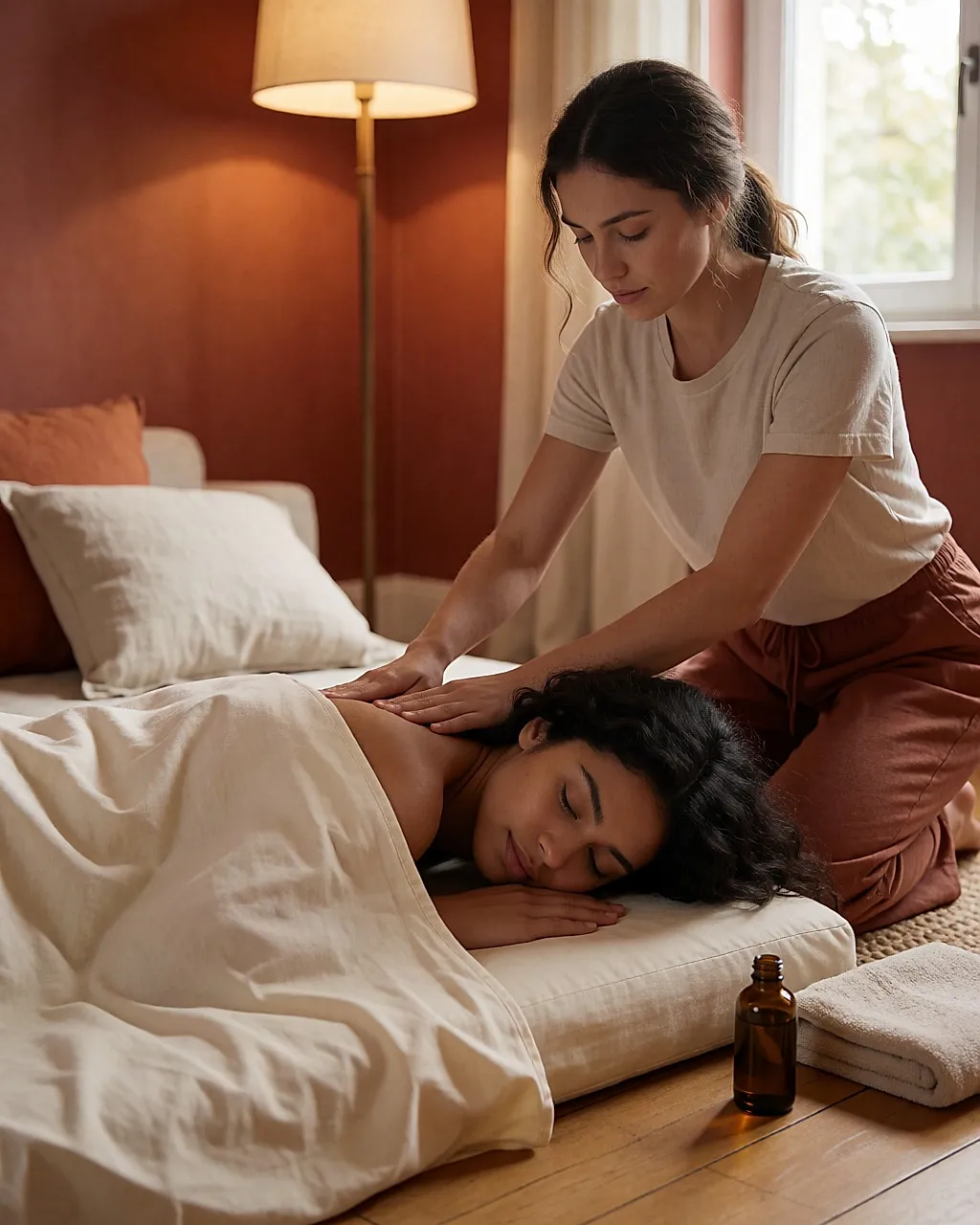
Californian massage
Born in the United States in the 1970s, it focuses on long, enveloping strokes, with oil, over the whole body, at a slow pace. It is often learned as a couple, which makes it a good school for touch. In practice, think about hygiene: short nails, clean hands, and a clear agreement on what each person is comfortable with.
Delay your session, or seek advice first, if you have a fever, an open wound or skin infection, phlebitis or a history of thrombosis, are taking anticoagulants, are having cancer treatment, are pregnant, or have sensory loss. Always tell your practitioner about your medical history: it's the first step in prevention.
Budget
The ranges below are approximate UK prices; they vary mainly by city, duration and setting.
- Seated acupressure (amma), 20 to 30 minutes on a chair: £15 to £30, in a salon, at work or in a station.
- One-hour wellness massage in a salon: £50 to £90; in a hotel spa or large city, £90 to £150.
- Hot stones, 1 hour to 1 hour 15: £70 to £120.
- Session at a massage school, supervised by a tutor: £20 to £40.
- At home: add £20 to £40 for travel.
- Organic carrier oil, 100 ml glass bottle: £8 to £20.
Where: salons and wellness centres, spas, gyms, accredited massage schools, online booking platforms. For oil: pharmacies, health and beauty retailers, or health food shops.
On the oil itself: go for a glass bottle, refillable if possible, carrying a certification such as COSMOS ORGANIC or Soil Association. These standards require a minimum percentage of organic ingredients and a verified manufacturing standard. A simple organic carrier oil—sesame, jojoba, sweet almond—works very well with fewer ingredients. And a useful reminder: "natural" does not mean "harmless"! Some essential oils are photosensitising or not recommended during pregnancy.
There you have it: check the practitioner's training, disclose your medical history, and keep in mind that a massage relaxes—it does not treat medical conditions.
Sources
- Cochrane Library, systematic review "Massage for low-back pain" (Furlan et al., 2015).
- Health and Care Professions Council (HCPC), information on physiotherapists and regulation — hcpc-uk.org
- NHS, information on physiotherapy — nhs.uk
- Soil Association, organic beauty and wellbeing standards / COSMOS — soilassociation.org



Comments
Your opinion matters: rate the article, react and reply to comments.
Comments are moderated; AI-assisted comments are flagged. Text emoticons (8-), :-), <3…) are automatically shown as images.