
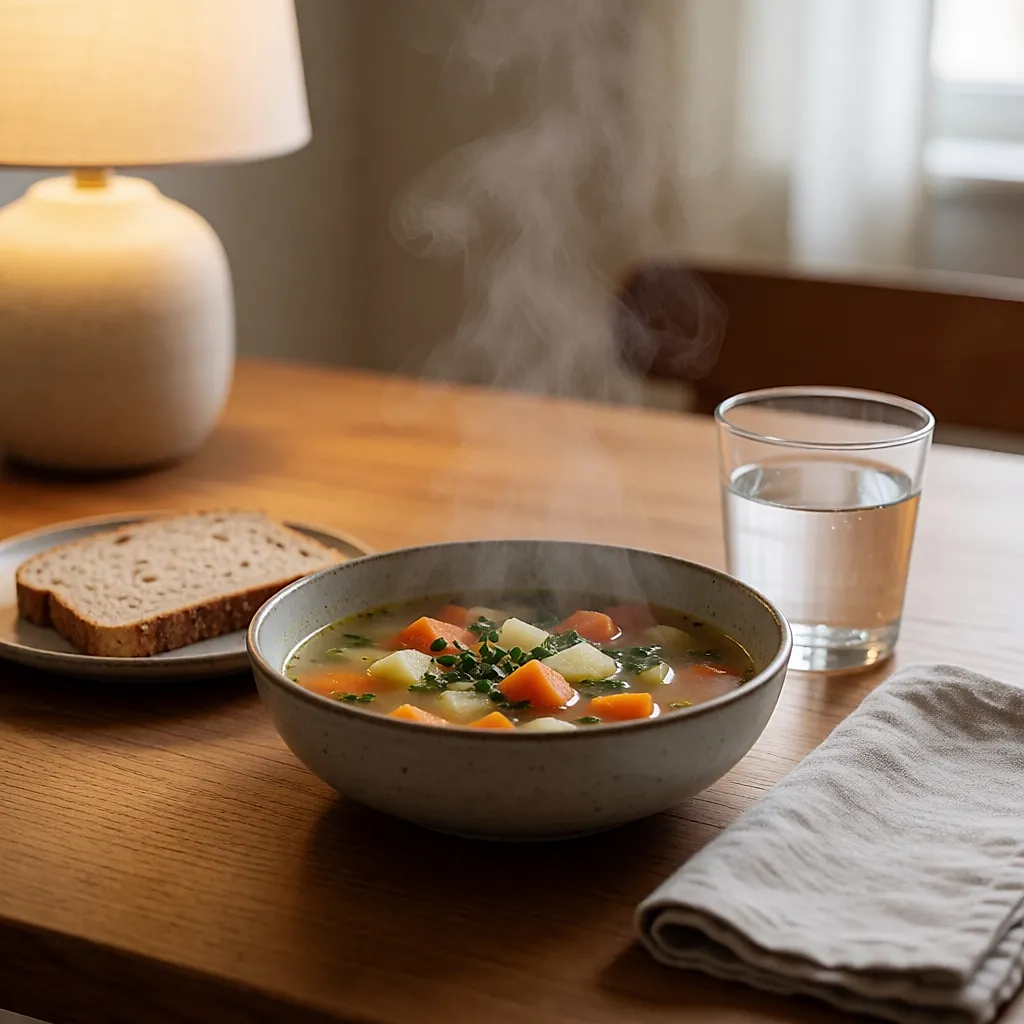
You get home, the day has been long, and the plate fills up before you have really decided to fill it. For many of us, dinner is still the biggest meal of the day. It is not a lack of willpower: it is the point when your head and your body want a reward. The trouble is that your stomach no longer has the same needs as it did at lunchtime. So how do you make the evening meal lighter without going to bed hungry? Here is what we know, what we do not yet know, and how to put it into practice on the plate.
What we know about the evening meal
Some observations suggest, though not with certainty, that a late, rich dinner may weigh on the night as much as on the waistline. Eating later rather than earlier could affect feelings of hunger and energy expenditure. Caution is needed, however: these observations are often based on small groups. It is therefore one factor among others, not a single explanation.

Why a heavy dinner is felt overnight
A saucy dish, a large plate, cheese and a sweet dessert take several hours to digest. If you go to bed an hour later, your body may not have finished. For some people, this can contribute to broken sleep, acid reflux, night-time waking or erratic bowels when you wake. The next day, tiredness can drive cravings for sugar and caffeine, and the cycle can close in again.

Snacking in front of a screen, meanwhile, can encourage eating without hunger — out of habit rather than appetite.
Building a lighter evening plate
There is no need to weigh every ingredient. In practice, a balanced evening plate looks like this: half vegetables, a quarter protein, and a quarter wholegrain carbs. A homemade soup with a slice of wholemeal toast, white fish and green beans, or a lentil salad with a little soft cheese: that is more than enough.

You can also skip protein in the evening, as long as you had some at lunch — it is the balance across the day that matters, not that of a single meal. For dressing, a drizzle of olive or rapeseed oil, herbs and lemon: fat is not the enemy; it is the amount that counts.
Do not skip dinner. An empty stomach, broken sleep and a middle-of-the-night hunger pang: skipping rarely works in your favour. A bowl of soup and a slice of toast is better than a meal missed altogether.
Timing matters as much as the menu
Eating lightly in the evening starts in the morning. A breakfast with protein (eggs, dairy, fromage frais) and wholegrain cereals keeps you fuller for longer. A proper lunch helps prevent the 5pm hunger pangs. If they arrive anyway, a simple snack — a piece of fruit, a few nuts, two squares of dark chocolate — does the job.
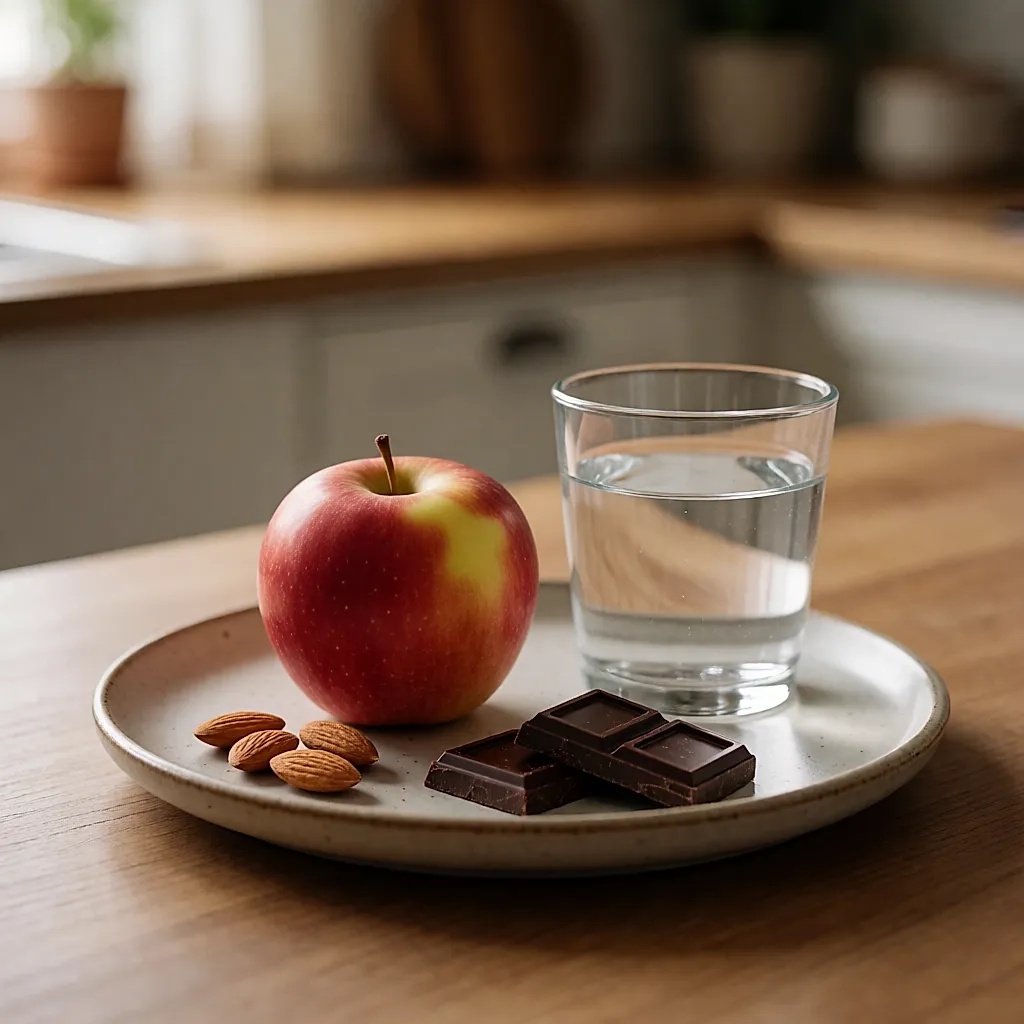
In practice, many people advise eating dinner two to three hours before bed. This is simple prevention, without dogma or a strict timetable.
What changes in practice
Some people notice changes in sleep or digestion, though there are no guarantees; these effects depend on many factors. Nothing dramatic: any weight loss depends on your overall diet and physical activity, not on dinner alone.

If you take medication, live with diabetes or an eating disorder, or your nights are still poor, speak to a health professional — a GP or dietitian — who can adapt the advice to your situation and provide follow-up.
Budget
Cooking lighter does not necessarily cost more. As a rough guide, UK shoppers can expect something like this (prices vary widely):
- Seasonal vegetables: around £1.50 to £4 per kilo at markets and greengrocers. Out of season, it is often better to choose plain frozen or tinned vegetables, usually £1 to £2.50 per 500g.
- Tinned or jarred pulses (chickpeas, lentils): £0.75 to £1.75 per tin or jar, in supermarkets and health food shops.
- White fish: £12 to £22 per kilo at the fresh fish counter, £7 to £12 per kilo frozen plain.
- Homemade soup: around £0.75 to £1.75 per portion, depending on the vegetables you choose.
What changes the bill: the season, where you shop (supermarket, market, greengrocer, health food shop), whether it is organic, and above all how much processed food you buy. Vegetable boxes and food-waste apps are among the cheapest options. Buying dried pulses in bulk can also work out cheaper per kilo than tinned — worth checking case by case, keeping in mind the soaking time.



Comments
Your opinion matters: rate the article, react and reply to comments.
Comments are moderated; AI-assisted comments are flagged. Text emoticons (8-), :-), <3…) are automatically shown as images.