

There is probably a pair at the back of your wardrobe that has only ever survived one night out. Halfway through the evening your feet were begging for mercy, and you finished the evening in flats. It doesn't have to be that way: a heel can be chosen carefully, tried properly and broken in gently.
Why heels hurt
A heel lifts the foot and shifts a good deal of your body weight forwards. The steeper the pitch, the more compressed the front of the foot becomes — and that is where blisters, corns and pain under the metatarsals start. Current evidence suggests that a very high heel also alters your posture and the load on the knee. A study published in The Lancet in 1998 was already measuring increased stress on that joint in women who wore high heels. None of this rules out heels, but it is worth thinking about height and how long you wear them.
Often it isn't the heel itself that causes damage but friction: a shoe that is too narrow, a rigid heel counter, a slippery sole. In practice, the most common cause of a blister is a badly fitting size or a material that simply doesn't give.
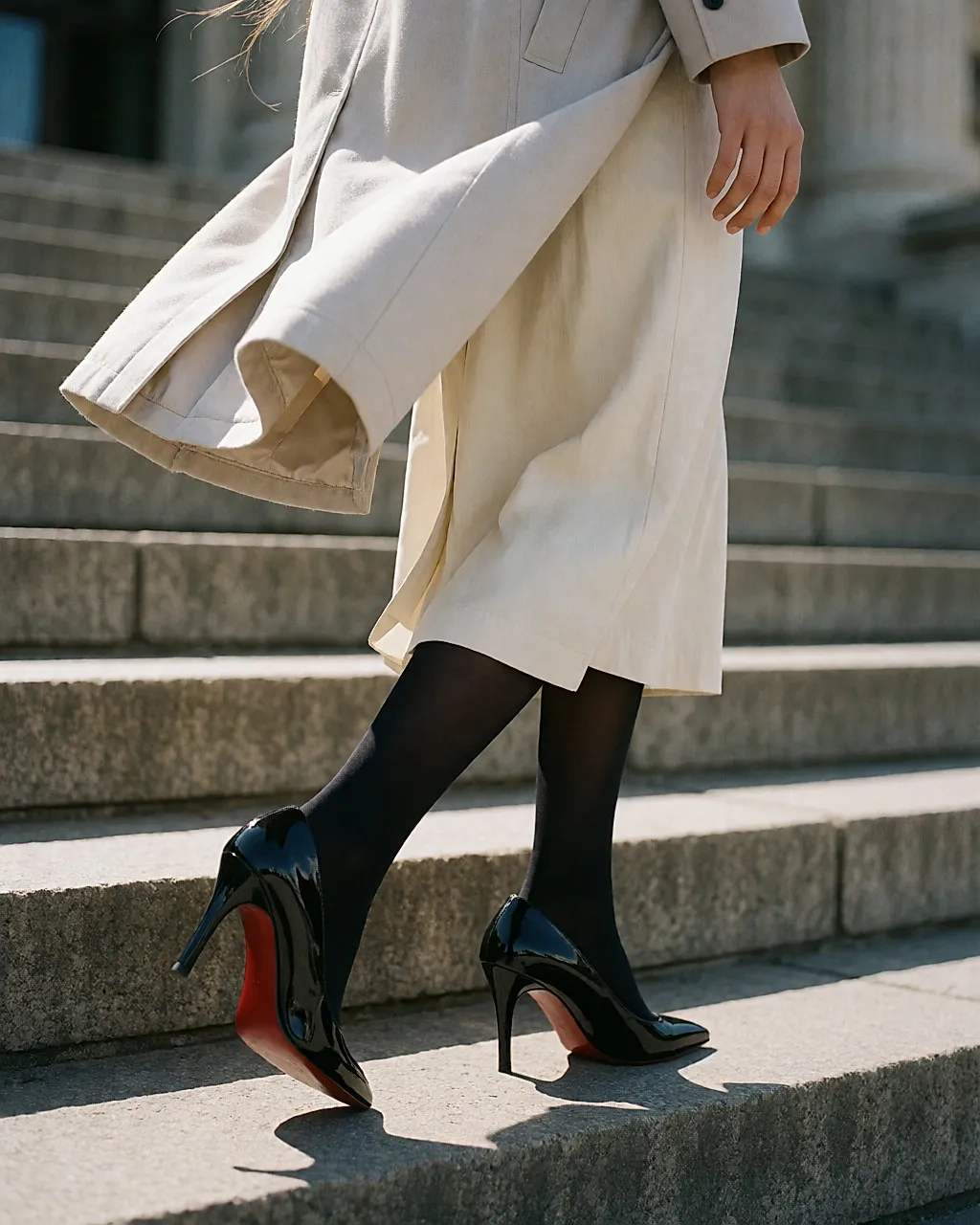
Choosing a pair you can stand up in
Price is far from the only measure of comfort.

Stability comes first, and you can feel it the moment you try the shoe on: if your foot slides sideways, if your ankle is hunting for support, that pair is not for you. A broader heel spreads the load better than a ten-centimetre stiletto. Stilettos are best saved for short evenings — they become riskier as soon as you have to walk or dance for any length of time.
Then the size. Choose your true size, even if the style is winking at you from half a size down. A compressed foot sits badly in the shoe, and instability increases your risk of a fall.
Arch and height come last. Strongly arched styles concentrate everything on the front of the foot. For everyday wear, the American Podiatric Medical Association recommends going no higher than about 5cm. Beyond that, keep the pair for short occasions. If you're new to heels, start at 4–6cm and build up gradually.
Pain that is still there the next day, a toe that is changing shape, an ingrown toenail: these are not details to endure. They are signals that deserve attention. Talk to a professional — a podiatrist or your GP — so that it can be properly diagnosed, before it becomes established.
How to try them on
Always try both feet: one is often slightly longer than the other. Take about ten steps, ideally on a hard floor, and note the pressure points — the edge of your toes, the back of the heel, the top of the foot. Don't count on the leather stretching to erase them.

Shop late in the day if you can: feet swell with heat and time spent standing. At that hour you will quickly spot the pairs that are going to pinch tomorrow.
Breaking them in and looking after your feet
Wear a new pair around the house, an hour a day on a clean floor, with thin socks if the leather is stiff. That gives you time to soften them up before taking them out. Afterwards, store your shoes upright or on shoe trees rather than piled on top of each other; they hold their shape better. A softening spray or a shoe stretcher can help a stubborn leather, but will never make up for a size that is too small. For long days, a gel forefoot insole cushions the impact — put it in before the pain sets in, not after.
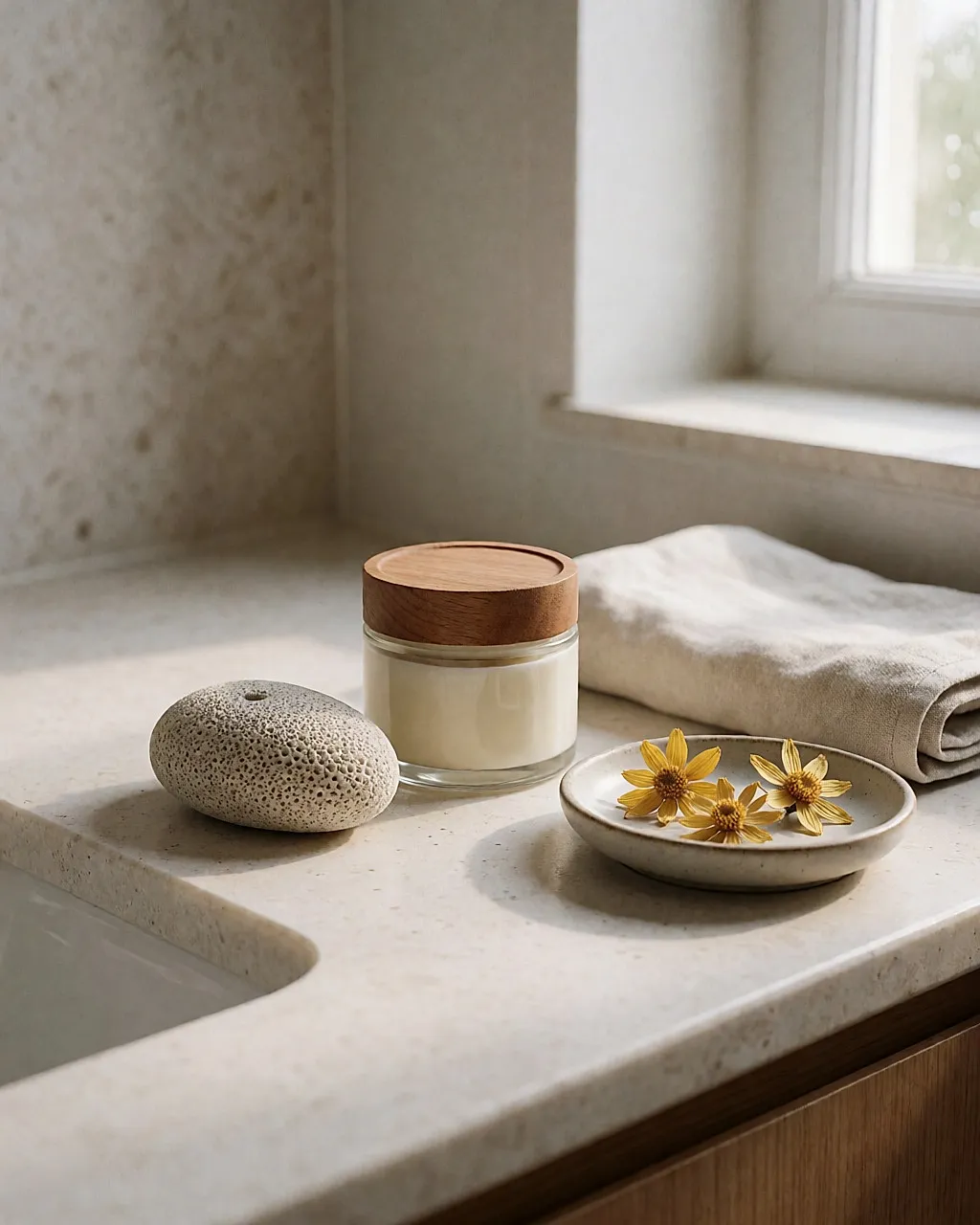
In the evening, in the shower, gently brush the hardened areas with a pumice stone: the skin stays supple and calluses are less likely to form. Dry carefully between the toes, then apply a moisturiser, working it in around the heel and the front of the foot. On the product side, a natural pumice stone and an organic shea or arnica cream — ideally in a glass or refillable pot — do the job perfectly well, with a simpler formula and packaging that lasts. If a blister has already appeared, don't burst it: a hydrocolloid plaster protects the area and lets the skin repair itself. And if you're stringing together several days in heels, alternate with flat shoes and keep a spare pair in your bag.
What it costs
- Heels: expect to pay roughly £35–£80 on the high street, £80–£180 from a specialist maker, and more above that. Leather costs more than synthetic, but it gives better and lasts longer.
- Gel forefoot insoles: around £8–£20 from a chemist, pharmacy or beauty retailer.
- Blister plasters: about £4–£9 a box from a supermarket or pharmacy.
- Softening spray, shoe trees, stretcher: roughly £8–£25 depending on the model.
- Foot care (cream, pumice stone, file): around £4–£18.
The variation comes down to material, where the shoe was made and the service you get. A cobbler can stretch a pair slightly; a podiatrist can supply custom insoles, which cost considerably more and are sometimes partly covered depending on your circumstances.
Sources
- American Podiatric Medical Association (APMA), guidance on wearing high heels.
- NHS (UK), "Foot pain" page.
- Assurance Maladie (ameli.fr), information sheet on bunions (hallux valgus).
- Kerrigan DC, Todd MK, Riley PO, "Knee osteoarthritis and high-heeled shoes", The Lancet, vol. 351, 1998.


Comments
Your opinion matters: rate the article, react and reply to comments.
Comments are moderated; AI-assisted comments are flagged. Text emoticons (8-), :-), <3…) are automatically shown as images.