
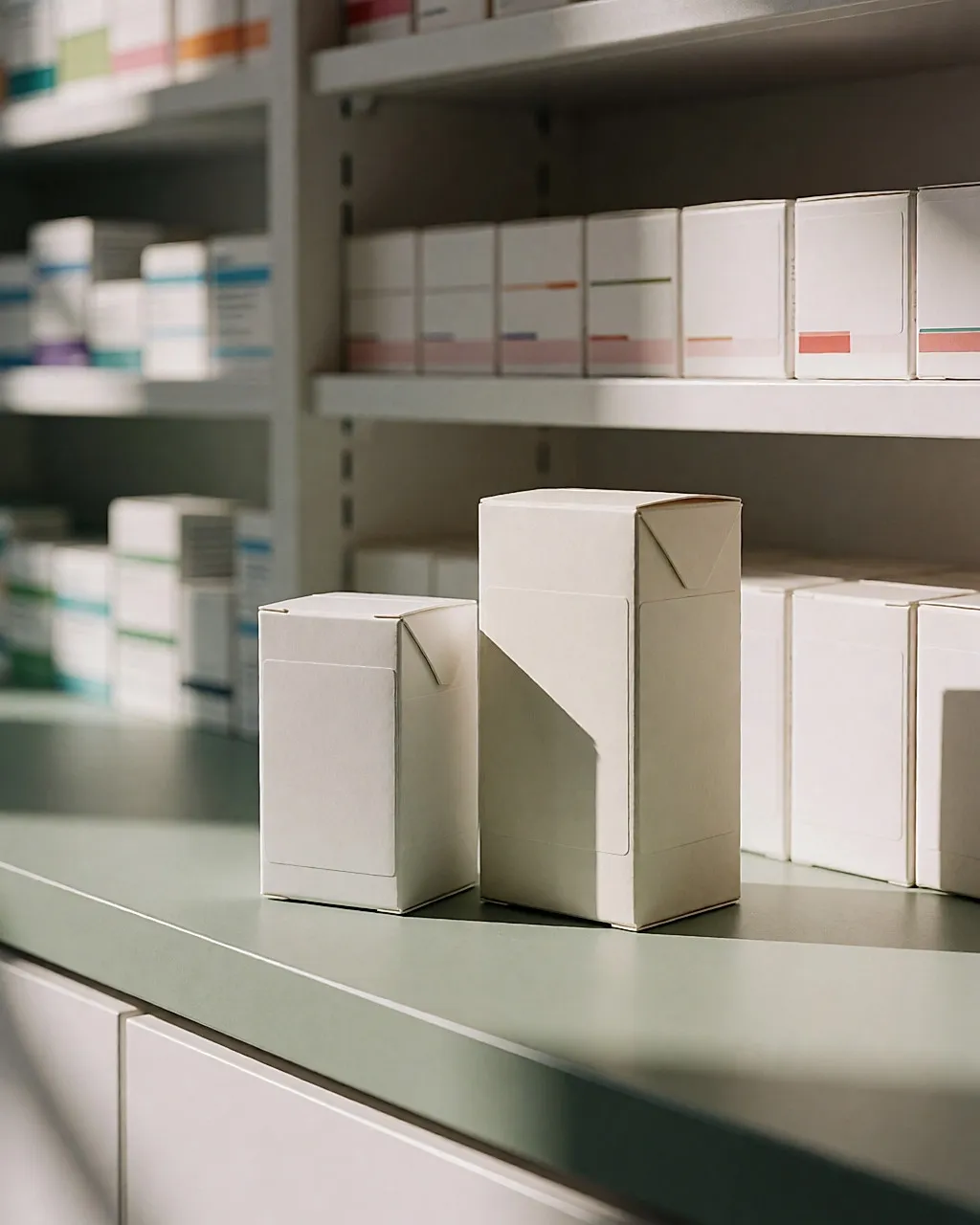
For years the generic had a fixed place in the public imagination: the money-saving option, useful but slightly austere, slightly anonymous. That framing no longer holds. Today it is the large drugmakers themselves crowding onto this ground — Sandoz, Viatris, Teva — and their appetite is real. How did a copy become a growth engine for the companies that made the original?
The principle is still straightforward. Once a molecule's patent expires and the compound enters the public domain, other manufacturers can produce an equivalent version. That is a generic.
What is established, and what is less clear
A generic contains the same active molecule, at the same dose, in a comparable form. To obtain a licence, the manufacturer has to demonstrate bioequivalence: the product is absorbed at the same rate, and reaches the same concentration in the body, as the reference medicine. In the UK, the MHRA assesses these applications; France's ANSM, which keeps a public register of generic groups, does the equivalent job.
Less widely understood is that this market also pays the originator. The patent expires, the margin collapses — and rather than surrender the whole territory, many companies choose to make the generic version themselves, often selling it under a different name. The brand and the copy can come out of the same building, which explains a good deal when you read the side of a box.
Why the industry is moving in
The reason comes down to one word: research. Developing a new molecule costs more each year, with high failure rates and years of clinical trials. Generic income, less spectacular but more predictable, partly funds that R&D. It is the argument made by the industry's own bodies, including the French association Leem.
The same movement has extended to biosimilars: versions of biological medicines whose patents are reaching expiry. They are more complex than a conventional generic, and the regulatory requirements around them are tighter.
What this means in practice
In the UK, most prescriptions are written by the generic name, and the pharmacy dispenses whichever licensed version it has in stock; the rules on dispensing and substitution sit in the Human Medicines Regulations 2012. If you would rather have a particular brand, you can say so — in most cases it can be arranged, though it may not be the version the NHS has priced, and it may cost more.
On price, a generic is usually cheaper than the original brand, though the gap varies with the molecule and the pack size. Over a long-term treatment, the difference adds up.
What it costs
For a common painkiller such as paracetamol, a pack of 16 500mg tablets typically costs a pound or two from a pharmacy or supermarket. The generic is almost always cheaper than the branded version, but on a product this inexpensive the gap stays modest.
Other things shift the total: where you buy it, the pack size (blister strips or larger boxes), the brand, and what is covered. In England most people pay a fixed charge per prescription item unless they are exempt; in Scotland, Wales and Northern Ireland prescriptions are free at the point of use. To check a specific price, the NHS website and the electronic medicines compendium are useful references, and your pharmacist can confirm the exact figure before dispensing.
Bioequivalence does not mean "strictly identical copy". The excipients — the ingredients that accompany the active molecule — can differ from one version to another. In people who are sensitive to a particular excipient, tolerance may vary. If you are in any doubt, talk to your doctor or pharmacist before switching versions.
Sources
- MHRA — guidance on licensing generic medicines (gov.uk)
- Human Medicines Regulations 2012 (legislation.gov.uk)
- NHS — medicines information and generic medicines (nhs.uk)
- ABPI — the Association of the British Pharmaceutical Industry (abpi.org.uk)
- Leem — Les entreprises du médicament (leem.org), cited for the argument that generics help fund R&D

Comments
Your opinion matters: rate the article, react and reply to comments.
Comments are moderated; AI-assisted comments are flagged. Text emoticons (8-), :-), <3…) are automatically shown as images.