

You've noticed that small, darker mole on your shoulder. Or those red patches on your cheeks that haven't budged since winter. Or that brown spot that appeared after summer and has you puzzled. Nothing alarming at first glance — but these 'flaws' deserve more than a shrug, don't they? In practice, a dermatologist appointment is often enough to put your mind at rest. And sometimes to act in time. No panic, but no burying your head in the sand either.

Moles: keep an eye on them rather than worry
A mole, or naevus, is a collection of pigment cells that is as ordinary as can be. Most of the time, they stay quiet for a lifetime and we forget about them. What we do know is that keeping an eye on them remains the best weapon: even with no visible change, an annual dermatology check is advised if you have fair skin, lots of naevi or a family history of melanoma. It's not paranoia, just method.
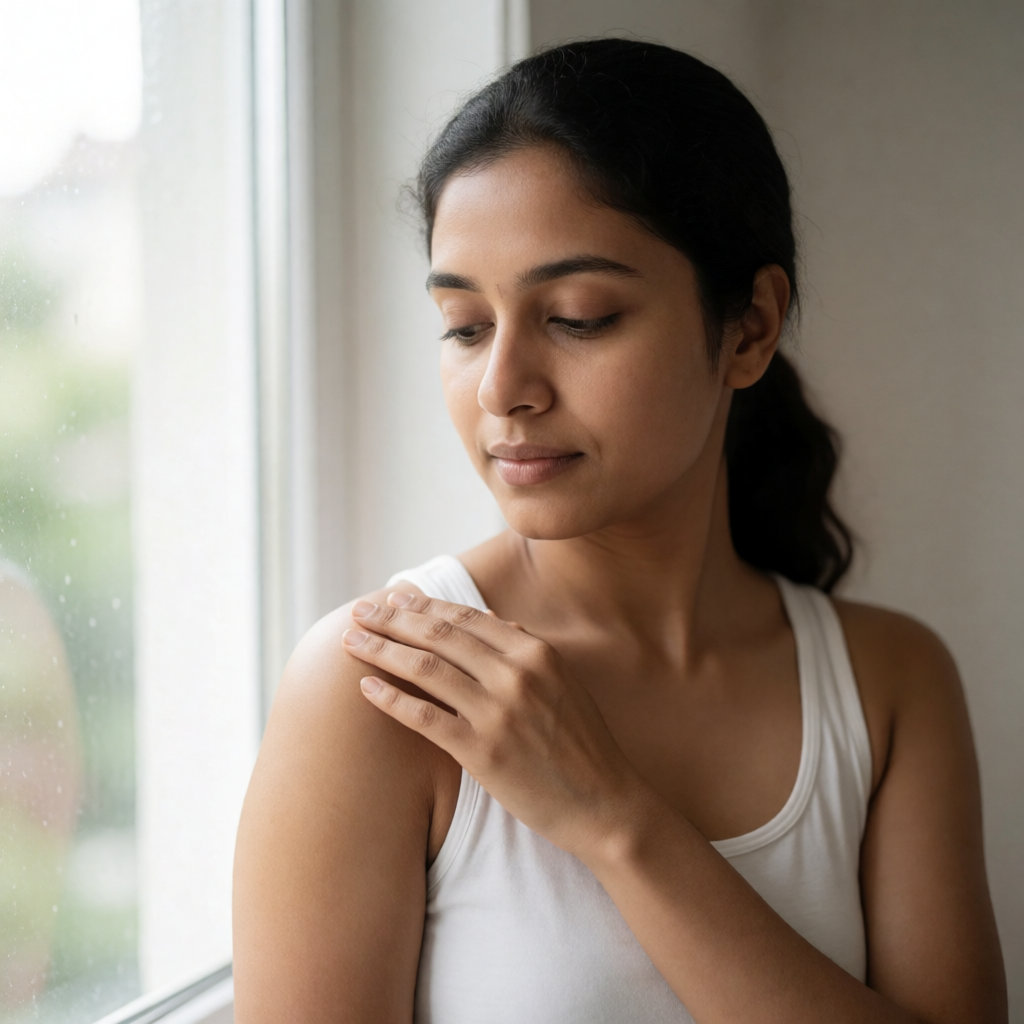
The well-known ABCDE rule helps you spot what should prompt a consultation: Asymmetry, Border irregularity, Colour variation, Diameter over six millimetres, Evolution in size, shape or shade. Add bleeding, itching or a scabbed lesion: speak to a healthcare professional without delay.
Should everything be removed? No, thankfully. When removal is decided on, it is done in the clinic under local anaesthetic. If the lesion is flat, the dermatologist performs a small excision and closes it with a few stitches; if it is raised, they may use an instrument that cuts and coagulates. The sample then goes to the laboratory for microscopic analysis — the only way to say whether there was any reason to worry.
Laser, which can erase plenty of skin flaws, is not recommended for moles: destroying pigment cells without being able to analyse them would deprive you of useful diagnostic information. A scar remains afterwards, discreet or not depending on the area. To keep it as fine as possible, protect it from sun and UV, and massage it with the cream prescribed by your dermatologist.
Rosacea: when redness settles in
Rosacea, which often underlies what's called couperose, shows up as widespread facial redness, especially on the cheeks and nose. Superficial blood vessels dilate, sometimes becoming visible, and the skin can feel hot. Sun, heat, spices, alcohol or stress are often mentioned, but current evidence points mainly to a genetic and vascular tendency. In other words, you haven't 'earned' it by overdoing the chilli.
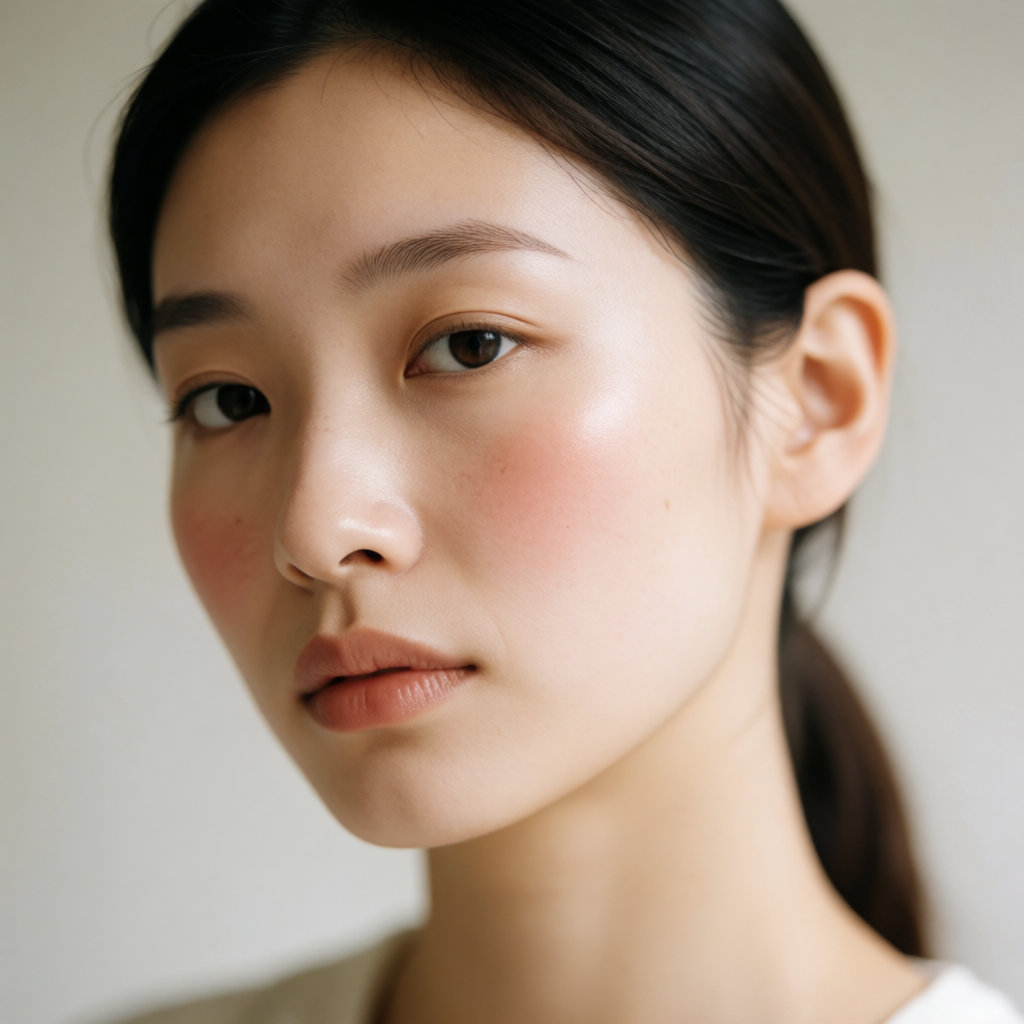
Vascular laser can noticeably reduce redness, sometimes markedly, over several sessions. The number varies according to the case and how long the redness has been present; your dermatologist will help you decide on the schedule. Treatment started early may give better results, with no guarantee.
These sessions are usually considered cosmetic, so they are rarely available on the NHS. If you have private health insurance, check whether your policy covers them, and always ask for a written quote. Prices vary between practitioners and cities — more on that below.
Age spots, or solar lentigines
It's not the years that create these spots, but accumulated sun. Lentigines appear on the most exposed areas: face, hands, décolletage, back. Fair, fine skin is more prone, but no one is truly safe after summers without protection.
These spots are benign. They can, however, mask or accompany a more serious lesion, which is why a dermatological examination is worthwhile, especially if one of them changes. For prevention, nothing beats SPF 50, covering clothing and avoiding the sunniest hours. Good sun protection really is the habit that changes everything.
To fade them, some dermatological treatments, such as pigment laser or certain chemical peels, can give results. They should be discussed with a dermatologist, over several sessions; without rigorous sun protection, the spots return. Consistency matters as much as technique.
Milia: tiny white cysts
On your cheekbones or eyelids, you may have noticed tiny white beads. These are milia, small cysts filled with keratin. They are benign, common in babies, and often disappear on their own.
Don't pierce them yourself. A hastily disinfected needle or a hack seen on social media opens the door to infection and can sometimes leave a small scar. If these milia bother you, a healthcare professional can remove them under proper sterile conditions.
Costs: consultations, laser and sun protection
On the NHS, a GP referral to dermatology is free at the point of use, though waiting times vary. Privately, an initial consultation is often around £150–£250, sometimes more depending on the city and practitioner. Vascular or pigment laser sessions, usually considered cosmetic and rarely covered by the NHS, generally cost around £150–£400 per session. A medical peel is usually around £100–£300 per session. These amounts vary according to the area, size, number of sessions and region; ask for a written quote, it's your best safeguard.
For sun protection, an SPF 50 cream costs around £8–£25 in pharmacies, supermarkets or online. If you're looking for a mineral formula, check for zinc oxide or titanium dioxide and broad-spectrum protection. Labels such as COSMOS Organic or Ecocert cover the proportion of natural and organic ingredients — not sun protection efficacy, so take care. The trade-off: these textures can be thicker or leave a white cast. For some post-laser care, the prescribed cream is sometimes the best choice; its price depends on the prescription.
In practice, remember this
Check your skin once a month in daylight, and have your moles checked regularly. Sun protection all year round, not just at the beach. And if a lesion changes, redness settles in or a cyst worries you, make an appointment rather than searching for the answer online — the internet will never replace an opinion formed by looking at your skin.
Your skin is with you for life: a few simple habits and a dermatologist you trust, and you'll feel calmer about the summers ahead. No doubt, it's worth spending a few minutes on it each month.
Sources
- NHS — Melanoma skin cancer and Sun safety, nhs.uk.
- Cancer Research UK — Skin cancer, cancerresearchuk.org.
- British Association of Dermatologists — Rosacea, bad.org.uk.
- NHS — Rosacea, nhs.uk.


Comments
Your opinion matters: rate the article, react and reply to comments.
Comments are moderated; AI-assisted comments are flagged. Text emoticons (8-), :-), <3…) are automatically shown as images.