
You push your trolley, turn a packet over to read the small print on fats, and that familiar voice whispers: “and what about your cholesterol?” We’ve all heard it—at the doctor’s, in an advert, or around the Sunday table. But between habits inherited from the 1990s and what today’s evidence tells us, there’s a gap that few people have really taken on board. Your plate matters, of course—but it’s only one piece of the puzzle, and the culprit isn’t necessarily the cheese or the egg you might think.
Cholesterol is not a poison
Let’s start with what we know. Cholesterol is an essential lipid: it helps make up the membranes of your cells and is a building block for certain hormones. Most is made by your liver; the rest comes from your diet. The problem isn’t cholesterol itself, but too much of it in the blood—and that’s where the long term matters.
What you can’t see is the silent mechanism: when LDL stays too high, it settles in the artery walls and gradually narrows them. This is atherosclerosis, a documented cardiovascular risk factor that can lead to a heart attack or stroke. That’s why prevention belongs in everyday life, rather than being saved for a crash diet in January.

What raises your levels: saturated fats first
Here’s the most useful update compared with the advice of twenty years ago. Current evidence suggests that the cholesterol you eat carries less weight than saturated fats and trans fats. In other words, it’s less the egg that’s the question than the butter you cook it in! Your packet of biscuits, ready meal and morning toast count at least as much as the egg yolk.

Saturated fats are found mainly in butter, cheese, processed meats, fatty cuts of meat, industrially produced cakes and pastries, as well as palm oil and coconut oil, which are very common in processed foods. Trans fats lurk in some industrial preparations, and a careful look at the label is often enough to spot them. In practice, you can eat eggs without guilt—just keep an eye on the cream, butter and bacon that go with them.
What really helps on your plate
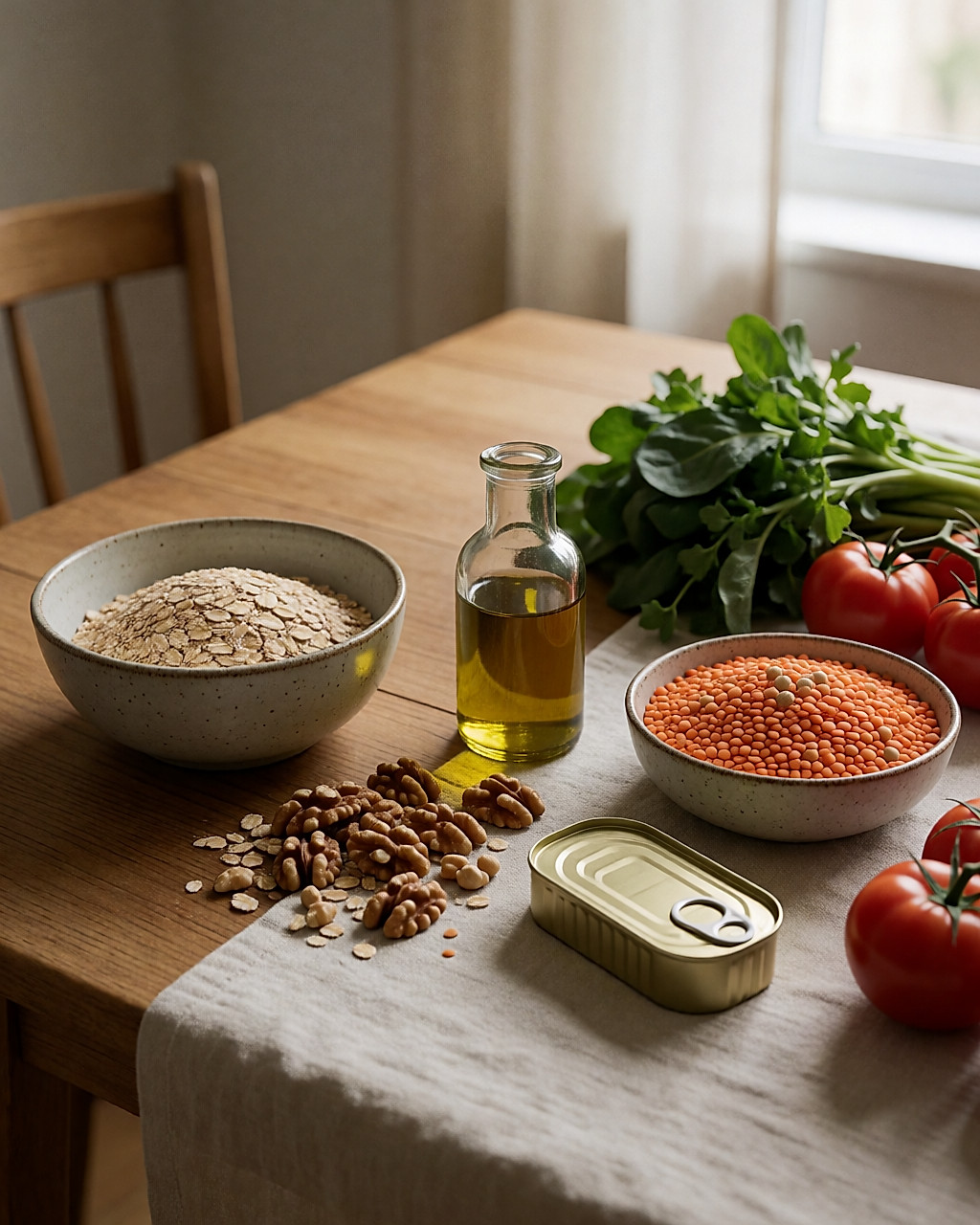
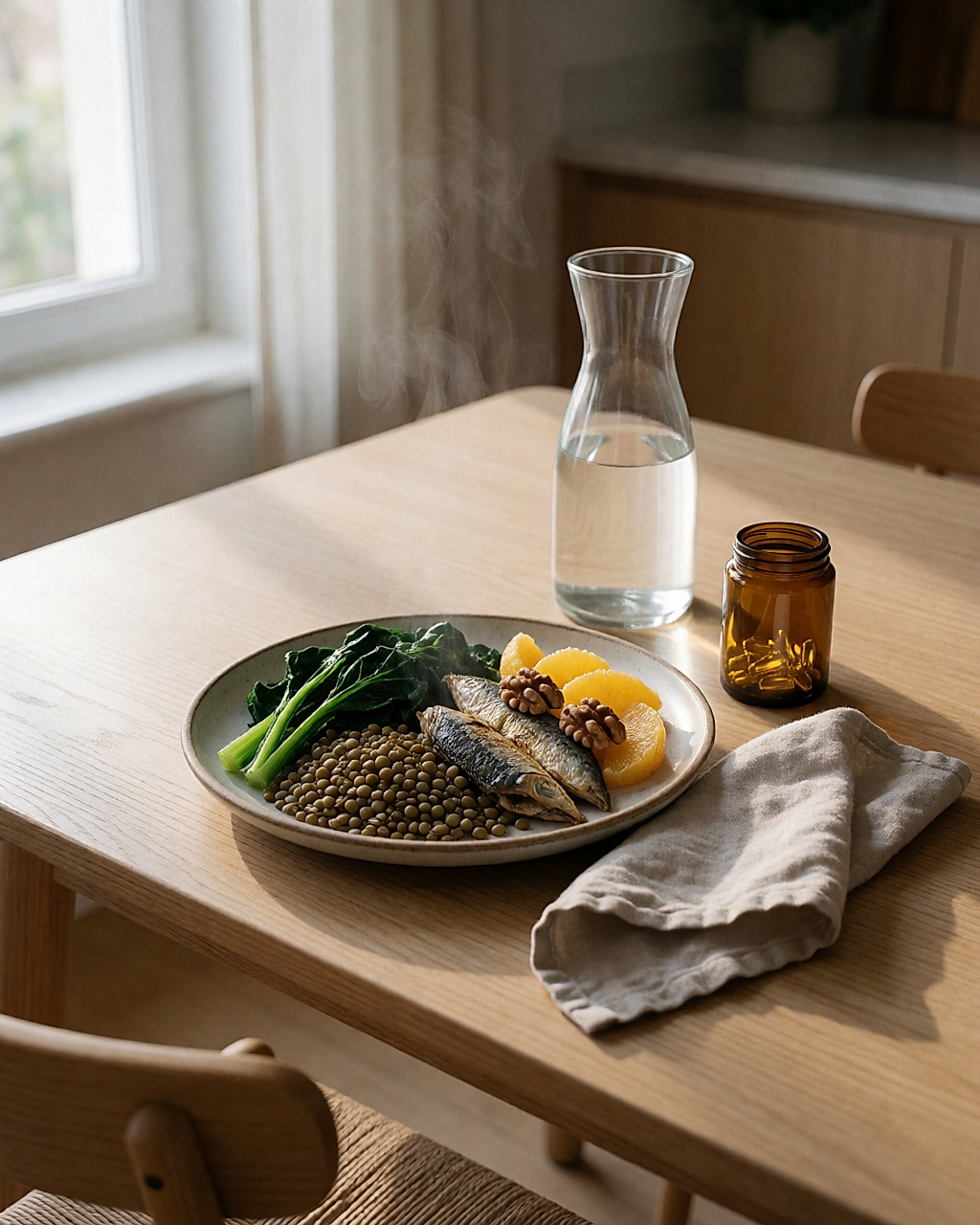
On the ally side, soluble fibre takes pride of place: oats, lentils, chickpeas, kidney beans, almonds, whole fruit and vegetables. Nothing exotic or expensive there, and these foods help the rest of your health too—digestion, fullness, blood sugar. We especially like how easy it is to add pulses to everything: in salads, soups or hummus.
Omega-3s also earn their place: sardines, mackerel, herring, salmon; on the plant side, rapeseed oil, walnuts, flaxseeds. The usual guide is fish twice a week, including one portion of oily fish. And for cooking as well as dressing, extra virgin olive oil is a reliable favourite—better for dressing than for very high-heat cooking, where it loses some of its appeal. None of these steps requires a huge budget or a nutrition degree.

Moving more and stopping smoking: just as important
Your plate isn’t the only lever, and that’s good news for anyone who likes a simple life. Regular physical activity raises HDL, the protective form of cholesterol. The World Health Organization recommends 150 to 300 minutes of moderate activity per week: a brisk 30-minute walk, five days out of seven, is often enough to get closer to that. No gym or fancy kit needed.

Smoking lowers HDL and damages your arteries—stopping remains one of the most worthwhile things you can do for your cardiovascular health. Too much sugar and alcohol tend to affect triglycerides more, which are worth keeping in the wider picture.
Getting your levels checked without scaring yourself
A blood test, prescribed by your doctor, is still the only way to know where you stand. How often depends on your profile: family history, diabetes, high blood pressure, smoking. Your healthcare professional will decide on appropriate monitoring, and treatment if needed—no “anti-cholesterol” supplement replaces that support.

What we know, and what we don’t yet know: saturated and trans fats raise LDL; that is established. However, each person’s response to diet varies, and part of your level depends on genetic and hormonal factors that diet can’t control. In practice, remember this: a varied diet, movement and medical follow-up are better than a list of forbidden foods. Talk to a healthcare professional before changing any treatment.
Budget
Good news: you don’t need “special” cholesterol-branded products, with the logo and the price tag to match. The useful foods are everywhere—supermarket, market, health food shop, online grocery. Expect around £7 to £14 per litre of extra virgin olive oil in supermarkets, more for a PDO bottle or a recent harvest; around £1 to £3 per tin of sardines or mackerel in oil, less in multipacks. Dried pulses are roughly £2 to £4 per kilo—tinned versions cost more per kilo but are a lifesaver on busy evenings.
What changes the bill: the label (organic, PDO), packaging, provenance and season, much more than the shop itself. On containers, glass and loose goods remain the easiest to reuse or recycle, and tins, cardboard and glass are simple to sort. One point that matters if you buy the same products often: family-size packs and loose goods quickly bring down the price per kilo.
Sources
- NHS — High cholesterol
- British Heart Foundation — High cholesterol
- Heart UK — Cholesterol and diet
- UK Chief Medical Officers — Physical activity guidelines
- World Health Organization — Physical activity recommendations
- European Society of Cardiology — Dyslipidaemia guidelines
You’ve got the picture: there’s nothing extreme in all this, and that may be the most reassuring part. A few habits that settle in gently—an extra handful of pulses, a tin of sardines each week, that morning walk that becomes normal, a label read with care—and regular check-ups agreed with your GP. Your heart may well thank you, without depriving you of life’s pleasures at the table. And frankly, that’s rather nice!
Food supplements do not replace a varied, balanced diet and a healthy lifestyle.



Comments
Your opinion matters: rate the article, react and reply to comments.
Comments are moderated; AI-assisted comments are flagged. Text emoticons (8-), :-), <3…) are automatically shown as images.