
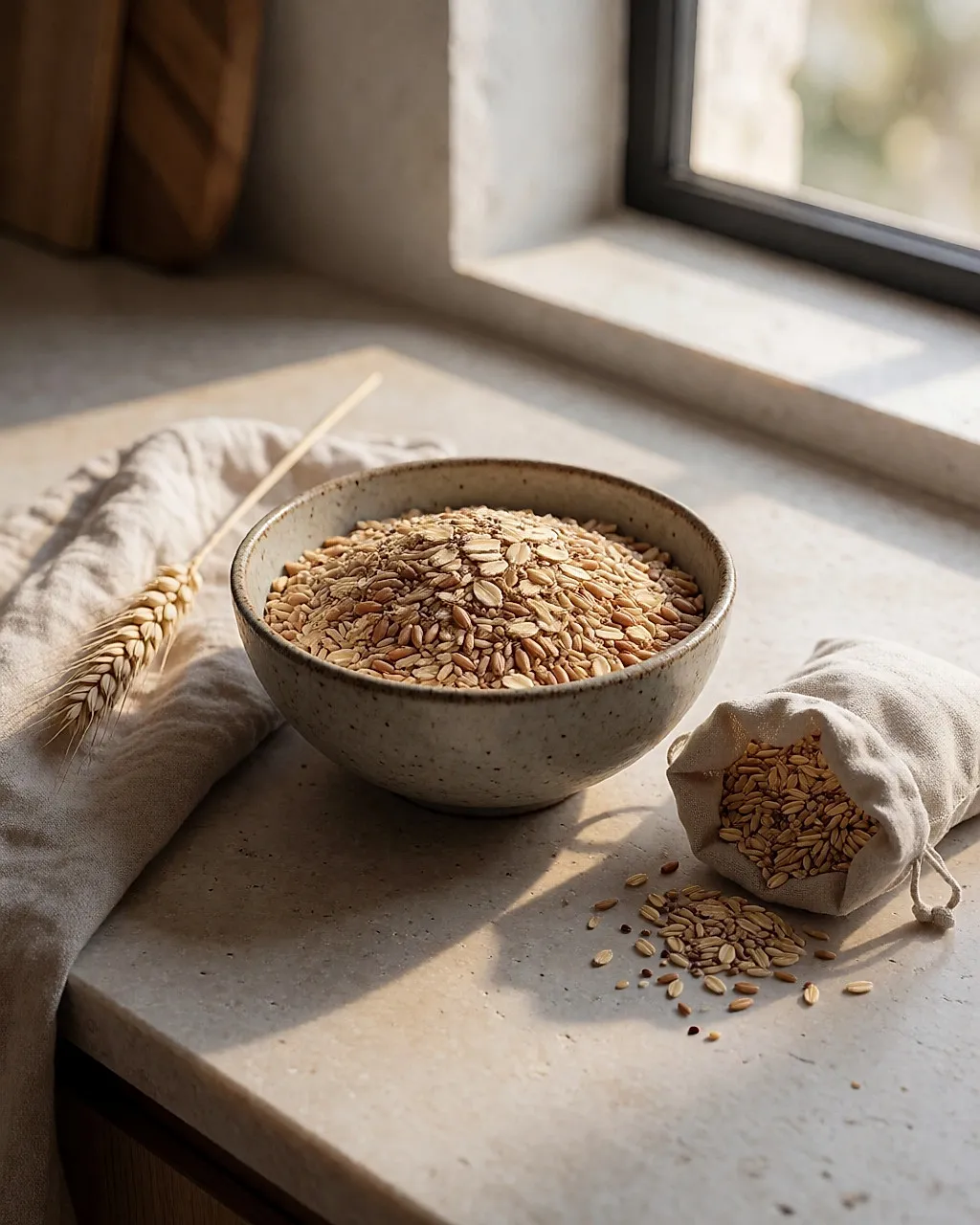
You've almost certainly come across this advice somewhere, between a video and a shopping list: choose wholegrain cereals. Except the word 'wholegrain' now appears on pretty much everything — pasta, rice, breakfast biscuits — and it doesn't always mean the same thing. So let's start from the beginning, calmly, so you can sort the real thing from the marketing without losing your morning.
One grain, three parts
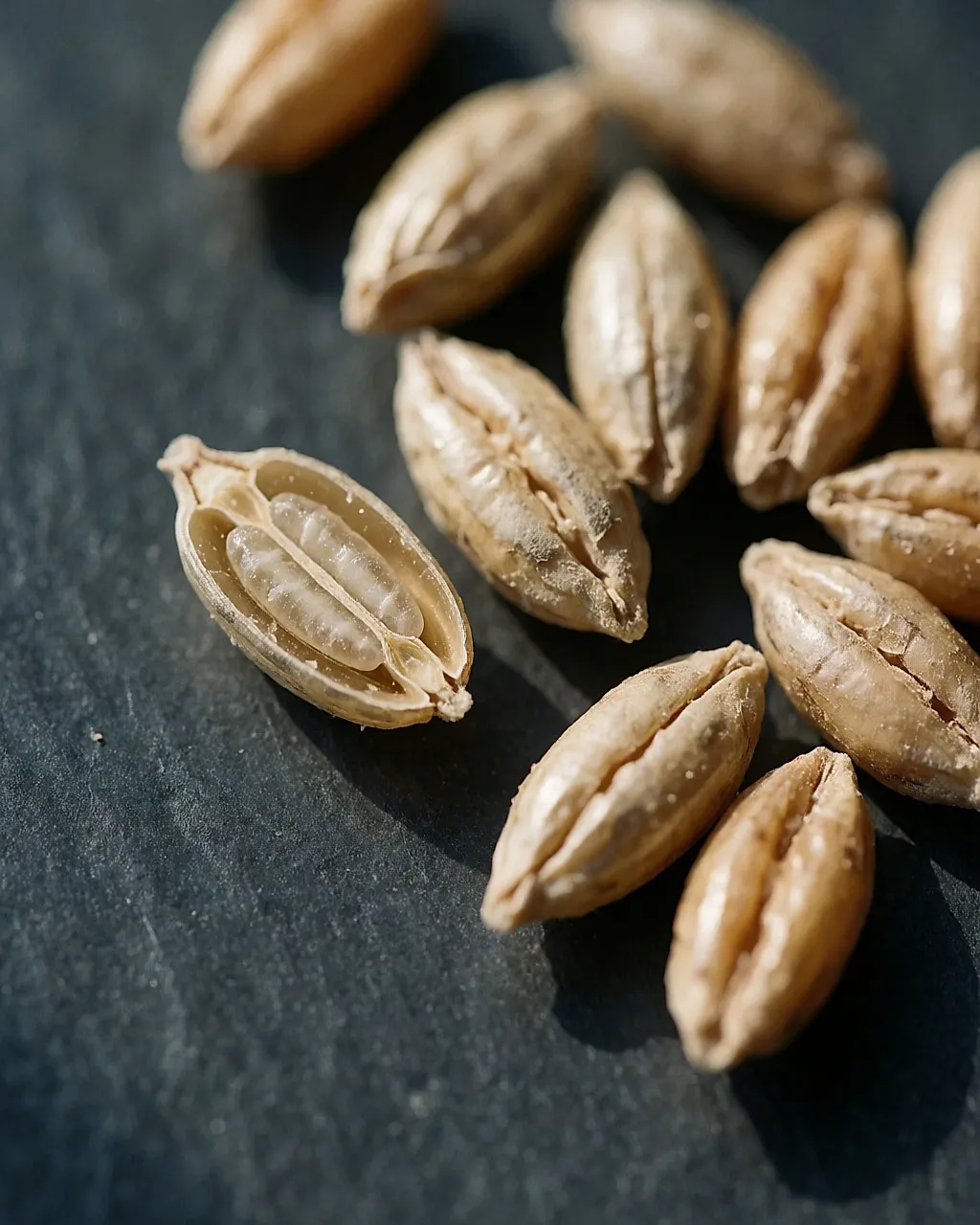
A grain of wheat, oats or rice is a small assembly in three parts. Around the outside, the bran: fibrous layers that protect the rest. In the centre, the starchy endosperm, mainly starch, the grain's energy store. And between the two, the germ, the living part that would grow into a new plant if sown.
Refining can be summed up in one sentence: only the endosperm is kept. White bread, fine semolina and standard white rice are therefore refined grains. Yet it is precisely the bran and germ that hold most of the fibre, B vitamins, vitamin E, magnesium, iron and zinc. By leaving them out, you lose much of the grain's nutritional value. That explains why wholemeal bread and white bread, even from the same field, have little in common on the plate.
What the studies say — and what they don't
Current evidence suggests a link between regular consumption of whole grains and a lower risk of cardiovascular disease and type 2 diabetes. A large meta-analysis published in The Lancet in 2019 linked higher fibre and wholegrain intake with lower all-cause mortality. The World Cancer Research Fund also ranks whole grains among the factors that reduce the risk of bowel cancer.
A note of caution, though: these are associations, not certainties. No one can protect themselves from disease simply by eating brown rice, and these benefits are seen in people with varied diets — plenty of vegetables, pulses and few ultra-processed foods.
Another point to keep in mind: if you live with irritable bowel syndrome, coeliac disease or gluten sensitivity, speak to your GP or a dietitian before suddenly increasing your fibre intake. Make the change gradually, drink enough fluids, and it's best to introduce whole grains little by little.
Spotting true wholegrain on the label
The word 'wholegrain' isn't always used in the strict sense, and its cousins even less so. 'Multigrain', 'with cereals', 'with wholemeal wheat': these claims don't tell you much. The most reliable clue is the ingredients list. If wholemeal flour or wholegrain comes first, that's a good sign. If it appears after sugar, you're dealing with a sweet product that contains a bit of bran.
The 'with wholemeal wheat' trap — A bread or cereal described as 'with wholemeal wheat' often contains only a small proportion of wholemeal flour, with the rest refined. Look instead for '100% wholegrain', 'wholemeal flour' as the only flour, or a high fibre content on the nutrition panel. For breakfast cereals, compare labels and choose the ones with the least sugar.
What deserves a place in your cupboard
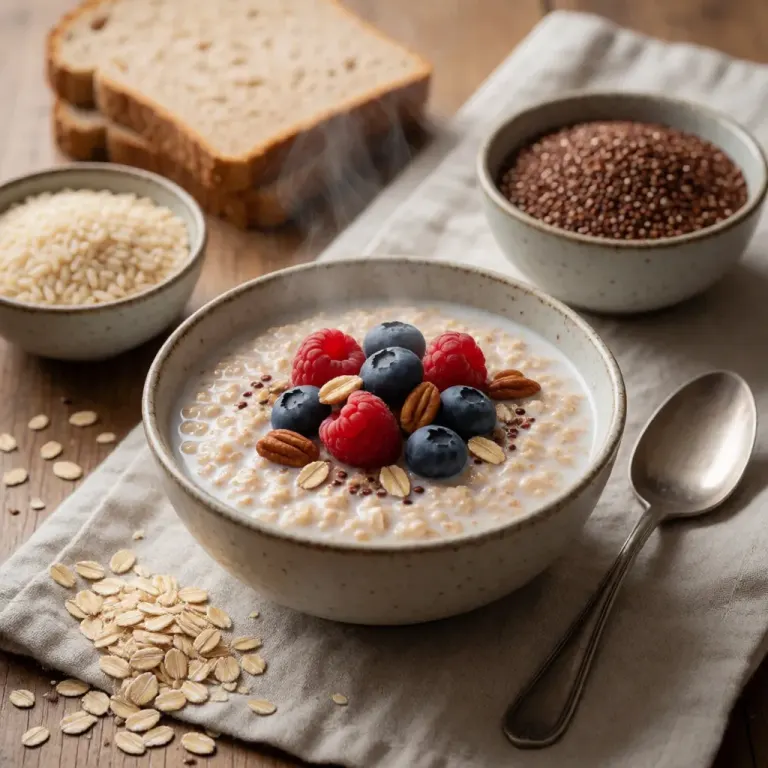
Oats, as porridge oats. They're the richest in protein and fat among common grains, and their soluble fibre, beta-glucan, contributes to lowering LDL cholesterol. Perfect at breakfast with fruit and a few nuts.

Quinoa and buckwheat. Not grains in the botanical sense, but they cook in much the same way, are rich in protein and naturally gluten-free.
Barley and bulgur wheat. Very high in fibre, just as useful in a cold salad as in a soup.
Wholemeal pasta and bread, ideally sourdough: everyday staples that won't break the bank.
Spelt, rich in magnesium, with a chewier texture that makes a change from standard pasta.
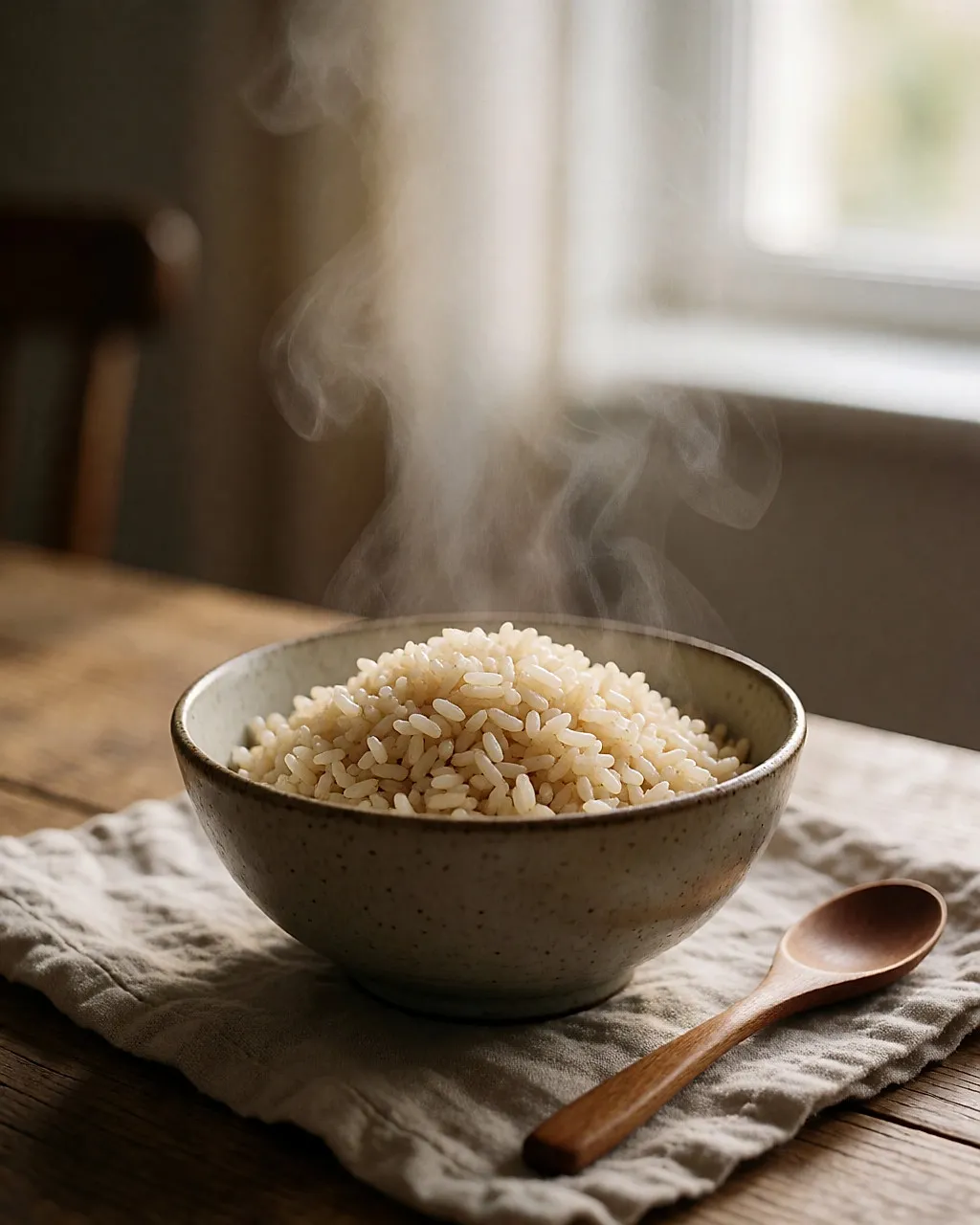
Brown or semi-wholegrain rice: the easiest option to find anywhere.
In practice, remember this: mix it up. A different whole grain each day, alongside vegetables and a pulse, and you'll cover the essentials.
Budget
Good news: whole grains aren't just for health food shops, far from it.
- Porridge oats: expect to pay around 90p to £2.50 for 500g in supermarkets, a little more for organic.
- Wholemeal pasta: expect around £1 to £2.50 for 500g depending on the brand.
- Brown rice: expect around £1.50 to £4 per kilo.
- Bulgur wheat, barley, buckwheat: expect around £1.50 to £3 for 500g.
- Quinoa: expect around £5 to £12 per kilo, depending on origin and production method.
What changes the price: organic, often more expensive; loose or packaged; brand; origin; and how pre-cooked it is. Own-brand ranges and the bulk sections in health food shops still offer the best value, and online shopping becomes worthwhile for larger quantities. Where to find it all? Supermarkets, health food shops, refill stores or online orders — buying loose helps limit packaging, as long as you store your jars away from light and moisture.
Sources
- Santé publique France, mangerbouger.fr — guidance on starchy foods and wholegrains.
- ANSES — dietary guidelines, nutritional reference values and opinions on fibre.
- World Health Organization — 'Healthy diet' fact sheet.
- Reynolds A. et al., 'Carbohydrate quality and human health: a series of systematic reviews and meta-analyses', The Lancet, 2019.
- World Cancer Research Fund — Continuous Update Project, bowel cancer and whole grains.


Comments
Your opinion matters: rate the article, react and reply to comments.
Comments are moderated; AI-assisted comments are flagged. Text emoticons (8-), :-), <3…) are automatically shown as images.