
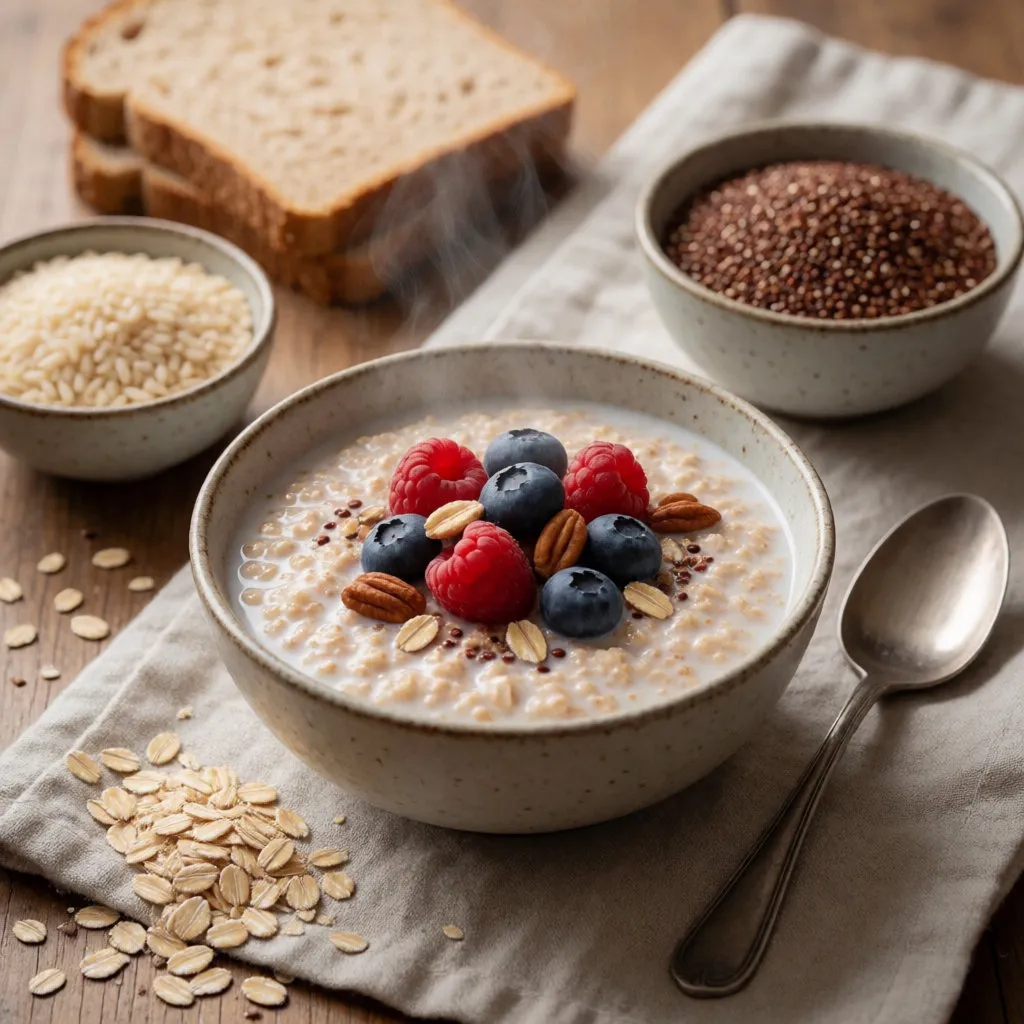
You might think cereals are a bit old-fashioned. Yet you eat them every day: toast as soon as you're up, a bowl of rice alongside dinner, pasta at lunch. Their place on the plate is far from minor — and we sometimes eat too little of them, or only in a highly refined form.
A fuel that powers the day
Wheat, rice, maize, oats, rye, millet: all these cereals provide carbohydrates, the fuel your cells need — including those in your brain and nerves. The old idea of 'slow' and 'fast' sugars is best left behind: current evidence suggests it doesn't accurately describe what happens in your body. What really matters is the form of the food, and how refined it is.
Wholegrain or refined: a big difference
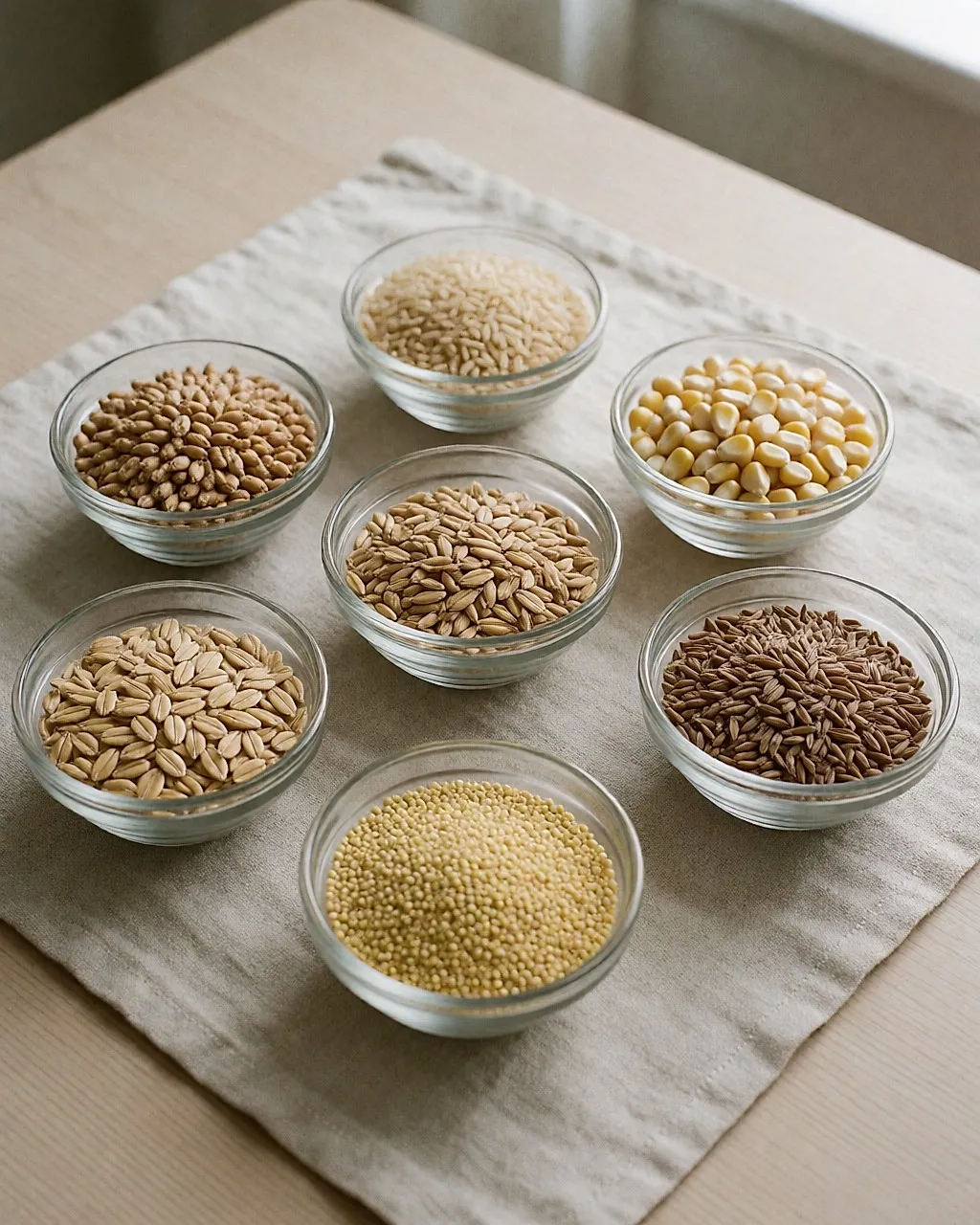
When a cereal remains wholegrain, its bran and germ are kept. It therefore provides fibre, magnesium, iron and B vitamins — especially thiamin (B1) and niacin (B3), which are involved in energy production. By contrast, a refined cereal (white flour, white rice, fine semolina) has lost a large part of these nutrients along the way.
Fibre, meanwhile, feeds the gut microbiome and helps keep you regular. Epidemiological data link regular consumption of wholegrains to a lower risk of cardiovascular disease and type 2 diabetes. A note of caution, though: this is not a guarantee of protection, but rather one favourable factor among others, alongside physical activity and the rest of your plate.
How much, and how?
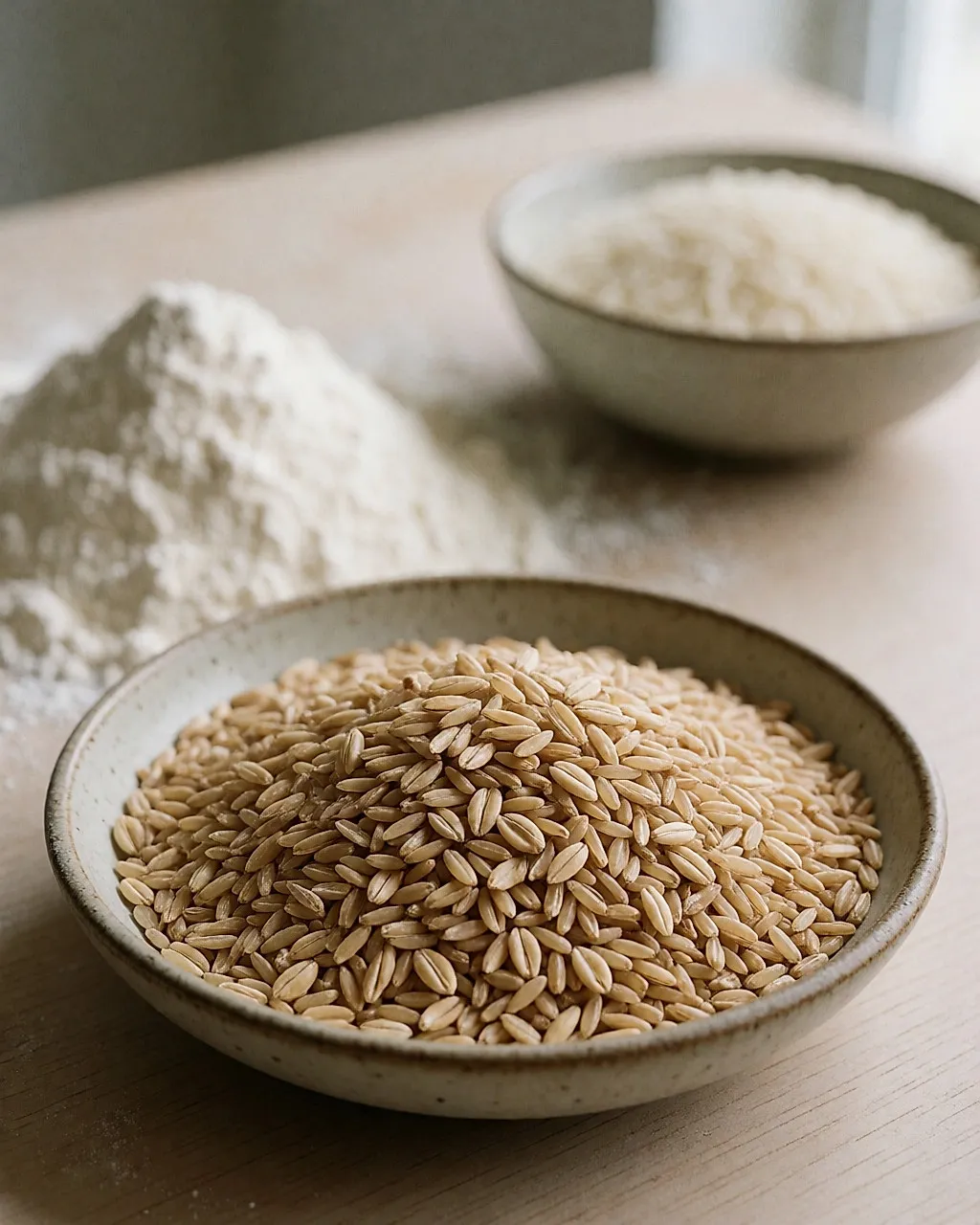
UK guidance recommends basing meals on starchy carbohydrates, choosing wholegrain or less refined versions where possible. A portion might be, for example, one slice of bread, or the equivalent of a small bowl of cooked pasta. Spreading these portions across the day can help avoid energy slumps and keep you going until your next meal.

In practice, three simple steps:
- swap some of your white bread or white rice for wholegrain versions;
- pair cereals with vegetables and a source of protein for a satisfying meal;
- vary your grains and pseudo-cereals — oats, barley, bulgur, buckwheat, quinoa — without locking yourself into just one.
'Wholegrain' does not mean 'as much as you like'. A sudden excess of fibre can cause bloating and discomfort: increase gradually over several weeks, and drink enough fluids. If you have coeliac disease, gluten sensitivity, irritable bowel syndrome or diabetes that is being treated, speak to a healthcare professional before changing your habits: no food can replace proper medical follow-up.
Cost
When it comes to price, in the UK expect to pay around £1–£3 for 500g wholewheat pasta, £1.50–£4 for 500g brown rice, £1.50–£3.50 for 500g porridge oats, and £2–£5 per kilo for wholemeal bread from a bakery. Buying in bulk is often better value for larger volumes. Organic products usually cost a little more: organic certification (such as the Soil Association logo, or the EU organic leaf on imports) sets standards for how food is produced, but does not by itself guarantee better nutritional value.
You'll find these products in supermarkets, health food shops, bulk aisles, bakeries or online delivery. If plastic packaging is unavoidable for a particular product, the reasonable compromise is to choose a larger pack or a cardboard option, which is easier to recycle.
Sources
- NHS — The Eatwell Guide, advice on starchy carbohydrates and fibre.
- Scientific Advisory Committee on Nutrition (SACN) — reports on carbohydrates and dietary fibre.
- World Cancer Research Fund (WCRF) — Diet, Nutrition, Physical Activity and Cancer: a Global Perspective, including ongoing evidence on wholegrains.


Comments
Your opinion matters: rate the article, react and reply to comments.
Comments are moderated; AI-assisted comments are flagged. Text emoticons (8-), :-), <3…) are automatically shown as images.