
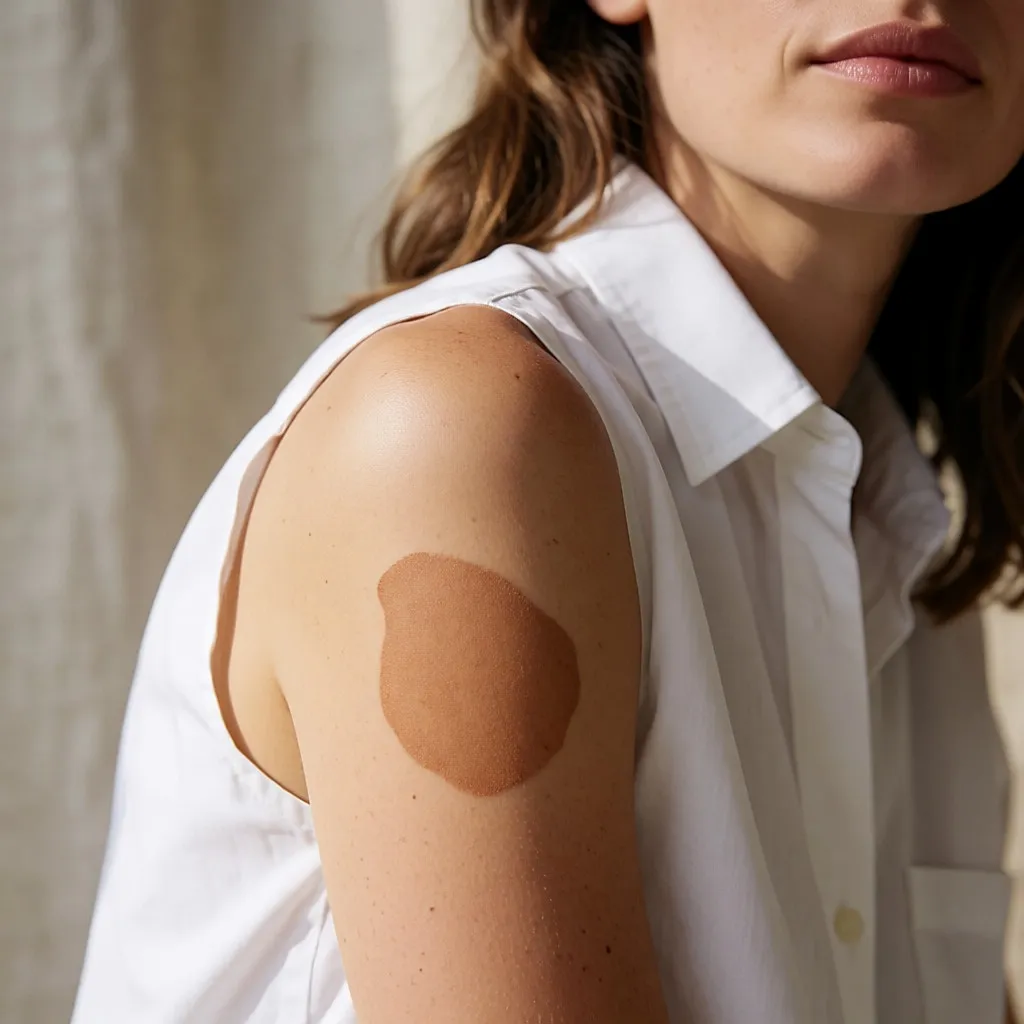
Working out which type of birthmark
Many of us have a birthmark, yet no two are quite the same. They reflect your skin's characteristics and its melanin, so they come in several forms: congenital, epidermal or dermal. They may be more or less pigmented, and can range from pink or red to brown or even grey. These are the marks we call port-wine stains or café-au-lait patches.

Birthmarks that change
Most birthmarks are benign, but some need to be monitored by a dermatologist, especially if they are large, numerous or linked with other signs. Your birthmark may also change over time: a port-wine stain, for example, tends to darken. If you notice any change, see a dermatologist promptly. It bears repeating: a mark that changes in size, shape or shade deserves a professional opinion, even if you have had it all your life.

Treatment
Whether for a dermatological concern or for cosmetic reasons, some birthmarks can be lightened or removed depending on their type, once a dermatologist has assessed them. No treatment can ensure complete removal. Your first step is always a consultation with a dermatologist (your GP can refer you on the NHS, or you can book privately), who will examine your skin and, if appropriate, refer you to a specialist for laser treatment.
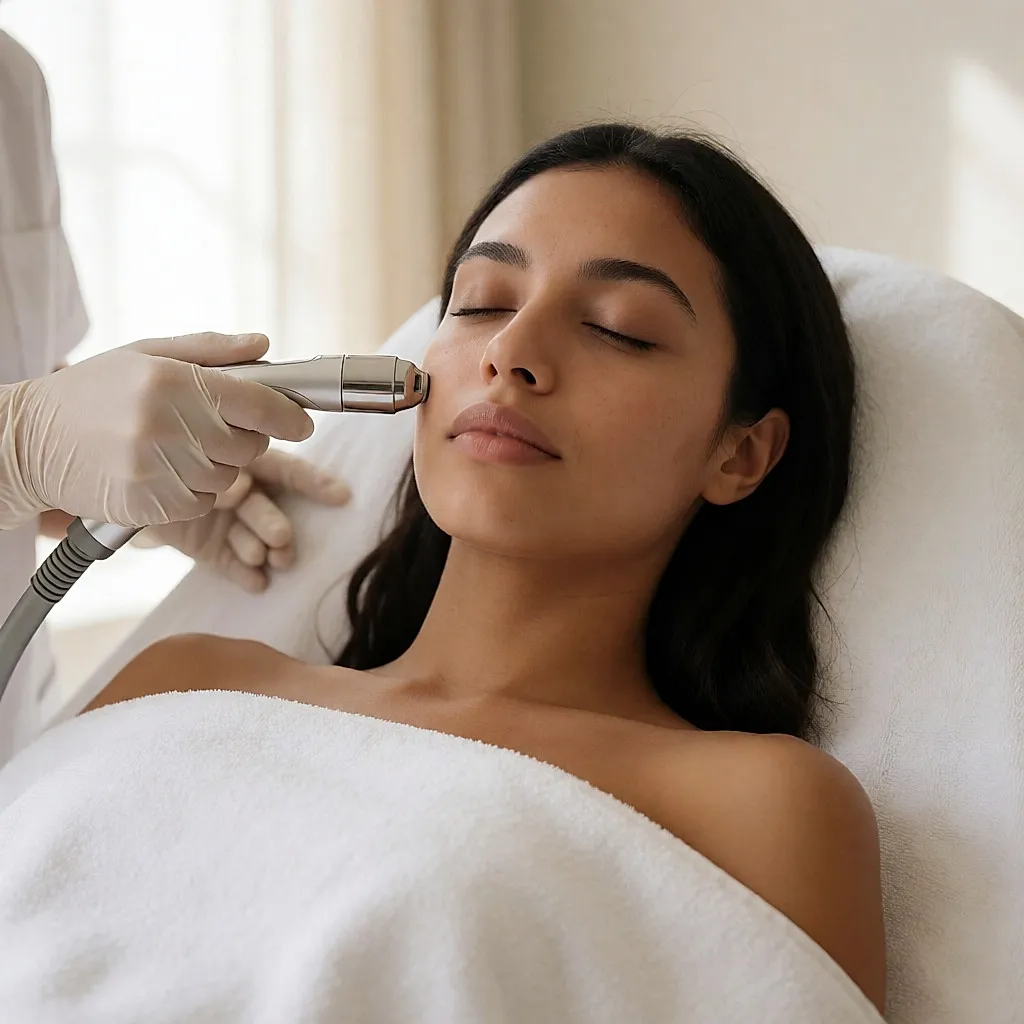
How does it work? Depending on the type of laser and the lesion, the pulse targets either haemoglobin in blood vessels or melanin. The effect on surrounding tissue, and the results, vary. A dermatologist may suggest different lasers according to the nature of the lesion; the number of sessions and the results also vary.
Results can be more or less convincing depending on your skin type and the nature of the lesion, so they differ from person to person. Some lesions lighten after several sessions; others stay the same or do not disappear completely. If this route does not work for you, cosmetic surgery may be an option, but it is not without consequences: it will leave a scar slightly larger than the original lesion.
Many of us have one or more birthmarks. Their shapes and colours vary, and although they are all grouped under the term birthmark, they can be different in nature and may appear at birth or later, spontaneously. Some go unnoticed; some we like because we share them with a parent; others cause concern for purely cosmetic or medical reasons. Some birthmarks can be lightened or removed, but the first step remains a dermatological consultation.
Costs
It is difficult to give a single figure, because everything depends on the type of birthmark, its size and the technique used. As a rough guide, private laser treatment for a small lesion may cost around £45-£130 per session, and several sessions are often needed. Surgical removal usually costs considerably more, generally several hundred pounds. The price also varies by city, the practitioner's reputation and the number of sessions included in the treatment plan. A detailed written quote is essential before you commit.
Sources
- Birthmarks — NHS.
- Pigmentation disorders — MSD Manuals, consumer version.
- British Association of Dermatologists — information and guidance on skin lesions.



Comments
Your opinion matters: rate the article, react and reply to comments.
Comments are moderated; AI-assisted comments are flagged. Text emoticons (8-), :-), <3…) are automatically shown as images.