
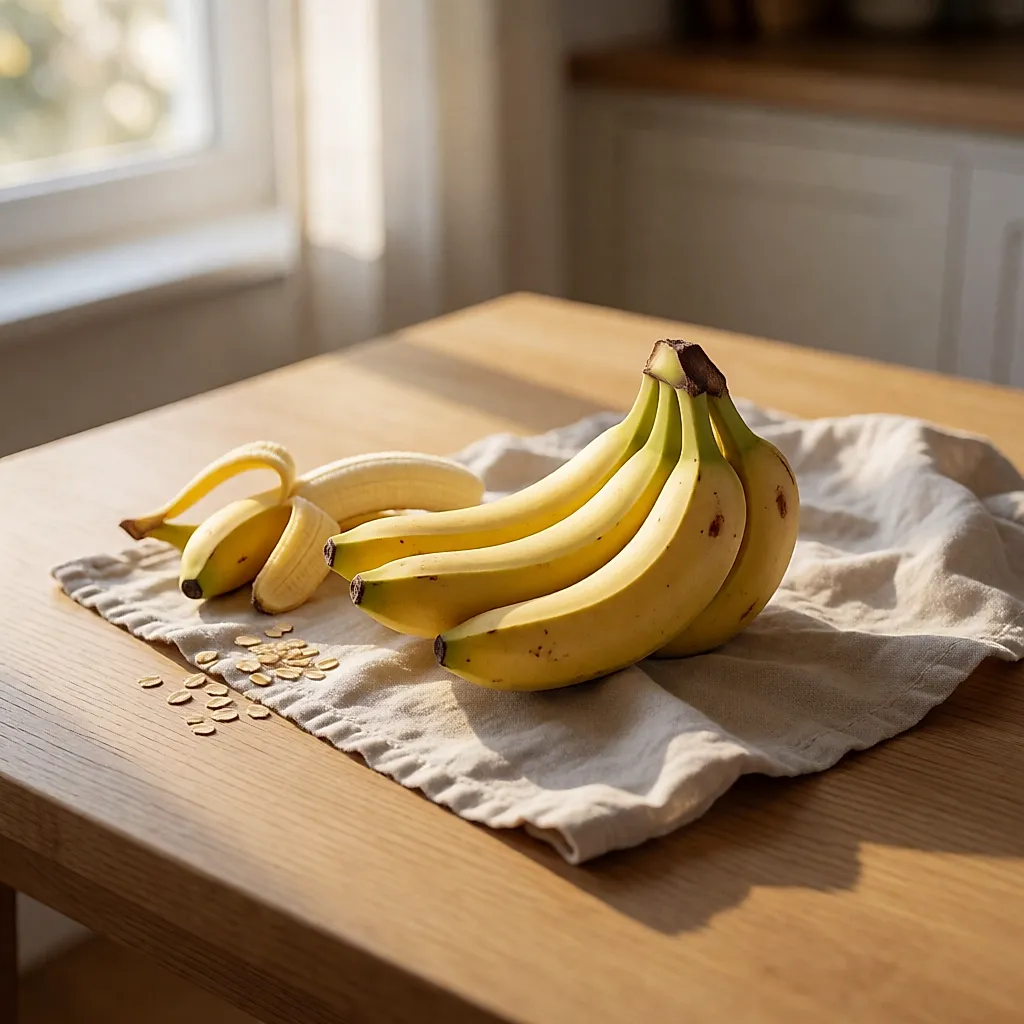
You slice one over your breakfast, slip one into your bag before a run, or blitz one into a smoothie when you're in a hurry. Bananas are everywhere, and it's not hard to see why: they travel well, cost very little and need no cutlery. Behind that yellow skin is a genuinely useful mix of nutrients. The question is what a banana actually gives you — and what it doesn't.
Where does this fruit we eat everywhere come from?
The banana plant is thought to have originated in South-East Asia. Its name is thought to come from an African word, and in India the banana has long symbolised the fruit of paradise. Over the centuries it spread, its varieties changed, and it became one of the most widely eaten fruits in the world.
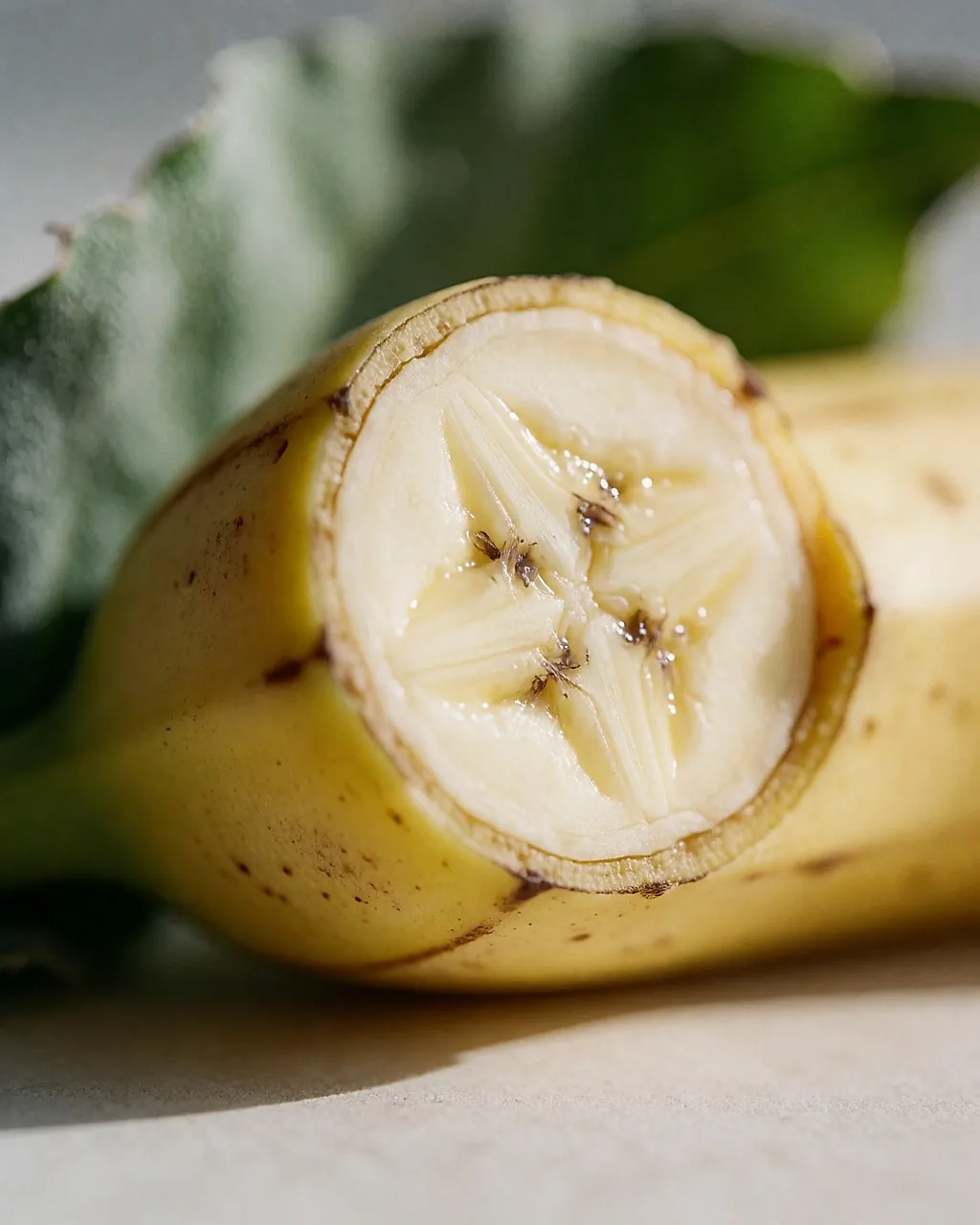
What a banana actually provides
Eat a banana and you take in potassium, magnesium, some calcium, iron and copper. Potassium contributes to muscle contraction and to the maintenance of normal blood pressure. Add B vitamins, a small amount of vitamin C and fibre: enough to keep you going until your next meal without an energy dip.
It is important, though, not to treat it as a remedy. The current evidence suggests that no single food, eaten on its own, can replace a varied diet.
How to choose and store bananas
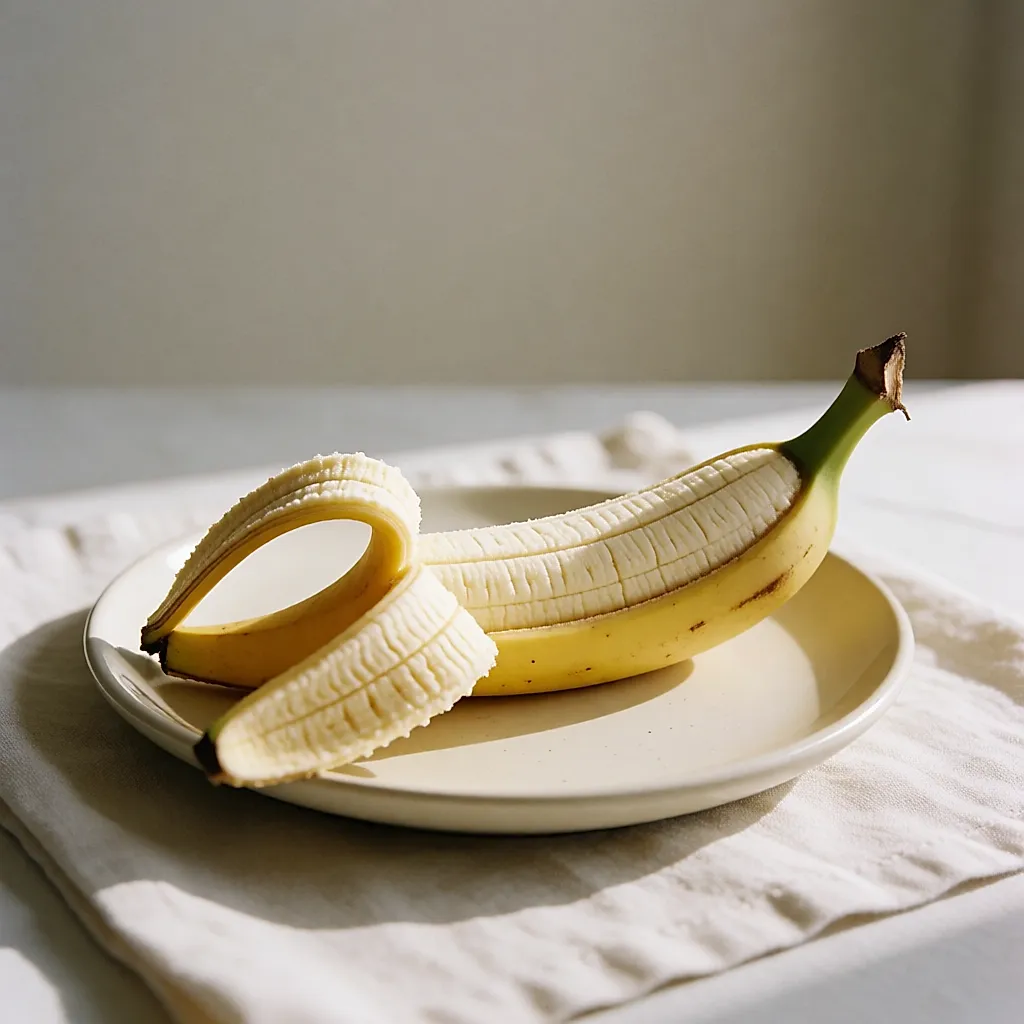
In practice, choose firm, pale yellow bananas with few or no spots. A few brown speckles don't mean they are past their best: they become sweeter and work well in puddings. To stop cut bananas darkening, a squeeze of lemon juice is enough. And don't put them in the fridge: the cold turns the skin black and changes the texture. Kept at room temperature, out of direct sun, they will last several days.

Three easy ways to work a banana into your day
- In a smoothie: one banana, plain yoghurt, a handful of porridge oats and a drizzle of honey. Blend and it's ready.
- As instant ice cream: slice ripe bananas, freeze them, then blend them on their own. You get ice cream with no added sugar.
- As a savoury side: plantain is firmer and can be fried like sweet potato; it goes well with a spicy dish.
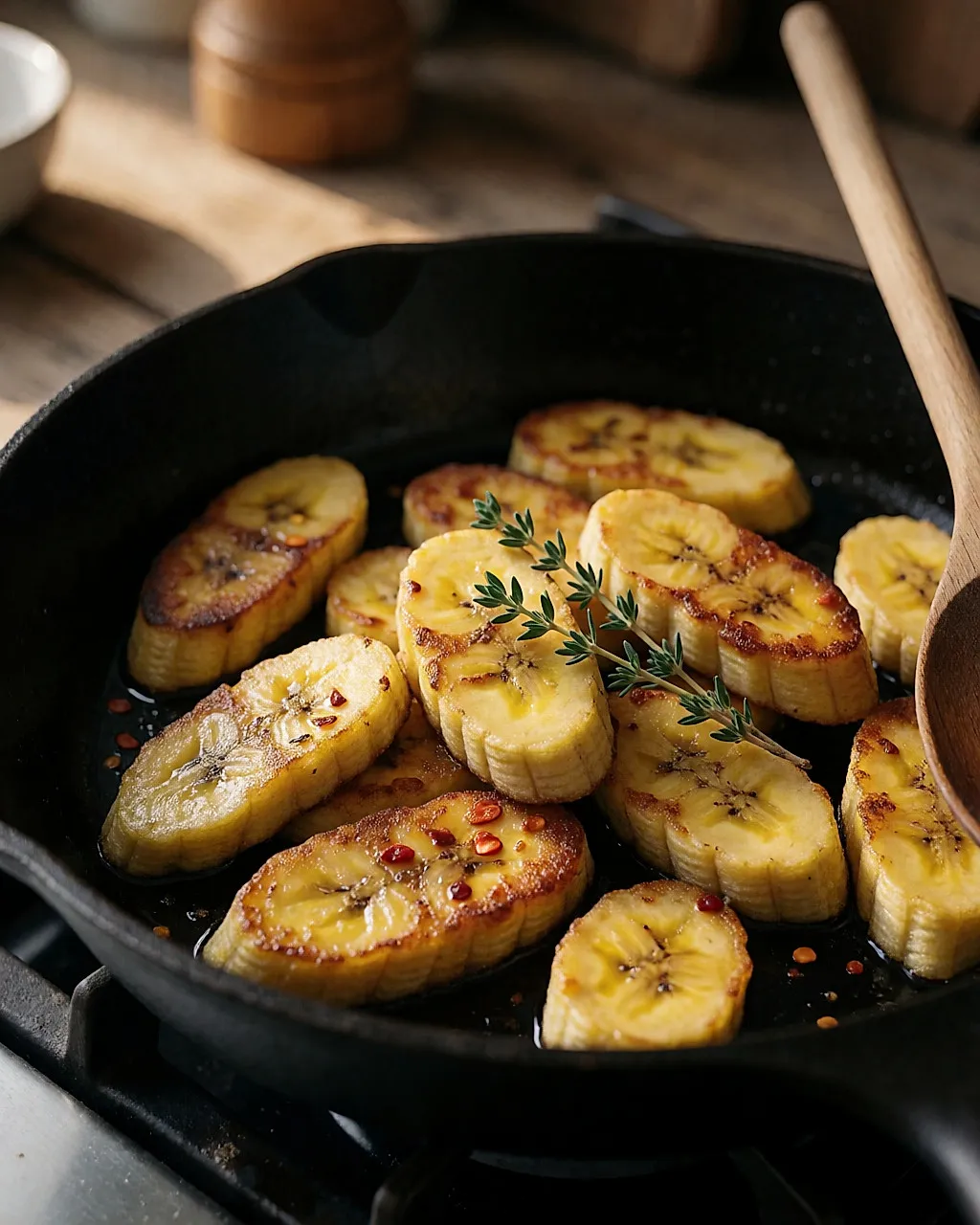
Raw, blended or fried, a banana can earn its place at any time of day.
A banana is neither a magic appetite suppressant nor a medicine. It is a fruit, and that is already a lot: affordable, practical, high in fibre and potassium. If you have questions about your diet, your weight or a treatment you are taking, speak to a healthcare professional.
What it costs
As a rough guide, expect to pay around 20p–45p for a single banana. By weight, conventional bananas often cost about £1.20–£2.50 per kilo, while organic fruit tends to be around £2–£4 per kilo. Prices vary with origin (the Windward Islands, Ecuador, Côte d'Ivoire), season, outlet — supermarket, greengrocer or market — and the grower's certification. Bunches or bags of five to seven bananas are often the best value, especially if you let them ripen at your own pace.



Comments
Your opinion matters: rate the article, react and reply to comments.
Comments are moderated; AI-assisted comments are flagged. Text emoticons (8-), :-), <3…) are automatically shown as images.