
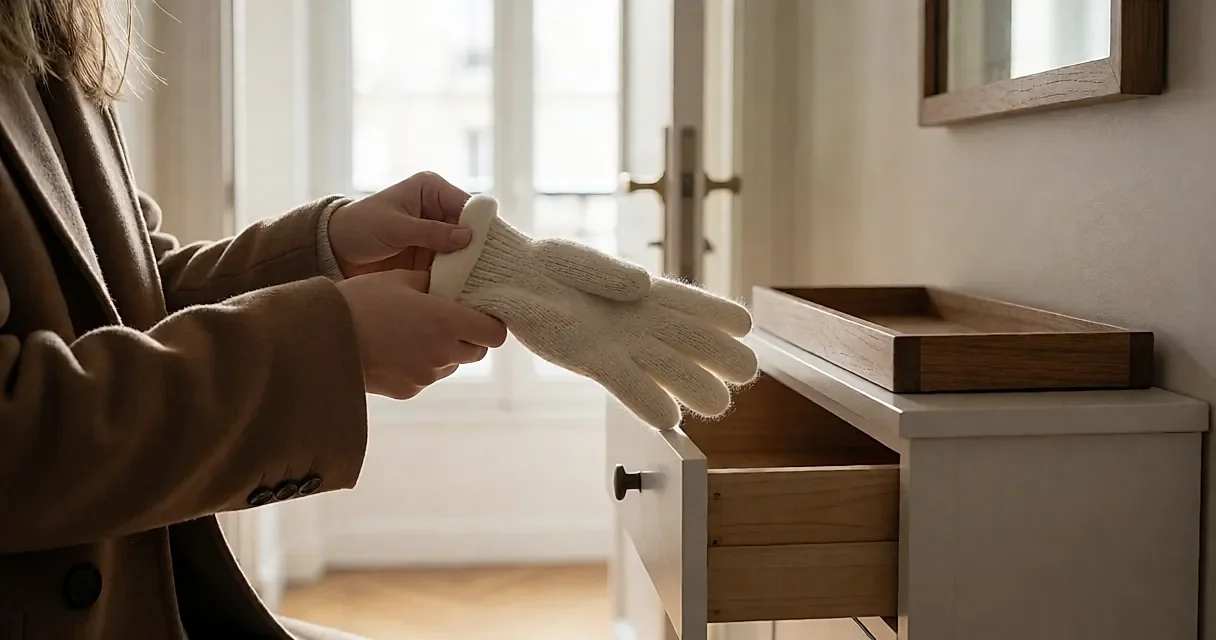
A lined glove is judged on the hand, never in a shop window. In the window, the lining promises cosy winters; on the hand, it takes up a few millimetres and lets you know as soon as you make a fist. So the first question isn't 'wool or cashmere?' but 'what size?'
Lining takes up space, and the maths is simple
The broader question of what size a glove claims to be is not for this piece: our article from 20 October 2026 covers that. Our focus is narrower: measuring what the lining adds inside the glove. A wool lining adds thickness all the way around, including between the fingers. Between a size 7 glove in plain leather and the same glove in a lined version, the hand does not get the same amount of room, even if the label shows the same number.
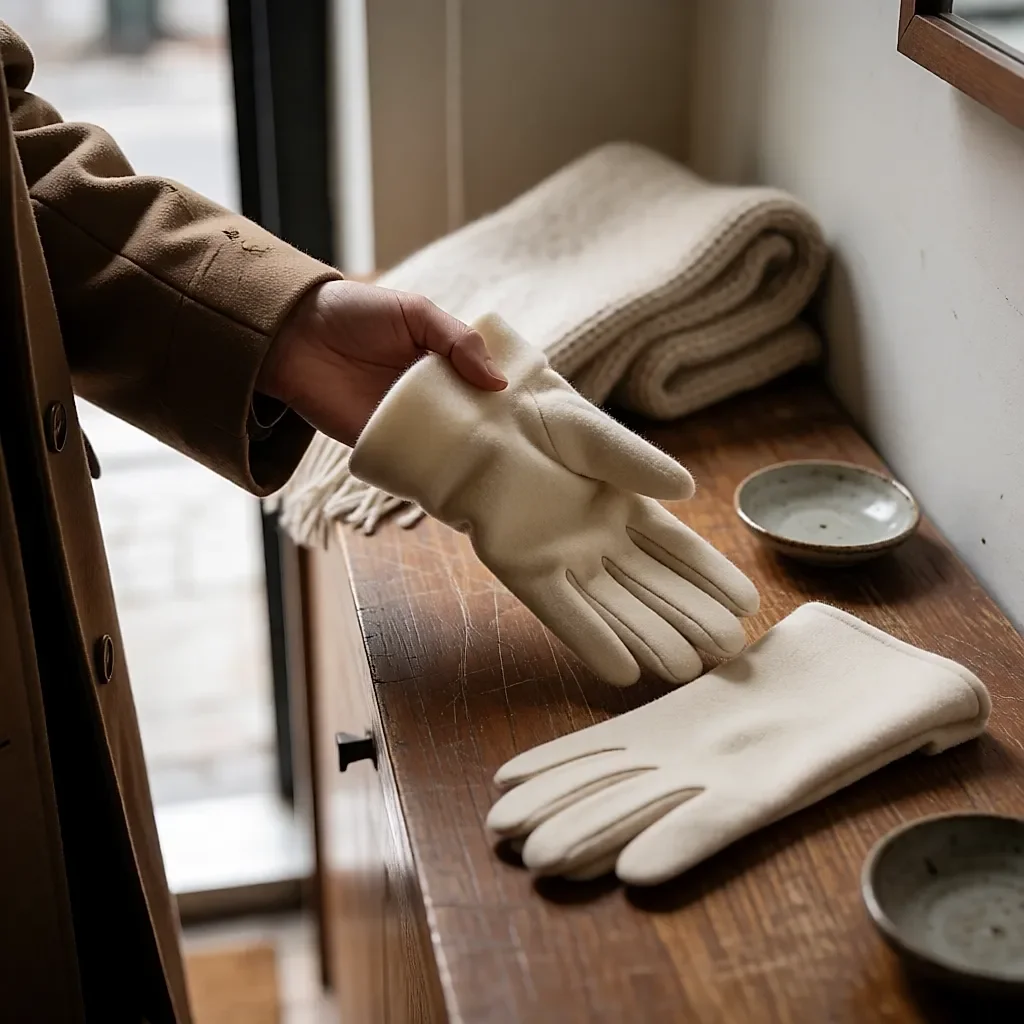
Here's the snag: leather gives with wear. It remembers your hand and eventually moulds to it. Lining does much less of that. A lined glove that is too tight won't loosen up on its own, and a glove that pinches is a glove you stop wearing. Hence the rule of thumb: go up half a size from your usual size in unlined gloves.
One distinction worth making: knitted wool gloves (a single layer that stretches) and wool-lined leather gloves (two layers that don't stretch in the same way) are often lumped together. The half-size advice applies to the second.
Try them on in two stages, open hand then closed fist
In a shop, it's tempting to slide a hand in, decide it feels 'not bad' and head to the till. That is exactly the try-on most likely to go wrong. Start with an open hand: spread your fingers and look at the end of the glove. About half a centimetre of room at the fingertips is a useful guide, no more — any extra and the glove will feel loose. Check the space between thumb and index finger, which shouldn't pull when you open your hand, and the wrist, which shouldn't gape like a shirt cuff.
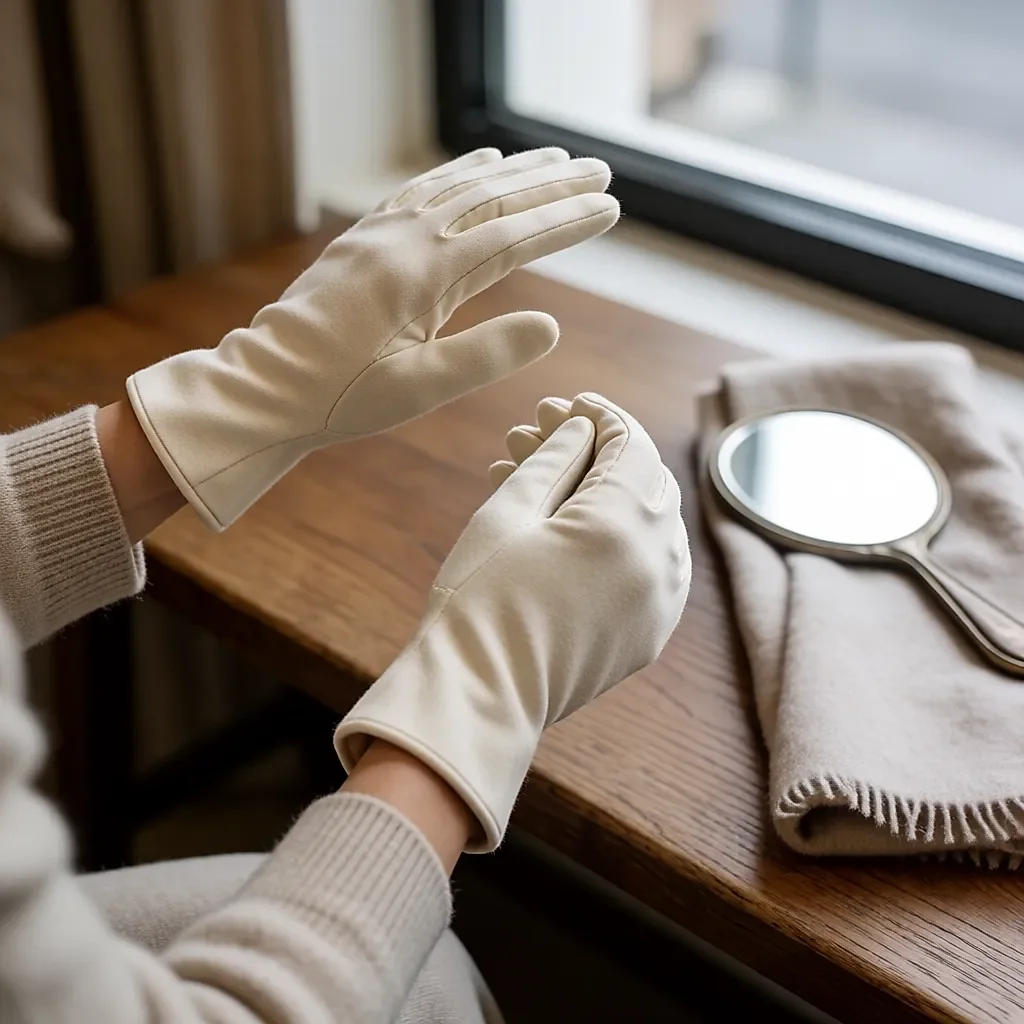
Then close your fist. Squeeze, open, repeat. If the thumb seam pulls or the ends of your fingers press against the tips, ask for the next size up without hesitating. If, on the other hand, the palm is baggy and the wrist loose, go down a size. A lined glove should be close-fitting without being tight — both extremes are uncomfortable. And keep your rings on for the try-on: a ring adds a few millimetres, so you might as well see the effect straight away.
The fist test, in seconds — open hand then closed fist, twice in a row. If you need three attempts to bend your fingers, the size is too small. If the glove twists around your hand when you squeeze, the size is too big.
When you're torn between two sizes, take the larger one: wool compacts over the seasons, it doesn't soften like leather. The opposite is much harder to correct.
Wool versus cashmere, and what it means for sizing
Wool, often merino or recycled, remains an honest lining: a little rustic for the first few weeks, but it adds thickness — that is what justifies the half size. Cashmere is finer and softer, leaving more room for the hand in a glove of the same size — indeed, some cashmere-lined styles can be worn in your usual size without discomfort. Try them rather than assume.
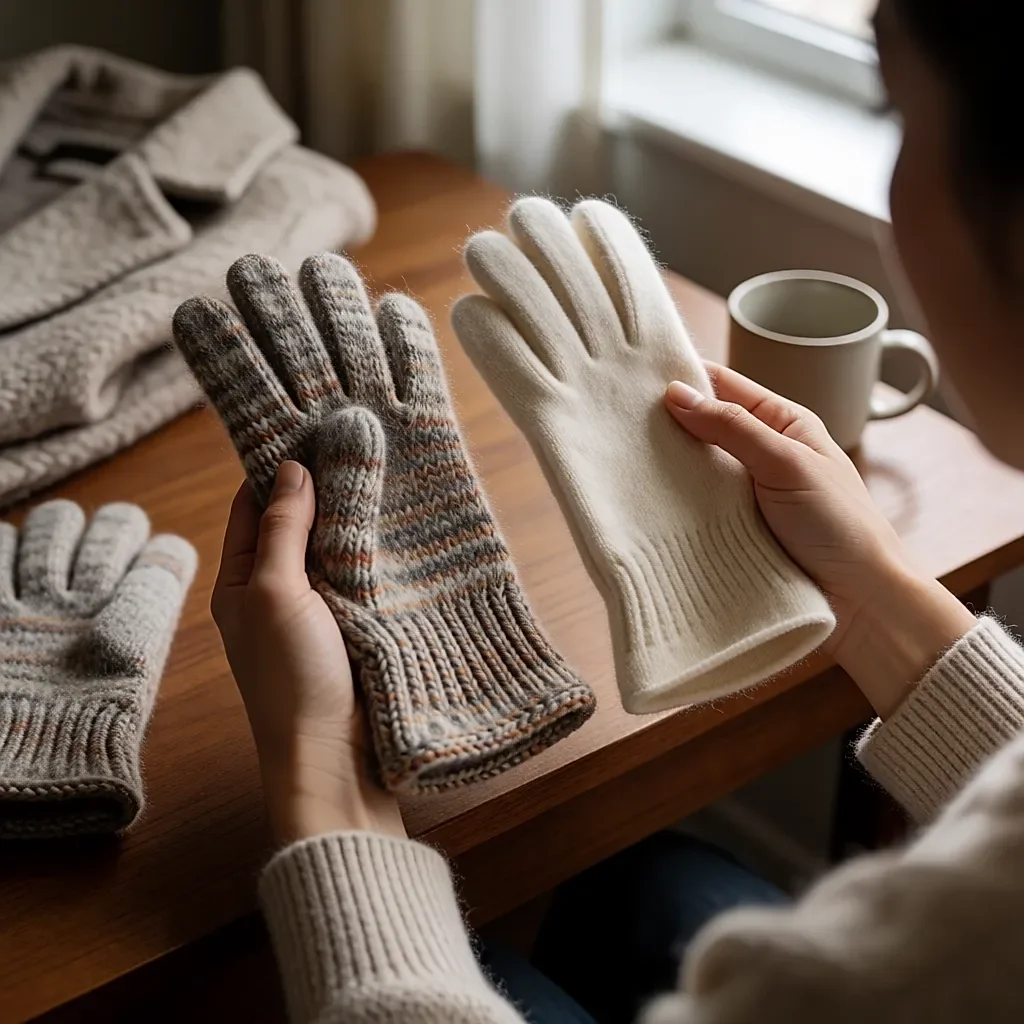
The real difference often lies elsewhere, on the inside label. Look at it before you fall for the colour: the composition and quality of the lining matter; not all synthetic fibres are equal. On the leather side, lambskin and goatskin remain the classics, and French glovemakers in Millau and Saint-Junien often work with vegetable-tanned leathers — a detail you pay for, but one that lasts.
Budget
As a rough guide, expect to pay around £12 to £35 for a pair of knitted wool gloves from a high-street shop or knitwear brand — ideal for changeable weather and rushed commutes. For a pair of wool-lined leather gloves, the usual range is £50 to £120: the price moves with the type of leather, merino lining, tanning and French manufacture. A pair of cashmere-lined leather gloves rises to £120 to £250, and more for artisanal glovemaking.
Where to find them? High-street shops and knitwear brands for knitted gloves; leather goods shops and online glove specialists for lined leather; January sales and second-hand for cashmere. A smart alternative if the budget is tight: a pair of plain leather gloves, one size up, and silk glove liners (around £10 to £20) that do the work of a lining without making the hand bulky.
One simple rule remains, and it matters more than any fibre: a lined glove that fits will be worn for several winters; a lined glove that is too tight will stay in your coat pocket from December to February. Take the time to do the two-stage try-on, even if it means ordering two sizes and sending one back. Your hands will thank you — and so will your fingers.

Comments
Your opinion matters: rate the article, react and reply to comments.
Comments are moderated; AI-assisted comments are flagged. Text emoticons (8-), :-), <3…) are automatically shown as images.