
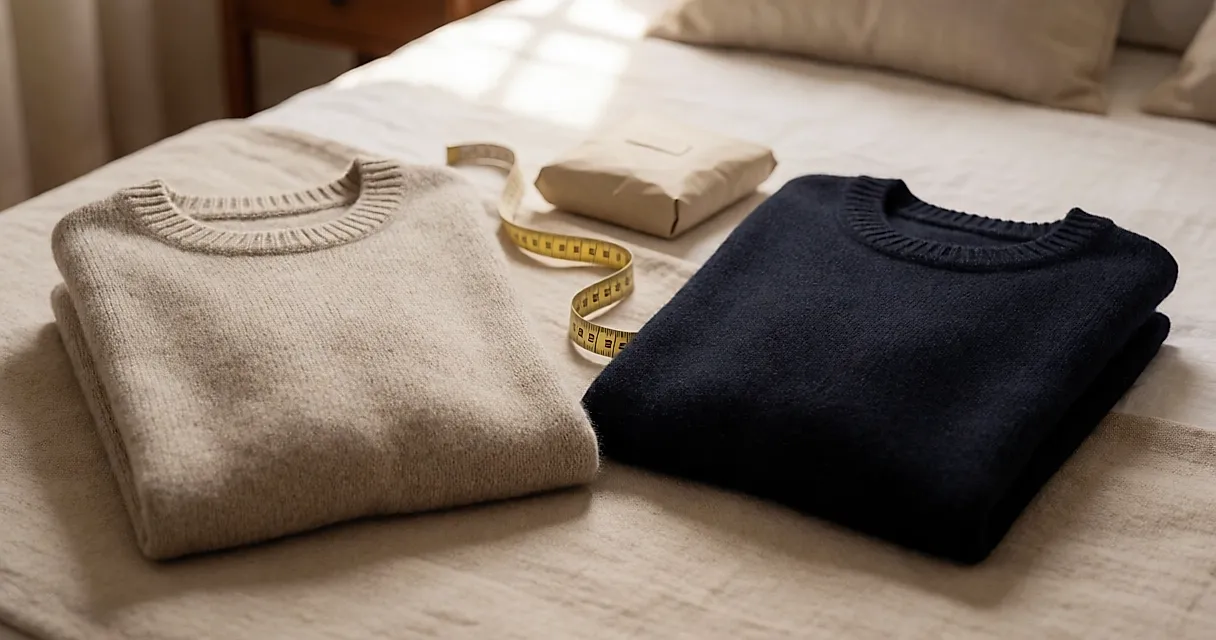
The parcel is open on the bed, the size 10 in wool is still folded in its tissue paper, and you already know it won't do up. Yet the size 10 from another brand, the one you reach for on Monday morning without thinking, fits just right. Same label, same body in the mirror: two garments with nothing in common. Here it isn't the feel of the fabric that dictates the size; it's how the garment has been graded. So where does this big gap come from?
A size 10 is not a unit of measurement
What happens upstream, in the workroom, has a name: grading. You start with a base pattern, often drawn in a size 10 or 12, then grade it up and down, from a 6 to a 20, adding a few millimetres at each step. Nothing forces two brands to set the dial in the same place: one adds a centimetre at the shoulders, another two; one cuts generously for customers who like to move, the other close to the body because that's its signature. A size 10 is a starting point, not a standard. So how can the same size 10 hang loose at one brand and feel tight at another?
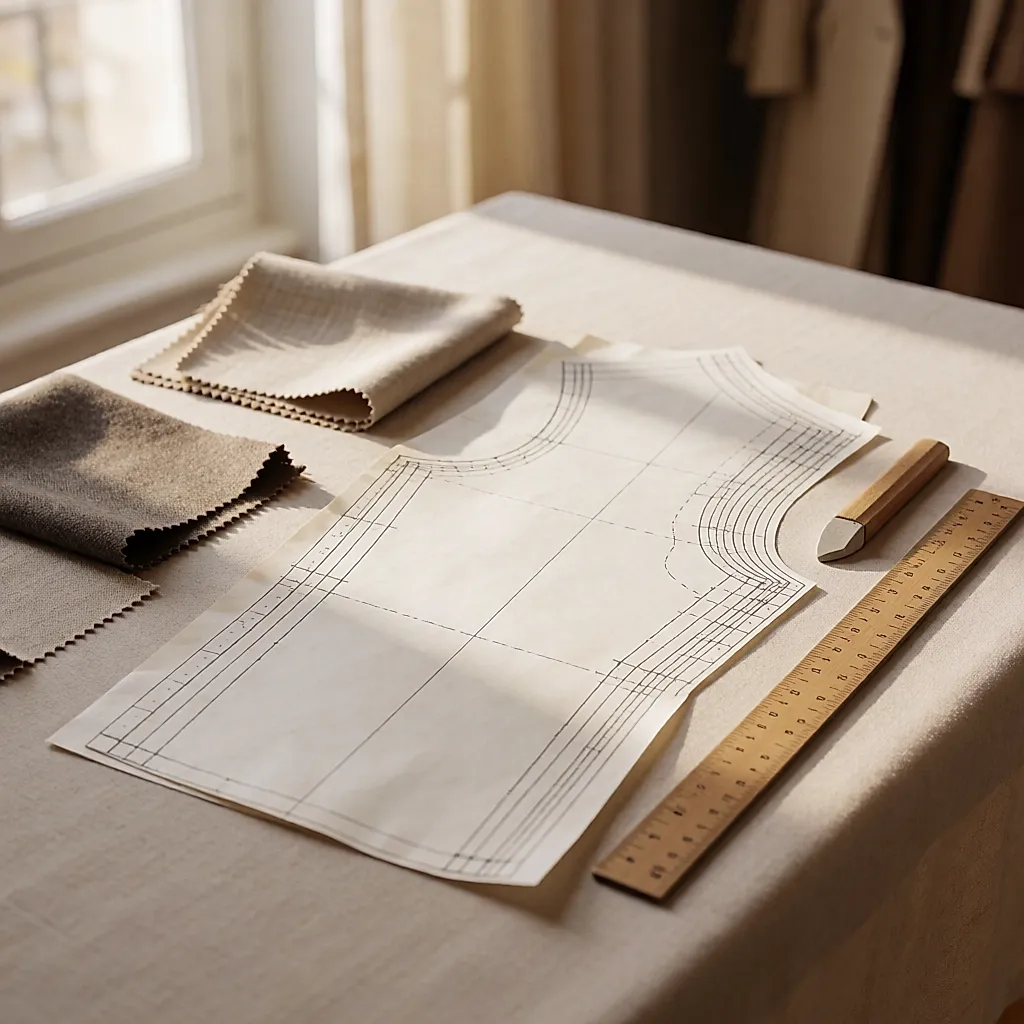
Then the fabric gets involved. Wool that hangs straight, linen that moves: the same cut won't give the same drape or the same comfort at the seams. And a brand can quite easily tweak its size chart from one season to the next without changing the label. A size is a grading marker, not an absolute measurement.
Three measurements and the guesswork falls away
To compare two size charts without a trip to the fitting room, three numbers are enough, all taken flat: shoulders, waist and inside leg. These are the three places where grading shows up fastest and where a mistake is least forgiving. Lay the buttoned garment on a table and measure it flat, without stretching. Shoulders: seam to seam, across the back. Waist: from one edge to the other at the narrowest point, then double it to find the full measurement. Inside leg: from the point where the seams meet between the legs down to the bottom of the trouser.
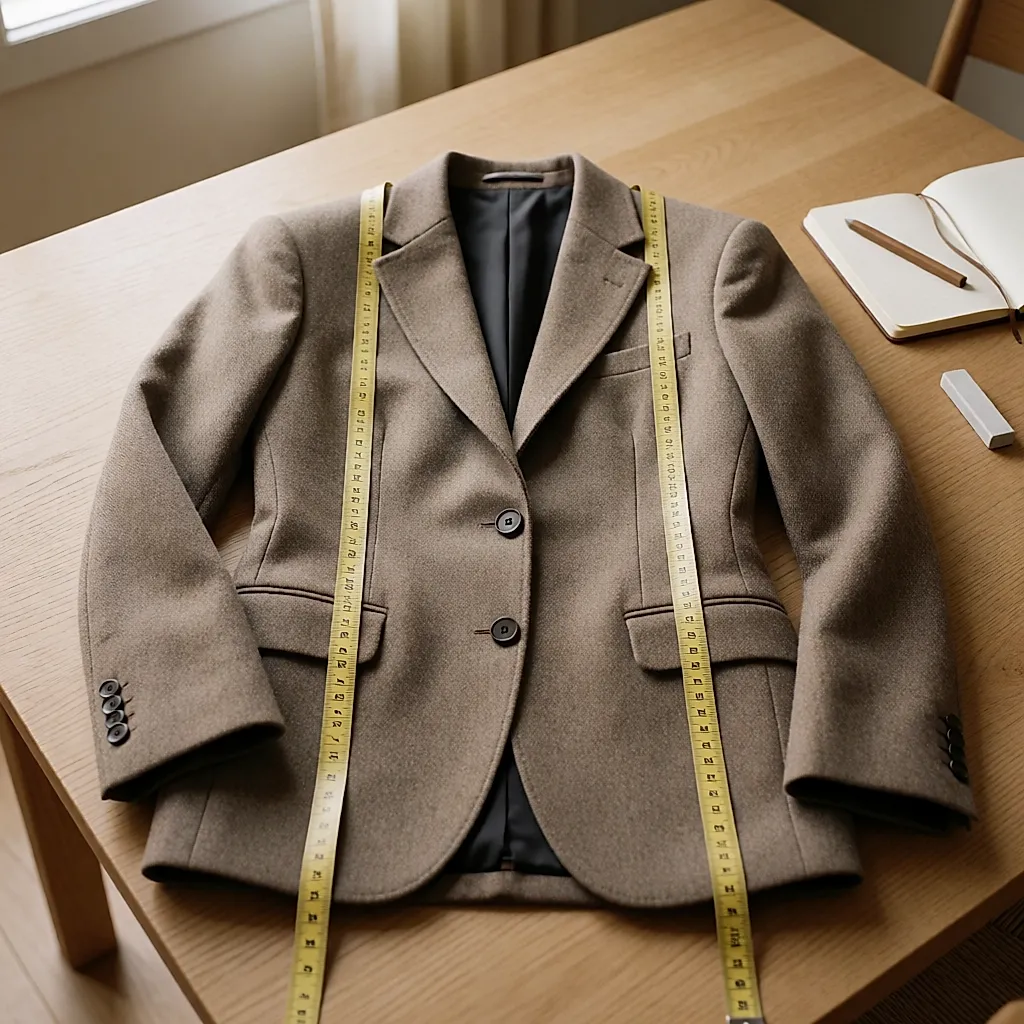
From one size 10 to the next, the difference can run to centimetres at the shoulders or waist. Enough to turn a fitted jacket into a blouse and a comfortable pair of trousers into a morning ordeal. That's exactly where comparing those three flat measurements becomes useful: it makes sense of product pages that publish them.
One caveat: these measurements include ease, meaning the room to move. Don't compare them with your bust measurement; you'd be looking for a precision that doesn't exist.
Between two sizes, which measurement matters most?
Grading assumes a body that grows in harmony, with shoulders, waist and hips moving at the same pace. Real life has other ideas, which is where choosing the measurement that matters becomes strategic.
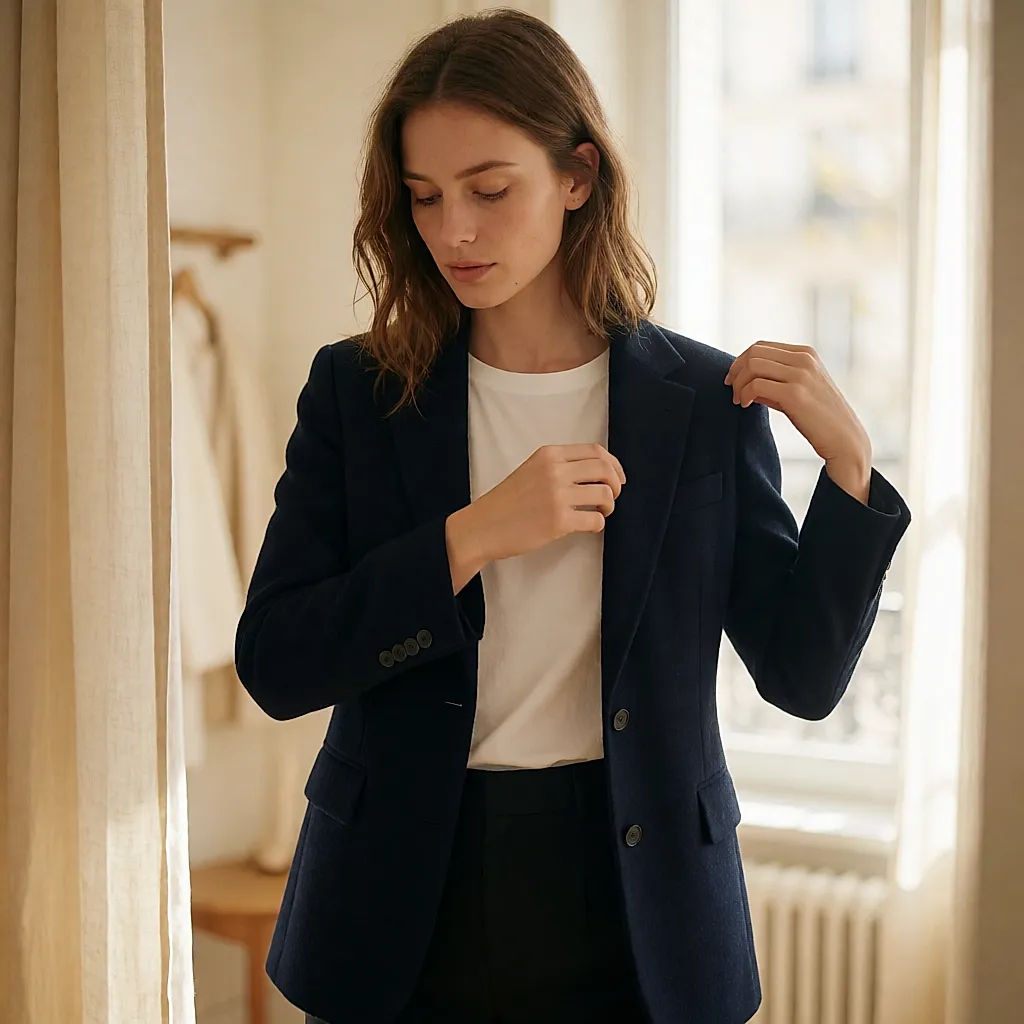
For a jacket, the shoulders call the shots: a shoulder is hard to alter and expensive to fix. For trousers, the waist and hips, with the hem being the simplest alteration. For a dress, the waist and the position of the darts; the rest can be taken in by an alterations tailor, often for less than the cost of a return that doesn't work out.
What it means when you're filling your basket
Before you hit buy, open the product details: flat measurements, fabric, cut. If a size 10 comes up two centimetres narrower at the shoulders than a garment in the same cut you've already measured flat, you now know it will have to be worn open. That doesn't do away with returns, but it can save you ordering two sizes and opening the parcel the night before a trip, a scenario most of us would happily skip.
And that habit is good for your wardrobe: fewer pieces going back, more clothes actually worn. In fashion, buying less often starts with reading a product page all the way down to the flat measurements.
Next time you're torn between two sizes, look at the brand's grading and the three flat measurements on the product page. Compare them with a garment in the same cut that you know well, and go for the one that lets you breathe on the Tube on Monday morning. It isn't an exact science, but it stops you starting from scratch every time you try something on.
Budget
A flexible tape measure costs a few pounds from a haberdashery, supermarket or online, and it will last you years. For alterations, prices vary widely from one tailor to another: as a rough guide, expect around £10 to £25 for a simple hem, and £30 to £60 for more technical work at the shoulders, depending on the city and the difficulty of the piece. Always ask for a quote before handing the garment over.
The most honest calculation is still cost per wear: not the ticket price, but how often you actually reach for it.

Comments
Your opinion matters: rate the article, react and reply to comments.
Comments are moderated; AI-assisted comments are flagged. Text emoticons (8-), :-), <3…) are automatically shown as images.