
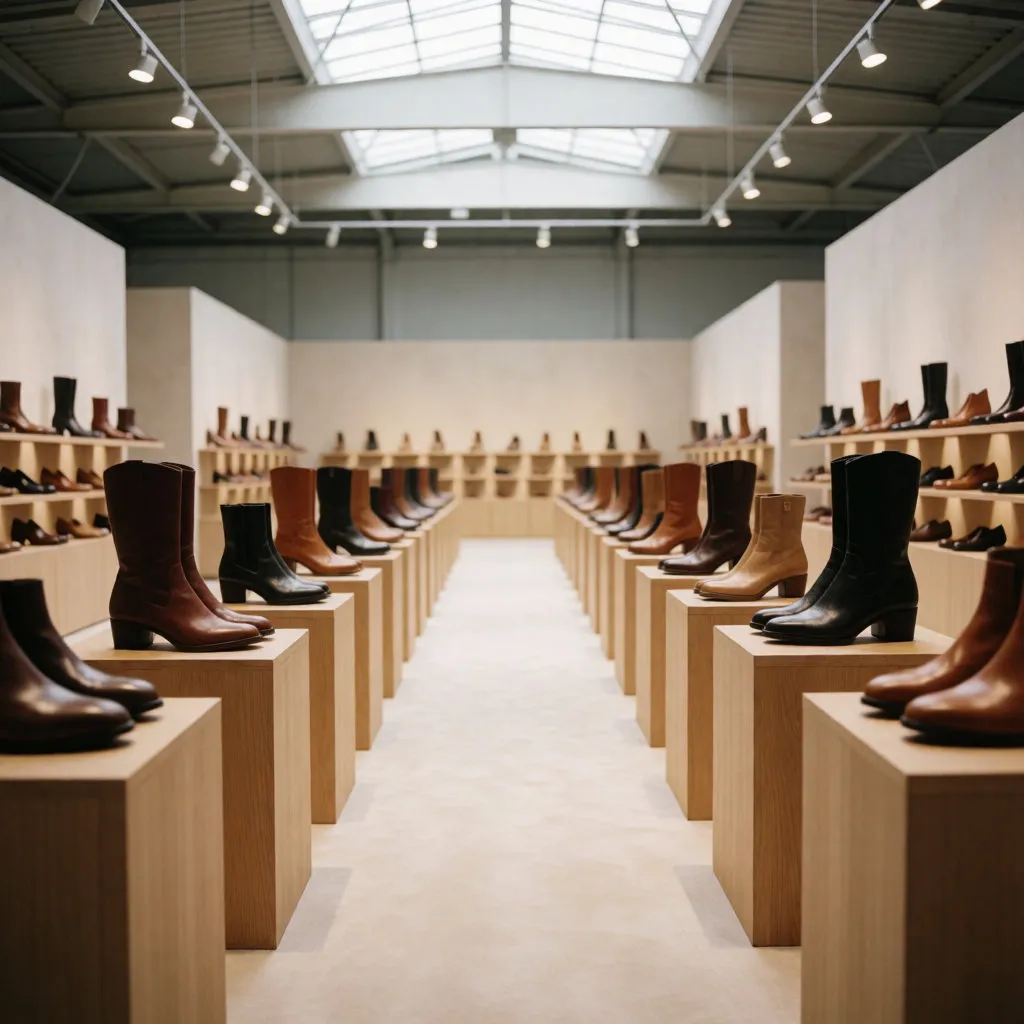
A trade fair, not a shop
Run by Assocalzaturifici, the Italian footwear manufacturers' association, MICAM has been going since the late 1960s and remains one of the industry's key fixtures. You come here to place orders, not to leave with a pair: the stands host buyers, distributors and accredited journalists.
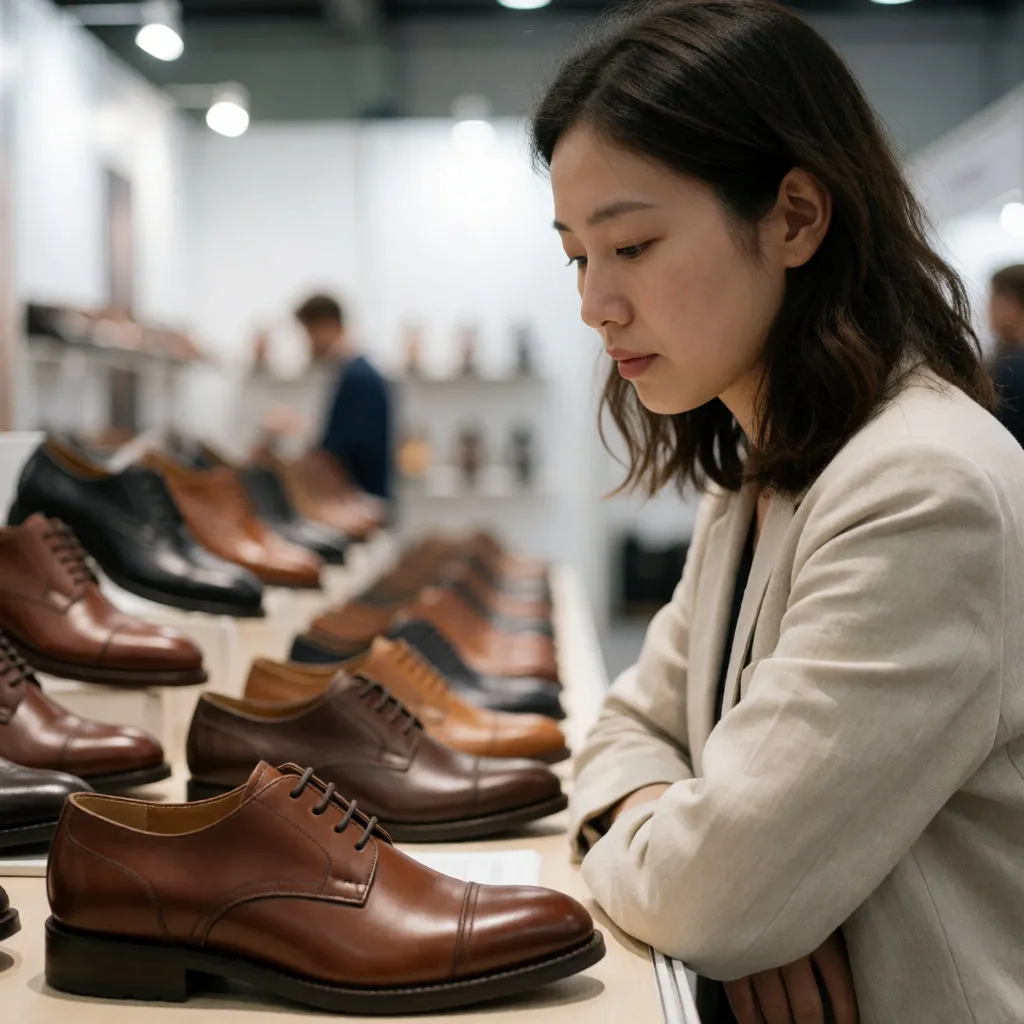
The format barely changes: three days, around ten halls, almost a thousand brands on show. Italy supplies the bulk of the collections, alongside Spanish, Portuguese, Turkish, Brazilian and Asian pavilions. In recent seasons the organisers have reported around 40,000 visitors per edition, nearly half of them from overseas.
The September edition runs at the same time as Mipel (leather goods), Lineapelle (leathers and materials) and Milano Fashion & Jewels. That overlap turns Milan's week into a concentrated version of the whole chain, from tanning to shop window — enough to watch an entire industry in three days.
Trends: comfort takes shape
Two clear directions emerge from the aisles.
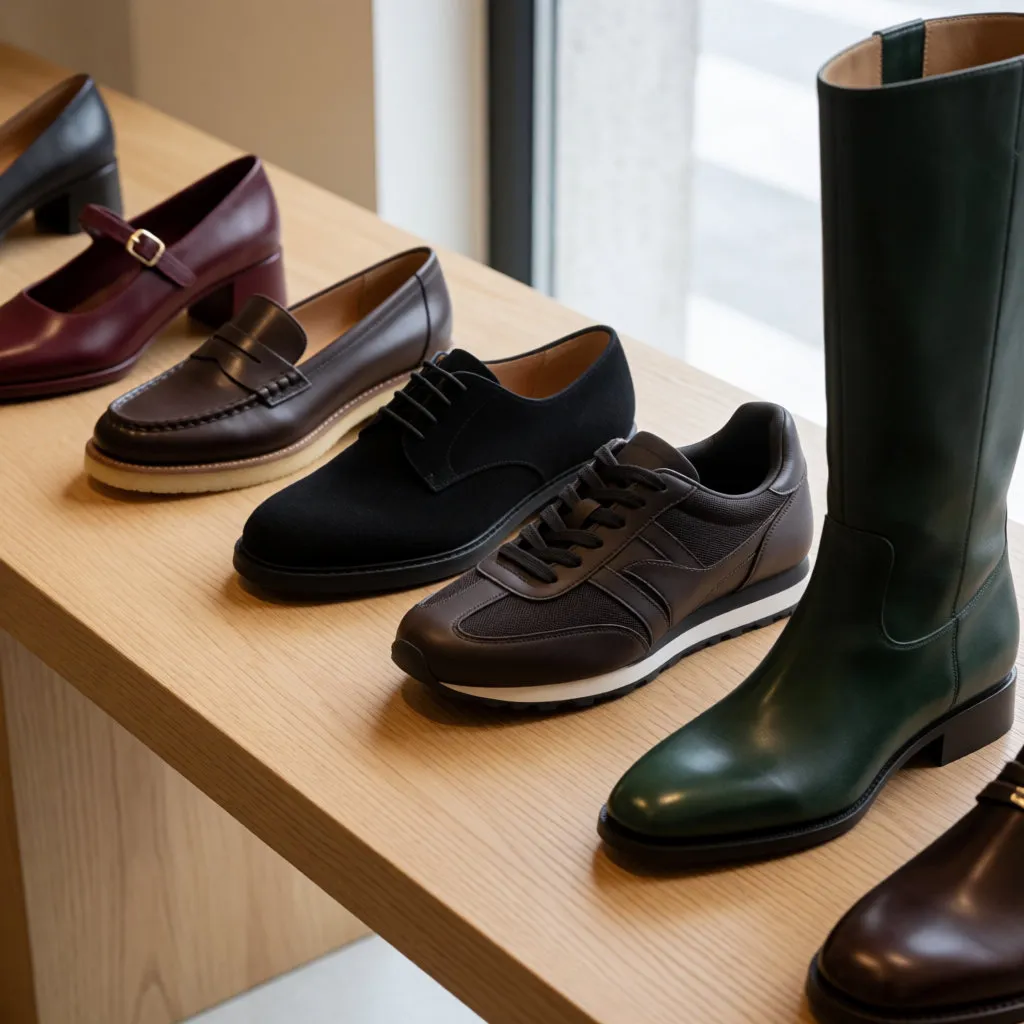
- Dressed-up styles that are genuinely wearable are back: crepe-soled loafers, Mary Janes, soft derbies, ballet flats redrawn with a more generous sole. The line stays clean, but the drape and comfort make all the difference.
- The trainer continues its evolution: fewer chunky silhouettes, more low profiles inspired by 1970s running shoes, mixed leather-mesh uppers and understated soles. The staple that works with any head-to-toe look!
On colour, the palettes tighten around deep browns, burgundies and dark greens, punctuated with metallic tones. The minimalist direction — thin sole, few seams, bare leathers — is gaining ground among niche brands, driven by an appetite for "less but better". As for barefoot, long the showcase for innovation, it now sparks a genuine technical debate about foot support.
Sustainability: proof, not promises
The language has changed. Where stands once displayed intentions, they now present data: origin of hides, recycled content rate, repairability index, component lists. The European ecodesign regulation (ESPR) lists textiles and footwear among its priorities and is preparing a digital product passport, which will eventually have to accompany items sold in the EU.
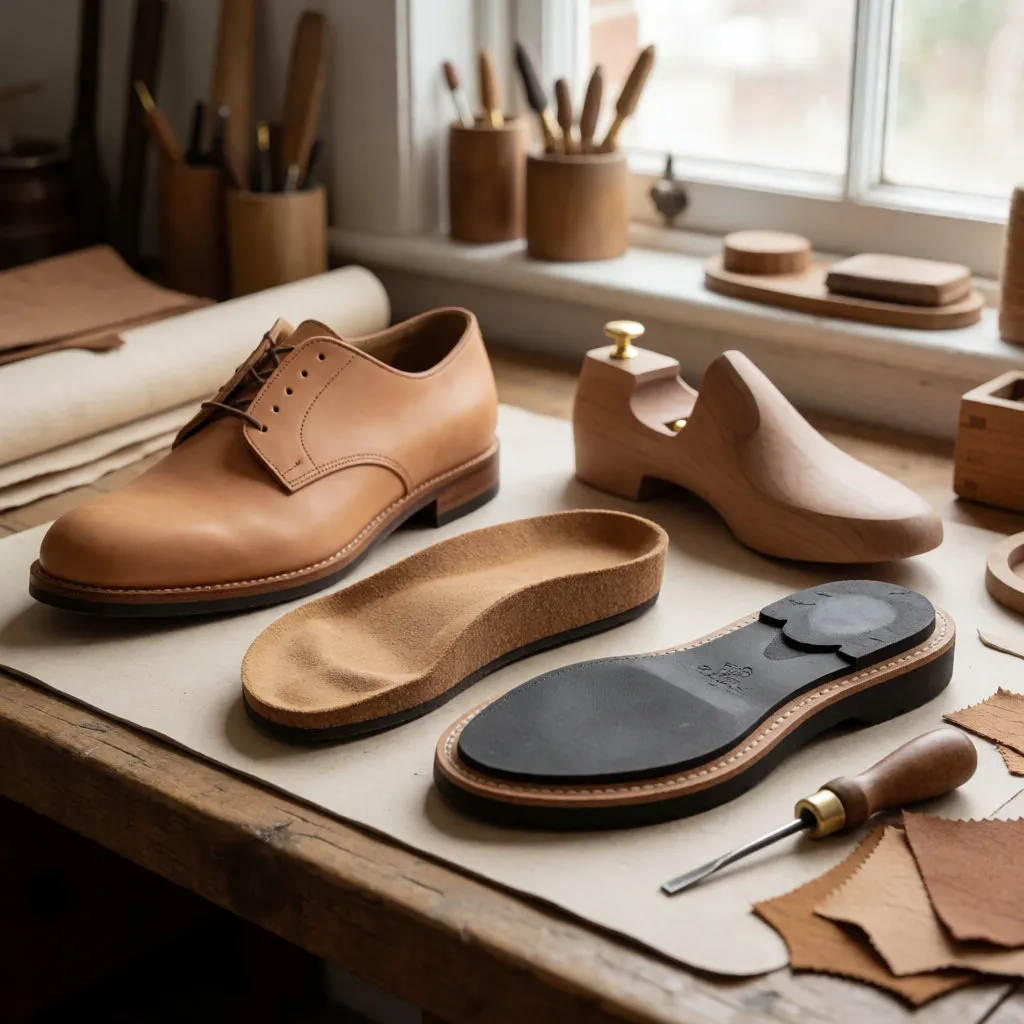
In this context, Italian manufacturers highlight their districts — Riviera del Brenta, Vigevano, Marche — and the traceability of their supply chains. The MICAM X space also hosts talks and start-ups around alternative materials, recycling and additive manufacturing.
The habit that makes all the difference — A good pair needs looking after. Cedar shoe trees to hold their shape, a nourishing cream every fortnight on leathers, and a trip to the cobbler the moment a sole wears down: you'll easily extend the life of your purchase.
The Italian industry under pressure
Italy remains Europe's leading exporter of footwear by value, carried by the premium end and leather. The current stretch, though, is a demanding one: slowing demand in Germany and China, rising energy and raw material costs, and competition from fast-fashion platforms. The fair also plays its part as a social barometer, between training young people, the passing on of family workshops and a shortage of skilled labour.
What you'll pay
Footwear is one of those purchases where the price gap climbs fastest. As a rough guide, expect somewhere in the region of £45 to £110 for a city shoe in leather or mixed materials — a ballet flat, derby or loafer — and £175 and up for a full-grain, stitched leather made in Italy or Portugal. Prices vary with the city (the big cities stay pricier), the material, the range and the level of finishing; upkeep adds its own cost too, between polish and shoe trees. You'll find them in department stores, at specialist shops or online — the fair itself remains trade only.
What to watch
For buyers, the signal of the season comes down to a single sentence: the shoe has to be desirable and defensible. Defensible through how it's made, its material and its lifespan; desirable through its line, its colour and its immediate comfort. Brands that can hold both ends without weighing down the silhouette have a head start for spring/summer 2027. The February edition, in Rho, will reveal which of them keep the promise for autumn/winter.
Sources
- MICAM official website: overview of the fair, the schedule for the February and September editions and practical information for trade visitors.
- Assocalzaturifici, the Italian footwear manufacturers' association: data on the Italian sector (exports, districts, employment) and the fair's visitor figures.
- Regulation (EU) 2024/1781 on ecodesign: regulation of the European Parliament and of the Council of 13 June 2024 establishing a framework for setting ecodesign requirements — the legal basis for the ESPR and the digital product passport.


Comments
Your opinion matters: rate the article, react and reply to comments.
Comments are moderated; AI-assisted comments are flagged. Text emoticons (8-), :-), <3…) are automatically shown as images.