

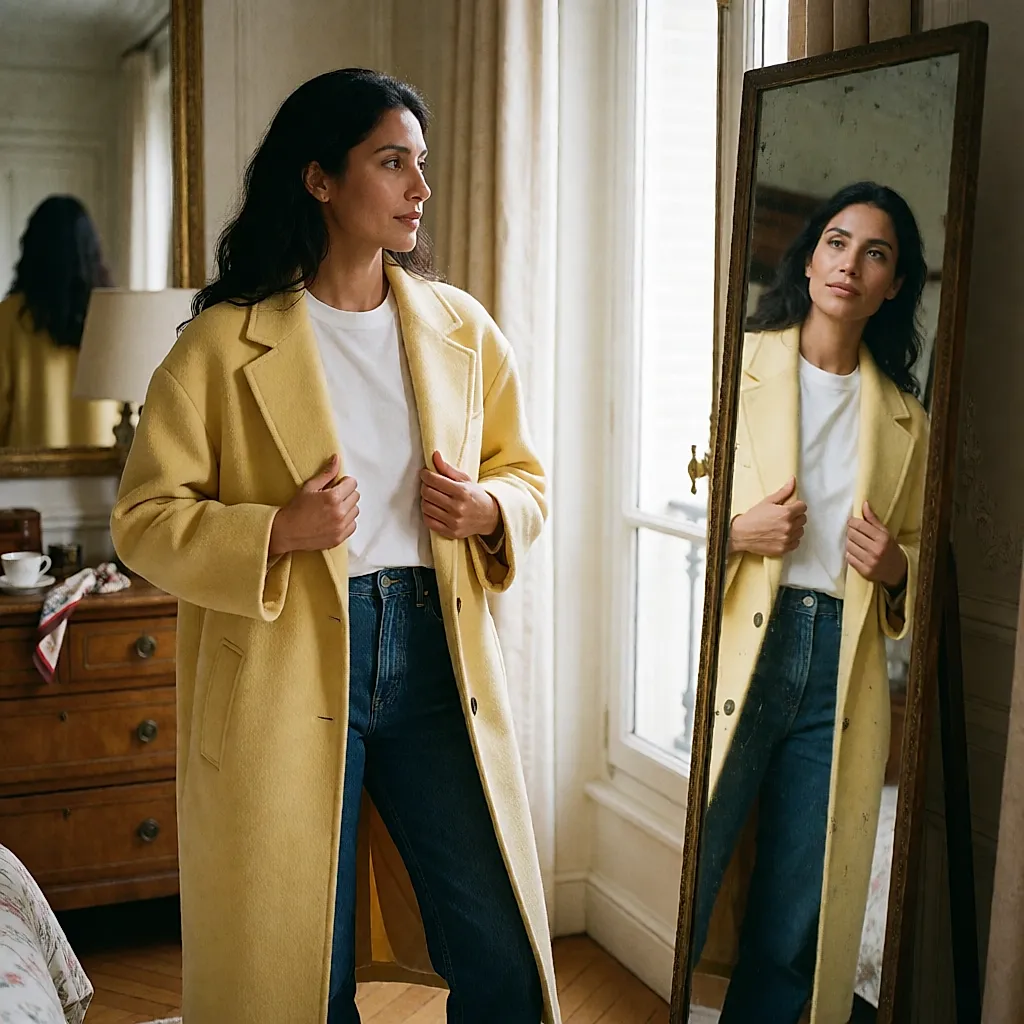
Three butter-yellow coats in ten minutes of scrolling. Then two on the street the same day, two postcodes apart. And three months later the colour turns up on the catwalk, presented as a designer's lightning-bolt intuition. So who copied whom, exactly?
Long before the catwalk, the groundwork is done
In the trade, a trend isn't born at the show. It's prepared well in advance, inside trend-forecasting agencies — Peclers Paris, NellyRodi, WGSN. The calendar? In practice, often long before the piece reaches a shop floor. In other words, when you're dithering over a jumper in the grey light of a Monday lunchtime, the decision was made well before you got there.

Who works with those agencies? Brands, obviously, but also spinners, tanneries, button makers — the whole chain that has to dye, weave and deliver on time. Your favourite shop doesn't swallow the lot: it takes two shades, one fabric, one cut. A trend isn't a marching order, it's a menu, and everyone picks according to appetite.
Then the machine starts watching the pictures
The second layer arrives later, and it happens to be French. Heuritech, in Paris, has built an image-analysis tool that watches what gets shown online. The machine answers in numbers where a forecasting agency used to answer in hunches.

One distinction here matters more than any other: the algorithm measures what gets shown, not what gets bought. A heavily photographed colour can be a disappointment at the till; a basic nobody ever posts can rescue a brand's year. And because the image stream is itself fed by previous trends, the tool is partly watching its own offspring. A mirror that thinks it's a window, in short.
The catwalk doesn't decide — it confirms
So what is the show actually for? Staging. A forecast announces "petrol blue"; a catwalk announces "petrol blue on a coat with rounded shoulders, worn with opaque tights and flat shoes". That's where styling happens — the layering, the fall of a sleeve, the accessory that shifts the whole silhouette — and it's that staging which makes you want to wear the shade, not the shade on its own.
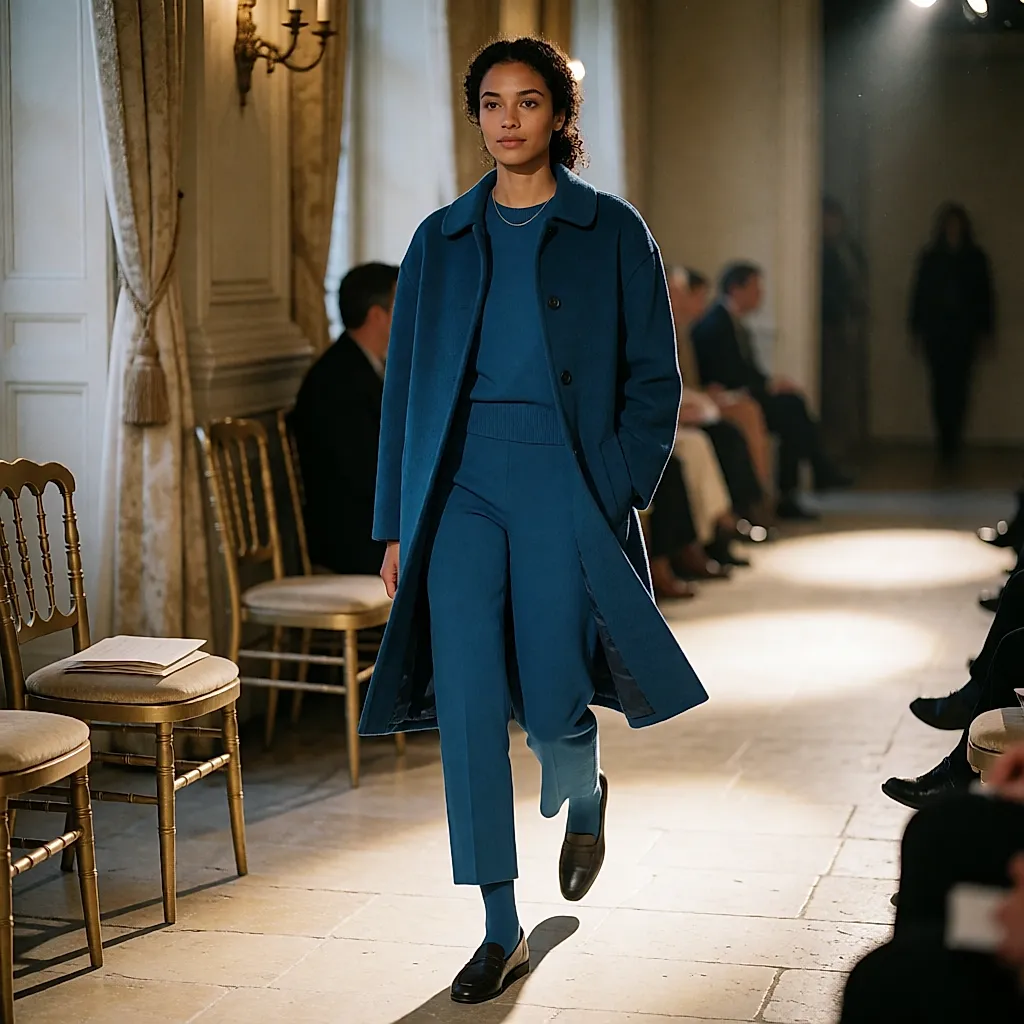
You still have to look in the right place. A catwalk isn't a catalogue: some pieces exist for the image and will never be produced as shown. The useful lesson is in fabric and construction. Notice how a wool jacket sits on the shoulder, how a trench works worn open over a single-colour outfit, how a straight skirt holds thanks to a well-placed belt. That's what you can take home — colour being the easiest part to adapt.
And what about your own wardrobe?
Forecasting has a side effect: it makes a trend feel inevitable before anyone has asked whether it suits us. Do you like the butter coat? Good. But if that's mostly because you've come across it forty times in three weeks, a fair bit of advice suggests waiting a few weeks — most micro-trends don't survive the gap, and your bank balance will thank you.
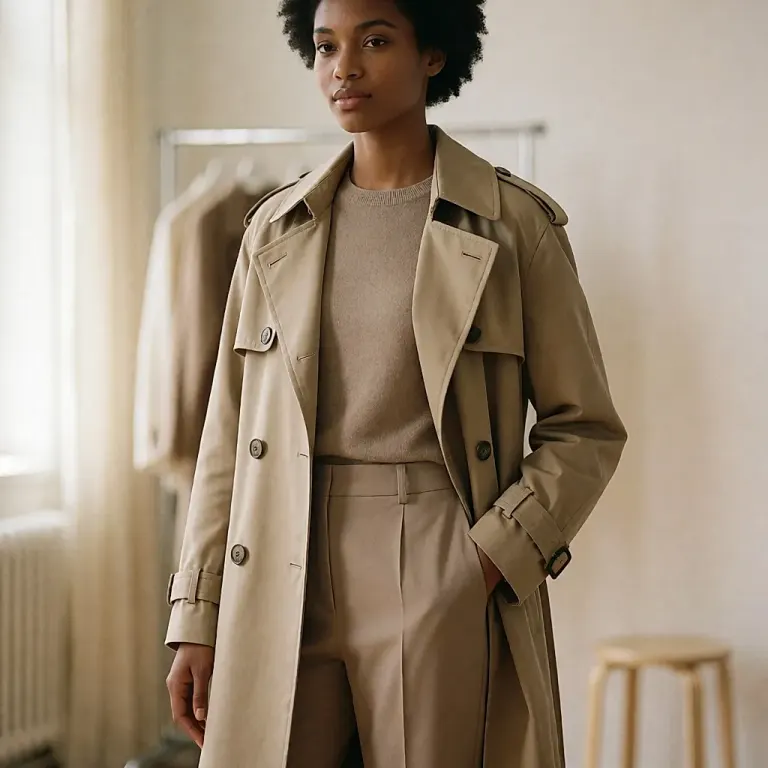
The other option is the wardrobe that isn't in the race: a cotton trench, a wool coat, straight-leg jeans. Those are never behind, because they aren't running. As for price, treat these as rough guides rather than gospel: somewhere in the region of £130 to £300 for a new wool coat, depending on composition and finish, and £50 to £130 for a decent second-hand one — it varies with the retailer and the season. The smart move is to read the label (the real wool content) and check the armhole seams and the lining before you commit.
Three questions before buying a "trend" piece
- Would I wear it if nobody had seen it this season? If the answer is hesitant, wait.
- How many things already in my wardrobe will it work with? Fewer than three, and it's a gamble.
- Will the fabric last two winters? Wool blended with too many synthetic fibres soon loses its drape — check the composition before the price.
So a trend now gets announced twice: once in graphs, once in music. Between the two there's a space, and it's yours — the space to decide what makes it through your wardrobe door. And if the algorithm spots it before you do, that's not a problem: you keep the right to love a piece it never saw coming, and that's often where the best wardrobe stories begin.

Comments
Your opinion matters: rate the article, react and reply to comments.
Comments are moderated; AI-assisted comments are flagged. Text emoticons (8-), :-), <3…) are automatically shown as images.