
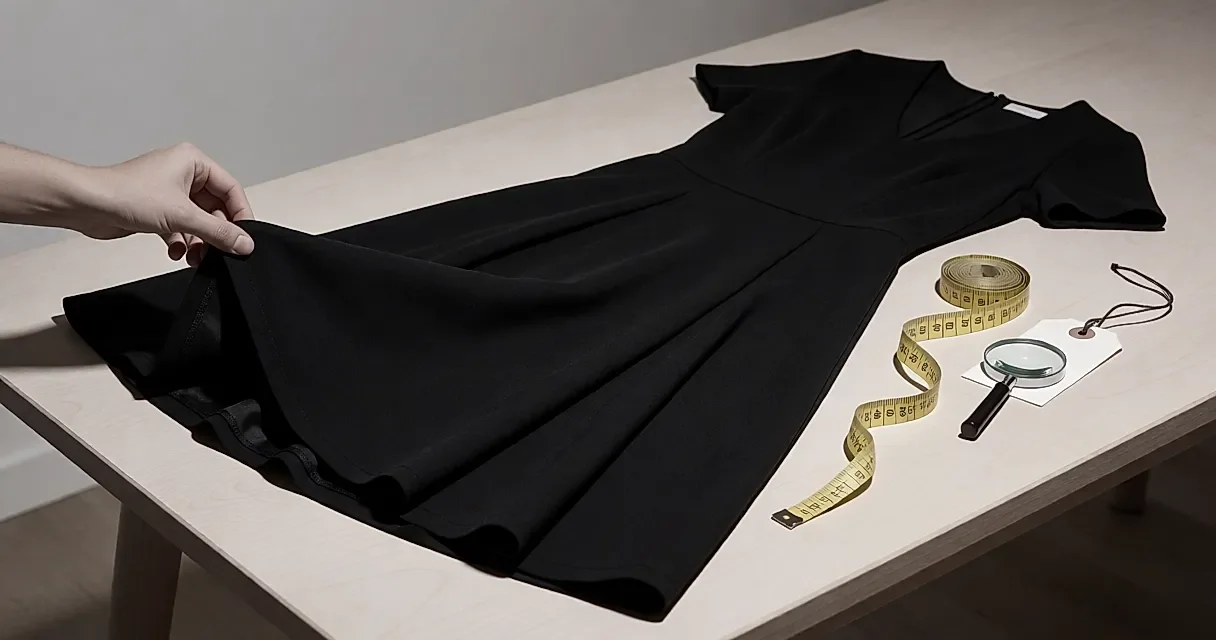
The changing-room lighting is always unflattering and the verdict always rushed: the black dress that looked so right on the hanger starts to float at the shoulders like a badly pinned sheet. It isn't you. It's the drape. And that is exactly where the difference lies between a dress that works for you and a dress that is merely black.
Black isn't an easy colour, it's just a quiet one
We've been sold the black dress as the universal fallback: an unplanned dinner, a Monday morning with nothing to wear, a hen do where you don't know a soul. Except black is no more forgiving than denim. It gives you no warning, it underlines. A fold in the wrong place, a seam that pulls, a lining that creeps up: on black, everything becomes a drawn line.
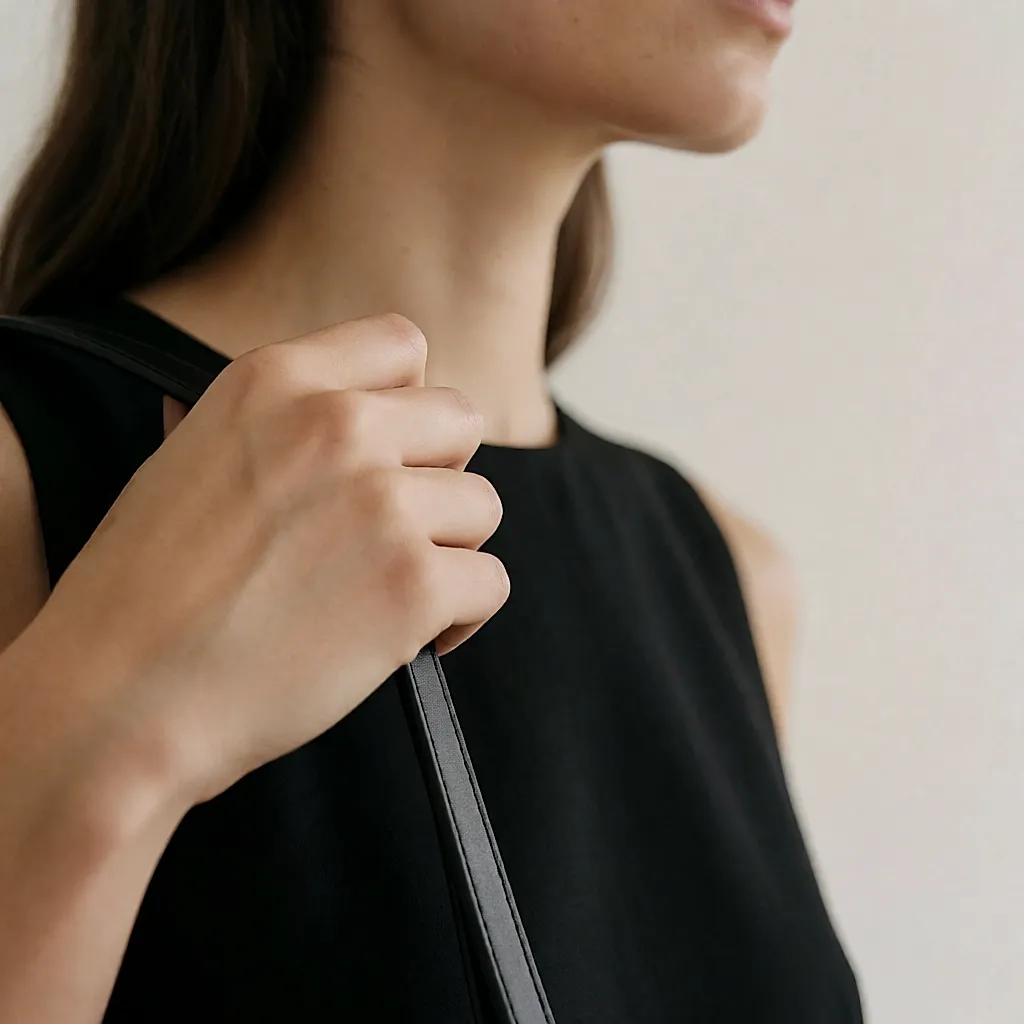
It's also what makes it such an interesting piece. A dark dress forces you to look properly at what you'd been buying on the sly: the way the neckline holds, the way the armhole sits, the way the hem falls back after an hour sitting down. And, let's be honest, it's how a £55 dress can look better than a badly made £250 one — the reverse being just as true.
Drape, or why two black dresses don't carry the same weight
It all comes down to what the trade calls the fabric's hand: its softness, its weight, the way it reacts when you let it drop. A slightly dense wool crepe falls straight, smooths over the body and keeps its shape from one wear to the next. A heavy silk skims the body without clinging. A very fine jersey, on the other hand, clings and marks — not a fault in itself, but you need to want that.
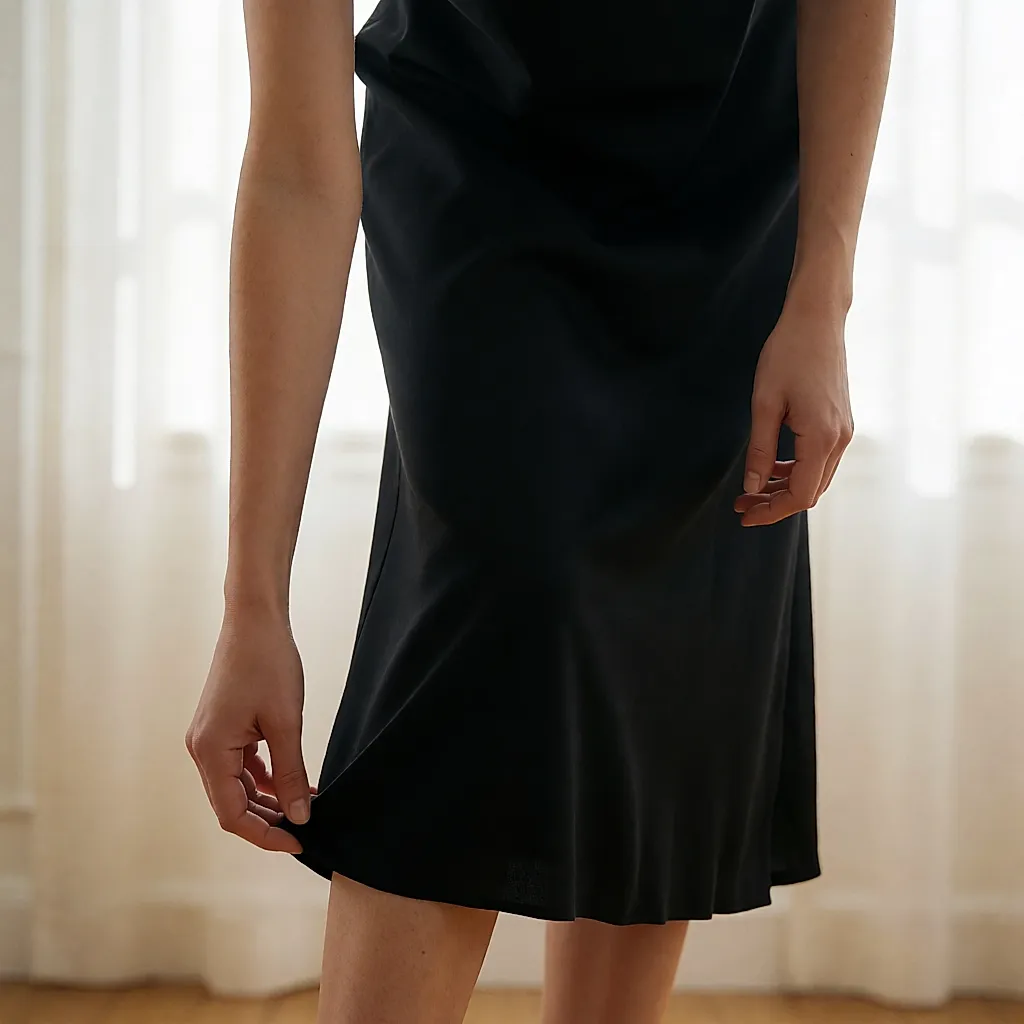
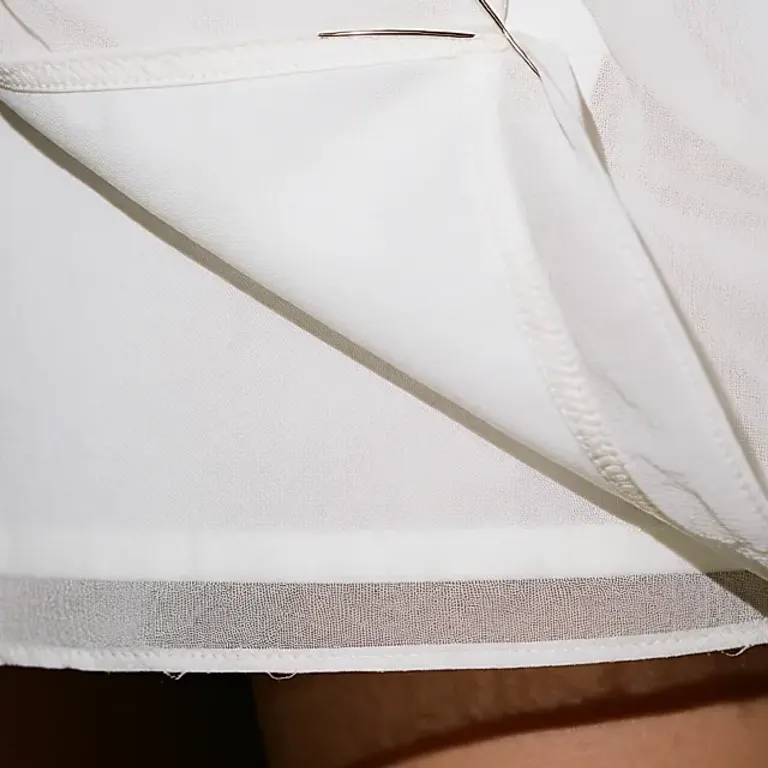
In a shop, the simplest test fits in one hand: take the hem, scrunch the fabric gently, let go. If it holds a hard crease, it will crease quickly on you. If it falls back softly, there's a fair chance it will age well. Look at the lining on structured styles too: a viscose or cupro lining that slips stops the dress riding up as you walk, and that invisible detail is often what separates comfort from a small daily ordeal.
Darts and alterations: the lines that make the cut
A word on darts and princess seams, the vertical lines that shape the waist without a belt. Well placed, they do all the work; badly placed, they carve where nothing should be carved — and on black, they don't hide. If a dress is perfect everywhere but the shoulders, a £15–£40 alteration at a local seamstress is often a better buy than yet another dress.
Budget: what you're actually paying for
Expect to pay roughly £35–£70 on the high street or at fast-fashion chains, where the fabric is often lighter and the lining missing — check with your fingers before you commit. Somewhere between £100 and £220, mid-range labels offer crepes and wool blends that hang better and wear more cleanly; this is often where construction and price line up best.
Above £250, you're paying for the cut, the finishing and sometimes the name. In charity shops, at vintage fairs or on resale apps, a well-cut black dress turns up for £15–£50, provided you inspect the seams and the wear under the arms. Whatever the budget, compare like with like: a black dress should be chosen as a statement piece, not as a consolation prize.
The truth is that you only need one or two genuinely well-made black dresses. Wear them, brush them down, air them between outings, wash them as little as you can — and keep the one you already own if it still fits. The rest is wardrobe literature.
Comments
Your opinion matters: rate the article, react and reply to comments.
Comments are moderated; AI-assisted comments are flagged. Text emoticons (8-), :-), <3…) are automatically shown as images.