
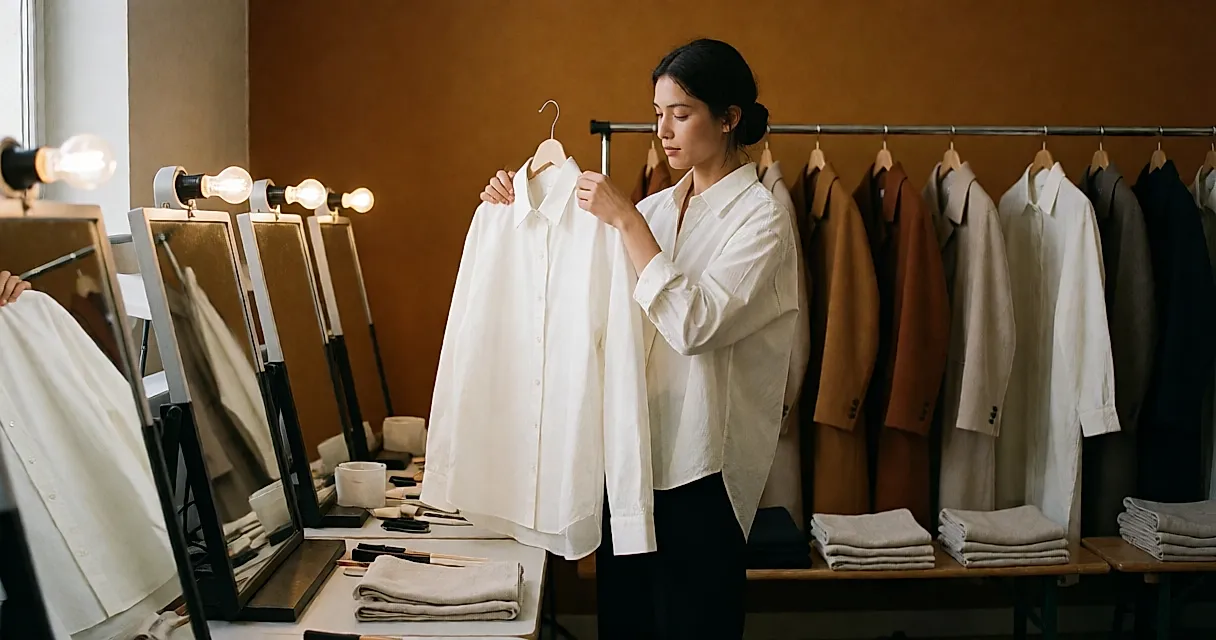
Two white shirts, barely £10 apart in price, with the same ‘100% cotton’ label on the collar. One will see you through three winters; the other will give up after the third wash—and luck has nothing to do with it. The name of the cotton tells part of the story; the trick is knowing which part, and above all what it leaves out.
What ‘100% cotton’ does and doesn’t tell you
Those three words say one thing only: the proportion of cotton fibre in the cloth. A 100% cotton shirt can be loosely woven, cut off-grain, rough to the touch or sewn in a hurry—it will still be 100% cotton, and perfectly within its rights. It is the wardrobe equivalent of a ‘pure butter’ label: it guarantees the raw ingredient, not the bakery.
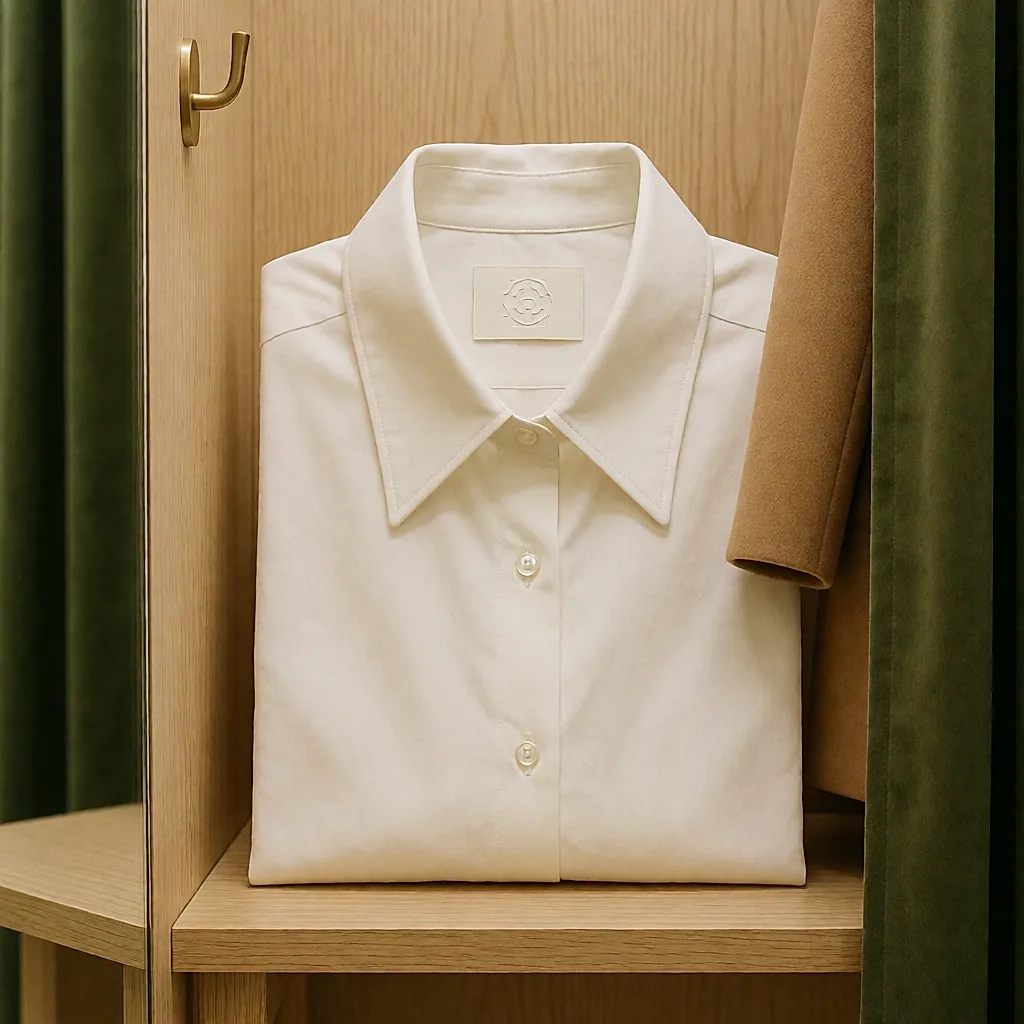
On a winter piece, read the label all the way down: a padded jacket advertised as cotton often hides a lining and filling of another kind. Check the percentage of synthetic fibres before you reach for your card—that is not a dealbreaker; it is simply information the word ‘cotton’ alone doesn’t give you.
What a cotton name actually commits to
A serious cotton name refers to three very different things. Fibre length first: extra-long-staple cottons—Pima, Giza, Supima—are known for making a finer yarn and a smoother, cleaner fabric that is less prone to pilling. Supply chain next: a GOTS-certified cotton meets a standard that covers the proportion of organic fibres and processing criteria across the whole chain; the ‘GOTS organic’ label corresponds to a high proportion of organic fibres, and the standard also includes a claim for more modest proportions. The Fairtrade mark relates to a fair-trade approach; GRS is a certification standard linked to recycled materials.
And then there are the names that look like labels but are not. Better Cotton is a supply-chain programme; it is best not confused with organic certification. As for the famous ‘thread count’, it mostly sells bedding: it is not a reliable indicator of quality, and a tight weave does not make up for a short fibre. So which of these names means most to you?
What no name will ever tell you
The weave, for a start. Poplin, oxford, twill, corduroy: the same cotton can produce radically different jackets and shirts to wear. Poplin is smooth and crisp, oxford more textured and casual, twill denser and matte. And fabric weight—grams per square metre—almost never appears on the label, even though it plays a large part in drape and structure. Curious, isn’t it?
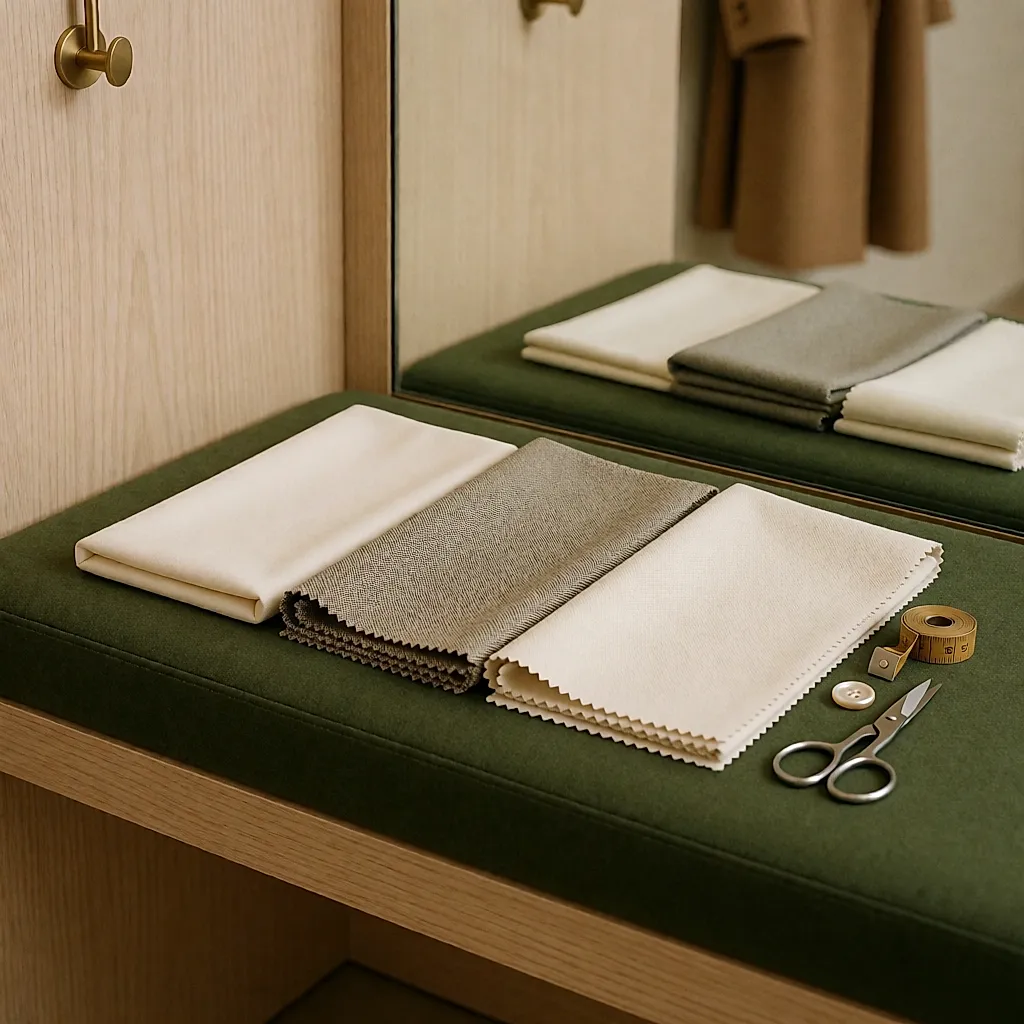
Then the cut, where real comfort is decided: a shoulder in the right place, a sleeve at the right length, enough room to layer a jumper underneath without looking like a tied roast. Then the finishes, seams and buttonholes included. Still missing is the big one: how it washes. Cotton that has not been pre-treated can shrink on its first machine wash, and no supply-chain name will warn you.
The buying decision, piece by piece
For a winter shirt, look for a dense cloth, a collar that holds its shape and enough room for a fine wool layer underneath. Cotton alone does not keep you warm: layers do the work. If the budget stretches, long-staple fibre really does make a difference over time with wear—less pilling, a collar that keeps its shape and a drape that stays crisp.
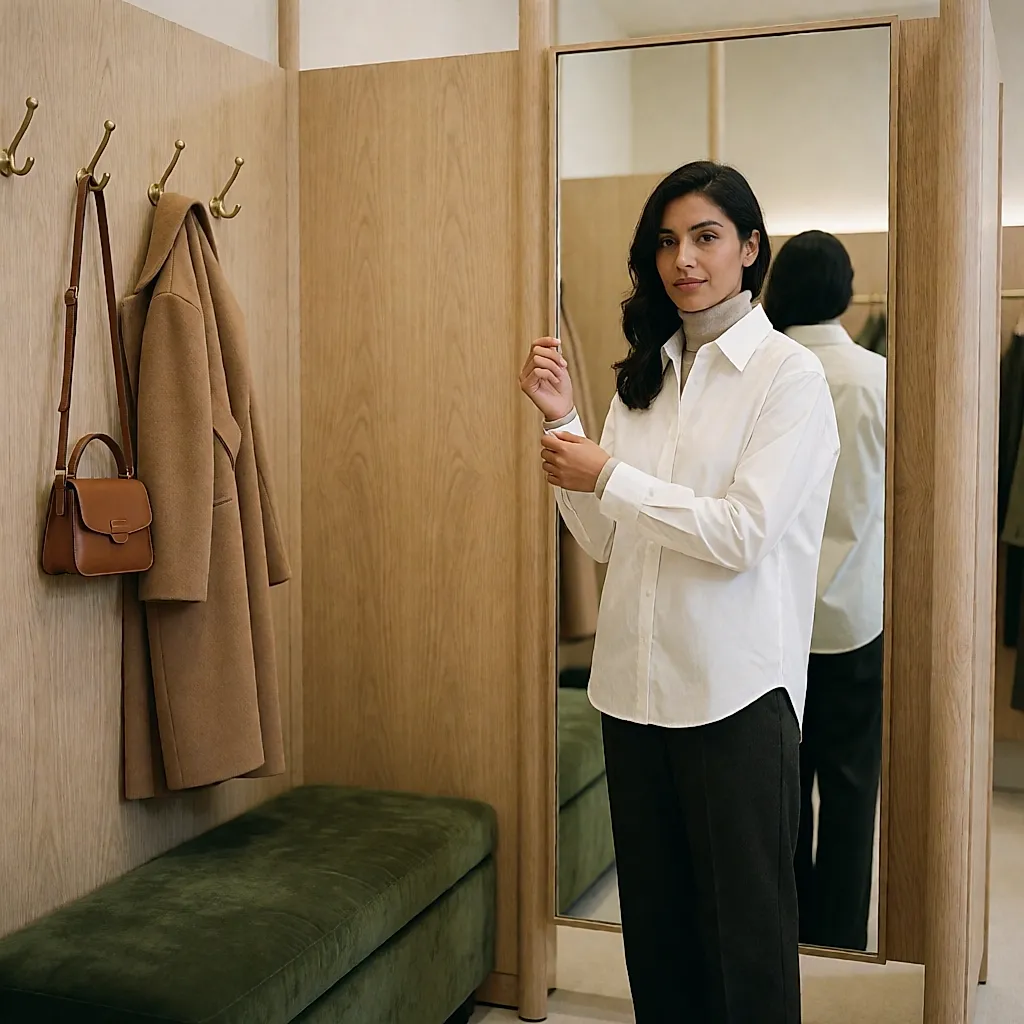
For jackets, a tightly woven cloth is your friend: gabardine or corduroy withstands wind better than light poplin and ages well. By contrast, be wary of a padded jacket whose filling remains a mystery—the filling provides the warmth, not the shell.
Three questions will do it in front of a label: is the fibre traceable? Is the cloth dense? Is there room to layer? Three yeses, and you can go to the till with an easy mind.
Budget
As a rough guide, a decent cotton shirt on the UK high street is likely to cost around £35–£70, while a piece in extra-long-staple cotton with a traceable supply chain tends to start nearer £80 and can reach £180 or more. Cotton jackets often sit between £70 and £180; padded versions between £100 and £250. The difference comes down to the filling, the cut and the brand.
Where to look? High-street retailers and specialist shirtmakers remain the safest bet for a first piece; buying second-hand lets you try a good cloth for much less, provided you check the seams and cuffs.
Comments
Your opinion matters: rate the article, react and reply to comments.
Comments are moderated; AI-assisted comments are flagged. Text emoticons (8-), :-), <3…) are automatically shown as images.